Religious Symbols Ignite War in the Middle East: What’s Behind Aggression on Iran?
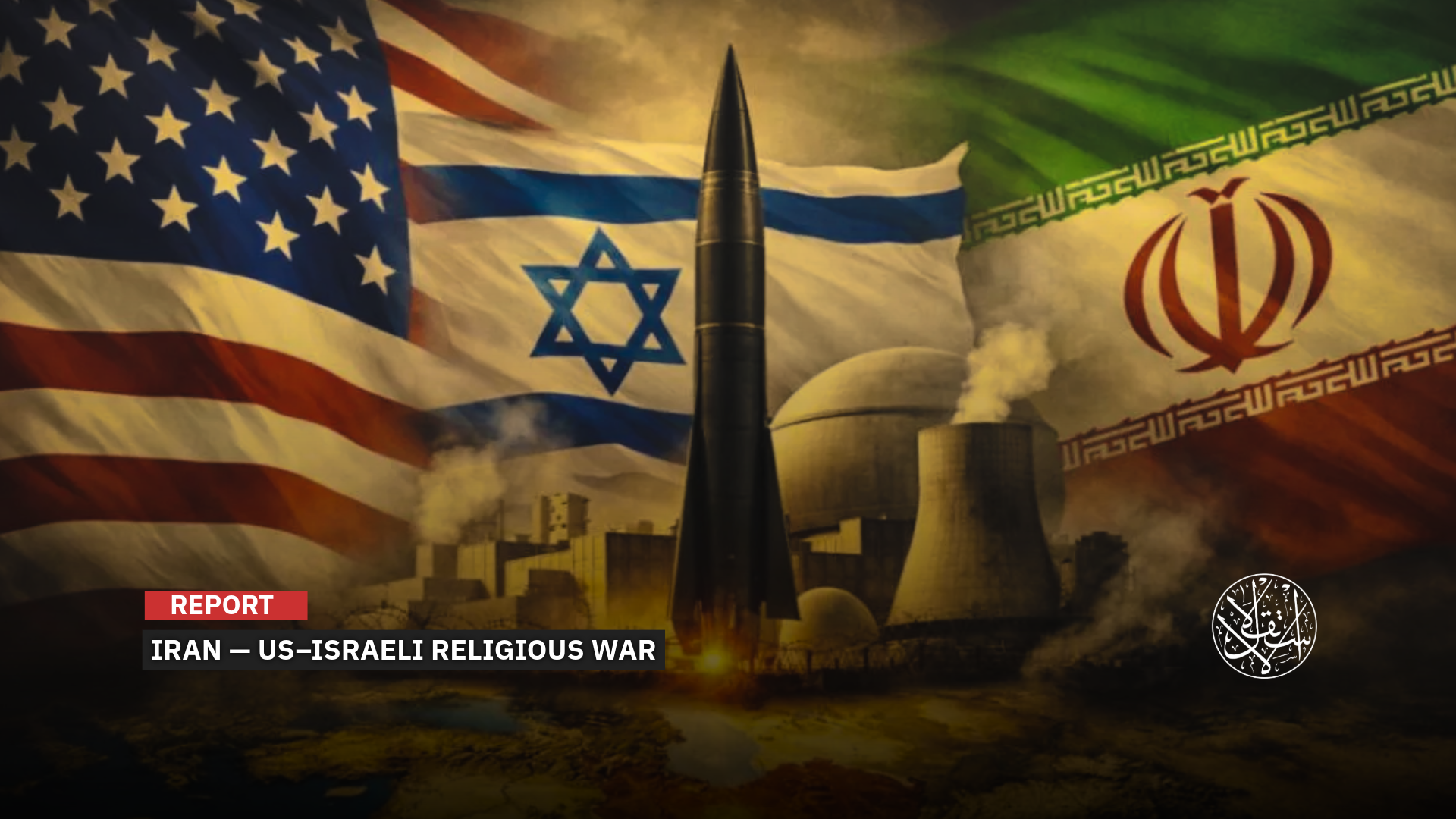
Military leaders are presenting the war on Iran as a war with biblical authority.
As military escalation between the United States and the Israeli Occupation on one side and Iran on the other intensifies, emerging evidence suggests that, in some political and military circles, the war is not framed merely as a conventional geopolitical struggle but increasingly as one with profound religious and ideological dimensions.
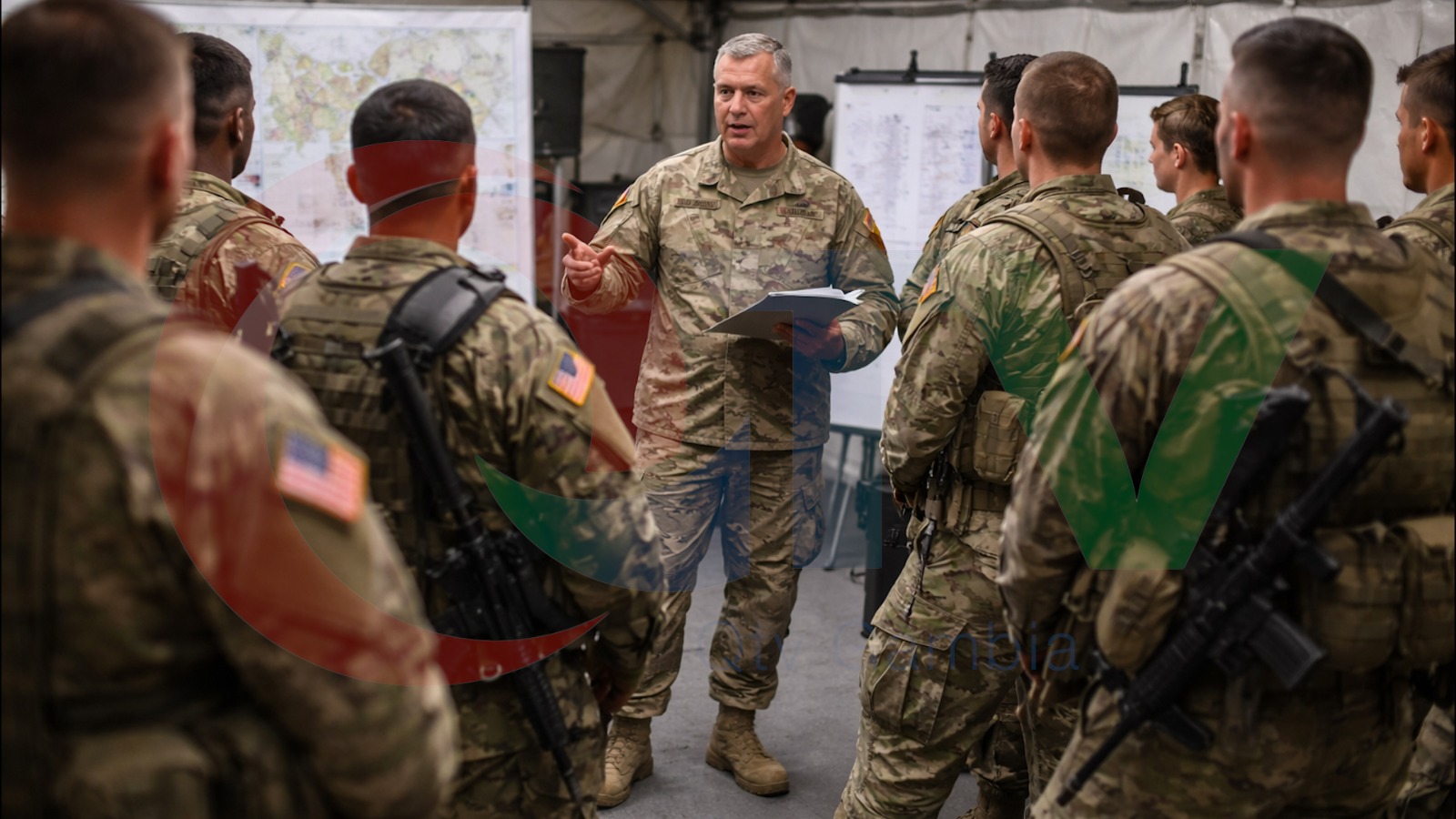
This perception gained further traction after the U.S.-based Military Religious Freedom Foundation (MRFF) announced on March 3, 2026, that it had received more than 200 complaints from service members across branches of the U.S. armed forces, including the Marine Corps, Air Force, and Space Force. The complaints accuse their commanders of using extremist Christian rhetoric to justify war against Iran.
Christian Nationalism
Complaints reviewed by The Guardian revealed that one complainant, identified as a noncommissioned officer (NCO) in a unit that could be deployed “at any moment to join” operations against Iran, told MRFF that their commander had “urged us to tell our troops that this was ‘all part of God’s divine plan,’ and he specifically referenced numerous citations out of the Book of Revelation referring to Armageddon and the imminent return of Jesus Christ.”
“He said that ‘President Trump has been anointed by Jesus to light the signal fire in Iran to cause Armageddon and mark his return to Earth,’” the NCO added.
The complaint was not an isolated case. It was filed on behalf of 15 soldiers, including 11 Christians, one Muslim, and one Jewish service member. The range of complainants suggests that objections were not limited to soldiers of different faiths but also included Christians who believed that invoking religion inside the military had gone beyond personal expression and crossed into imposing a specific ideological view on troops.
The complaint first reached independent American journalist Jonathan Larsen before its details appeared in the British press, opening a wider debate about the kind of rhetoric surrounding preparations for war with Iran in parts of the U.S. military.
“Anytime Israel or the U.S. is involved in the Middle East, we get this stuff about Christian nationalists who’ve taken over our government and certainly our U.S. military,” Mikey Weinstein, MRFF’s president, who is an air force veteran, told The Guardian.
In a statement, Weinstein suggested the reports indicate an increase in Christian extremism in the military, noting that the complainants “report the unrestricted euphoria of their commanders” who perceive a “‘biblically-sanctioned’ war that is clearly the undeniable sign of the expeditious approach of the fundamentalist Christian ‘End Times.’”
He said that the complaints show a clear violation of the separation of church and state.
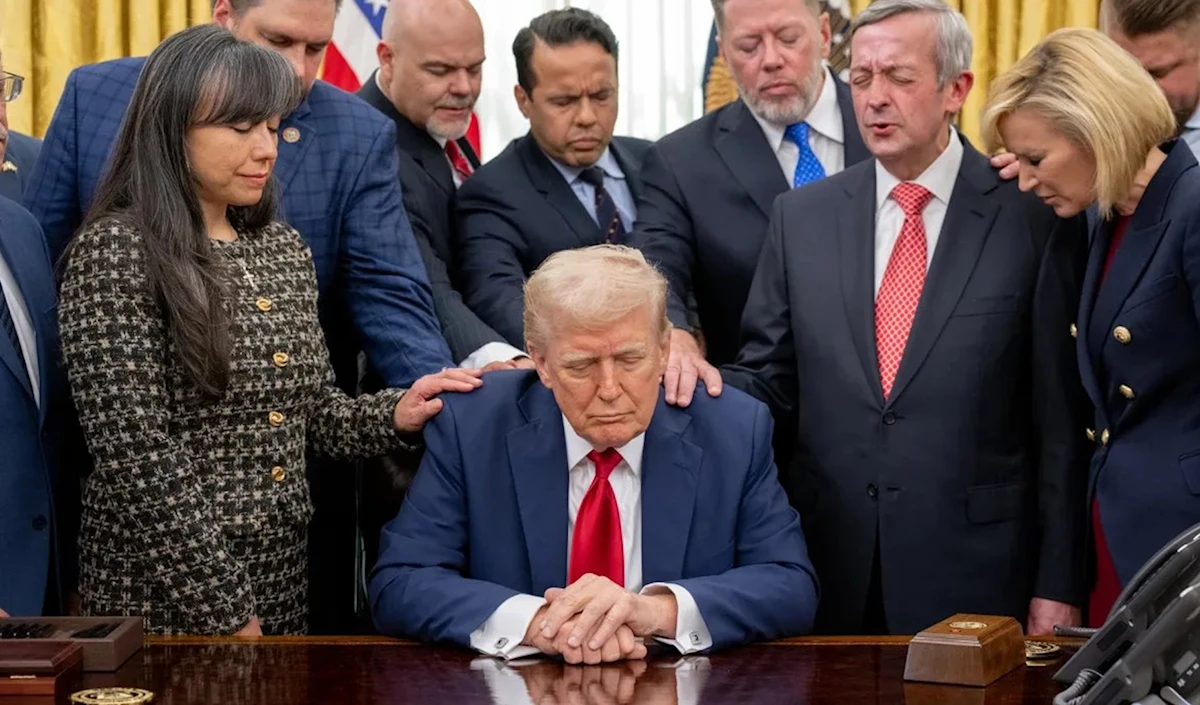
The controversy comes amid the rise of political discourse in the United States tied to what is known as Christian nationalism, an ideological current that argues the country should be rooted in Christian identity and play a central role in fulfilling what its supporters see as religious prophecies about the end of history.
Within this context, attention has turned to the positions of U.S. Secretary of War Pete Hegseth, who is known for supporting these intellectual trends, particularly the doctrine known as “sphere sovereignty.”
The doctrine, promoted in some conservative evangelical circles, holds that Christians are called to impose their religious vision on public life and politics, including governance and law.
In August 2025, Hegseth sparked widespread debate when he reposted a video by the far-right American pastor Doug Wilson, one of the leading figures of Christian nationalism and founder of the Idaho-based Communion of Reformed Evangelical Churches (CREC).
In the clip, Wilson said he wants to see the world become a Christian one and rejected the idea of women holding senior combat roles in the military. Critics saw the remarks as a sign that this ideology may be influencing certain strands of political and military thinking in Washington.
Biblical Symbolism
On the Israeli side, a parallel form of religious language has also emerged, though it takes a different shape, rooted in biblical symbolism used to name and describe military operations.
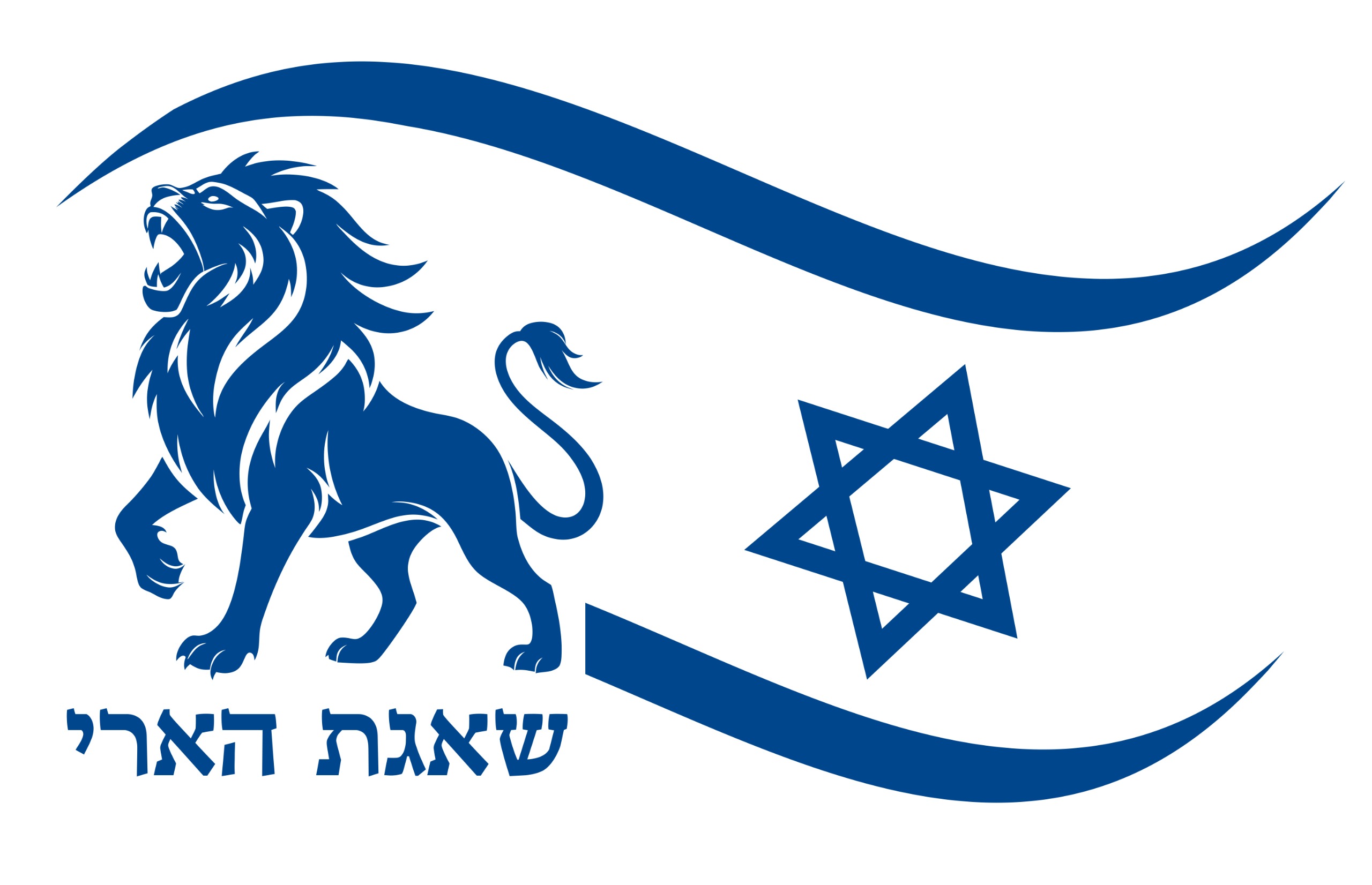
Since the start of the war on Iran, the name of the Israeli “military campaign” has shifted from “Shield of Judah” to “the Roar of the Lion,” a choice loaded with symbolic meaning in Jewish religious tradition.
In biblical texts, the lion is closely linked to the “Tribe of Judah,” one of the tribes of the Israelites and a symbol of strength, sovereignty, and leadership in religious narratives. The name “the Roar of the Lion” therefore carries more than a military meaning, evoking the image of a powerful force announcing its presence.
This symbolism intersects with Israeli rhetoric portraying the war on Iran as an existential battle aimed at protecting “Israel’s” national security from what it sees as a strategic threat.
Israeli Prime Minister Benjamin Netanyahu has repeatedly expressed this view, arguing that confronting Iran is a strategic necessity that cannot be postponed.
Yet the religious symbolism does not stop at the aggression’s name. The commander of the Israeli Air Force, Major General Tomer Bar, reportedly referred to the squadrons carrying out the strikes as “Genesis,” a direct reference to the first book of the Torah.
The label gives the attack a symbolic dimension, suggesting the beginning of a new phase or the creation of a different reality in the region, blending religious imagery with political and military messaging.
Another detail that drew attention was the timing of the attack, which coincided with the Jewish holiday of Purim.
The holiday commemorates the story, preserved in Jewish religious texts, of how Jews were saved from an extermination plot in the ancient Persian Empire. According to the narrative, Haman, a minister of the Achaemenid emperor Ahasuerus, planned to destroy the Jews across the empire, but his plan failed after the Jewish queen Esther intervened, guided by Mordecai, saving her people and leading to the downfall of Haman and his followers.
Purim has since become a symbol of victory and deliverance in Jewish religious memory.
Some observers say the timing of the aggression alongside the holiday carries a clear symbolic message, linking the current war to a historical narrative of survival and the defense of Jewish existence.
In reality, the use of religious symbolism in naming “military operations” is not new in “Israel.” Since the establishment of “the state” in 1948, the Israeli Occupation military has frequently drawn on biblical texts and Jewish history when naming many of its wars.
The practice aims to connect the present to a longer historical narrative, reinforcing in domestic discourse the idea that the Israeli military is not simply a modern fighting force but part of a religious history stretching back thousands of years.
This fusion of biblical past and modern warfare creates a symbolic framework that, in some narratives, casts the war as a continuation of a long historical struggle for survival.
Religious War
Amid this atmosphere, American commentator Tucker Carlson warned that the assassination of Iran’s Supreme Leader, Ali Khamenei, could push the world toward what he described as a global religious war.
In an episode of his program aired on March 5, 2026, titled “Could This Be a Religious War Designed to Rebuild the Third Temple on the Ashes of al-Aqsa Mosque?” Carlson raised questions about the deeper motives behind the war on Iran.
He pointed to what he described as entrenched Christian Zionist beliefs among some influential figures in the United States, including U.S. Ambassador to “Israel” Mike Huckabee.
According to Carlson, some supporters of this ideology believe that rebuilding what is known as the “Third Temple” in occupied Jerusalem is a necessary condition for the fulfillment of religious prophecies linked to the return of the Messiah.
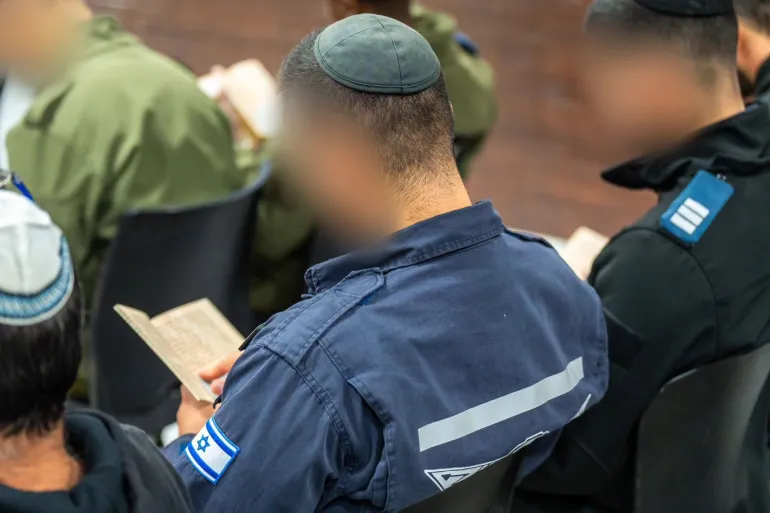
The American commentator also said that some Israeli soldiers wear patches on their uniforms, suggesting their religious mission is tied to rebuilding the Temple.
Carlson further aired a video clip of a rabbi speaking openly about a scenario in which a missile could be fired at al-Aqsa Mosque and blamed on Iran, potentially igniting a wider war in the region.
He also discussed the possibility of what is known as a “false flag” operation, in which the Dome of the Rock could be targeted by a missile or drone and the attack blamed on Iran, a scenario he said could unfold amid what he called the fog of war.
Notably, these criticisms have emerged from within the American right itself. Haaretz published a lengthy report before Carlson’s episode aired examining the growing influence of the commentator within right-wing circles in the United States.
The report carried the headline, “How Did Tucker Carlson Become One of the Far Right’s Most Influential Voices?
The debate suggests that discussions about the religious dimension of the war on Iran are no longer confined to academic or media circles but have become part of the broader political divide inside the United States.
Meanwhile, U.S. Senator Lindsey Graham warned that the U.S.-Israeli war against Iran could become a “religious war” with consequences that shape the Middle East for a millennium.
Speaking on television, he described the war as a defining moment for the region and suggested the stakes involve what he called “extremist Islamist terrorists who want to kill all Jews.”
Graham added that the outcome of the war could determine the political and strategic map of the Middle East for centuries to come.
Ideological Crossroads
Dr. Muhammed Abu Zaid, a professor at al-Azhar University, argued that understanding the U.S.-Israeli war against Iran cannot be limited to military analysis alone. Instead, it must be seen, within a broader context that includes the clear ideological and religious undercurrents shaping the conflict’s discourse.
“Theological language and biblical symbols, once merely rhetorical tools in Western political discourse, have become instruments of political mobilization, giving the conflict an ideological dimension and legitimizing military policies in the region,” he told Al-Estiklal.
“The rhetoric reveals a transnational ideological alignment, linking hardline religious groups in Israel with the evangelical right in the United States and parts of Europe. This adds a dimension to the conflict that goes beyond conventional politics.”
He added that phrases such as “the Promised Land,” “the war of good versus evil,” and “the sacred mission to protect civilization” are more than political slogans. They draw on biblical roots and are invoked to justify violence and genocide, giving it a veneer of moral legitimacy.
Abu Zaid argued that this ideological overlap between religious Zionism and the far-right evangelical movement in the U.S. encourages some decision-makers to view the Middle East as a stage for fulfilling apocalyptic prophecies, including an Armageddon scenario, which partially explains America’s unconditional support for “Israel.”
The professor also referenced comments by former Hamas leader Yahya Sinwar, who noted that the ongoing conflict carries a deeply religious dimension. The invocation of biblical texts and religious symbols in Israeli political and military discourse reinforces this framing and gives it broader interpretive weight.
According to Abu Zaid, the rhetoric of “Israel’s” far-right leadership, with its explicit use of religious symbols and texts, demonstrates that religion is being used as a tool for political and ideological mobilization, not merely as a cultural or symbolic framework.
He warned that framing the conflict in open ideological and religious terms risks deepening polarization and prolonging violence, as wars with a religious character are often harder to contain and more prone to extremism and escalation.
“Such a trajectory could destabilize the region for decades, undermining political settlements and fueling sectarian and ideological divides, with negative consequences for the wider Middle East.”
“Understanding the region requires more than a military perspective; it also demands careful attention to the religious discourse surrounding the conflict, which is crucial for anticipating future policies and the threats they may pose to stability across the Arab and Islamic world,” said Abu Zaid.
Sources
- US troops being told Iran war intended to bring about Armageddon, watchdog says
- US troops were told war on Iran was ‘all part of God’s divine plan’, watchdog alleges
- Israel’s War on Iran Framed in Biblical Terms [Arabic]
- Armageddon in the Middle East [Arabic]
- “Armageddon Battle”: America’s Build-Up for a Doomsday War in Iran [Arabic]