Pezeshkian Apologizes to Neighboring States: Why Do Observers Doubt Iran’s Pledge?
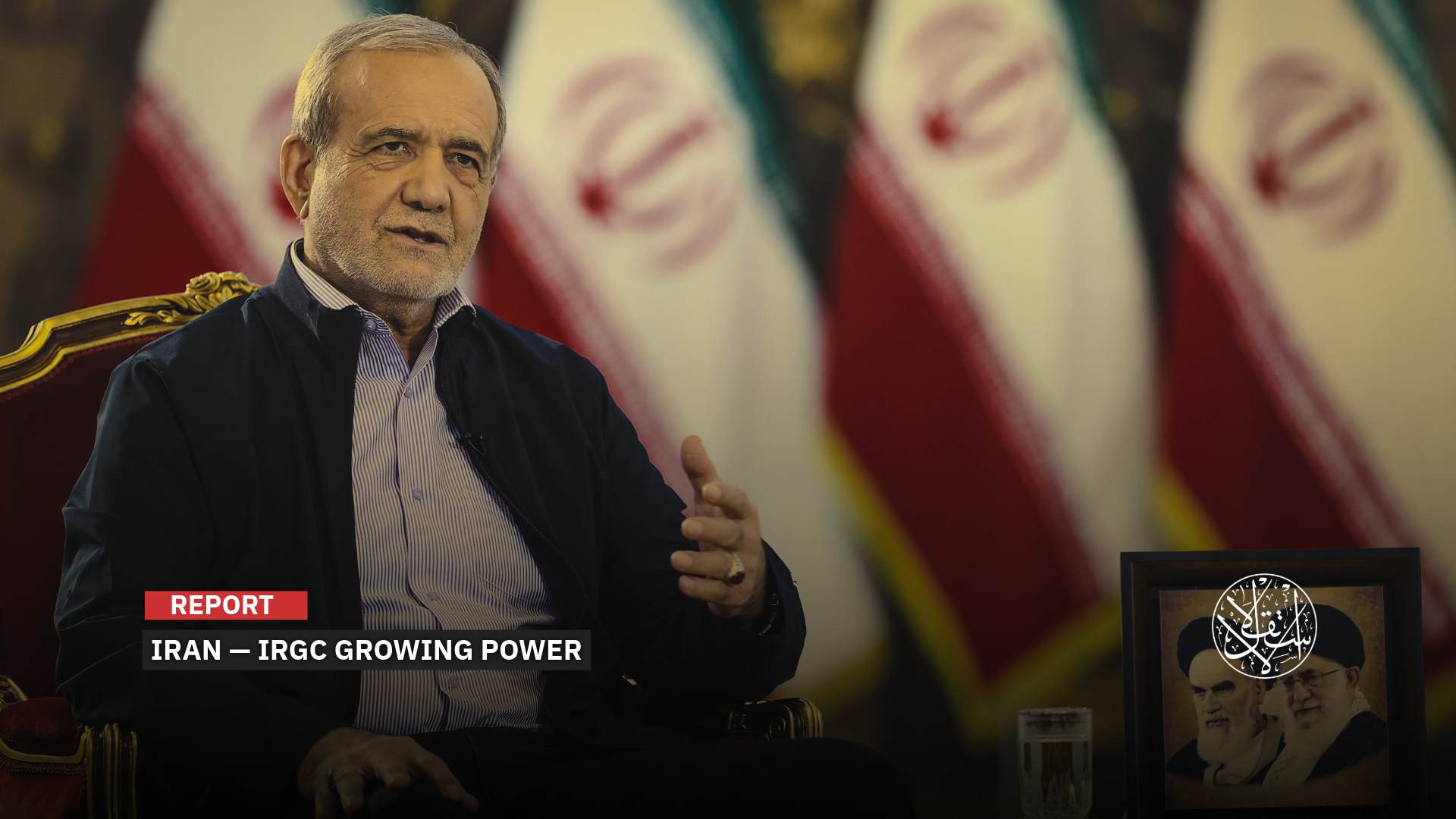
Trump said the strikes had forced Iran into what he called a “surrender” to neighboring countries, referring to Pezeshkian’s remarks.
Iranian President Masoud Pezeshkian’s apology for the targeting of neighboring countries, along with the temporary leadership council’s approval to suspend the strikes, has raised questions about the council’s ability to control the Islamic Revolutionary Guard Corps (IRGC), which is overseeing military operations against the United States and the Israeli Occupation.
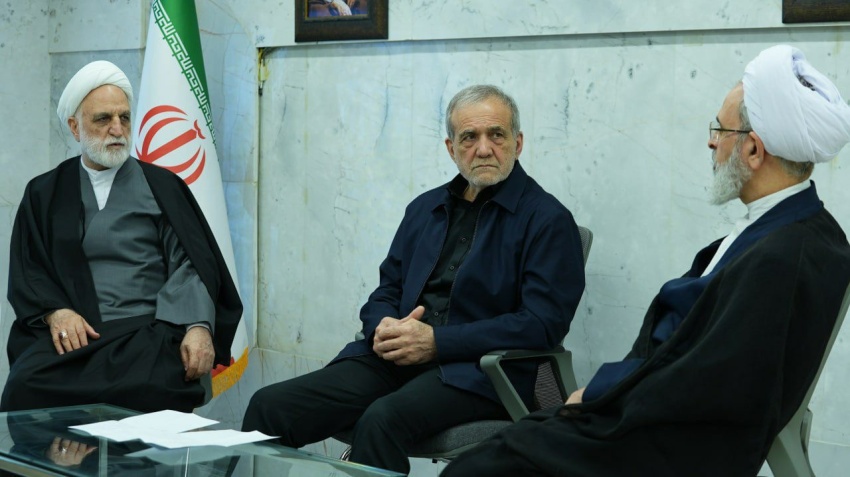
The temporary leadership council is currently assuming the duties of the Supreme Leader on an interim basis until a new leader is elected to succeed Ali Khamenei, who was killed on February 28, 2026. The council consists of President Masoud Pezeshkian, Judiciary Chief Gholam-Hossein Mohseni-Ejei, and Ayatollah Alireza Arafi, who serves as the council’s clerical member.
Apology and Clarification
On March 7, Iranian President Masoud Pezeshkian appeared in a video broadcast by Iranian media and said, “I personally apologize to neighboring countries that were attacked by Iran. Our commanders, leaders, and loved ones lost their lives due to the brutal aggression that took place, and our armed forces are heroes who gave their lives to defend our territorial integrity.”
“We didn’t intend to violate neighboring countries’ [territory]. As I have said many times, they are our brothers. We stand with these ones we love in the region.”
The president reiterated that Iran wants good relations with “the brotherly neighbouring countries” but has been forced to respond to attacks coming from the territories of other countries.
He stressed, however, that this response does not mean there is a dispute with those countries.
“Iran stands strong against those who attack it and will respond with strength,” he said.
He also stressed that Iran remains committed to international law and humanitarian principles, while insisting that the country will not surrender to “Israel” or the United States, as the war entered its second week. Pezeshkian said enemies who hope Iran will capitulate “will take that dream to the grave.”
Hours after the remarks, Pezeshkian’s office issued a clarification regarding the president’s comments, particularly after U.S. President Donald Trump claimed that the statements meant Iran had surrendered to its neighbors.
The president’s office said that Iran would respond firmly to any aggression launched from U.S. bases, emphasizing that the president’s message was clear: if regional countries do not cooperate in facing U.S. attacks on Iran, Tehran will not target them.
Responding to Pezeshkian’s remarks, Trump said that Iran, under heavy strikes, had apologized and surrendered to Middle Eastern countries. He argued that the pledge was the result of the ongoing U.S.-Israeli aggression and accused Tehran of seeking to dominate the region.
In a military development, the IRGC announced it had attacked al-Dhafra Air Base in the United Arab Emirates (UAE) with a large number of drones, according to Iran’s official Mehr News Agency on March 7.
The Iranian army also reported launching missiles and drones toward U.S. military facilities in Bahrain and Qatar, while Qatar’s Ministry of Defense said it had intercepted a ballistic missile attack.
Earlier, on March 1, Iranian Foreign Minister Abbas Araghchi said Iranian military units operate with a high degree of autonomy, carrying out previously issued general directives while stressing the need to select targets carefully.
Araghchi added in televised remarks that the incident in Oman was not Iran’s choice and noted that he had explained this to the foreign ministers of Qatar and Oman.
Exchange of Roles
Iraqi political researcher Ali al-Masari said that the statements by Iranian President Masoud Pezeshkian about halting attacks on neighboring countries cannot be trusted, pointing to continued rhetoric from the IRGC and Ali Larijani, secretary of the Supreme National Security Council (SNSC), who justify the strikes by citing U.S. military bases in the region.
“Pezeshkian’s remarks appear to be a calming injection for neighboring states, aimed at persuading them not to formally join the war or allow the United States and Israel to expand strikes on Iran, particularly in countries that had opposed military escalation, such as Saudi Arabia,” he told Al-Estiklal.
“The statements by Pezeshkian and the IRGC represent an exchange of roles between two wings within Iran’s political system, noting that threats to target neighboring countries existed even before the current war began.”
“Iran now faces confrontation with most of its neighbors, from Azerbaijan to the Gulf states, making the late apology from Iran’s President Masoud Pezeshkian more of a symbolic political move than a real shift in military policy, especially after intermediary countries such as Qatar and Oman had previously been targeted,” al-Masari added.
The researcher also pointed to signs of weak commitment to Pezeshkian’s statements, citing comments made the same day by Iranian Foreign Minister Abbas Araghchi, who said the president’s initiative to reduce tensions had been thwarted by the U.S. position.
“President Pezeshkian expressed openness to de-escalation within our region, provided that our neighbors’ airspace, territory, and waters are not used to attack the Iranian People. Gesture to our neighbors was almost immediately killed by President Trump,” Araghchi posted on X.
He added that the war would not strengthen the United States’ negotiating position and noted that he had previously made clear that military escalation would not improve the terms of negotiations.
Meanwhile, Qatari journalist Jaber Alharmi commented on Pezeshkian’s apology in a post on X, saying that it is essential for Iran’s political and military circles to be consistent in both their statements and actions, without resorting to justifications or political evasions.
Alharmi added that the announcement to halt attacks on neighboring countries was followed, just hours later, by a Qatari statement reporting the interception of an Iranian missile attack. He questioned the consistency between words and actions in Iran’s position, noting that the gap between official statements and developments on the ground raises doubts about the seriousness of the pledges.
A Fight for Survival
Palestinian journalist Nezam Mahdawi said that the apology from Iran’s political establishment for attacks carried out by the IRGC on neighboring countries, alongside the continuation of military operations, reflects the nature of the IRGC’s position within the Iranian system.
Mahdawi wrote in a post on X on March 3 that understanding the gap between political statements and military actions requires an appreciation of the role the IRGC plays within Iran’s state structure.
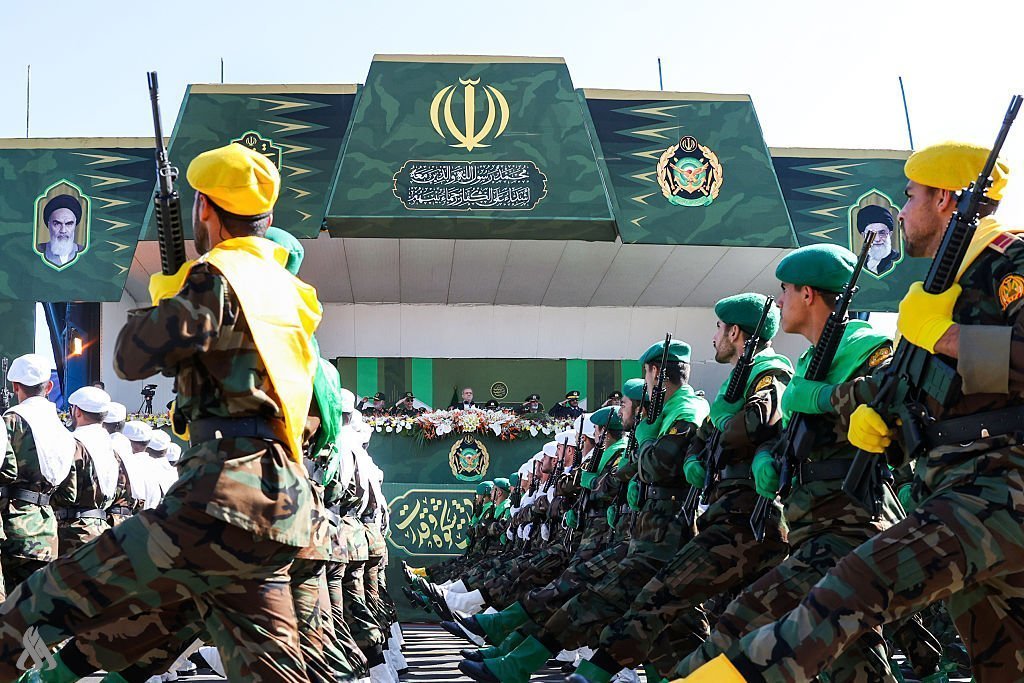
“The IRGC is a relatively autonomous military force, separate from the regular army, and is organizationally and ideologically linked to the Supreme Leader, who, according to Iranian political theory, holds ultimate religious and political authority,” he said.
“The IRGC was established after the 1979 Islamic Revolution to protect the revolutionary system, prevent foreign interference, and thwart any internal attempts to overthrow the government.”
Mahdawi emphasized that the IRGC’s loyalty, according to its ideological framework, is tied to the concept of the Supreme Leader’s religious guardianship as both the al-wali al-faqih and the deputy of the Hidden Imam. This gives the IRGC’s military discourse an ideological dimension that goes beyond the traditional institutional framework of modern armed forces.
“The IRGC may view any threat to the Supreme Leader as an existential threat to the regime itself, leading it to prioritize ideological and security considerations over conventional political calculations, even if this results in escalation affecting neighboring countries or worsening regional tensions.”
The IRGC has become one of the most important centers of power within the Iranian system, given the intertwining of religious, military, and political dimensions in the structure of governance and its growing influence over decisions related to war and peace, according to Mahdawi.
“Understanding what is happening in Iran requires recognizing the position of the IRGC within the political system, as ignoring this factor could lead to an incomplete reading of current developments.”
On March 1, 2026, Iran announced the deaths of Supreme Leader Ali Khamenei and several senior security and military officials, including the secretary of the Defense Council and the commander of the IRGC, following U.S.-Israeli attacks targeting sites in Tehran.
Sources
- Pezeshkian: Enemies will take dream of Iran’s surrender to grave
- Why are Iranian leaders sending mixed messages on Gulf attacks?
- An Iranian Official Explains Pezeshkian’s Apology and His Pledge to Halt Strikes on Gulf States [Arabic]
- Araghchi: Oman Attack 'Was Not Our Choice; Our Military Units Act Independently [Arabic]
- Trump: Iran Has Surrendered to Its Middle East Neighbors [Arabic]