Did the UAE Bribe the European Union to Hide Its Support for Hemedti’s Militia in Sudan?
The UAE is under UN investigation over alleged military support to the Rapid Support Forces militia.
Global media outlets have labeled the issue the “Strasbourg scandal”, while Sudanese people commonly refer to it as a “bribe” allegedly received by the European Union from the United Arab Emirates, or as pressure exerted on the EU to overlook Abu Dhabi’s support for arming the Rapid Support Forces (RSF) militia.
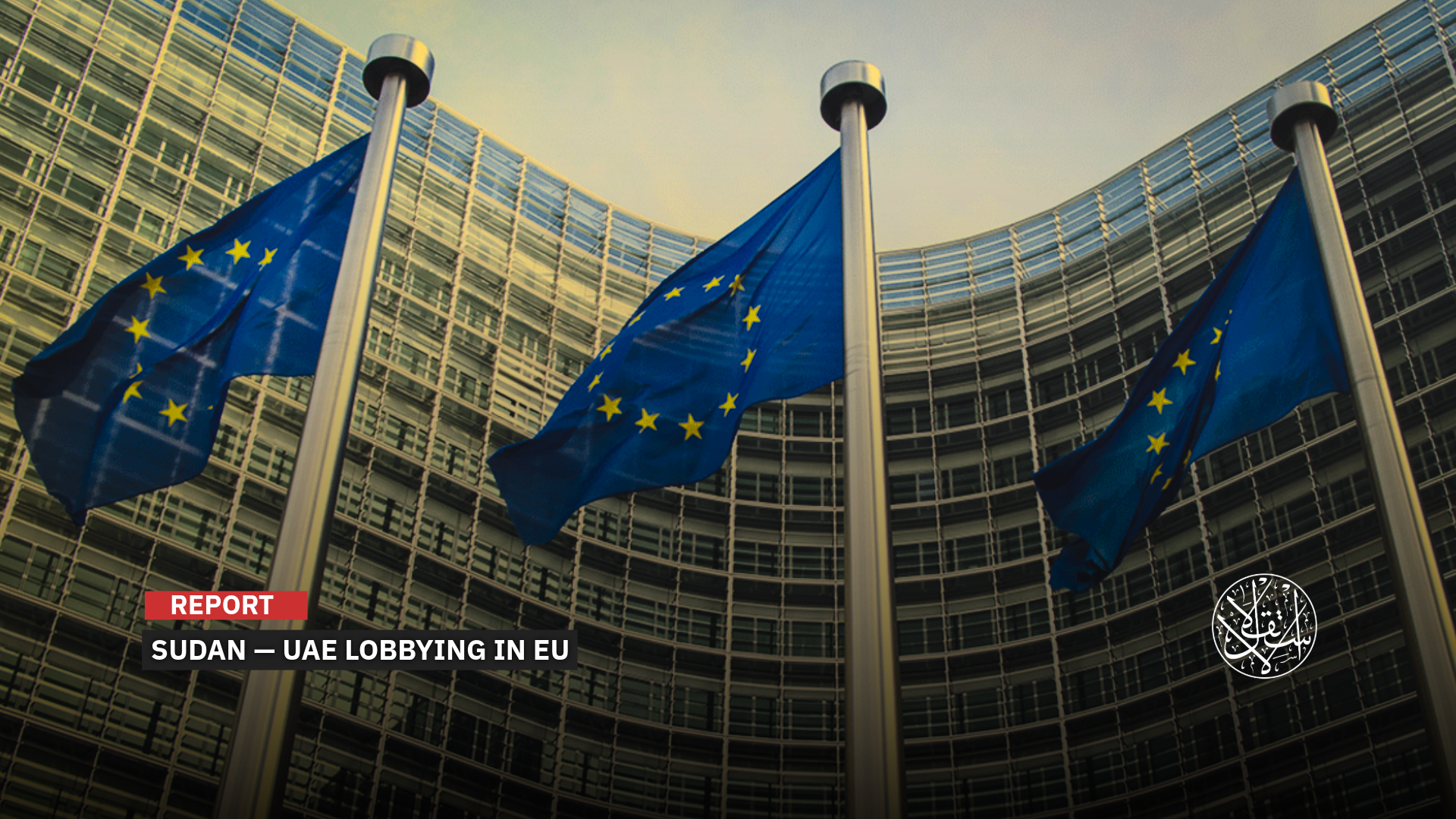
On November 20, 2025, the European Parliament released a draft resolution that explicitly referenced the UAE’s role in supplying weapons to the RSF militia, along with growing calls to halt European arms exports to Abu Dhabi for fear they could be redirected to Sudan.
The official website of the European Parliament also noted that the UAE is currently under a United Nations investigation led by a specialized committee examining accusations of military support for the RSF militia.
Later, Abu Dhabi sent a delegation to Strasbourg, the home of the European Parliament, in an effort to persuade lawmakers that it is playing a “constructive” role in the Sudanese crisis.
Observers suggest that wide economic interests and powerful lobbying groups may have influenced the stance of European lawmakers.
Then, on November 27, 2025, the Parliament issued its final resolution on Sudan. It made no mention of the UAE, despite the fact that the first draft released only a week earlier included clear condemnations of Abu Dhabi’s role in arming the RSF militia.
What Happened?
An exclusive published by the U.S. outlet Politico revealed that the United Arab Emirates had exerted what it described as intense and forceful pressure inside the European Parliament in an effort to conceal its role in the war in Sudan and to prevent any reference to its alleged support for the Rapid Support Forces militia in the Parliament’s resolution on the Sudan crisis.
According to the report, Abu Dhabi dispatched its envoy, Lana Nusseibeh, to Strasbourg at the head of a high-level delegation for a series of direct meetings with influential lawmakers ahead of the vote, attempting to convince them that the UAE was playing a “constructive role” in resolving the crisis, despite human rights reports accusing it of supplying weapons to the RSF militia.
The Emirati delegation also circulated an informal document to members of Parliament before the voting session, in which Abu Dhabi categorically denied providing any political, financial or logistical support to the Rapid Support Forces militia.
To manage the lobbying effort, the full nature of which remains unclear, the Emirati delegation was given a private room inside the European Parliament building, adjacent to the main chamber. The space was used for meetings and communications away from public view.
Three Parliament officials told Politico that the European People’s Party (EPP) considered any wording that criticized the UAE a “red line”, with direct support from right-wing blocs.
This resulted in the complete removal of any reference to the UAE, leaving only a condemnation of the Rapid Support Forces militia.
A report published by Euronews on November 26, 2025 noted that left-wing lawmakers had attempted to insert amendments explicitly addressing the UAE’s role and calling for accountability. However, conservative right-wing groups allied with Abu Dhabi, particularly the EPP and the European Conservatives and Reformists (ECR), rejected these amendments during the vote.
Activists and human rights organizations in Brussels described the UAE’s actions as “damage-control”, arguing that the delegation mounted an intense counter-pressure campaign to prevent the country’s name from appearing in the final text.
They said the Emirati team raced through closed corridors and used the private room next to the main hall to block any reference to Abu Dhabi.
Although Abu Dhabi succeeded in removing its name, the final European Parliament resolution included the strongest wording to date condemning atrocities committed by the RSF militia, citing “ethnically targeted killings, rape, sexual slavery and the starvation of civilians”.
The resolution stated that these violations could amount to acts of genocide and called for sanctions on “militias and external supporters”, without naming the UAE directly, despite extensive reporting alleging that Abu Dhabi provided military support to the forces led by Hemedti for interests linked to gold and ports.
The only remaining reference to the UAE appeared in a paragraph noting a joint statement issued by the Quad for Sudan, Egypt, Saudi Arabia, the UAE and the United States, on September 12, 2025, which called for an end to the war.
Germany’s DW reported on November 26, 2025 that Dutch MEP Marietje Schaake said the European Commission had been considering suspending trade negotiations with the UAE because of its alleged ties to supplying weapons to the RSF militia.
She added that extensive reports suggested Abu Dhabi had used supply routes through Somalia, Libya and Chad to deliver arms to Hemedti’s militia forces, which are accused of massacres, ethnic cleansing, rape and torture.
Even so, the UAE mission in Strasbourg distributed statements denying any political or material support for the Rapid Support Forces militia and continued applying heavy pressure on members of Parliament.
In related comments, Sudanese army leader Yasser al-Atta told journalists, coinciding with the release of the European resolution, that “the world was silent about what the Rapid Support Forces did in Sudan”. He added, “that silence was bought with the power of Emirati money”.
Although the UAE welcomed the European resolution after its name was removed, Sudanese analyst Makkawi Elmalik said, “The resolution is the first international slap that exposes Abu Dhabi’s narrative and places its militias under global scrutiny.”
He added that the European Parliament had not granted the UAE legitimacy, but had instead placed the Rapid Support Forces militia under international oversight, opened the door for the first investigations into European arms shipments that reached the militia via the UAE, and pushed the European Union to reconsider its trade agreement with Abu Dhabi.
How Did the Bribe Happen?
The so-called “bribe” was not a conventional payment of money, but, according to European estimates and reports, took the form of economic and political pressure exerted by the UAE through lucrative trade deals with European countries and the use of its vast financial influence to ensure its name was removed from the European Parliament resolution on the Sudan war and its support for the Rapid Support Forces militia.
According to a leak obtained by Dark Box, a platform tracking the UAE’s secret activities, Abu Dhabi led one of the most powerful political lobbying operations within EU institutions.
The operation relied on a combination of economic leverage through promises of deals and investments, and political pressure via its allies inside Parliament, particularly from conservative right-wing parties, along with extensive networks used by the UAE to influence sensitive European decisions, active diplomatic offices, and unannounced visits within the European Parliament.
The leak suggests that the UAE was fully aware of the significant risks posed by a direct European condemnation, which could threaten its economic projects in Europe or derail ongoing negotiations over a free trade agreement with the EU.
As a result, it acted swiftly to remove any direct reference to its role in arming the Rapid Support Forces militia and to block proposals from lawmakers calling for the suspension of trade talks and the imposition of sanctions.
Sudanese sources say the final wording of the European resolution, which omitted any mention of the UAE, was not an “innocent oversight”, but the result of “silence bought” through intense political and financial influence.
According to the Dark Box leaks, the Sudan war has become a stage for international influence, where money and political connections are used to reshape the narrative, and the UAE remains capable of buying European silence and controlling the story of the conflict.
The leak raises broader questions about the extent of the UAE’s penetration into Europe’s decision-making institutions, as this is not the first time Abu Dhabi has been able to reshape European positions through political and economic pressure.
Sudanese analysts say the events in Strasbourg clearly illustrate how Emirati financial and political influence can be turned into an effective tool for obscuring responsibility for one of the deadliest wars in Africa, and how positions within the European Parliament can be reshaped when a state capable of buying silence intervenes and redirects the political compass.
In a similar context, Kenneth Roth, the former director of Human Rights Watch, noted that “the United Arab Emirates embarked on a lobbying blitz of the European Parliament to avoid mention of its role in arming the notorious Rapid Support Forces militia as it commits ethnic massacres and sexual violence in Sudan's Darfur region.”
After two and a half years of bloody conflict in Sudan, which has left between 20,000 and 150,000 civilians dead and displaced around 12 million people, including 7.2 million internally displaced and more than 4.2 million refugees and asylum seekers in neighboring countries, the organization Renew Europe called for urgent and decisive international action to prevent the country from sliding into what it described as “the worst humanitarian crisis in the world.”
Marietje Schaake, coordinator of the Socialist and Democrats delegation in the EU Joint Parliamentary Assembly and lead negotiator for the Socialist and Democrats on the resolution, said that credible investigations had clearly shown that external actors and networks, operating from or through the UAE, had provided direct support to the Rapid Support Forces militia.
In remarks published on the Socialists and Democrats website on November 27, 2025, Marietje called on the UAE authorities to “stop fueling the war in Sudan.”
She also said it was “shameful”, in her words, that the European People’s Party cooperated with far-right forces to deny these facts, adding that right-wing blocs “did not even dare to mention the UAE by name in the text of the resolution.”
Possible Scenarios
In the wake of the controversy over the inclusion and subsequent removal of the UAE’s name from the European Parliament draft resolution, and the sharp divide it exposed between the Socialist and Democrats blocs on one side, and the conservative and far-right blocs on the other, Western analysts have outlined three main scenarios for the likely path forward:
1. Scenario of de-escalation and diplomatic crisis management
This approach would involve a cautious strategy aimed at reducing tensions, with the UAE continuing to issue clarifying statements, announcing internal investigations, or providing reports to European officials on its role in Sudan.
In turn, the European Union would adopt a measured policy of reassurance, potentially leading to a relative improvement in relations and the resumption of traditional cooperation channels, particularly in trade, arms sales, and technology.
2. Scenario of limited escalation
This scenario would see parliamentary pressure measures or trade restrictions led by Socialist and Democrats lawmakers within the European Parliament, linking parts of the cooperation agenda to stricter conditions.
Estimates suggest that the European Commission had already considered suspending parts of agreements and reviewing exports of arms and dual-use technology to the UAE.
Under this scenario, relations could experience a clear slowdown, with targeted economic effects on specific sectors, while the UAE might respond in kind by freezing economic cooperation projects that benefit European countries.
3. Scenario of broad legal escalation
The EU would move toward more sensitive measures, such as imposing sanctions on networks or intermediaries believed to be acting on behalf of the UAE in transferring arms to the Rapid Support Forces militia, or launching financial and judicial investigations against companies or intermediaries linked to the issue.
Collecting new evidence could lead to restrictions on specific exports or the implementation of stricter regulatory measures.
If this scenario materializes, the impact would be profound, with a decline in security and trade cooperation, an intensification of the diplomatic crisis, and the potential for long-term tensions between the two sides.
Sources
- Escalation of the war and the humanitarian catastrophe in Sudan
- MOTION FOR A RESOLUTION on the escalation of the war and the humanitarian catastrophe in Sudan
- UAE avoids blame for Sudan war atrocities in EU Parliament text
- EU rethinks UAE trade deal over alleged arms sales to Sudan
- S&Ds urge action to end Sudan’s war and deliver relief, regretting the omission of the UAE’s role