‘The Ceasefire Trap’: How the Israeli Occupation Uses the Pause to Track Resistance Fighters
“The Israeli Occupation uses the truce to update its target list in preparation for assassinations.”
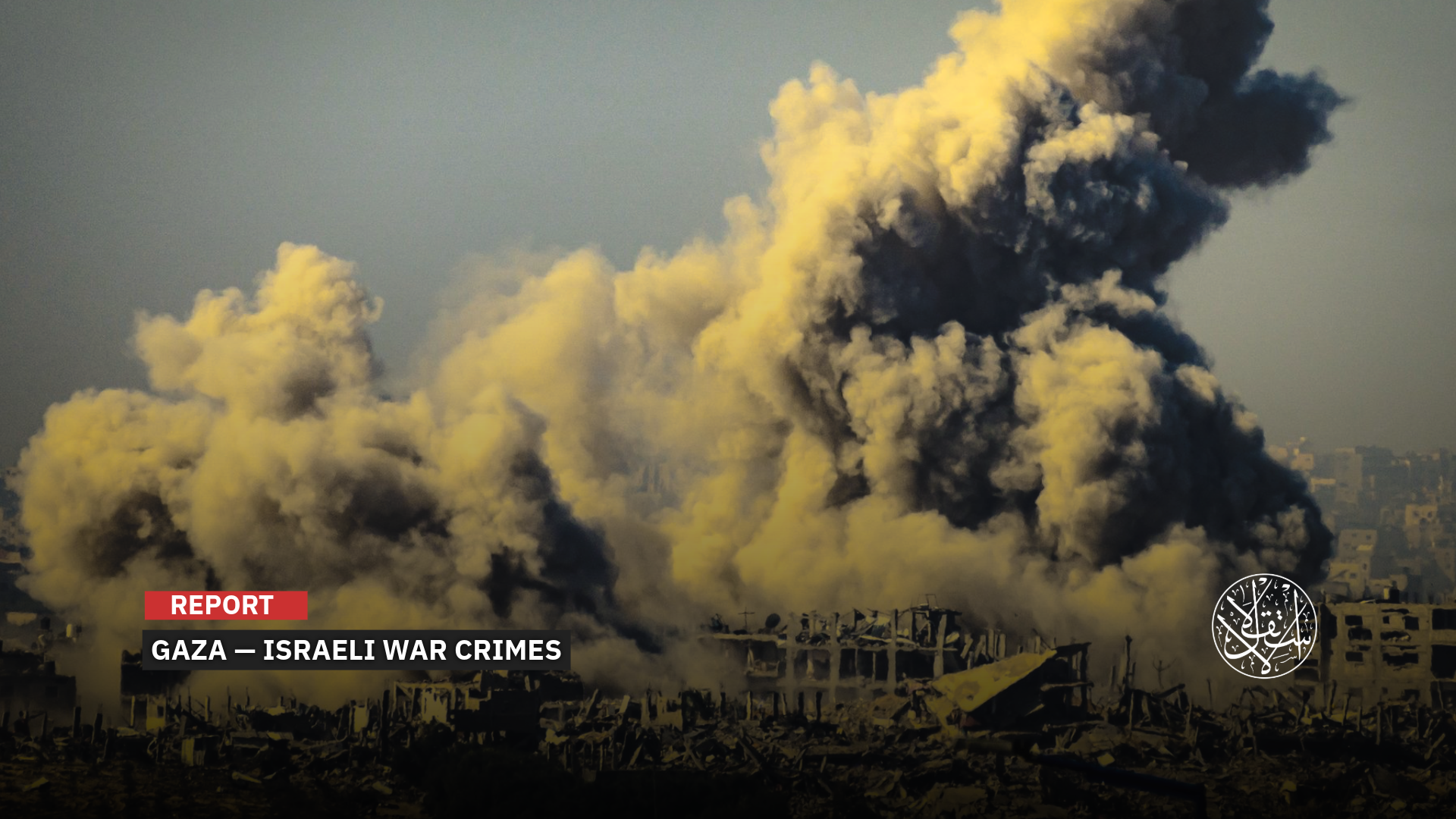
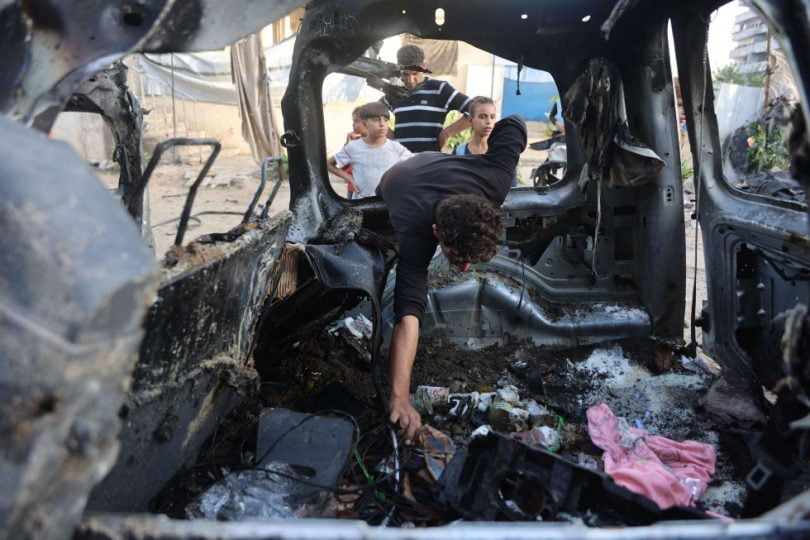
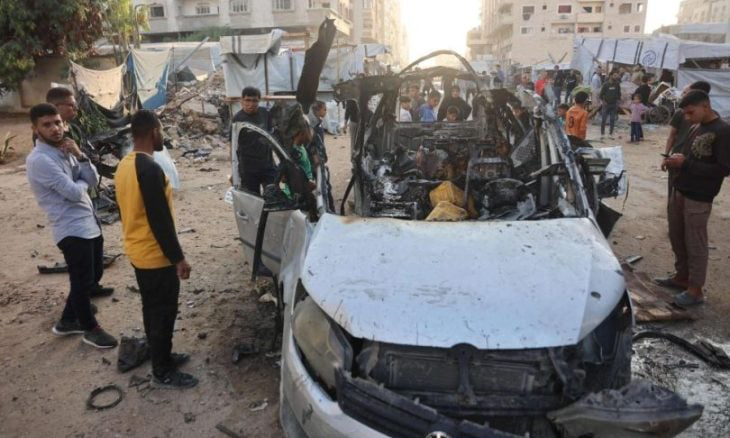
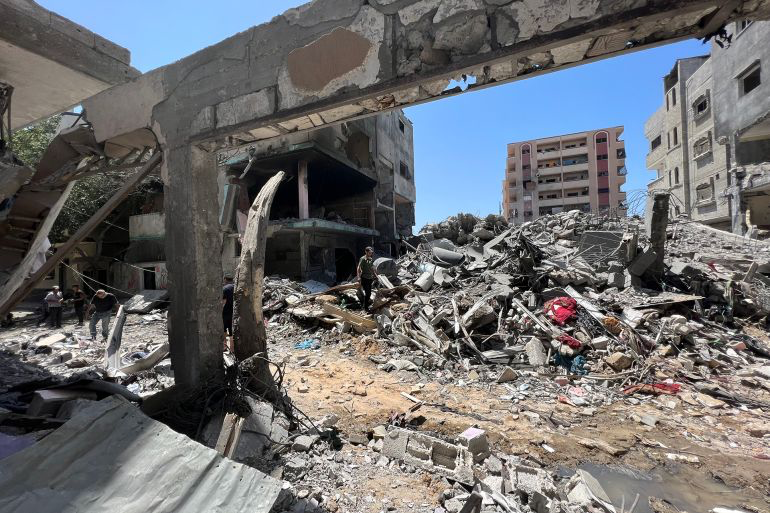
Despite a ceasefire that has technically been in effect since October 10, 2025, “Israel” continues to carry out deadly attacks across the Gaza Strip. Every day brings dozens of martyrs and the fall of hundreds of injured people, most of them women and children, as the Israeli Occupation military keeps targeting civilian areas under the cover of the truce.
Before each violation of the ceasefire, “Israel” runs an intense intelligence sweep across Gaza, saturating the skies and the ground with surveillance tools.
A New Phase
“Israel” has now shifted into a new and bloodier phase that flatly contradicts the ceasefire agreement, built around assembling an expanded target bank that includes both individuals and sites across the Strip.
This intelligence surge is followed by staged security incidents that “Israel” then uses as justification for fresh massacres in Gaza, launched once it identifies what it calls a “valuable catch” among resistance commanders and fighters.
Since the ceasefire came into effect, the Israeli Occupation military has announced the killing of several senior resistance leaders in the enclave, including members of the al-Qassam Brigades’ General Staff, brigade commanders, battalion commanders, and their deputies. The list has also included group leaders and fighters from the al-Qassam, struck in surprise attacks that observers describe as a new form of aggression.
As these killings repeated, Gaza’s Resistance Security—the body responsible for protecting fighters and the home front—issued a series of alerts and security instructions directed at both resistance members and the wider public.
In several statements published across its platforms, it warned that Israeli surveillance drones have sharply increased their presence over the Strip, circling day and night as part of what it described as wide information-mapping operations that track movement in civilian areas.
It said these operations are part of “Israel’s” push to intensify data collection and pattern analysis, requiring the highest levels of caution in movement and communication.
A directive published by the Resistance Security on December 3 urged fighters to stay out of sight from aircraft, avoid areas with street, shop, and institution cameras, and maintain extreme caution in all movement and communication. It called on them to avoid any exposed activity or repeated use of familiar routes, rely on secure channels, limit all nonessential contact, and report any suspicious activity without drawing attention.
It stressed that those being hunted must abandon technology entirely, switch off phones and electronic devices, change routines, and use unfamiliar times and routes.
Intelligence in Overdrive
A security source told Al‑Estiklal that the Israeli Occupation military is carrying out what he described as an enormous intelligence effort across the Gaza Strip.
The source, who asked not to be named for security reasons, said this activity has surged to unprecedented levels in recent weeks, with the Israeli Occupation relying on layered surveillance systems operating around the clock.
According to him, the spying apparatus now in use includes every type of surveillance drone, aerostat balloons, wide‑ranging phone‑hacking operations, access to CCTV networks inside the Strip, and the activation of human assets on the ground. “Israel” is also conducting extensive electronic eavesdropping.
He added that Israeli intelligence services have also begun impersonating employees of humanitarian organizations operating in Gaza in order to communicate with civilians and extract information about individuals “Israel” labels as wanted. These operatives seek highly specific details about their movements and daily activities.
The source said he has monitored the deployment of virtually every class of unmanned aircraft, with particularly intense activity from Hermes 900 and Hermes 450 drones, in addition to Super Heron and Heron TP aircraft, as well as quadcopter drones of all varieties.
He also noted the constant presence of manned aircraft, including Tzofit planes equipped with eavesdropping and jamming systems, along with intermittent sorties by Israeli warplanes that circle Gaza’s airspace at all hours.
The security source revealed that “Israel” is maintaining 24‑hour focused surveillance on several key areas, most notably the al‑Mawasi zone west of Khan Younis, as well as the central refugee camps—especially Deir al‑Balah and the Nuseirat camp—in addition to wide stretches of Gaza City.
He explained that these areas are being watched with intense, uninterrupted aerial monitoring as part of a broad intelligence campaign that integrates all surveillance platforms.
According to the source, one of the recurring incidents has been quadcopter drones flying extremely low and close to the ground. Some have entered people’s homes, while others have flown into schools, conducting spying and filming missions and dropping listening devices in unexpected locations.
He said these incidents have increased sharply in recent weeks as part of “Israel’s” sweeping intelligence push inside the Strip.
Asked about “Israel’s” motives for escalating its intelligence operations, the source said the goal is to update its target lists in preparation for what he called potential massacres. He added that the Israeli Occupation also aims to hinder the recovery of resistance factions and block them from rebuilding their forces and capabilities.
A portion of these intelligence activities, he said, is directed at Gaza’s security institutions—the bodies responsible for managing civil affairs and maintaining order—as part of “Israel’s” effort to fuel instability and encourage internal chaos.
‘Recycling the War’
The Israeli Occupation has made no secret of its intent to continue its ruthless aggression on Gaza. Prime Minister Benjamin Netanyahu has repeatedly stated that the war will not and cannot end until its goals are achieved, which he summed up as the “complete elimination of Hamas.”
Justifying the massacres, Netanyahu said on November 23, 2025, that Israeli forces would continue “operations” in Gaza and would always respond to “Hamas violations.”
Salih Ibrahim, an expert on Israeli affairs, told Al‑Estiklal that the Israeli Occupation sees the war on Gaza as far from over, describing it instead as recycled and ongoing in a different form.
Periods of calm are exploited by the Israeli Occupation to gather intelligence and information before carrying out waves of targeted assassinations. This method, he said, has been applied since the ceasefire began and was also used previously—and continues to be applied—in Lebanon.
Ibrahim added that statements from both political and military levels in “Israel” make it clear that the war in Gaza has not ended and that many objectives remain actively in play.
He noted that despite announcing the release of large numbers of reserve troops, the Israeli Occupation has not discharged any active air force personnel, particularly those in drone operation units. The military intelligence unit Aman is operating at full capacity, maintaining the same intensity as during the height of the war. This, Ibrahim said, confirms that “Israel” has not ended its state of war and continues to operate with the same vigor.
The expert highlighted that “Israel” fears the presence of an international force in Gaza could limit its ability to carry out military operations and escalations against Palestinian resistance factions.
Since the ceasefire began, the Israeli Occupation has focused its attacks according to a new policy: compiling target lists in advance before striking. Ibrahim emphasized that this strategy is clear and that “Israel” will continue to implement it regardless of whether an international force is present.
He warned that these rapid escalation operations could gradually extend into longer periods of attacks, eventually resulting in near‑constant Israeli aggression on Gaza, even if at a lower intensity than during the war prior to the ceasefire.
Ibrahim said this scenario suits Netanyahu and his hardline government, which seeks to maintain broad operational freedom for “military action” within Gaza.
“The ongoing military targeting and unrestricted operational capacity of the Israeli Occupation inside Gaza align with one of the goals Netanyahu declared at the start of the war: imposing full military and security control while retaining the ability to conduct operations anywhere in the Strip at any time without constraints,” he added.
The expert stressed the urgent need for a clear stance from mediators and guarantors of the ceasefire to pressure the Israeli Occupation, halt its violations, and prevent this policy from becoming entrenched in Gaza, which would stop the continued shedding of blood.
Appeals to the Resistance
With “Israel’s” new strategy in Gaza becoming clear, based on updating its target lists and launching sudden strikes, Palestinian social media pages buzzed with security advisories issued by local authorities. The aim was to raise awareness and protect resistance fighters from becoming targets.
A wave of public guidance swept the sector, involving academics, security experts, journalists, religious leaders, and other national figures dedicated to safeguarding the lives of fighters.
Palestinian preacher Mohamed al‑Astal told Al‑Estiklal that the decision by resistance leaders to maintain a ceasefire in the announced format was intended to halt daily bloodshed and protect Gaza City.
Al‑Astal explained that the ceasefire created a situation somewhere between peace and war. He said that fighting has not truly stopped but changed form, demanding new security and military tactics to navigate the next phase.
He highlighted the primary battlefield challenge facing fighters: “Israel” exploits periods of relative calm to monitor movements and rebuild its human target database.
“The enemy, once its target list is complete, carries out sudden strikes, hitting multiple elements at once. In a single day, it can achieve what might take weeks or months of open combat,” al‑Astal said.
He described the upcoming period as one of “flash rounds of war,” predicting that Gaza will experience cycles of relative calm followed by sudden violent escalations, only for mediators to intervene and restore quiet. “Israel” then begins building a new target list, repeating the cycle.
Al‑Astal stressed that security requirements for this stage demand strict policies and tactics. Individuals identified as potential targets must avoid using mobile phones entirely. If use cannot be avoided, it should be limited strictly to secure locations.
He also urged the adoption of alternative residences in case of danger, emphasizing that the location must remain secret and information shared only on a strict need‑to‑know basis.
Sources
- The War Goes On: Why the Enemy Is Intensifying Its Intelligence Effort Despite the Ceasefire [Arabic]
- 24 Killed Including Children in Israeli Airstrikes Across Gaza as Israel Claims It Targeted a Qassam Commander [Arabic]
- Government Media Statement (1030): After 60 Days of the Ceasefire, 738 Israeli Violations Keep Gaza Under Tight Blockade While Humanitarian Compliance Reaches Just 38% [Arabic]