Anti-Muslim Hostility Gets Recognition in London: What’s New?
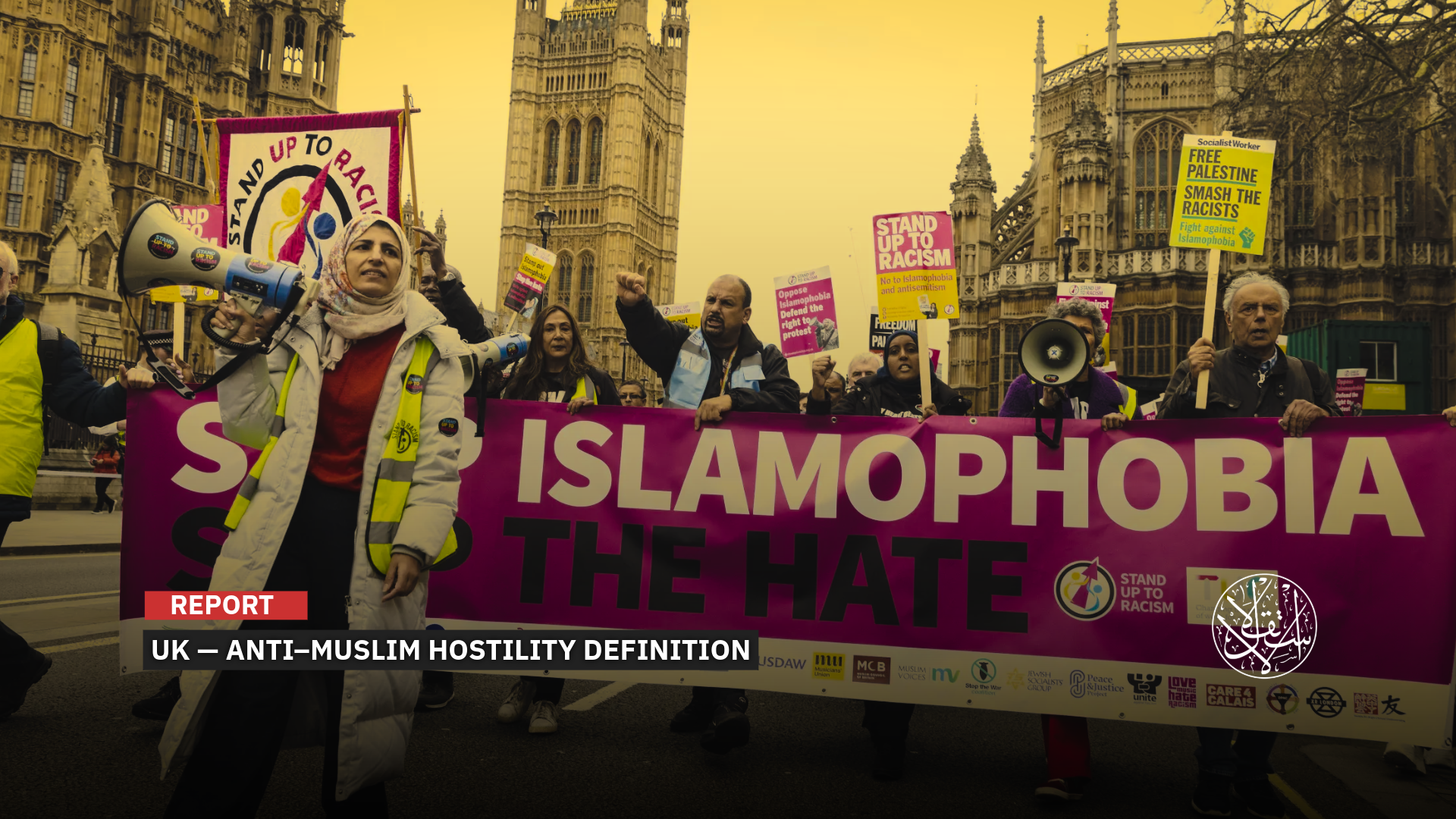
The document explicitly states that this definition is not legal legislation and does not create a new crime.
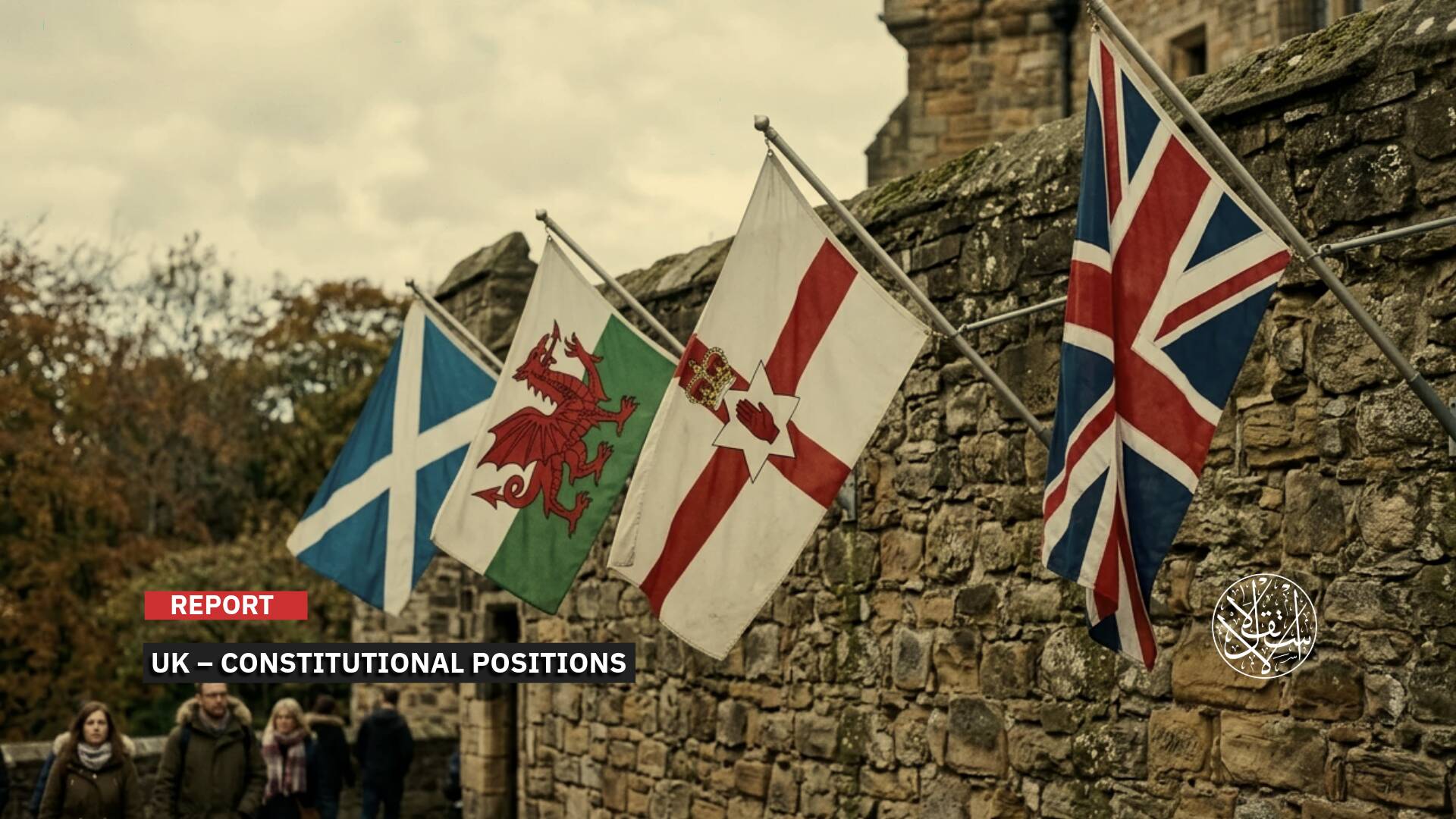
Under what it calls a “social cohesion action plan,” the British government announced on March 10, 2026, the adoption of its first official working definition of anti-Muslim hostility, set out in a document titled “Protecting What Matters.”
The move follows a year-long process that began in February 2025, with the creation of an independent task force, as record levels of religious hate crimes targeting Muslims sharpened pressure on ministers to respond.
The definition arrives in the middle of a fierce national argument, with campaigners demanding formal recognition of Islamophobia facing off against critics who warn that such a step risks blurring the line with free speech, particularly when it comes to the criticism of religion.
Inside the Document
The document sets out a definition of anti-Muslim hostility built on three core elements. It describes, first, the deliberate involvement in criminal acts such as violence, vandalism, harassment, or intimidation against a Muslim person, or someone perceived to be Muslim, on the basis of religion. Second comes prejudiced stereotyping intended to incite hostility. Third is unlawful discrimination aimed at harming or excluding Muslims.
It is careful to draw a line around its own authority. The text states plainly that the definition does not amount to legislation. It creates no new offense and alters neither equality law nor criminal statutes. Instead, it is framed as guidance, an attempt to give institutions a shared language for identifying and responding to anti-Muslim hostility.
That balance is reinforced in the accompanying notes, which stress that freedom of expression remains intact. Criticism, rejection, or even mockery of Islam or any religion is protected, the document says, so long as it does not cross into incitement to violence or discrimination.
Until now, British institutions have operated without a single agreed definition. Successive governments declined to adopt the term “Islamophobia” as outlined in 2018 by the All-Party Parliamentary Group (APPG) on British Muslims. In practice, police forces, local councils, and civil society groups have relied on broader legal frameworks to address anti-Muslim incidents, treating them under existing categories of hate crime.
What changes with the new definition is less the law than the lens. It offers a common reference point, a way of distinguishing between hostility directed at individuals and criticism aimed at belief. The government has pledged up to four million pounds to support its rollout, funding training materials, practical guidance, improved reporting systems, and the appointment of a dedicated envoy of anti-Muslim hostility to coordinate efforts across sectors.
According to the UK Ministry of Housing, Communities, and Local Government, the aim is to validate the lived experiences of Muslims, provide clarity for public bodies, and strengthen responses to hate without curbing free speech or expanding the scope of criminal law.
In practice, the shift lies in standardizing the language and offering clearer guidance to police, schools, and public bodies on when an act targets a Muslim as an individual rather than constituting criticism of religion. The law itself, however, remains unchanged, meaning offenses will continue to be handled under existing legislation.
For some Muslim organizations, the move carries symbolic force, a long-delayed acknowledgment of a pattern of hostility that has often been contested or downplayed. But without legal teeth, others see its impact as limited, dependent on whether the government can turn guidance into practice through training, resources, and consistent adoption.
The definition, in the end, does not redraw the boundaries of criminality or extend new protections in court. It seeks instead to shape understanding, and through that, the quality of the response.

Religious Hate
The adoption of the definition comes against the backdrop of a sharp rise in religious hate crimes. Figures from the UK Home Office for the year ending March 2025 show that 4,478 such offenses targeted Muslims, accounting for 45 percent of all recorded religious hate crimes.
The data points to a steep climb. The total marks a 19 percent increase compared with 2024, with incidents affecting Muslims reaching a rate of 12 per 10,000 people. Officials linked the surge to spikes in racial hostility following global terrorist attacks and political tensions in the Middle East, though the department stopped short of detailing specific triggers.
Speaking in the Commons, Communities Secretary Steve Reed said anti-Muslim hostility had reached record levels, with Muslims making up nearly half of all victims of religiously motivated crime. The scale of the problem, he argued, made it necessary to “name the phenomenon” through a formal definition.
Even so, the path to that point was slow and contested. In February 2025, the government convened an independent working group chaired by former attorney general Dominic Grieve, bringing together representatives from across the political and social spectrum. Its mandate was tightly drawn: produce a non-legislative definition that captures the experiences of Muslims in Britain while safeguarding free speech.
The group was expected to report within six months. Instead, disagreements over terminology and deeper divisions about how to define concepts such as racism and hostility pushed the timeline back, delaying publication until March 2026.
Politics played its part in the delay. For years, the issue has been caught in a wider partisan struggle over whether any formal definition risks sliding toward a de facto blasphemy law. In 2019, the Conservative government rejected a proposed definition put forward by the APPG on British Muslims, arguing it could conflict with free speech protections and the Equality Act 2010.
The debate shifted after the Labour Party came to power in July 2024, pledging to address the rise in anti-Muslim hatred. As religious hate crime climbed to unprecedented levels, political momentum began to build.
The definition was folded into a broader social cohesion agenda that also addressed other forms of hate, including “antisemitism,” giving ministers a wider framework within which to act. At the same time, a wave of protests and statements from Muslim organizations throughout 2025 added to the pressure, turning a long-delayed question into one the government could no longer put off.
Split Over the Issue
The choice of language has exposed a deeper divide. The government’s preferred term, “anti-Muslim hostility,” marks a clear departure from the definition of Islamophobia put forward in 2018 by the APPG on British Muslims.
That earlier definition framed Islamophobia as a form of racism, rooted in structures that target expressions of Muslim identity or those perceived to be Muslim. The 2018 definition, therefore, focuses on structural racism and institutional discrimination.
Ministers have steered away from that framing. By opting for “anti-Muslim hostility,” they have sought to avoid the impression that it is shielding Islam itself from criticism, emphasizing instead the protection of Muslims as individuals rather than Islam as a belief.
The shift has not gone unchallenged. The Muslim Council of Britain (MCB) rejected the new definition outright, describing it as a diluted version of what had been proposed. In a pointed statement, it accused the government of sidelining Muslim voices and stripping out key concepts such as racialization, thereby weakening the focus on institutional racism.
The council reiterated that the 2018 definition remains the most widely recognized benchmark and called for more concrete measures, including parity in funding and security with Jewish communities and a broader process of consultation.
Skepticism has also come from within advocacy circles. Majid Iqbal, head of a leading anti-Islamophobia unit, questioned in a LinkedIn post whether the definition would make any tangible difference, particularly in tackling discrimination in workplaces and schools.
What emerges is not consensus but a contested settlement, where the words themselves have become part of the struggle over how the problem is understood and, ultimately, how it is addressed.
Academic voices have echoed that ambivalence. Amina Easat-Daas, a senior lecturer in political science at De Montfort University, described the definition as a “step in the right direction” but “disappointingly falls short.”
Her main concern is the definition’s failure to recognize Islamophobia as a form of racism.
“Islamophobia relies on the racialization of Muslims,” she told Hyphen. “This means that Muslims, those perceived to be Muslim, or practices and places assumed to be linked to Muslims, such as halal slaughter, are stereotyped as being universally problematic and threatening.
“This flawed perception is then called upon to legitimate restrictive and exclusionary policy and legislation towards Muslims, racist rhetoric and Islamophobic attacks on people, practices and place,” she added.
A similar frustration was voiced by Salman Al-Azami, a senior lecturer in language, media, and communication at Liverpool Hope University.
He said he was “disappointed at the government’s decision to use the term ‘anti-Muslim hostility’ rather than the worldwide accepted term ‘Islamophobia,’” noting that the 2018 definition advanced by the APPG on British Muslims makes clear that the focus is on the victim’s perceived or actual Muslim identity, not on shielding Islam as a religion. That approach, he pointed out, had previously been backed by the Labour Party.
Why the current Labour government has chosen a different path remains unclear, he added, suggesting an unresolved tension at the heart of its approach.
Within party politics, some Labour lawmakers and allies of Muslim communities have read the shift as a calculated compromise, an effort to blunt criticism from conservative voices and free speech campaigners. They note that Prime Minister Keir Starmer had pledged before the election to adopt a definition of Islamophobia, only to retreat once in office.
Discontent has also surfaced among liberals. Hina Bokhari of the Liberal Democrats criticized what she called a watered down definition, pointing to the government’s limited engagement with Muslim organizations and its decision to sideline the 2018 framework centered on racism. Without addressing structural and unconscious bias, she argued, the new approach risks understating the scale of discrimination, and should be paired with reforms in mosque security funding and stronger action against online hate.
Secular groups have struck a more cautious tone. Humanists UK offered qualified support, welcoming what it sees as a careful balance between protecting Muslims and preserving freedom of expression. The choice of “anti-Muslim hostility,” it said, makes clear that criticism or ridicule of religion remains permissible.
Among smaller parties and some academics, the response has been pragmatic. The definition is seen as better than nothing, a symbolic advance after years of delay. But without concrete policies to back it up, they warn, it risks remaining little more than a statement of intent.
Sources
- ‘Anti-Muslim hostility’ definition falls short, say senior Muslim figures
- A Definition of Anti-Muslim Hostility
- Anti-Muslim Hostility Definition
- Social Cohesion Action Plan
- Anti-Muslim Hatred/Islamophobia Definition Working Group Terms of Reference
- All Party Parliamentary Group on British Muslims Definition of Islamophobia
- Humanists UK welcomes definition of anti-Muslim hostility
- Hina Bokhari writes… After years of delay, the Government’s Islamophobia definition still misses the mark