How Tunisia’s Kais Saied Found Himself in Direct Confrontation With the European Parliament
“Tunisian opposition forces called for unifying efforts on the ground and intensifying peaceful protests.”
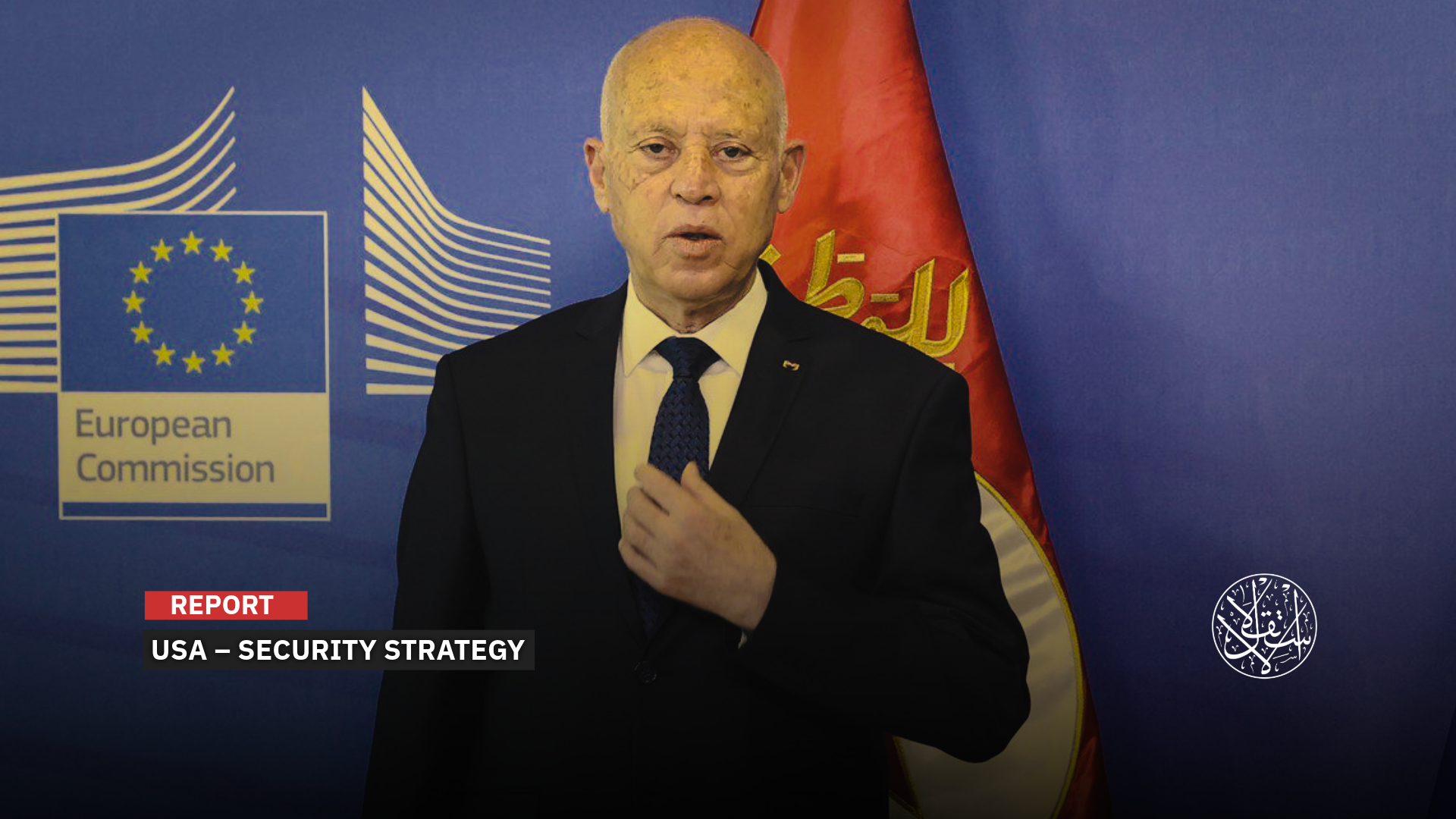
Faced with the growing targeting of political opponents and human rights activists in Tunisia, and the exploitation of the judiciary in this regard, President Kais Saied found himself in direct confrontation with the European Parliament.
On November 27, the European Parliament voted overwhelmingly in favor of a resolution calling for the release of all those detained for exercising their right to freedom of expression in Tunisia, including political prisoners and human rights defenders.
On November 28, President Saied described the European Parliament's resolution as blatant interference in Tunisia's affairs, instructing his Foreign Minister, Mohamed Ali Nafti, to lodge a strong protest with a representative of a foreign state accredited to Tunisia.
The Parliament had specifically mentioned, in a briefing, the case of lawyer and commentator Sonia Dahmani, who was conditionally released that same day after serving more than half of her sentence in two separate cases since her arrest on May 11, 2024.
Vote and Position
The European Parliament voted overwhelmingly in favor (464 votes in favor, 58 against) to adopt a resolution calling on Tunisian authorities to protect freedom of assembly and expression, the independence of the judiciary, and to repeal the controversial Decree 54.
This decree regulates crimes related to communication and information systems and has been used to prosecute critics of the government on charges such as spreading false news or defamation.
The Parliament also called on the European Commission to respond to the economic pressure exerted by the Tunisian government on human rights defenders and civil society.
Furthermore, the Parliament urged EU institutions to reaffirm their concern about the deteriorating human rights situation in Tunisia and to continue their coordinated diplomatic efforts to secure the release of political prisoners.
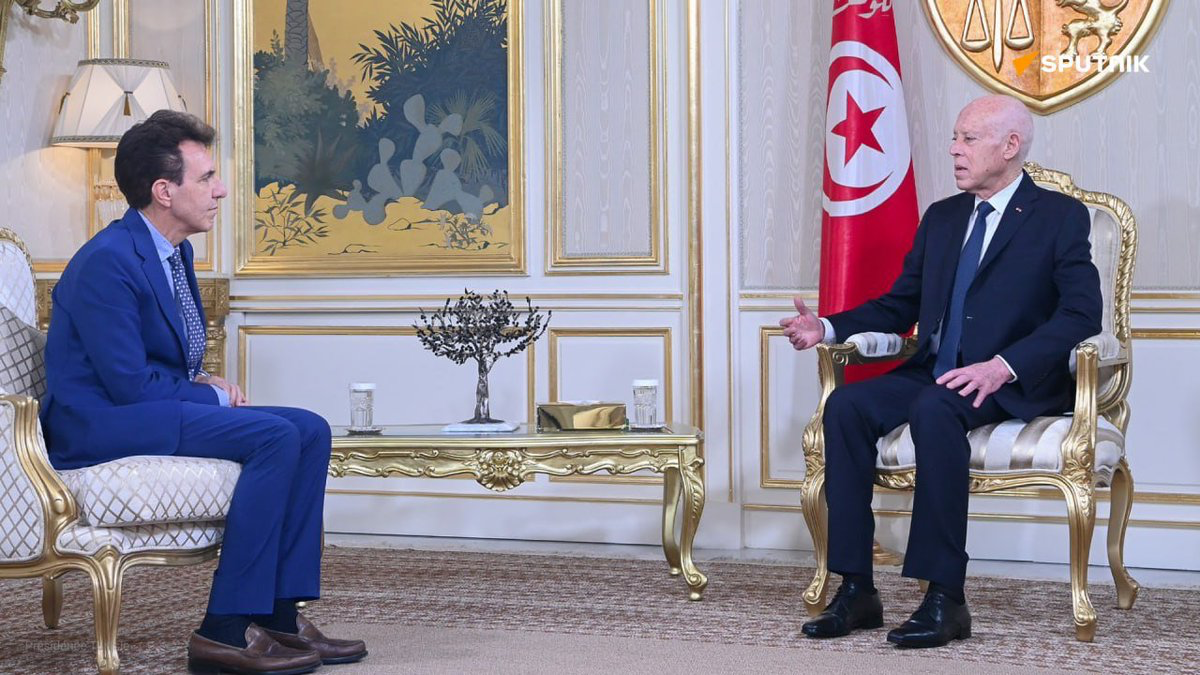
The European Parliament's stance follows the Tunisian presidency's announcement on November 24th of its protest against what it considered a breach of diplomatic protocol, specifically the meeting between the EU Ambassador to Tunisia, Giuseppe Perrone, and representatives of the Tunisian General Labour Union (UGTT) and the Tunisian Union of Industry, Trade and Handicrafts (UTICA).
Ambassador Perrone's meeting comes amid escalating tensions between the UGTT and the executive branch regarding the closure of channels of dialogue and attempts to curtail the union's social role.
UGTT deputy general secretary Sami Tahri commented on President Saied's summoning of the ambassador, saying: “The European Union was surprised by this emotional reaction.”
On November 27, he explained to the Ultra Tunisia website that visits by foreign delegations to the EU are not a new occurrence.
“These visits take place at the request of these entities, whether ambassadors, representatives of international missions, or civil society organizations, with the aim of understanding the positions and opinions of civil society,” he said.
“According to diplomatic and international norms, there is nothing preventing this. The EU does not conspire, nor does it hold these meetings secretly. Rather, they take place at the EU headquarters and are conducted openly,” he added.
He noted that the European ambassador had previously met with other organizations without any official reaction. However, the outcry only arose after the delegation's meeting with the UGTT.
He asserted that this demonstrates an attempt to isolate the UGTT and prevent it from expressing its opinions, defending workers' rights, and presenting its proposals for resolving the economic and social crisis in Tunisia
It is worth noting that Tunisia is a strong partner of the European Union, which accounts for approximately 75% of its foreign trade.
Tunisia and Brussels also signed a memorandum of understanding to combat irregular migration more than two years ago, which has enabled To reduce the flow of migrants across the Tunisian coast.
Parliamentary Response
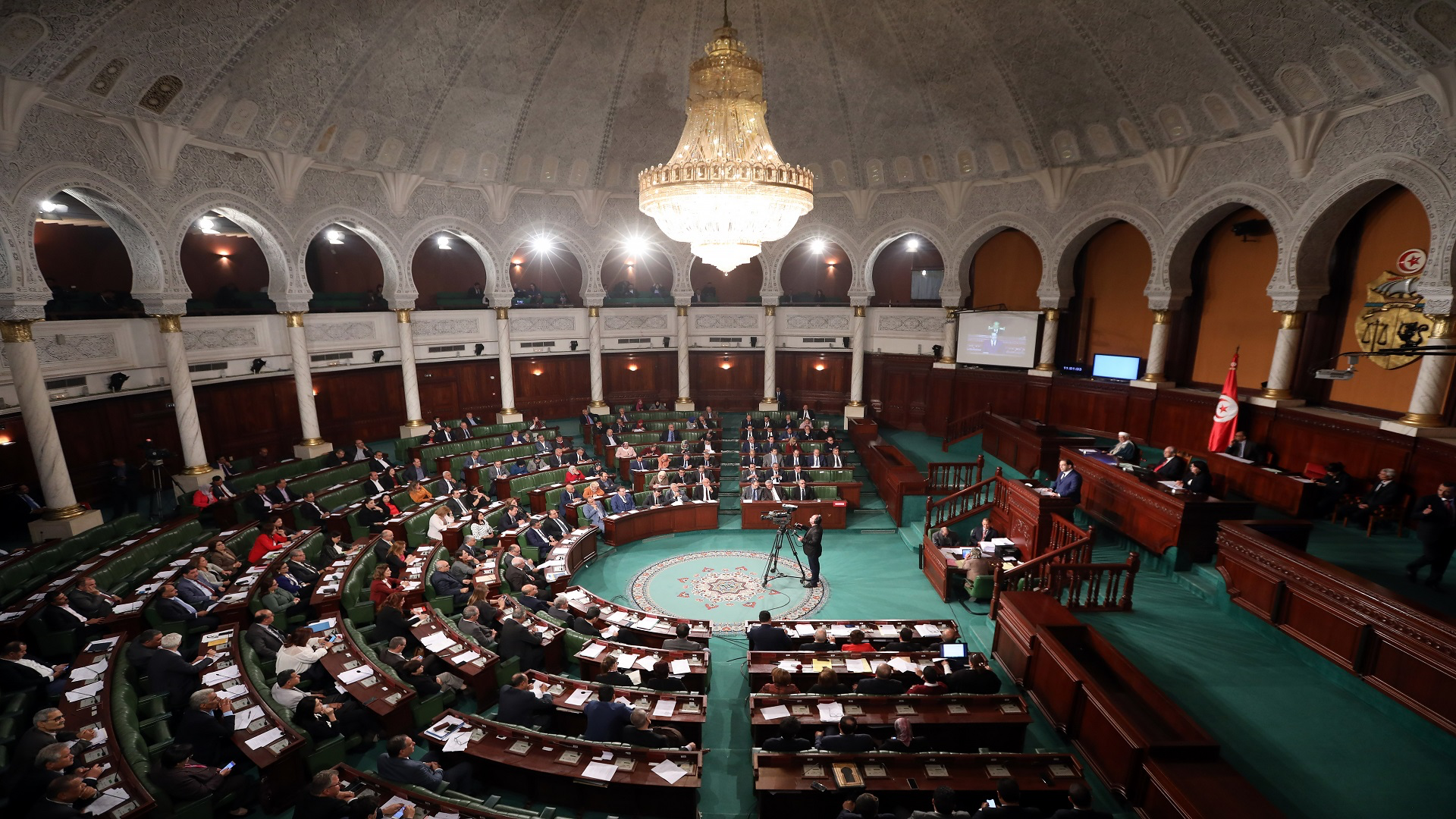
The European Parliamentarian's stance also drew a response from the Tunisian Parliament, where Speaker Ibrahim Bouderbala announced the parliament's rejection of all forms of foreign interference in the country's internal affairs.
This came in a speech delivered by Bouderbala on November 28 during a plenary session of Parliament dedicated to discussing the 2026 draft budget.
“Parliament categorically rejects any form of foreign interference in Tunisia's internal affairs,” he said.
He emphasized that Tunisia's sovereignty is fully exercised, and internal problems are resolved within state institutions without any external dictates.
The Speaker criticized what he described as the colonial mentality that some parties in foreign countries (which he did not name) still employ in their dealings with his country.
In the same context, he affirmed respect for individual and public freedoms, the right to demonstrate, and freedom of the media and press in the country, considering the recent actions of some foreign parties to be unacceptable interference that cannot be tolerated in any form.
For his part, MP Ali Zaghdoud stated that the European Parliament's audacity in discussing and making decisions regarding Tunisia's internal situation constitutes blatant interference in the country's national affairs.
In an interview with Diwan FM radio on November 28, Zaghdoud described the European Parliament's actions as "an attack on Tunisia's sovereignty and the dignity of its people."
He called for the suspension of all forms of cooperation with the European Parliament until these condescending practices cease, emphasizing that Tunisia's position must be clear and firm in the face of any external interference in its internal affairs.
Escalating Violations
These developments coincided with a Tunisian appeals court issuing prison sentences of up to 45 years in the conspiracy against state security case, in which approximately 40 people, including opposition figures, are being tried.
The majority of the 37 defendants in this case have been detained since their arrest in the spring of 2023 on charges of conspiracy against state security and belonging to a terrorist organization.
Among the most prominent defendants are businessman Kamel Letaief, Jawhar Ben Mbarek, head of the main opposition coalition (The National Salvation Front) and its Secretary-General.
The Republican Party's Issam Chebbi, and political activists Ghazi Chaouachi, Khayyam Turki, and Ridha Belhaj, were among those sentenced.
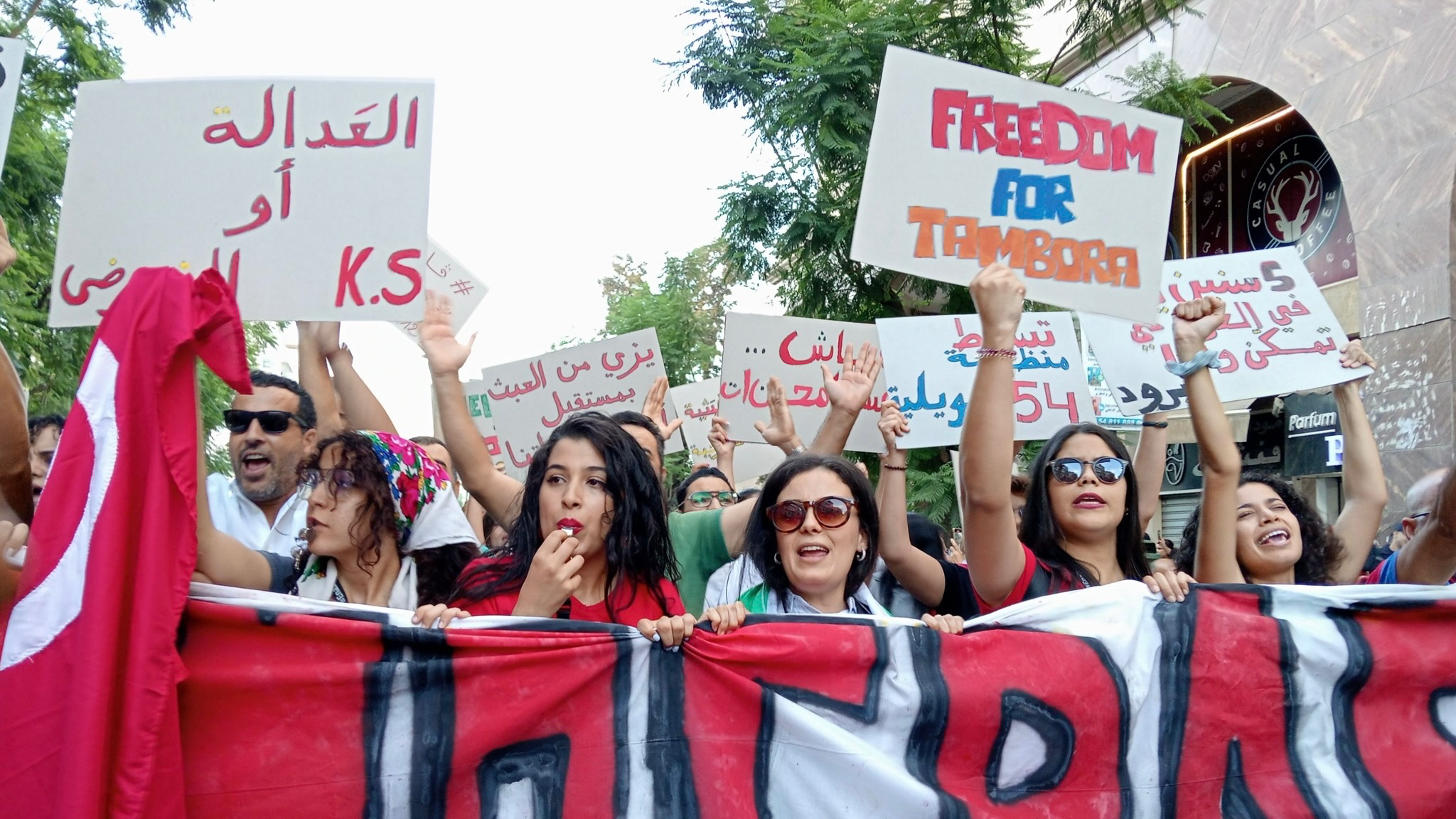
President Saied described them as terrorists, citing among the charges against them that they met with foreign diplomats.
Tunisian radio station Mosaique FM, quoting a judicial source, reported that the prison sentences ranged from 10 to 45 years, and that one of the imprisoned defendants was acquitted.
Those tried while free received prison sentences ranging from 5 to 35 years, while two were acquitted.
Amnesty International called on the Tunisian authorities to immediately overturn the convictions and prison sentences against the defendants in the case of conspiring against state security and to release them unconditionally.
Sarah Hashash, Deputy Director of the Middle East and North Africa Regional Office at Amnesty International, said: “The Court of Appeal’s decision is a blatant indictment of the Tunisian judicial system.”
She pointed to the court’s deliberate disregard for the series of violations of fair trial standards that have plagued this fabricated case from day one.
Amnesty International stated that the Court of Appeal had effectively endorsed the government’s use of the judicial system to eliminate political opposition.
Human Rights Watch condemned what it described as a judicial farce and an unfair, politically motivated trial without evidence.
On November 28, the regional spokesperson for the Tunisian judiciary, Ahmed Benchemsi, condemned to AFP the egregious misuse of the judicial system to eliminate opponents of President Saied.
UN High Commissioner for Human Rights Volker Turk denounced violations of the law, raising serious concerns about the political motivations behind the trial.
Prior to the appeal hearing, which took place over three sessions beginning in late October, Human Rights Watch called for the annulment of the unjust sentences handed down by the lower court, specifically condemning the lack of fair trial guarantees.
The organization described the trial as part of a broader crackdown on all forms of criticism or dissent.
Political Analysis
In assessing these developments, Tunisian political analyst Nasr Eddine Souilmi stated that the European position reflects its strong ties with secular elites in Tunisia.
He added to Al-Estiklal that “European associations and institutions, especially semi-official French ones, fund most of the civil society network in Tunisia. Furthermore, the Tunisian secular elite is considered one of France’s most important assets in the Maghreb and perhaps in Africa.”
Therefore, the political analyst explained that this European anger towards Saied stems from the president’s mistake in broadening his targeting, from the Islamist adversary, whom most European powers agree on targeting, to the secular ally, a red line for European elites.
Regarding his assessment of Saied’s reaction to the European Parliament’s statement, Souilmi said: “Saied’s reaction was as usual; he says what he wants and does what they wants.”
“We saw Saied rage and then release lawyer Sonia Dahmani at the behest of the European Union,” he noted.
As for Saied’s relationship with the European Union in light of these developments, Souilmi affirmed that it “will not be affected in the near future, especially since EU institutions have realized that Saied is merely a figurehead.”
She added that she understood she had to make concessions and allow him the satisfaction of verbal escalation in exchange for practical commitment to the interests of the EU member states, similar to his role in protecting their maritime borders.
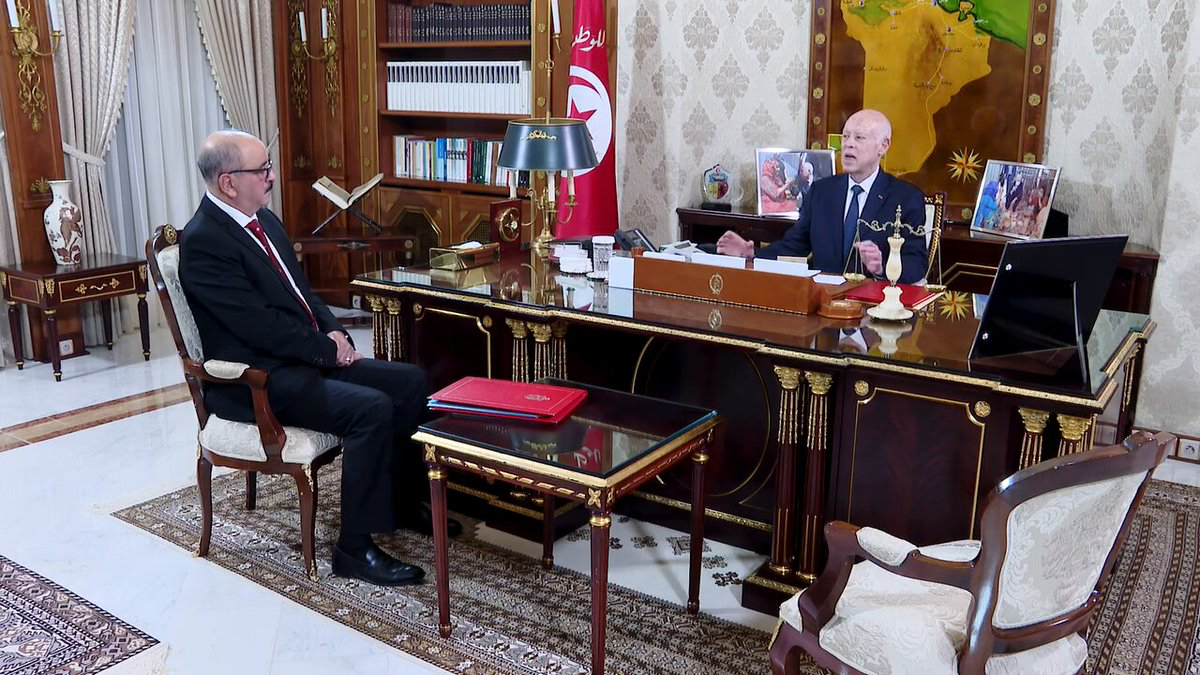
In the latest developments on the Tunisian scene, opposition forces announced that the current political context is characterized by the closure of public spaces and the systematic targeting of various voices opposed to the ruling authority.
A statement issued on December 3 by political and civil forces rejecting the authoritarian path of the regime and the policy of targeting every critical or dissenting voice indicated that the country is witnessing a dangerous trend in terms of rights and freedoms.
The forces affirmed that the arrests targeting politicians, activists, journalists, bloggers, and other voices constitute a systematic campaign aimed at closing off public space and silencing the opposition. They asserted that the security apparatus, the judiciary, and prisons are being used to consolidate a repressive, autocratic regime, mirroring the practices of despotic governments.
They emphasized the need to unify opposition efforts in confronting the arbitrary arrest campaigns targeting anyone who opposes the authorities or criticizes their policies, and demanded the immediate release of all prisoners of conscience, regardless of their ideological or political leanings.
The forces also called for unifying efforts on the ground and intensifying peaceful protests under a unifying banner that rejects injustice and defends the gains for which the Tunisian people have struggled.
Sources
- Sami Tahri: The Tunisian General Labour Union (UGTT) responds to the ambassador's call in Tunis
- The "People's Victory" bloc demands the freezing of all forms of cooperation with the European Parliament
- Zaghdoud: The European Parliament's actions constitute an attack on Tunisia's sovereignty and require a strong national response