Tunisia’s Judiciary Fights Back: Inside the Rising Battle Against Saied’s Authoritarianism
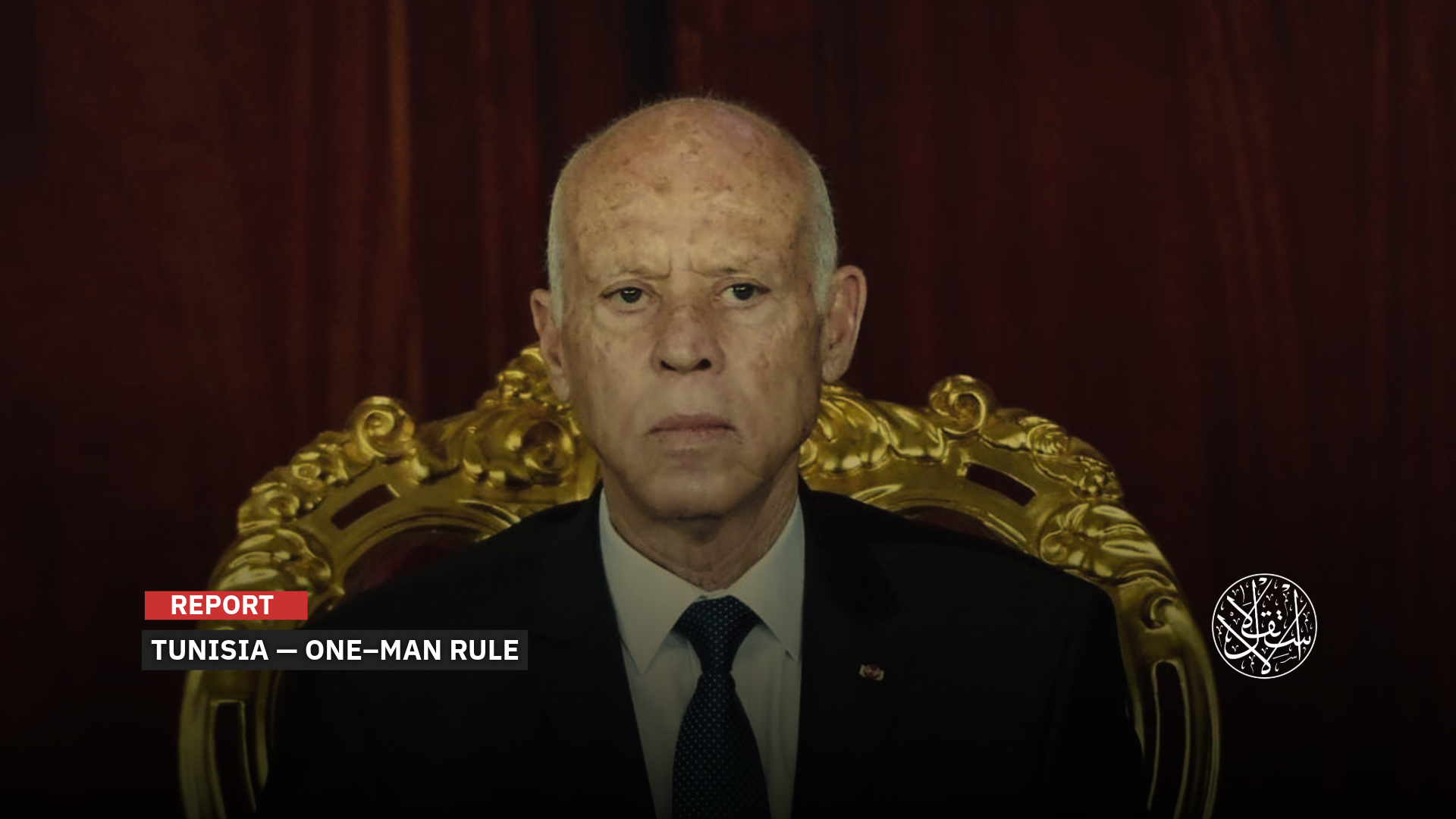
Kais Saied has sidelined the judiciary, turning it into a public agency under the control of the executive branch.
The grip of Tunisian President Kais Saied on the country’s judicial institutions continues to draw fierce criticism from political figures and rights advocates. The latest outcry comes from the Association of Tunisian Judges, which has warned that the justice system is sliding into unprecedented decay.
In a statement issued on November 24, 2025, the association’s executive office denounced what it described as a rapidly deteriorating judicial landscape. It said the erosion of personal and institutional safeguards meant to protect judicial independence has left the courts exposed to political pressure.
According to the association, this decline has produced a severe breakdown in the performance of the judiciary and crippled its ability to deliver fair rulings that defend basic rights and freedoms. It noted recent criminal verdicts that imposed maximum penalties, including death sentences, in cases tied to expression of opinion.
The group also condemned what it called blatant violations caused by the executive branch’s direct interference in judges’ careers.
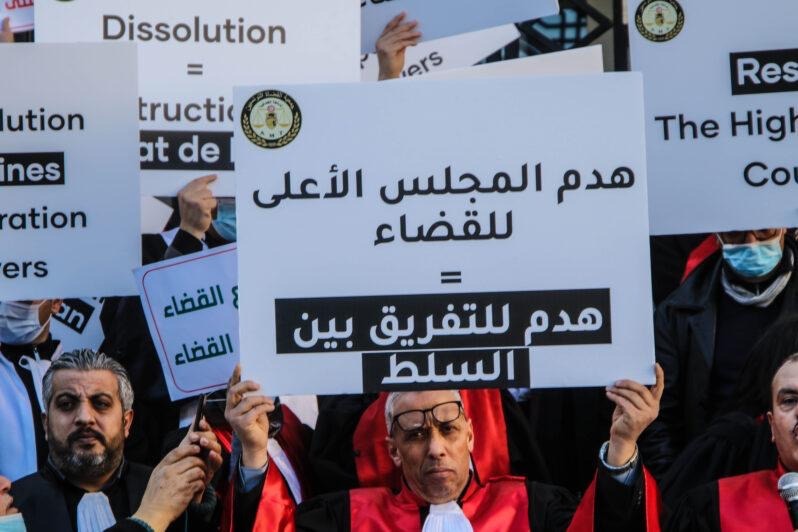
Judges reacted with anger to a recent comment by the justice minister, who declared that Tunisia has no need for a Supreme Judicial Council. They described her remarks as shocking and profoundly troubling.
The association accused the minister of denying the seriousness of the harm inflicted on judicial independence through her direct involvement in the transfers, promotions, and disciplinary measures of criminal court judges. It said these actions were carried out through unlawful administrative memos.
The judges stressed that no judicial system can be independent or credible when the executive branch controls professional decisions and when no autonomous council exists to oversee their careers and shield them from political intrusion.
The association reiterated the urgent need to establish an independent Supreme Judicial Council in line with international standards. It argued that such an institution is essential to protect judges from executive overreach and to restore balance among the branches of government.
The statement concluded with a stark warning. It said the past few years have shown that the absence of this constitutional body has had serious consequences for justice and for the protection of rights and freedoms.
A Decree that Shook the System
In February 2022, President Kais Saied issued a decree that dissolved Tunisia’s Supreme Judicial Council, declaring that the body belonged to the past. The move came after months of blistering attacks on judges, during which he repeated that he would not allow what he called a state ruled by judges but rather judges who serve the state.
Saied accused the judiciary of dragging its feet in corruption and terrorism cases and insisted that deep reform was long overdue. He argued that judges hold a function within the state rather than an independent authority. One month before the dissolution, he revoked all financial privileges granted to members of the council.
The Supreme Judicial Council is a constitutional institution tasked with ensuring the proper functioning and independence of the judiciary, overseeing discipline, and handling promotions. Its removal has fueled accusations that Saied is consolidating unchecked power after gathering every branch of authority into his own hands and rejecting dialogue with political parties.
Tunisia has been gripped by political turmoil since July 2021, when Saied froze the parliament’s powers, dismantled the constitutional oversight body, issued laws through presidential decrees, dismissed the government, and appointed a new one. Most political forces reject these exceptional measures and have labeled them a coup against the constitution. Many have since rallied under the National Salvation Front led by Ahmed Nejib Chebbi.
In this climate, the Arab Network for the Independence of the Judiciary, launched in July 2025 and made up of fifteen rights groups from six Arab countries, warned of systematic attacks on the Tunisian judiciary. It criticized the erosion of safeguards that protect judges and said they now operate under a climate of fragility and fear. The network pointed to the year-long paralysis of judicial transfers caused by the executive branch after courts ordered the reinstatement of judges who had been summarily dismissed. It stressed that the crisis surrounding the Supreme Judicial Council remains unresolved.
A Deliberate Campaign
Legal researcher Karim Marzouki said the council has been absent for a second consecutive year after the interim council was effectively frozen through deliberate attempts by the executive to manufacture vacancies.
“This has prolonged the exceptional state of affairs while removing a core guarantee of judicial independence,” he told Al-Estiklal.
“The Justice Ministry now manages transfers, appointments, and the reclassification of judicial positions through administrative memos that bypass established procedures.”
“This system has caused confusion inside the courts and turned judges into hostages of ministerial directives that shape their career paths,” he added.
Marzouki warned that judges have even lost their right to file administrative objections when annual promotion or transfer lists are published, which has deepened their vulnerability and allowed the ministry to exert direct control over their professional trajectory.
“This approach confirms that the executive branch has tightened its grip on the judiciary while publicly insisting that it respects judicial independence.”
The Association of Tunisian Judges already condemned the use of administrative memos in a September 2025 statement, saying the tool had been used to remove certain judges from sensitive cases and replace them with others favored by the authorities, according to the researcher.
Marzouki argued that the Justice Ministry’s approach reflects a clear and systematic strategy aimed at intimidating judges and judicial officials in order to bend them to the political agenda of those in power.
Intervention Like Never Before
A September 26, 2025, analysis in the Tunisian magazine Alpheratz argued that President Kais Saied’s battle with the judiciary did not start with the dissolution of the Supreme Judicial Council but dates back to the very first days of his presidency.
According to the publication, Saied began by questioning the integrity of judges and criticizing the slow handling of major cases. He then moved steadily to shrink the role of the judicial branch and recast it as a public service operating under the executive.
Saied soon became Tunisia’s sole lawmaker, issuing a stream of presidential decrees that reshaped the justice system to fit his vision. This included dismissing dozens of judges, jailing others, and asserting full control over appointments, benefits, and promotions.
The magazine described the current situation as a scene without precedent in Tunisia’s history. Not even the eras of Habib Bourguiba or Zine el Abidine Ben Ali witnessed this level of interference. Both leaders punished dissenting judges through transfers or withdrawal of privileges, the magazine noted, but neither dismantled the institutional framework of the judiciary in the way the current president has.
The analysis recalled that the 2011 revolution placed a strong focus on protecting judicial independence. As a result, Tunisia adopted a new constitution in January 2014 recognizing the judiciary as an independent branch of government. The constitution strengthened institutional safeguards and led to the creation of a new Supreme Judicial Council empowered to appoint judges and oversee their performance.
But as Saied expanded his exceptional measures, the magazine said presidential decrees became a tool to consolidate his authority. They allowed him to rewrite the rules of the state through laws that bypassed any legislative oversight.
One of these was Decree 117, which suspended key articles of the 2014 constitution and granted the president the power to issue unchallengeable legislative decrees across all areas without returning to parliament.
These decrees soon reached the judiciary itself. They moved beyond administrative or financial matters and targeted the position and function of the justice system. This culminated in the dissolution of the Supreme Judicial Council and its replacement with an interim body under the direct control of the president.
The magazine concluded that Saied has transformed the judiciary from a relatively independent institution into an administrative arm of the presidency. He tightened security control, ordered the arrest of judges who opposed him, and pursued them with heavy political charges such as threatening state security, plotting a coup, or planning acts of terrorism.
A Dangerous Squeeze
The state of Tunisia’s judiciary has grown so alarming that the National Council of the Tunisian League of Human Rights issued a blistering statement on November 23, 2025. The group said the country is witnessing a deliberate escalation aimed at stripping away rights and freedoms, choking civil and civic activity, and accelerating a wave of political trials and prosecutions for opinions that fall far short of any fair trial standard. It warned of a broad deterioration in the lives of ordinary Tunisians.
The League condemned what it described as the unchecked expansion of executive power under a presidency that has sidelined both the legislative and judicial branches while allowing core state institutions to atrophy, including the Constitutional Court and the Supreme Judicial Council.
The group also rebuked the authorities for using the courts as a political tool by obtaining judicial orders that suspended the activities of several associations working on women’s rights, children’s rights, and social and economic justice.
It denounced the rapid rise in politically motivated trials and prosecutions of dissent in recent days, arguing that they lack the most basic conditions of justice. These actions, the League said, are political at their core and form part of a broader effort to shrink civic and political space, target activists, and eliminate intermediary bodies in order to silence independent voices.
The League also took aim at what it described as dangerous and irresponsible remarks by the justice minister. These comments either demeaned hunger strikers by questioning the legitimacy of their protest or dismissed the establishment of a Supreme Judicial Council as pointless. The organization said these statements amount to a denial of judicial independence and a breach of the constitution and the legal framework governing the judiciary.
It urged the authorities to move quickly to establish both the Constitutional Court and the Supreme Judicial Council to protect rights and freedoms and safeguard judicial independence.
Lawyers Take a Stand
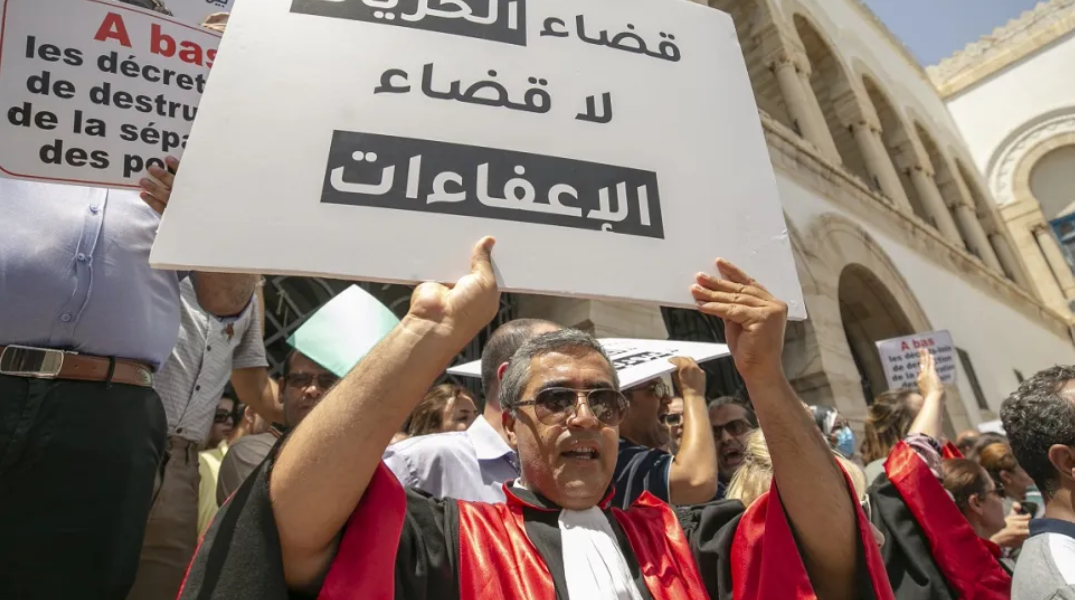
The executive branch’s grip over the judiciary has shaped rulings in several cases targeting critics and political opponents, prompting lawyers to stage a public protest. The Tunisian Order of Lawyers expressed shock and deep rejection of recent appellate verdicts in the case known as the “conspiracy case.” It called the sentences political, harsh, and detached from any notion of justice and said they reveal the depth of the crisis that President Saied has imposed on the Tunisian judiciary.
The case traces back to a brief police memo sent to the Justice Ministry on February 10, 2023. It alleged that a group of individuals intended to conspire against domestic and foreign state security. Based on that memo, judges issued arrest warrants for politicians, rights figures, business leaders, and former officials who were taken from their homes late at night without being caught in any act, according to their lawyers.
Among the detainees are senior figures from the Ennahda movement, such as Nourredine Bhiri and former leader Abdelhamid Jelassi, as well as prominent members of the opposition’s National Salvation Front, including Jaouhar Ben Mbarek and Ridha Belhaj.
The arrests also swept up party secretaries general, among them Issam Chebbi of the Republican Party, former Democratic Current chief Ghazi Chaouachi, and National Salvation Front leader Nejib Chebbi.
All defendants face charges that include forming a terrorist organization, espionage, and endangering national and food security. Their defense teams categorically reject the accusations and describe them as a mechanism to sideline the opposition.
The Tunisian Order of Lawyers said in a statement on Sunday, November 30, 2025, that the judicial chamber handling the case deliberately issued its verdict without delay and without examining the core motions submitted by the defense. The association said this showed a clear intent to close the file at any cost, even if it meant overriding the rights of the accused.
The defense team revealed that it had filed motions to challenge several members of the chamber, yet it was denied full access to the case file and could not even confirm how detained defendants were summoned or transported for their remote hearing from Mornaguia Prison.
The association said the proceedings unfolded with none of the basic guarantees of a fair trial. There were no interrogations, no confrontations, no pleadings, and no physical presence of defendants before the court. It described the process as a flagrant violation of the constitution and the law, a stark reflection of the collapse that has overtaken the judiciary as the executive maintains control and prevents the completion of the interim Supreme Judicial Council.
The Tunisian Order of Lawyers placed direct responsibility on the authorities, accusing them of using the courts as a tool for political elimination. It expressed full solidarity with the detained lawyers and with all those who have been sentenced because of their political positions.
It called for an immediate halt to these measures and for the release of all detainees, stressing that this repressive course can only deepen Tunisia’s internal suffocation. According to the association, this is precisely the path that Kais Saied insists on pursuing to silence opposition and push the country into further isolation.