‘Green Rafah’: Humanitarian Haven or Another U.S.–Israeli Scheme to Isolate Palestinians?

“The idea of social sorting or demographic engineering is bound to fail before it even gets off the ground.”
In late November 2025, Rafah in southern Gaza returned to the center of public debate, not only as a devastated city on Egypt’s border but also as the label for a new Israeli-American plan meant to isolate Palestinians.
“Israel” has unveiled a proposal to build a new city called “Green Rafah,” a move seen as an attempt to sidestep key obligations in the second phase of the ceasefire agreement signed on October 10, 2025.
What’s the story behind this city “Israel” is racing to build? What does “Tel Aviv” hope to achieve, and how is it another attempt to dodge its commitments, especially rebuilding the devastated Gaza Strip?

Behind the Project
At the heart of the plan is what “Israel” describes as a “humanitarian city” to be built east of Rafah, inside what is known as the yellow zone. This area makes up 53 percent of the Gaza Strip and falls under Israeli Occupation control according to the most recent ceasefire agreement.
According to the Israeli channel i24 News, the United States has proposed creating the city under the name “Green Rafah,” marketing it as a model for a “city of hope” in contrast to what it calls “old Gaza,” which remains under the control of Hamas.
The project is planned along the Philadelphi Corridor on the border with Egypt, in the heart of Rafah. The Israeli Occupation army destroyed and occupied the city in May 2024, and its crossing has stayed closed and under Israeli authority even after the ceasefire was signed.
The channel explains that residents of the new city would be Palestinian civilians, with the exception of Hamas members and other armed factions.
In the American and Israeli narrative, the stated aim is to create “safe communities” for civilians who would live outside the reach of Hamas. The plan envisions temporary housing, schools, health centers, and jobs linked to debris removal and reconstruction.
The blueprint divides Gaza into two zones: a green area under direct Israeli control and a red area described as Hamas aligned. The city could also involve anti-Hamas militias such as the Abu Shabab militia, which would be tasked with providing security.
Ron Dermer, “Israel’s” recently resigned strategic affairs minister, is described as the original architect of the idea. The Knesset correspondent for i24 News, Amiel Yerhi, reports that Dermer told the cabinet shortly before stepping down in November 2025 that if Hamas does not disarm, he will build a new Gaza on the Israeli side and reeducate them.
On the ground, American and Israeli reports indicate that the project has entered a stage of field preparation, although full construction has not yet begun.
The Wall Street Journal reported on November 21 that American officials at the United States civil-military coordination center in southern “Israel” confirmed the start of engineering work to remove rubble and unexploded munitions at the designated sites.
Days later, i24 News stated that the Israeli army expected to deploy heavy engineering equipment in Rafah within days in preparation for the project. The report added that preliminary work was already under way.
On November 26, the Jerusalem Post noted that military units involved in the project encountered armed men emerging from a tunnel who attacked the site, an early sign that the area is turning into a live testing ground.
“Israel’s” Channel 15 likewise reported that the army has begun removing debris in eastern Rafah as part of the preparations for construction.
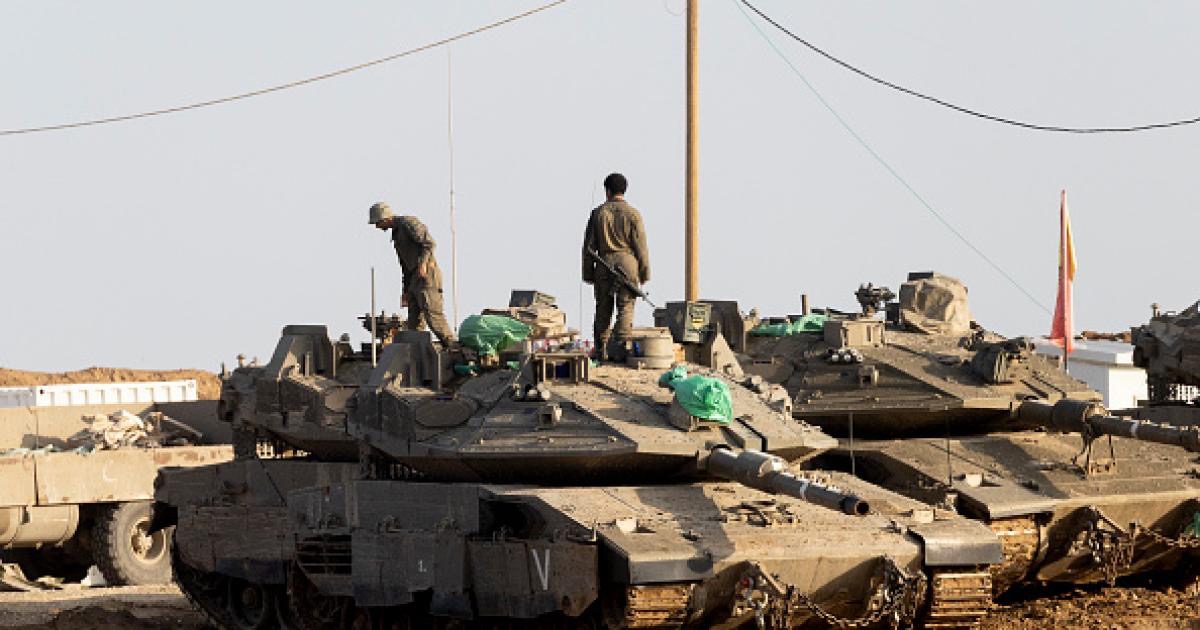
Under the current plan, the Israeli Occupation military would maintain full control over the “new city,” since “Israel” continues to reject international forces or any form of civilian administration for the Strip.
Isolation and Displacement
Behind the official talking points, fears are growing that the Israeli and American plan in Rafah is designed above all to stall the move into the second phase of the ceasefire agreement. That phase calls for a full end to the genocide, the reopening of crossings, unrestricted humanitarian aid, a transition to a civilian governing body in Gaza, the deployment of an international stabilization force, and the withdrawal of Israeli Occupation troops from the so-called yellow zone.
Analysts say the plan seeks to confine Palestinians to a tightly controlled area, then push them out of Gaza in stages. It would be a continuation of a displacement strategy that “Israel” has struggled to carry out over two years of war.
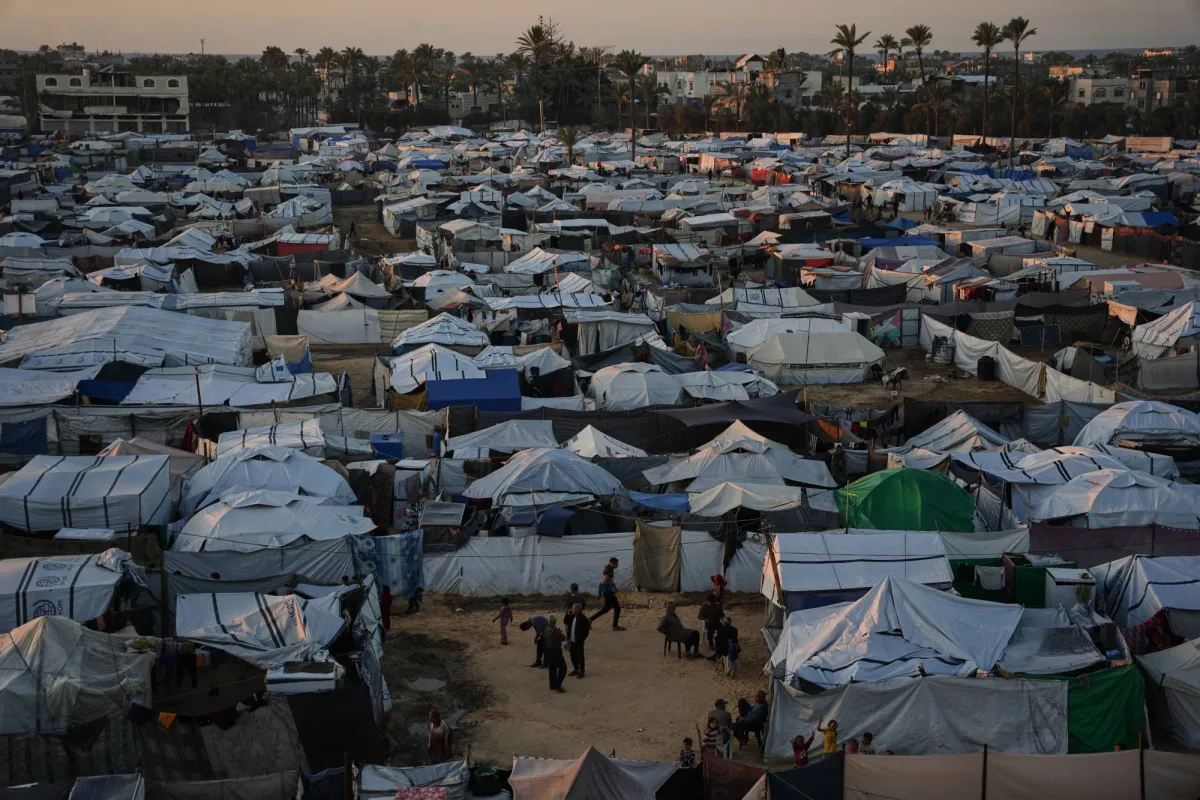
On July 7, 2025, Israeli war minister Israel Katz announced his intention to build a massive “humanitarian city” on the ruins of Rafah and move hundreds of thousands of Palestinians into it. He presented military reporters with a proposal to turn the shattered city into what he called a “city under strict military supervision,” beginning with the transfer of about six hundred thousand displaced Palestinians from the Mawasi area in the south, then eventually moving the entire population of Gaza.
By mid-July, Reuters warned that the project could turn Rafah into something akin to an isolated “human island” inside Gaza, with entry and exit controlled by military permit. The agency cautioned that such an arrangement would entrench a partitioned reality in which some areas become marginally livable under strict conditions while others remain destroyed and impossible to rebuild.
The proposal follows an earlier idea pushed by President Donald Trump, backed by Israeli Prime Minister Benjamin Netanyahu, to move Gaza’s population to third countries as part of a reconstruction plan.
Current Israeli thinking casts “New Rafah” as an enclave east of the destroyed city, where tens of thousands of Palestinian civilians would be relocated after passing a detailed “security screening.”
International relief experts warn that this amounts to coerced resettlement inside occupied territory, even if it is framed with humanitarian language.
Such geographic sorting could push thousands of Palestinians to accept forced relocation simply to access basic services. It would not be a voluntary choice, particularly if the Israeli Occupation cuts aid to the rest of the Strip.
Demographically, Reuters reports that population experts see the plan as an early step toward reshaping Gaza’s southern landscape. It would empty certain areas while concentrating people in small zones, reducing Rafah’s population density and making it far harder for displaced residents to return to their original neighborhoods in the future.
‘Humanitarian Bubbles’
Palestinian political analyst Ibrahim al-Madhoun argues that the “Green Rafah” project, also called the “new Gaza,” is essentially an attempt to reshape the Strip by creating what he calls humanitarian bubbles and quiet, resistance-free zones. These enclaves, he says, would enjoy stability under Israeli oversight and could eventually be run by international forces.
“The plan has no cultural, social, or political grounding and cannot take root in Palestinian reality. Palestinian society has always rejected internal fragmentation, whether geographic or social,” he told Al-Estiklal.
“The notion of dividing Palestinians into a resistant community that clings to its rights and a compliant one that trades peace for abandoning national responsibilities is an imported concept. It has no basis in Palestinian identity, experience, or values and contradicts one of the most fundamental traits of Palestinian society.”
Al-Madhoun pointed out that a version of this idea was tested years earlier under the supervision of American General Keith Dayton, with direct Israeli involvement. Washington and “Tel Aviv” tried then to cultivate a new Palestinian generation that would coexist with the Israeli Occupation and detach from its national duties. The outcome, he said, was the opposite.
Dayton, known to Palestinians for his role as security coordinator between the Palestinian Authority and “Israel” from 2005 to 2010, was tasked with reshaping Palestinian police and security forces to serve Israeli interests over those of their own public in the West Bank.
But, al-Madhoun said, from that same environment emerged a more aware, determined, and defiant generation that led the 2015 uprising in the West Bank and Occupied Jerusalem, sparked by repeated settler incursions into the al-Aqsa Mosque compound, along with later waves of confrontation.
He emphasized that Washington and “Tel Aviv” fail to grasp that the Palestinian social fabric is resistant to artificial sorting. Every street contains supporters of Hamas, Fatah, left-wing factions, and independents. Even within a single family, multiple political identities can exist side by side.
“Hamas is not an isolated movement operating in remote villages that can be separated or dismantled. It is organically rooted in its society, emerging from its social environment and intertwined with every neighborhood, camp, and extended family,” according to the analyst.
“For this reason, the idea of social sorting or demographic engineering is bound to fail before it even gets off the ground.”
Al-Madhoun believes “Israel” itself, regardless of American proposals, has no real interest in a stable Palestinian environment, even one painted in humanitarian colors. The Israeli Occupation is not committed to sustaining calm or creating a model Palestinian who feels secure under its control.
In his view, “Israel” seeks only to entrench new rules of engagement that give it full freedom of movement, restrict Palestinians, and keep them within a ceiling set by “Tel Aviv”.
The overall picture, he said, remains murky, unstable, and unsettled. The plans presented so far are shapeless ideas without real foundations.
For al-Madhoun, any attempt to impose a “new Gaza” without resistance, or to build isolated communities that make peace with the Israeli Occupation, will run straight into the awareness, resilience, and deep national identity of the people.
“Palestinians will block these schemes as they blocked those before them and will confront any attempt to divide them or reshape them according to an American or Israeli vision.”
Sources
- U.S. Pushes a Hamas-Free ‘Green Zone’ in Gaza
- 'Green Rafah': Fury as IDF begins rebuilding Rafah before Hamas disarms
- Amid heated debate, no real plan for Israel's 'humanitarian city' in Gaza
- Who Is the Senior Israeli Official Behind the Push to Build 'Green Rafah'? [Arabic]
- ‘Rafah al-Khadra’: A New City to Be Built for Gaza Residents Opposing Hamas in Israeli-Controlled Territory [Hebrew]