A Serious Breach: How Did Muslims’ Personal Data in France End Up with Israeli Intelligence?
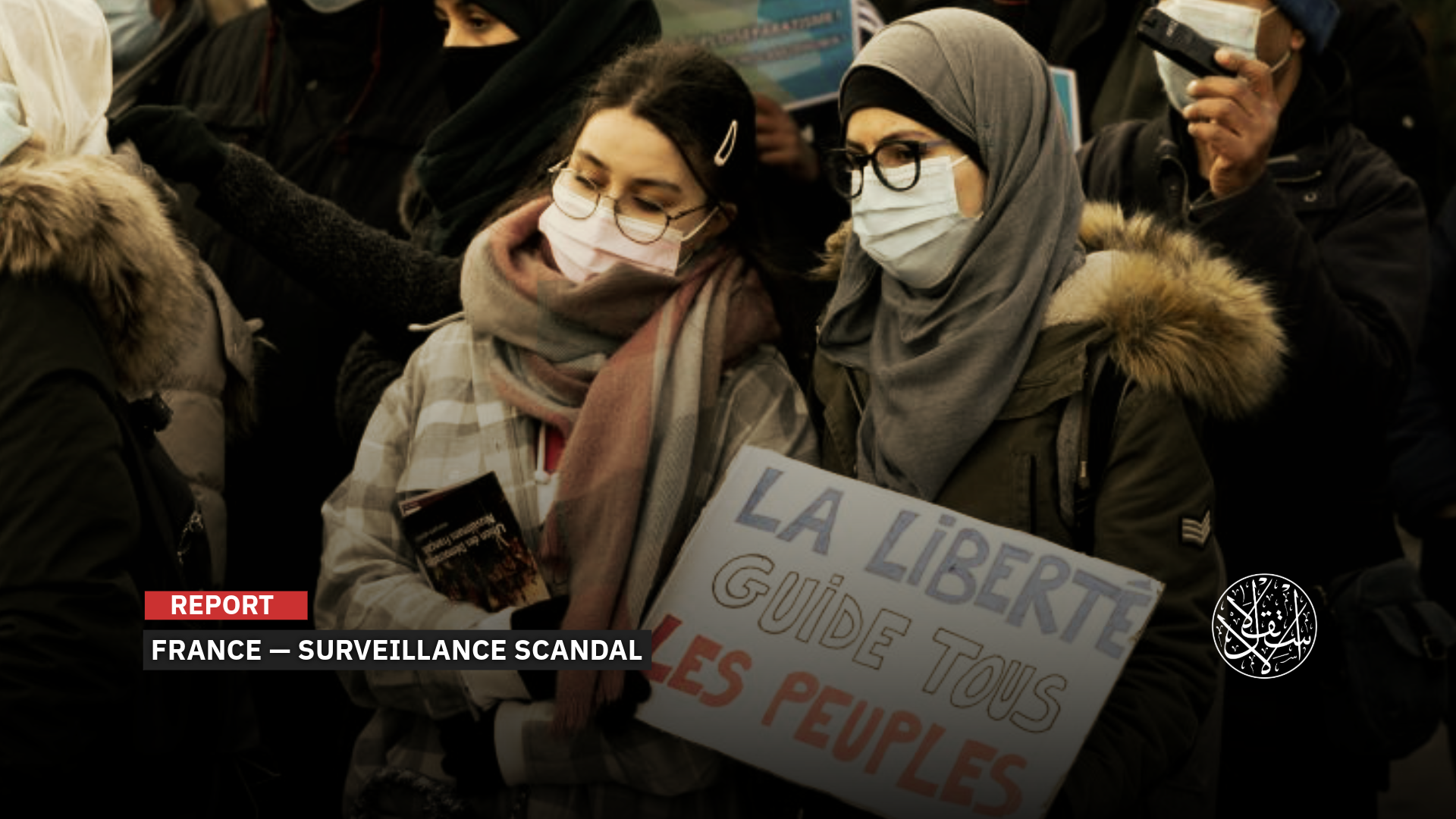
The Representative Council of Jewish Institutions in France (CRIF), a politically influential body with wide institutional ties.
In a development touching the status of millions of Muslims in France, a fierce public controversy has erupted after formal allegations, revealed by Islamic organizations, accused the Representative Council of Jewish Institutions in France (CRIF) of overseeing a systematic effort to collect sensitive information about Muslims.
The shock stems from claims that this data was passed to the Israeli intelligence services, with the involvement of French political and security figures, significantly heightening the gravity of the affair.
The story began with the leak of a video featuring a French businessman, yet within hours it spiralled into a political and security storm, given its links to highly sensitive issues inside France, including the state’s relationship with Islamic and Jewish religious institutions, the rights of Muslim citizens, and rising accusations over the extent of Israeli influence within French institutions.
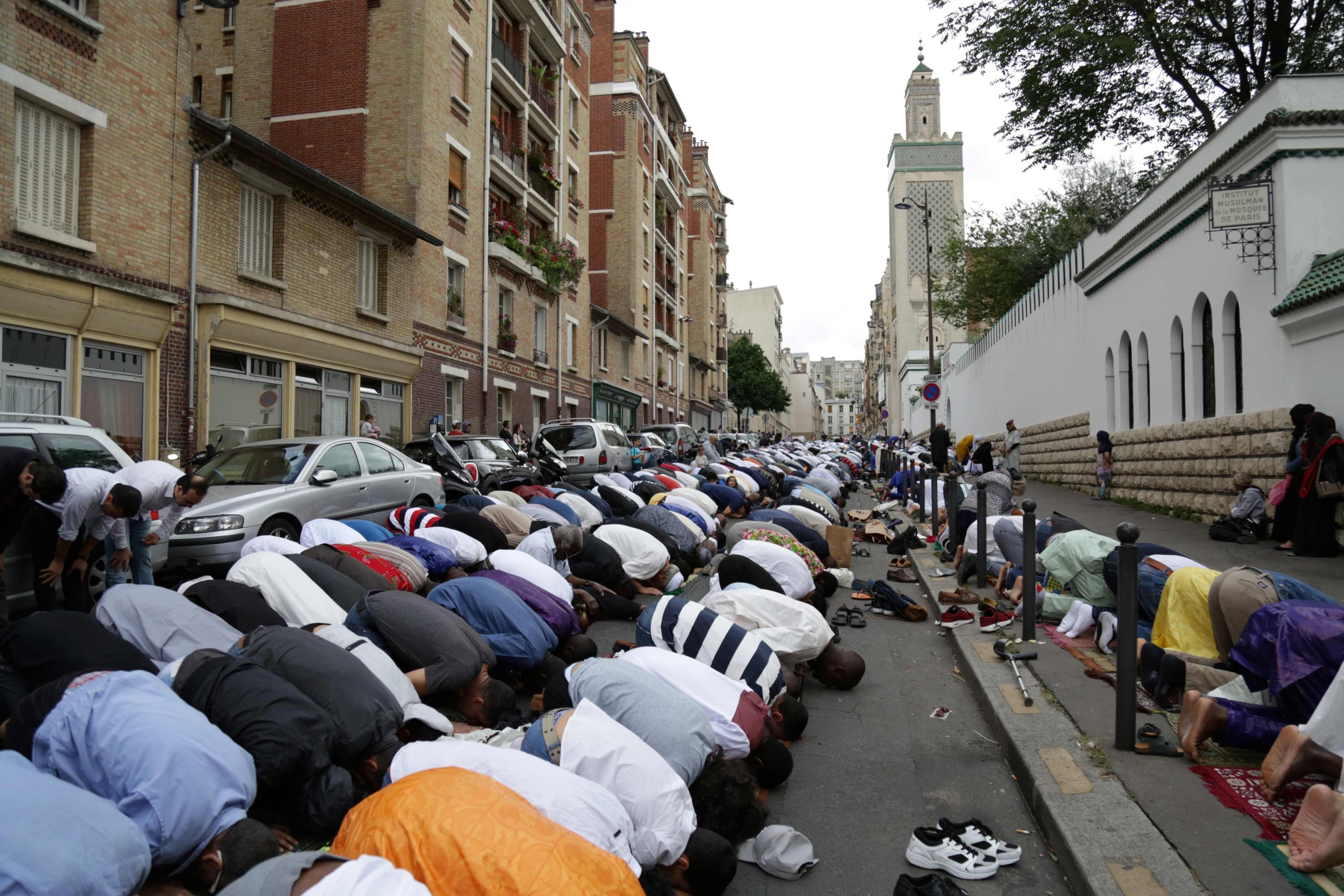
The Outbreak
According to a statement issued on November 26, 2025 by the French Council of the Muslim Faith, what has taken place goes far beyond a “private investigation”, and represents a dangerous precedent that touches the sovereignty of the state and the privacy of millions of Muslims in France.
The council argues that what has been revealed reflects a troubling shift in political attitudes toward Muslims, set against the backdrop of President Emmanuel Macron’s policies, which in recent years have expanded under the banner of “fighting Islamic separatism”.
The crisis erupted after a video circulated of businessman and digital specialist Didier Long, in which he asserts that he was tasked in early 2023 with preparing a comprehensive strategy on behalf of the Representative Council of Jewish Institutions in France (CRIF), working in cooperation with Dov Maimon, one of the Israeli government’s leading advisers on Jewish security issues in Europe.
Long says he held direct meetings with senior officials inside French state institutions, including figures from domestic intelligence, former police officers in Seine-Saint-Denis, officials from the Directorate of Military Intelligence, as well as local elected representatives, security figures and intellectuals close to decision-making circles.
According to his account, this work produced a full report on Muslims in France, containing personal, social and demographic data, along with assessments of the “potential threat” they might pose to the Jewish community.
The most alarming point came, Long said, when he openly acknowledged that he had delivered the entire report to Israeli intelligence services.
Were French Institutions Involved?
According to the leaks, the alleged report classified Muslims in France as a potential threat to the Jewish community, concluding that around 150,000 Jews living in areas with Arab, Muslim, Turkish or Pakistani residents might be “at risk”.
Observers argue that this language is not merely a security assessment, but part of a broader discourse of collective stigmatization that undermines the foundations of French coexistence, and provides political cover for the restrictive policies imposed on the Muslim community since 2020.
The French Council of the Muslim Faith has condemned this rhetoric, saying it reflects a volatile political climate fuelled by far-right narratives, in which Muslims are viewed as “inherently suspect bodies” rather than full citizens with equal rights.
The council raised a series of questions that have begun to echo loudly across political and media circles:
In whose name, and for what purpose, were data concerning French citizens collected for the benefit of Israeli intelligence? And who authorized, coordinated or facilitated this process?
The council’s statement notes that the nature of the information reportedly involved, including personal and demographic data and contacts with security officials, requires an urgent official investigation to determine how it was gathered and how it moved from French territory to foreign intelligence services.
The council has not ruled out filing legal complaints against those involved, as well as against any public official found to have facilitated, participated in or been aware of the transfer of data.
This highlights one of the most sensitive points in the case: the suspicion that political, administrative or security actors in France may have been implicated by providing information, opening doors inside public institutions or granting access to sensitive data.
Such allegations place the French interior ministry at the center of the storm, since the law stipulates that sensitive data must be held exclusively within state institutions.
This raises the possibility that an internal actor may have enabled contact with a third party working on behalf of “Israel.”
As for the Representative Council of Jewish Institutions in France (CRIF), known for its political influence and extensive connections within the state, it now faces one of the biggest tests of its representative credibility, amid accusations that it leveraged its position to exercise influence beyond the bounds of traditional civic advocacy.

Call for an Investigation
The French Council of the Muslim Faith called on the interior ministry to launch a full and transparent investigation into the case, warning that the matter “cannot be handled through press statements, but through serious judicial action, because what has happened affects social security and the rights of millions of Muslim citizens”.
Observers say any official hesitation in addressing the file could be interpreted as silent complicity or an attempt to contain the crisis given its political sensitivity, especially as the French government has for years faced sharp criticism over its policies toward Muslims under the banner of “fighting separatism”, accompanied by the closure of associations, the dissolution of religious institutions and tighter surveillance of mosques.
On December 5, 2025, a report by France’s Defender of Rights revealed a troubling rise in religious discrimination across French society.
According to the report, one in three Muslims surveyed said they had experienced some form of discrimination in recent years, a sign of the depth of the challenges facing the Muslim community.
France is home to the largest Muslim population in Western Europe, formed historically through waves of migration from its former North African colonies. Despite this, French law prohibits the collection of official data on the basis of race or religion, making it extremely difficult to measure religious discrimination or track racist patterns.
Claire Hedon, the head of the authority, based her report on a 2024 survey of 5,000 participants representing different segments of French society.
The survey found that 7 percent of respondents said they had faced religious discrimination in the past five years, compared with 5 percent in 2016.
The figures rise sharply when looking specifically at Muslims, 34 percent of whom said they had experienced discrimination, compared with 19 percent among followers of other religions such as Judaism or Buddhism, and just 4 percent among Christians.
The report warns that the persistence of such practices could lead to the systematic exclusion of large segments of Muslims, deepening feelings of marginalization and opening the door to more acute social tensions in the future.
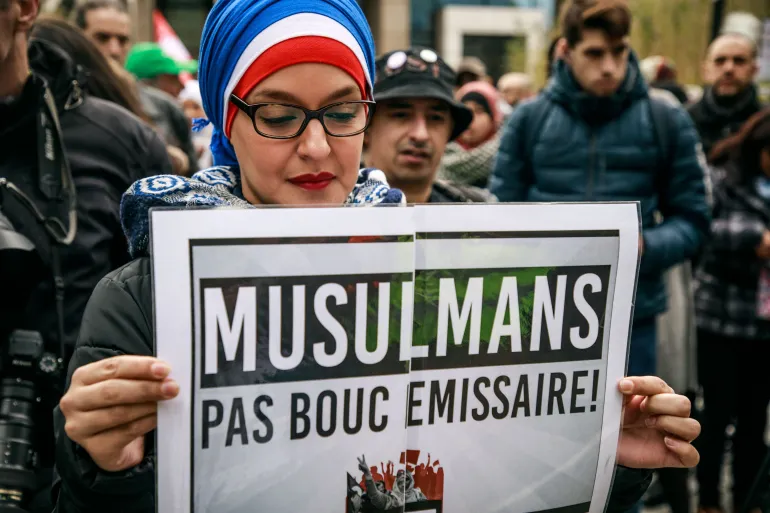
Engineering Islam in France
The Algerian journalist Naceur Ben Mohamed, who lives in France, told Al-Estiklal that the explosive controversy over allegations of espionage targeting Muslims cannot be separated from the political and security trajectory adopted by Paris since 2017 in its handling of the Muslim presence.
He explained that the French state has gradually shifted from a discourse focused on “combating extremism” to an attempt to reengineer French Islam itself, by encouraging certain currents and marginalizing others, under a broad security approach framed as “community protection”.
Ben Mohamed noted that recent years have seen key turning points reinforcing this shift, most prominently the 2021 “anti-separatism” law, which marked a fundamental rupture in the state’s relationship with the Muslim community.
This shift, he said, also included the dissolution of hundreds of Islamic and charitable associations on grounds of non-compliance with republican standards, the imposition of strict financial and administrative oversight on mosques, and the monitoring of educational institutions connected to the Muslim community.
This unfolded alongside a sustained media amplification of the issue of “political Islam”, used to justify government measures.
In the same context, the role of Jewish organizations close to “pro-Israel” lobbying networks has grown, he said, with these groups wielding significant influence in shaping France’s security and representational approaches.
Ben Mohamed added that this climate created an ideal environment for bodies such as the Representative Council of Jewish Institutions in France to capitalize on the moment, recasting themselves as security intermediaries between the government and the Jewish community, benefiting from the deepening ties between Paris and “Tel Aviv,” which have become more entrenched under Emmanuel Macron.
He argued that the alleged espionage affair is not an isolated incident, but part of a broader landscape that places millions of Muslims under constant scrutiny and grants organizations with foreign connections an enlarged role in shaping the state’s security perceptions toward them.
Ben Mohamed stressed that the case, regardless of the outcome of any investigation, has triggered a genuine crisis of trust between the French state and its Muslim citizens.
A community that has spent years under the pressure of highly charged political and media rhetoric now faces the prospect that its personal data may have been passed on to Israeli intelligence services, which have a long record of operations targeting Arabs and Muslims globally.
“The most dangerous question today remains this, will the French government treat this case as a foreign breach targeting part of its own population, or will the matter be shelved like dozens of controversies that once caused an uproar and then vanished in silence?” he concluded.
Sources
- Accusations Against Jewish Organizations in France of Spying on Muslims and Transferring Their Data to Israel [Arabic]
- One Third of France’s Muslims Report Experiencing Discrimination [Arabic]
- “CRIF”: The Israeli-Aligned Voice Shaping French Politics [Arabic]
- How Did the Zionist Lobby Shape France? Its Networks and Figures Said to Influence the State and Its Decisions [Arabic]