Who Stands to Gain and Who to Lose? Qatari Support for Libyan Dialogue and the Haftar Camp’s Response
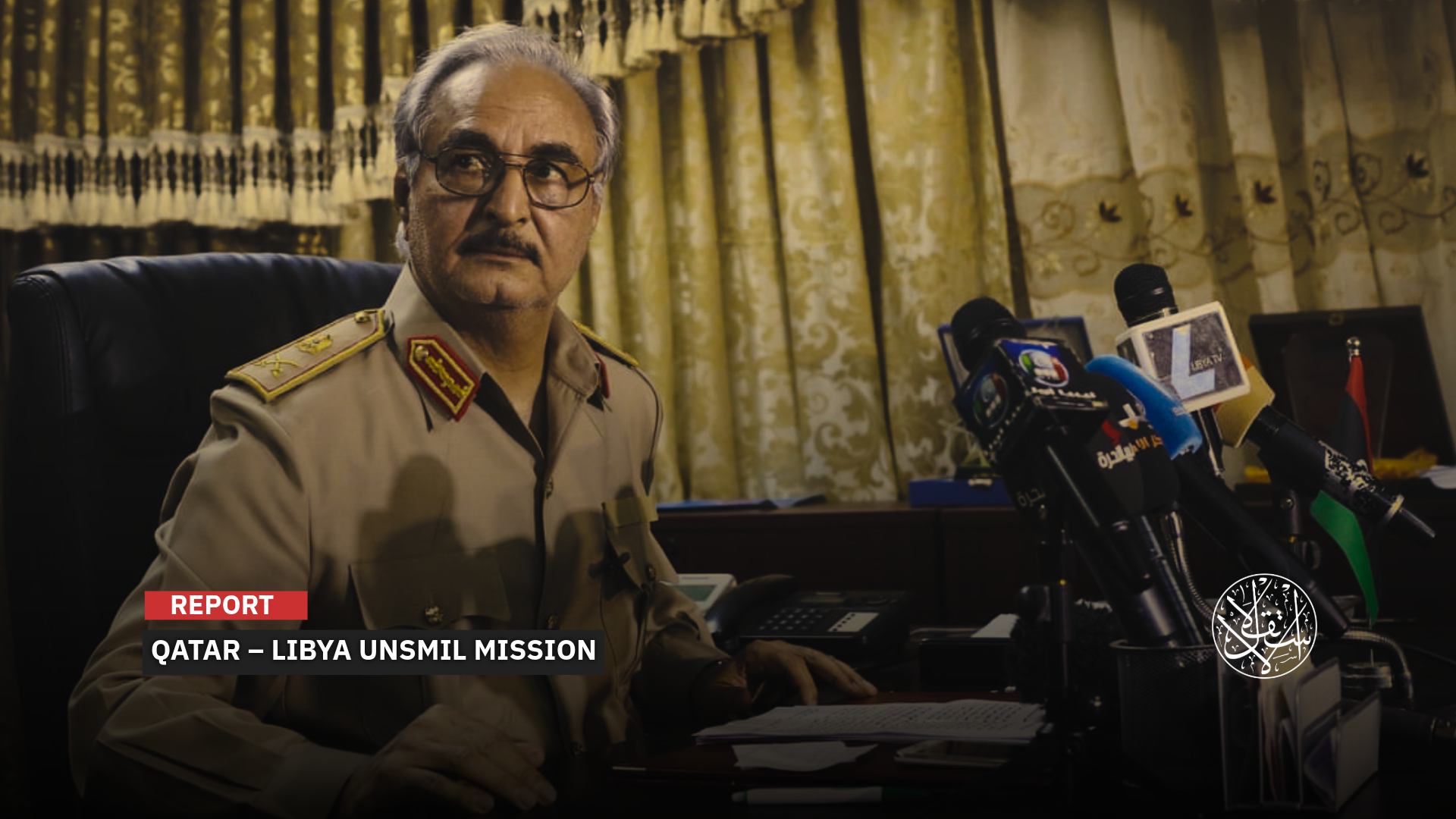
Qatar has pursued a diplomatic approach in line with Security Council decisions.
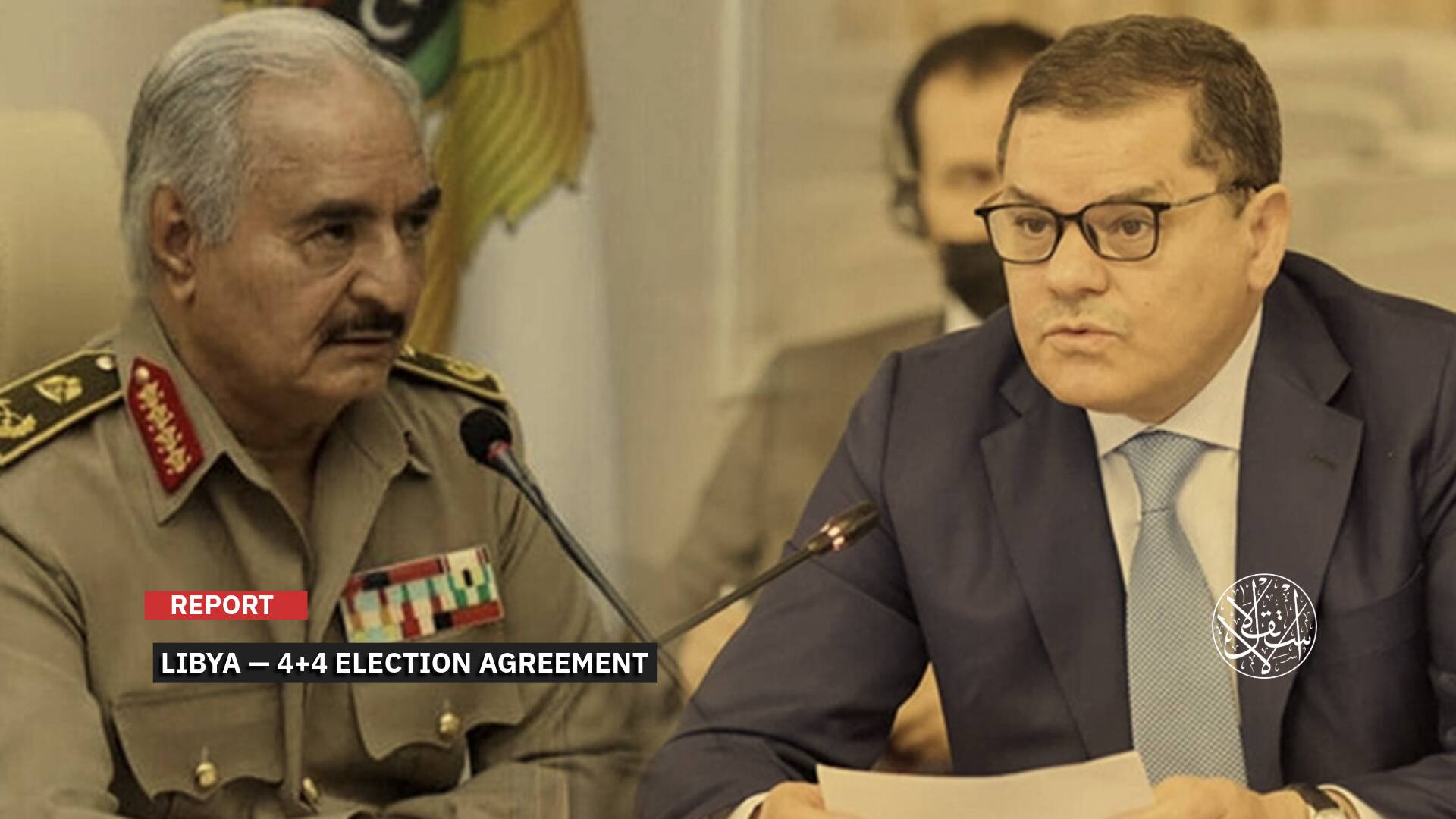
No sooner does one crisis subside than another swiftly emerges. Such has become the defining headline of Libya’s political landscape, mired in deep institutional and political fragmentation, a country split between internationally recognized authorities in the west and forces loyal to the renegade militia general Khalifa Haftar in the east.
The latest controversy was sparked by an announcement from the UN secretary general’s special representative to Libya, Hanna Tetteh, revealing that Qatar would fund a project to support Libyan dialogue as part of efforts to advance a UN-backed roadmap for a political settlement.
The move has reignited familiar disputes, laying bare once again the fragility and mistrust that continue to overshadow attempts to steer the country toward stability.
Divergent Reactions
In a statement issued on November 17, 2025, the UN Support Mission in Libya (UNSMIL) said that Hanna Tetteh welcomed the signing of a funding agreement with the Qatari government.
The deal, concluded in Tripoli by Qatar’s ambassador to Libya, Khaled al-Dosari, and the UNDP’s resident representative, Sophie Kemkhadze, is intended to bolster a program aimed at supporting Libya’s political dialogue.
According to the mission, the funding forms part of “a joint project to support political dialogue and strengthen civic participation”.
The UN said the contribution would “reinforce the organization’s efforts to implement the roadmap facilitated by UNSMIL”, which Tetteh presented to the UN Security Council on August 21, 2025.
The initiative is also expected to “expand broad-based civic engagement in support of a political process led and owned by Libyans themselves”.
the Qatari embassy in Tripoli said in a statement that Doha had provided financial support to the UN mission “as part of its contribution to developing development programs and efforts to strengthen stability”.
Ambassador al-Dosari said the support “reflects Qatar’s belief in the vital role of the United Nations in advancing the political process, strengthening institutions, and implementing humanitarian and development programs across various regions”, according to the same source.
The UN announcement triggered widespread criticism from the authorities in eastern Libya. The government there, headed by Osama Hammad and based in Benghazi, declared it would suspend all forms of engagement and coordination with the UN Support Mission in Libya.
In a statement issued on November 17, 2025, the eastern government accused the mission of “straying from the principle of Libyan ownership of the political process and from the will of the Libyan people and their legitimate institutions”.
It argued that “seeking external funding for political activities inside Libya without consulting any official body constitutes a violation of diplomatic norms and reflects a suspicious approach that contradicts the mission’s supposed role, raising doubts about its true intentions”.
At the parliamentary level, the Defense and National Security Committee of the eastern House of Representatives announced its “condemnation and rejection of the mission’s signing of a funding agreement for the roadmap with the Qatari government”, describing the move as “a serious breach of the principle of neutrality and professionalism” that the mission is expected to uphold in its handling of Libyan affairs.
In a statement issued on November 18, 2025, the committee characterized the step as “a blatant interference in national sovereignty”, expressing its “denunciation of attempts to internationalize the Libyan crisis through questionable instruments aimed at imposing external projects that run counter to the interests and aspirations of the Libyan people for stability and sovereignty”.
The committee affirmed its “full support for the position outlined in Hammad’s government statement”, calling for a comprehensive review of the UN mission’s role in Libya, including “a demand to reassess the continuation of its presence should it persist in exceeding its mandate and aligning with one political party at the expense of the national interest”.
At the party-political level, the “Alliance of Libyan Parties” wrote to UN Secretary General Antonio Guterres, voicing its deep dissatisfaction with the UN mission’s acceptance of external funding from the State of Qatar.
In a statement issued on November 18, the alliance said that “this constitutes a dangerous precedent and a clear violation of international rules governing the work of UN missions, and an infringement of the principle of neutrality set out in Articles 100 and 101 of the UN Charter, which affirm the independence of UN staff and their obligation to refrain from receiving any instructions or support from any member state”.
The alliance added that “this conduct also violates the UN’s financial regulations, which stipulate that mission funding must come exclusively from the UN budget or the host state under publicly declared arrangements. It also represents a fundamental breach of the principle outlined in UN Resolution 46/182 regarding the neutrality and independence of UN operations in countries experiencing conflict”.
The “Libyan Popular National Movement” also voiced its dismay over the Qatari funding agreement, stressing that “this step constitutes a dangerous precedent that undermines the neutrality of the UN mission”.
In a statement, the movement said that allowing any state or entity to provide direct funding or to enter into a political and financial partnership with the mission “opens the door to influencing the pathways of dialogue and grants the donor an advantage over other states”.
It added that “this move could obstruct the course of a peaceful solution and further deepen the climate of mistrust”.
The UN Mission’s Response
Facing mounting criticism, the UN mission said in a statement that the United Nations budget relies on assessed contributions from all 193 member states, in line with General Assembly resolutions, of which Libya is a member.
In a clarifying note, it added that “this is in addition to voluntary contributions allocated by member states for specific projects and programs. Through their voluntary contributions, donors may fund designated programs or take part in joint financing arrangements, and these programs are implemented exclusively under UN management”.
The mission stressed that all funding is subject to the UN’s global financial control system, which requires missions to adhere to unified regulations governing budgeting, procurement, and spending.
It added that this includes mandatory reporting requirements, multi-level approval mechanisms, and independent auditing to ensure that every expenditure aligns with the mission’s mandate.
The mission said this framework ensures that funds dedicated to supporting the political process remain neutral and transparent, and are managed under a unified structure that prevents misuse and preserves the integrity of UN operations worldwide.
According to the mission, no fewer than 13 countries and regional organizations have provided voluntary funding to support the political process and community engagement.
It emphasized that these financial contributions to mission programs do not grant any donor state a role in determining the direction of the political process, including the agenda, participants, or outcomes.
The mission reaffirmed its commitment to a political process that is Libyan-led and Libyan-owned, stating that its role is to facilitate an inclusive and professional platform enabling Libyans from all regions and constituencies to discuss key issues shaping a peaceful and prosperous future.
The mission also condemned all attempts to mislead public opinion by spreading false narratives, urging all Libyan parties to work together to restore authority to the Libyan people.
A Reliable Mediator
In assessing these reactions, Libyan political analyst Ibrahim al-Asifer said the UN Support Mission’s signing of a cooperation memorandum with Qatar to fund the dialogue project “carries clear political implications”.
al-Asifer told Al-Estiklal that these implications “go beyond their procedural aspect and reflect the international community’s continued view of Doha as a reliable partner in the most complex and sensitive files”.
He continued, “This step is not merely financial support for a political track, but an expression of the UN’s confidence in a Qatari role that has consistently adhered to international law and respected legitimacy”.
Since the outbreak of the Libyan crisis, al-Asifer noted, Qatar has maintained a diplomatic approach aligned with Security Council resolutions, without any recorded violations of arms embargo decisions or military support to any party.
He argued that what Qatar is offering Libya today comes within the context of an expanding international role.
“Doha has demonstrated over the past years its capacity to manage difficult, globally significant files, from mediating the historic agreement between the United States and the Taliban, to its prominent humanitarian and political role in the Gaza war, to serving as a diplomatic platform capable of bringing distant parties to the same table,” he said.
The political analyst stressed that “this accumulated experience makes Qatar a trustworthy mediator, capable of aligning with the UN track in Libya without imposing any agenda or creating new fault lines”.
He affirmed that Doha’s support for the Libyan dialogue project “does not amount to siding with one party over another, but rather reinforces the notion that a political solution deserves a genuine chance, and that the best path to resolving the Libyan conflict lies in dialogue, not in the logic of gains achieved by force or arms”.
He noted that this support aligns with the broader international outlook, which holds that Libya needs a partner who can add momentum to the UN-led process, not compete with it or deepen existing polarization.
Qualitative Value
Al-Osifer argued that in a country that has long suffered from overlapping initiatives and conflicting regional interests, Qatar’s formal entry as a supporter of dialogue offers an opportunity to restore confidence in the political process and strengthen the mediation tools capable of bringing Libyans together around a shared vision.
He noted that “having a mediator with international respect, who maintains equal distance from all sides and operates within the UN framework, contributes to creating a more stable environment and supports the possibility of reaching understandings that can be built upon”.
The analyst added that the signing of the cooperation memorandum between the United Nations mission and Qatar “represents a step that could add real value to the Libyan political track and give Libyans more space to engage in dialogue away from pressure and polarization”.
Al-Osifer concluded that this step opens the door to a more balanced international role that places Libya’s interests above all other considerations, reinforcing the idea that diplomacy, when given sufficient space, is capable of making a difference.
From another angle, Libyan writer and political researcher Mohamed Mahfoud sees Qatar’s support as neither the first nor an exception, noting that Libya receives funding from several states, including the European Union, the African Union, and others.
Mahfoud said in a televised interview on France 24 on November 18, 2025, that this support falls within the broader effort to advance the political process, something he described as acceptable and unobjectionable, since it is declared and not covert.
The political researcher stressed that the controversy surrounding the support stems from the fact that some actors hold negative positions toward Qatar due to various issues.
Mahfoud added that the structured dialogue supported by Qatar and other countries produces non-binding recommendations and does not make executive decisions.
Therefore, he said, it is Libyans who ultimately control and decide what happens in Libya, not any supporting state.
Regarding the position of Hammad’s government, Mahfoud said that it seeks to exploit the situation to perpetuate division, as it does not want the political process to move forward, which, he argued, explains its statement on the matter.
Mahfoud concluded that the priority now should be to make progress, rather than placing obstacles in the path of every initiative or idea that could contribute to advancing dialogue on the Libyan crisis.