Is Sweida’s ‘National Guard’ Steering the Region Toward Breakup and Turmoil?
“People in Sweida are simply waiting for zero hour to dismantle this gang.”
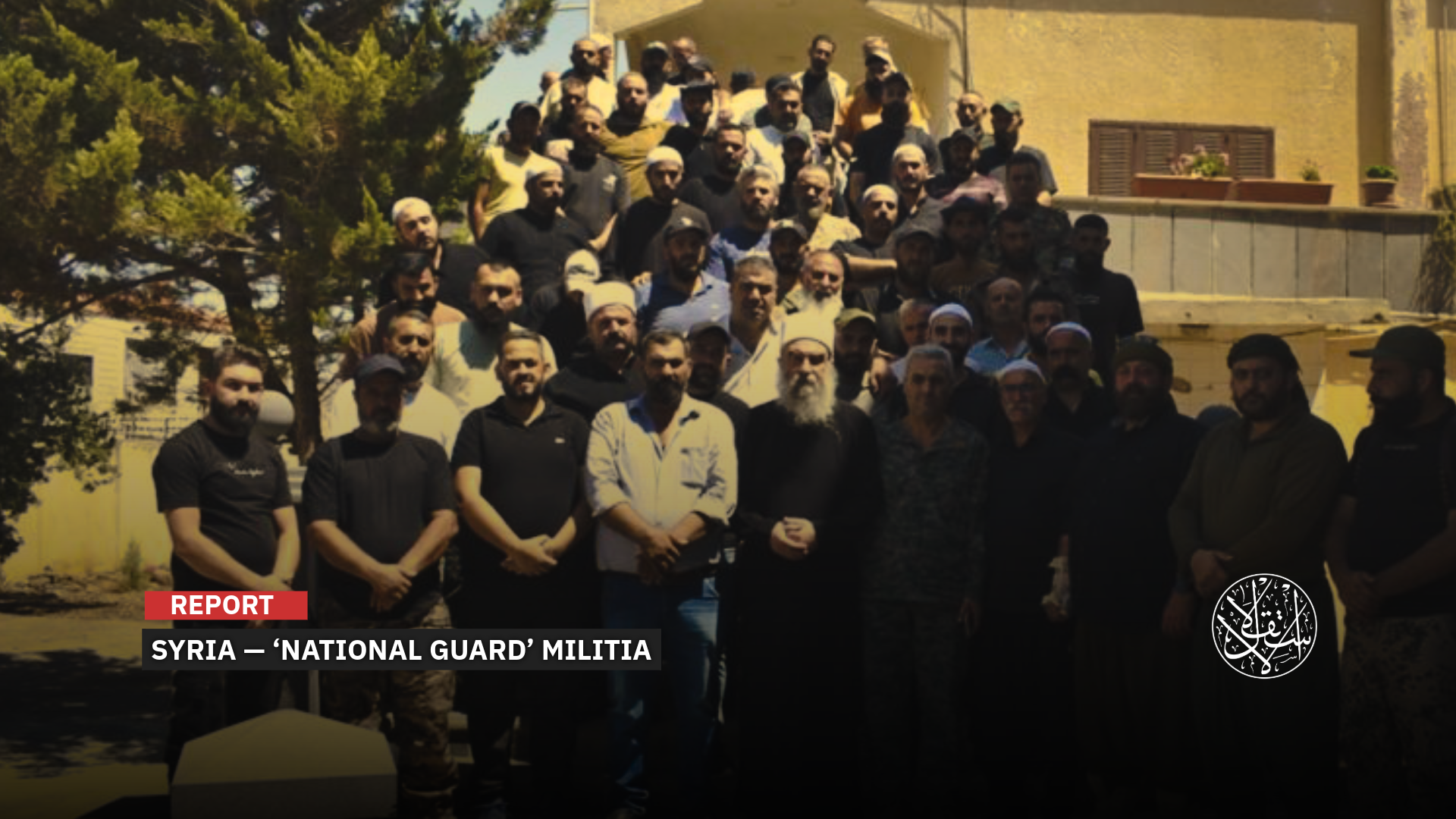
Day by day, the role of the so-called “National Guard” militia—formed by Sheikh Hikmat al-Hijri, the spiritual leader of Syria’s Druze community in Sweida—is becoming clearer, as it suppresses and detains those opposing its attempts to isolate the province from the Syrian homeland.
In its latest move against civilians, the militia’s leadership announced it had arrested figures it branded “traitors and conspirators,” touting a November 29, 2025, operation in southern Sweida as “precise,” “swift,” and “decisive.”
‘A Vile Conspiracy’
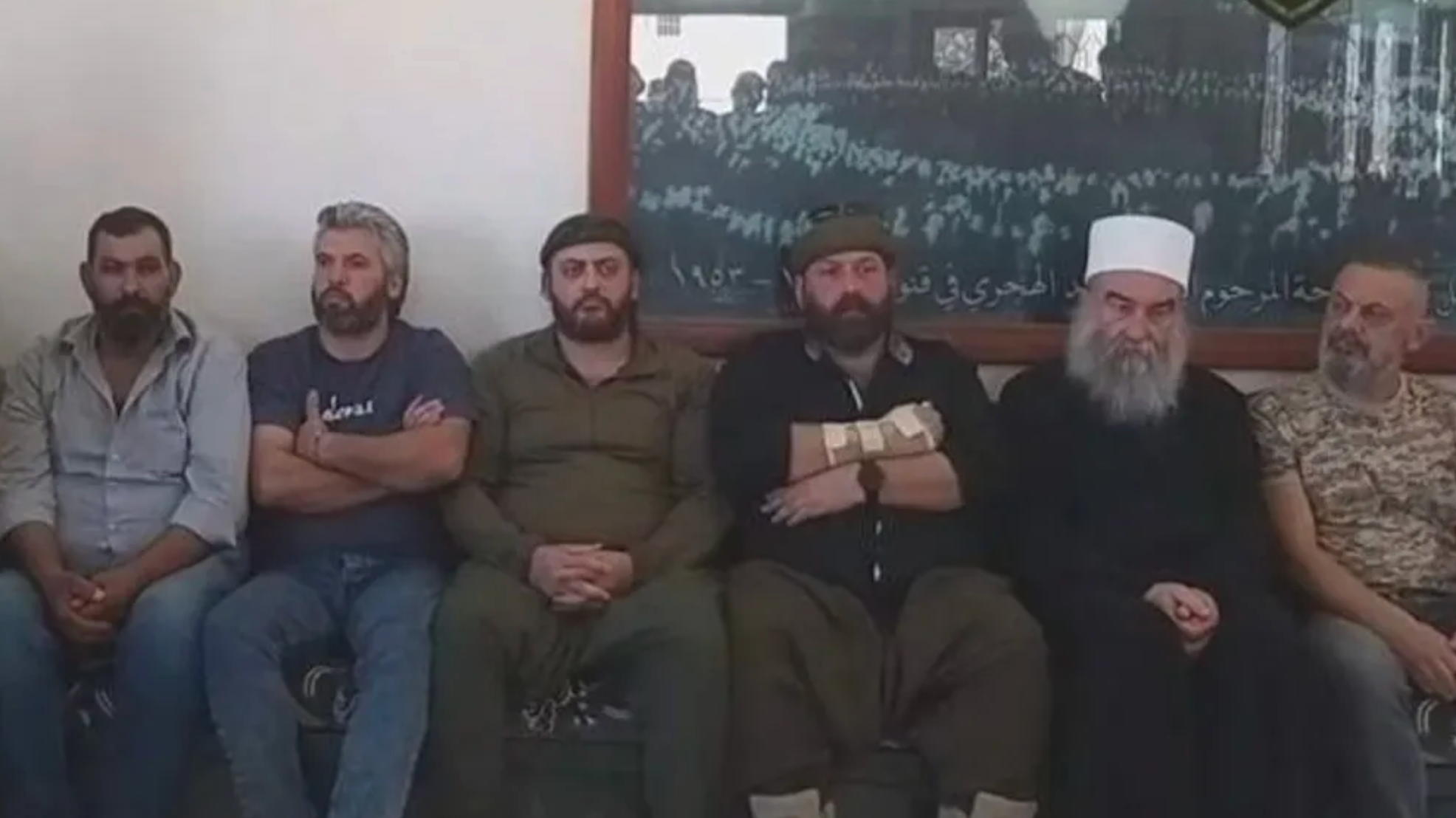
In a statement, the leadership of the “National Guard” militia claimed it had uncovered a “vile conspiracy” and an act of “high treason,” allegedly involving a group of “cowards and collaborators who sold their conscience in coordination with the terrorist government in Damascus and foreign actors.”
The statement accused the supposed plotters of trying to engineer a “dangerous” internal security breach that would pave the way for a “barbaric” assault on Sweida and its people—traded, it said, for a handful of “treachery-tainted” cash.
During the sweep, militia members stormed the home of Sweida’s Director of Internal Security, Suleiman Abdul Baqi—appointed by Damascus and living outside the province—an incident captured in a video he posted on Facebook showing the raid unfolding as women and children were inside.
Local sources say the militia arrested at least ten people, including five well-known figures from Sweida. Among them was Sheikh Raed al-Mutni, a prominent religious figure entrusted by Hikmat al-Hijri with maintaining security and defending citizens’ rights.
Al-Mutni had also served as one of the officials on the so-called “Military Council” formed after the fall of the Assad regime in Sweida—raising fresh questions about deepening internal rifts, particularly since he was arrested by the very group he had once helped lead.
A video circulating on social media shows al-Mutni being insulted and beaten during his arrest by “National Guard” militia members, triggering outrage and condemnation across Syrian communities.
Just two days after the mass arrests, the deaths of Sheikh Raed al-Mutni and Sheikh Maher Falhout were announced—both killed under torture while in the militia’s custody.
Medical examinations at Sweida National Hospital revealed clear signs of torture on both bodies, fueling widespread anger and intensifying questions over how they died and who bears responsibility.
Abdul Baqi insisted that official state agencies are fully capable of entering Sweida and restoring stability but said that option has been avoided so far to prevent bloodshed and avert a repeat of past cycles of reprisals and violence inside the province.
Suleiman Abdul Baqi, speaking after the raid on his relatives’ home in Sweida, said the authorities were exercising “patience and restraint” out of respect for civilians and to avoid needless bloodshed.
He warned that the abuses unfolding inside the province are being driven by “kidnapping rings and armed gangs” and cautioned that allowing these conditions to fester threatens the security and stability of Sweida itself.
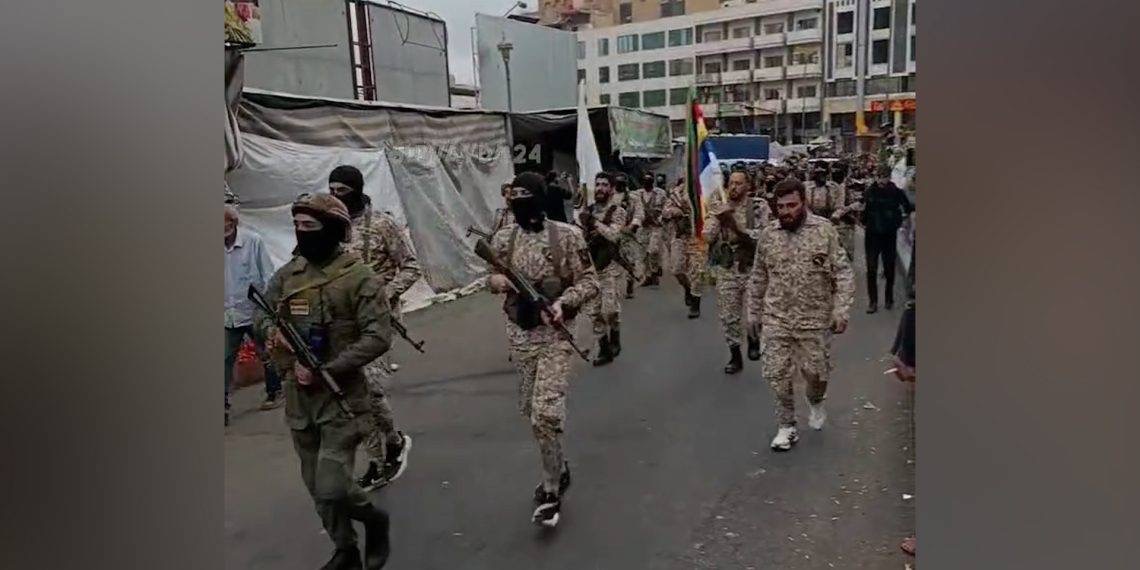
‘The National Guard’
Local factions in Sweida announced on August 23, 2025, the formation of an armed militia called the “National Guard,” placed under the authority of Sheikh Hikmat al-Hijri, the head of the Druze spiritual council in the province.
The new force brings together roughly 30 local factions and, according to its founding statement, aims to bolster the region’s defense and security. The factions pledged full obedience to the spiritual leadership, casting al-Hijri as the legitimate representative of the Druze community in Sweida.
They described their incorporation into the “National Guard” as joining the province’s “official military institution.”
Al-Hijri appointed former regime brigadier general Jihad Najm al-Ghouthani—who rose to the rank of brigadier in 2019 after taking part in military operations against civilians in rural Damascus and Idlib—as the commander of the “National Guard.” He hails from the village of Taraba in Sweida’s countryside.
The move drew sharp criticism from Druze leader Sheikh Laith al-Balous, the representative of “Men of Dignity,” who rejected the formation outright. He argued that some of its factions were previously known for kidnapping, theft, extortion, and abuses against women, and accused several of having long-standing ties to former regime officers. Al-Balous dismissed the name “National Guard” as an imitation of Iran’s Revolutionary Guard.
Since the fall of the Assad regime in December 2024, al-Hijri and his armed militias have blocked Syria’s new state institutions from entering Sweida, operating according to their own interests instead. This has escalated to calls for separating the province from Syria altogether and openly seeking support from the Israeli Occupation, while rejecting any national political process with Damascus.
As the security and political landscape grows increasingly volatile, the “National Guard” has shifted from a local protection force into an instrument of coercion and detention, one that now enforces a parallel security structure and deepens Sweida’s isolation from the rest of the country.
In a letter to the UN Secretary-General and members of the Security Council on October 11, 2025, al-Hijri even referred to the area as “Bashan” rather than its known names, Sweida or Jabal al-Arab. “Bashan” is a Hebrew term meaning “level or flat land,” historically used for a district in ancient Canaan east of the Jordan River.
This shift coincides with al-Hijri’s appeals to “Israel” to prevent the Syrian state from reasserting its authority in the province—a request that has, in turn, offered the Israeli Occupation a pretext for advancing expansionist ambitions in the region.
On July 13, 2025, Syrian security forces moved toward Sweida following clashes between Bedouin tribes and local Druze factions in an effort to restore order.
Pursuing his efforts to detach Sweida from Damascus, al-Hijri issued an official statement on July 16, 2025, calling on Israeli Prime Minister Benjamin Netanyahu to “save Sweida,” a direct attempt to enlist foreign intervention against the Syrian state.
“Israel” responded the same day with a wide-ranging assault on Syria, launching airstrikes on more than 160 sites across four provinces—including Sweida, Daraa, rural Damascus, and Damascus—targeting military and government facilities in the capital.
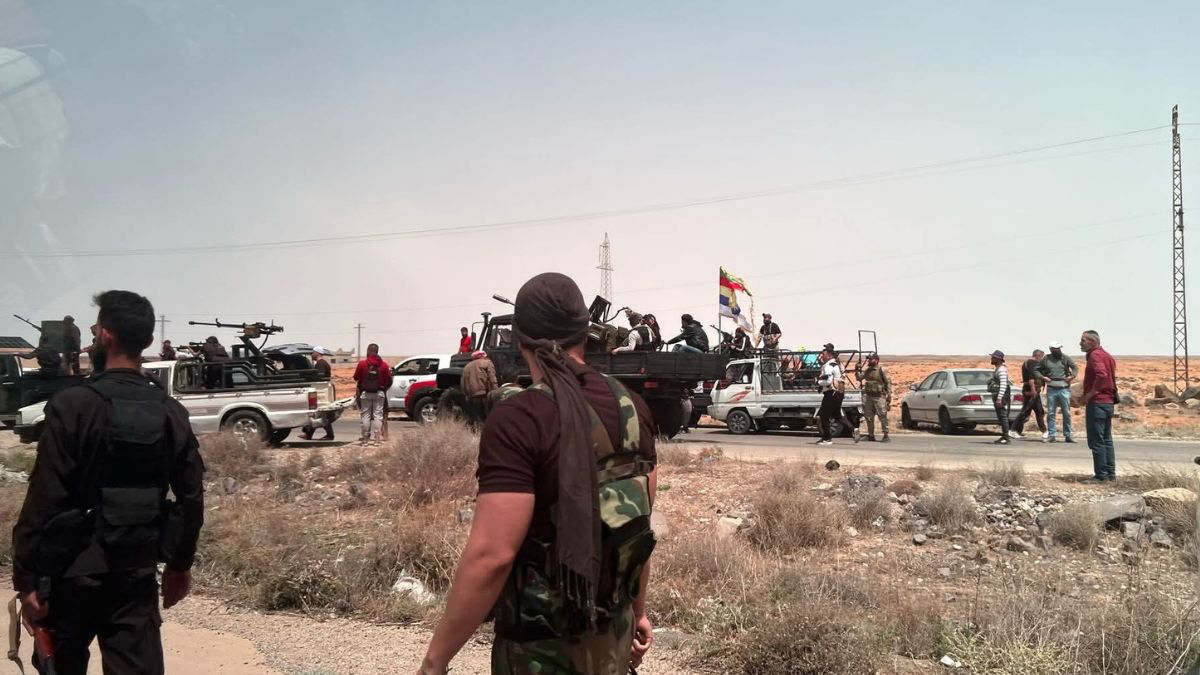
‘An Independent State’
The latest escalation in Sweida, especially the security sweep carried out by the so-called “National Guard,” has thrown a harsh spotlight on the widening rift between the street and the province’s Druze religious leadership.
While the militia accuses its opponents of colluding with Damascus, critics fire back that the “National Guard” has morphed into an unrestrained force built on fear-mongering and loyalty tests, intent on imposing its own de facto authority. At the same time, officials warn that the province is edging toward a new cycle of violence and vendettas.
“Sheikh Hikmat al-Hijri’s militias are accused of trafficking weapons and Captagon and of using brute force to crush any opposition to separatism or foreign-backed schemes amid the clear absence of state authority,” military analyst Colonel Ahmad Hamada told Al-Estiklal.
“The National Guard’s arrests of dissenters,” he said, “show al-Hijri acting as if he’s running an independent state exercising power by force.”
Hamada argues the militia has become a tool of repression amid public anger over al-Hijri’s policies, worsening living conditions, and rising fears of sectarian conflict. He describes the “National Guard’s” abuses as an attempt to impose its will on civilians without law, mandate, or legitimacy.
“People in Sweida are simply waiting for zero hour,” he added, “to dismantle this gang, restore order, and hold those responsible for the violations to account.”
Observers warn that continued escalation from al-Hajri without alternatives or any roadmap could push the province into deeper instability.
Government forces continue to encircle Sweida as Damascus opens an indirect negotiation track with al-Hijri in hopes of pulling him back from the separatist project.
But the targeting of prominent Druze figures underscores a sharper social and political clash, as al-Hijri’s faction pushes to consolidate control over the levers of power in the province.
And throughout it all, the Israeli Occupation shows no hesitation in exploiting the province’s sectarian fractures—backing separatist currents and capitalizing on the split between those pushing to integrate into the new Syrian state and those championing breakaway projects that lean openly on Israeli support.
Sources
- 'National Guard’ Militia Launches Arrest Campaign, Raids Sweida Security Chief’s Home [Arabic]
- Al-Hijri's Militias Humiliate Clerics and Officials in Sweida, Sparking Outrage Online [Arabic]
- What Is the ‘National Guard’ Formed by al-Hijri in Sweida? [Arabic]
- Balous: Sweida’s ‘National Guard’ a Copy of the Revolutionary Guard and Lacks a Voice of Reason [Arabic]