Years of Neglect and Mismanagement: Why Doctors Are Leaving Tunisia?
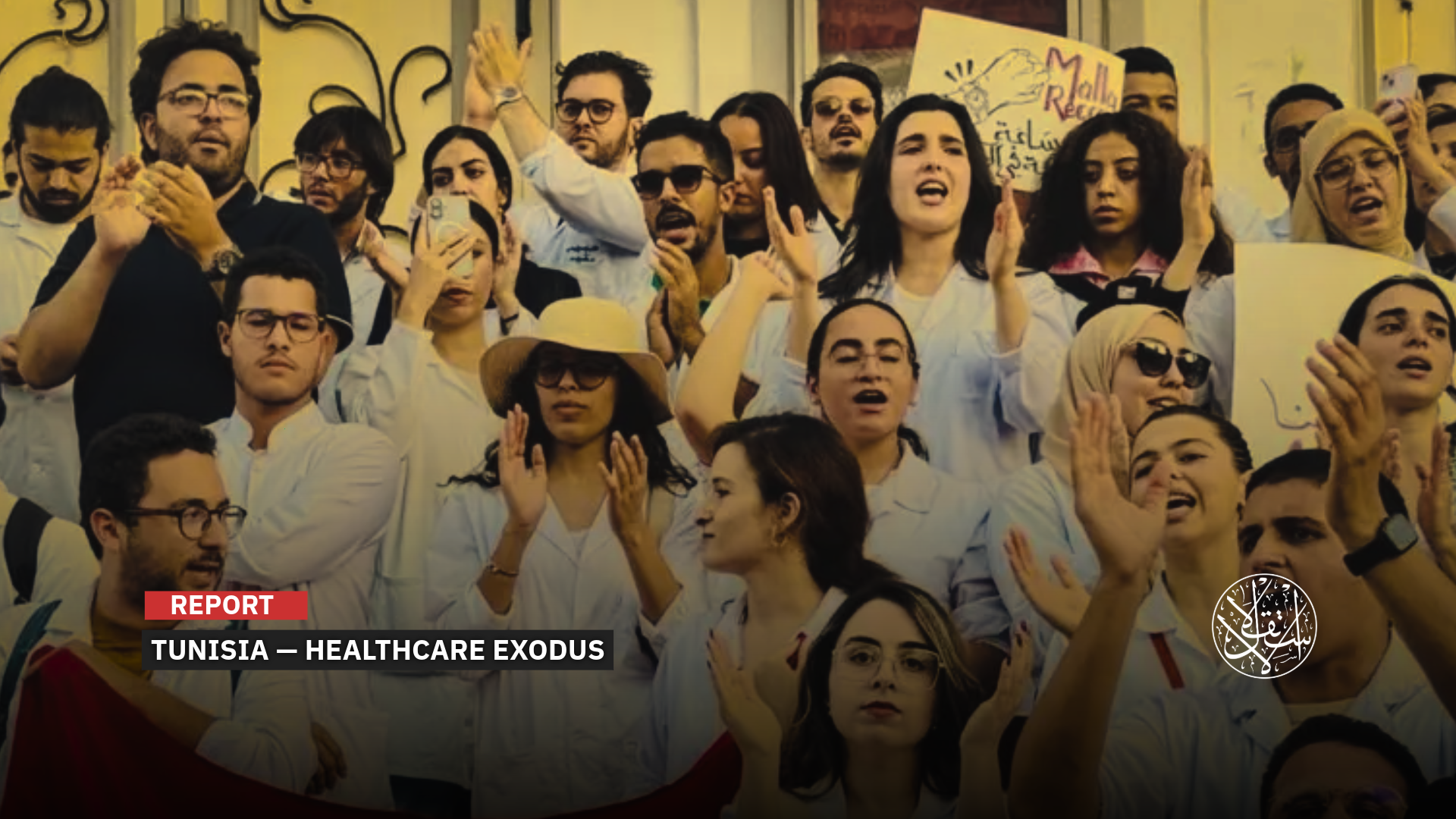
The exodus of Tunisia’s paramedical staff is no longer a series of isolated cases.
Years of neglect and poor management of public affairs in Tunisia have cast a shadow over various sectors, foremost among them the health sector, contributing to a growing wave of migration among its professionals abroad.
An official Tunisian study revealed that the medical sector is witnessing an unprecedented drain, after more than 6,000 doctors left the country over four years, specifically between 2021 and 2025.
The study, published by the government-run Institute for Occupational Health and Safety on Sunday, February 22, 2026, stated that the migration of paramedical staff is no longer a series of isolated individual cases, but has turned into a real drain threatening the balance of the healthcare system.
It showed that the average age of migrating nurses and paramedical staff does not exceed 33.4 years, with 84.6 percent leaving due to low salaries, while 59.6 percent seek better living conditions.
The study, conducted between March 15 and April 15, 2025, indicated that weak opportunities for continuous professional development push 57.7 percent of nurses and paramedical staff to emigrate, while about 54 percent leave to escape difficult working conditions.
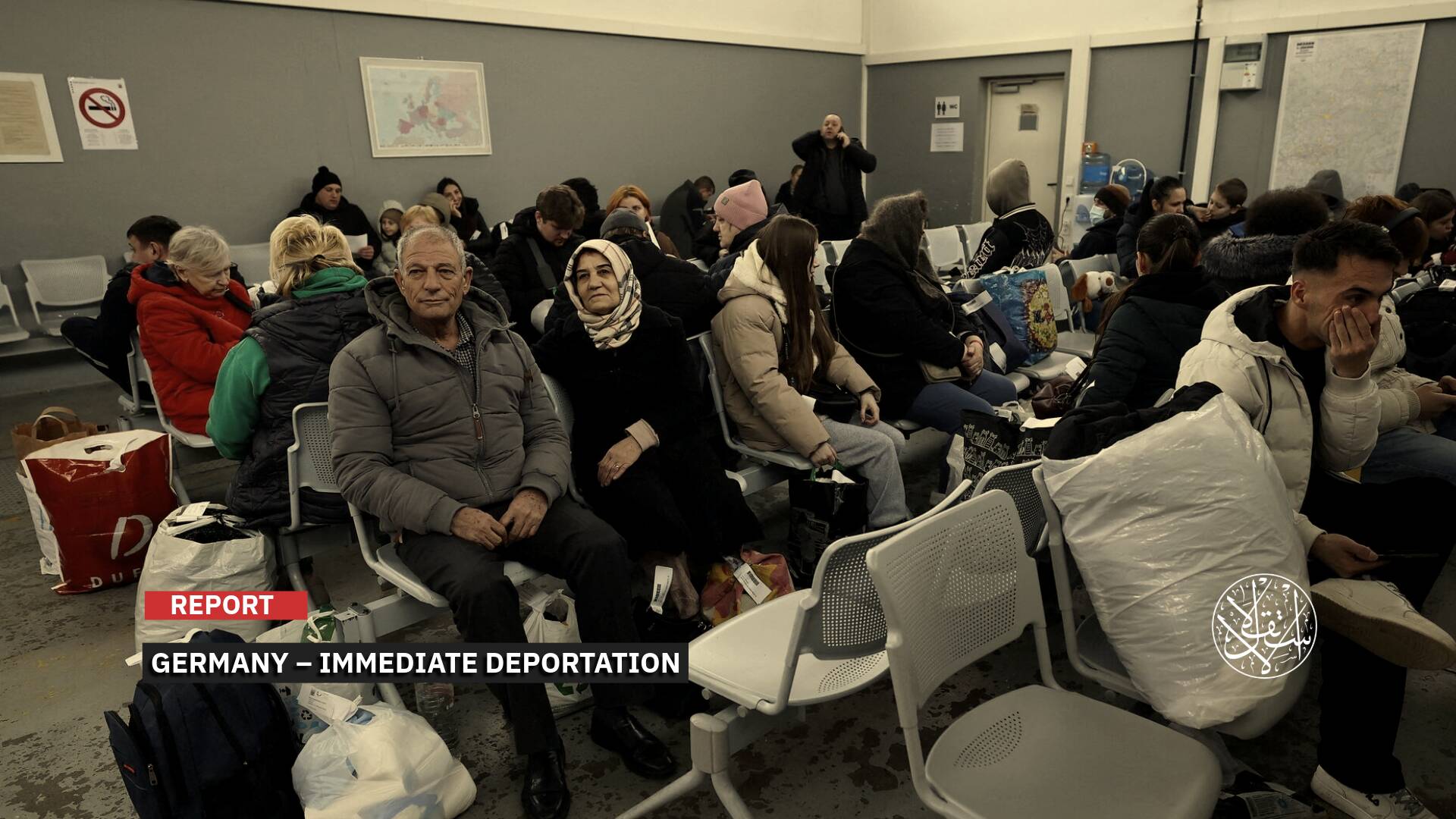
According to the data, Germany is the most attractive destination for Tunisian paramedical staff, accounting for more than 40 percent, followed by Canada at 28.8 percent, and Italy at 21.2 percent.

A Serious Threat
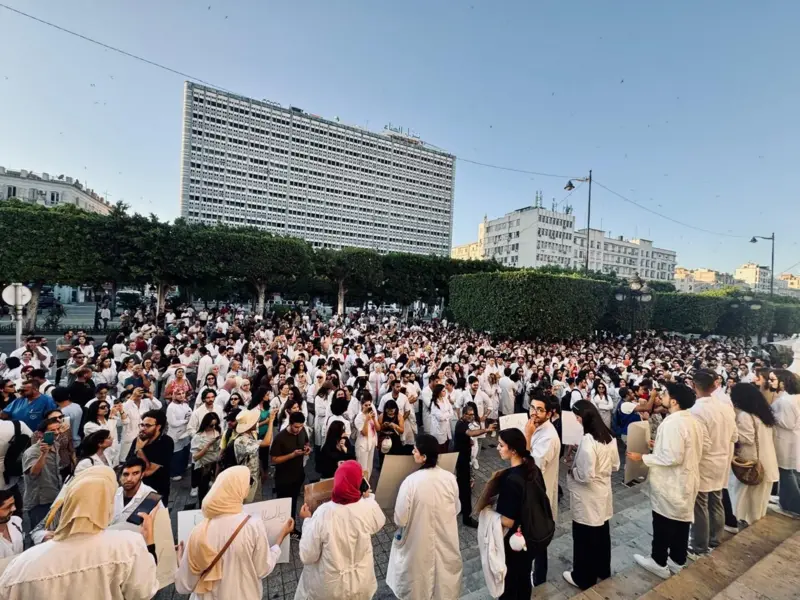
Shortly before the study was released, the secretary-general of the Union of University Hospital Doctors, Pharmacists and Dentists in Tunisia, Mohamed Adnane Hanchi, acknowledged the existence of a serious threat affecting the public health system and the continuity of services in government hospitals.
Hanchi said in remarks to Mosaique FM on January 25, 2026, that the worsening migration of doctors reflects the failure of health policies to preserve the human capital of the healthcare system.
He pointed out that some figures are “alarming,” noting that studies indicate more than 1,000 doctors have been leaving the country annually over the past six years.
He added that 2024 alone witnessed the departure of around 1,450 doctors to destinations including France, Germany and Gulf countries.
He explained that studies conducted by young doctors show that more than 80 percent of them intend to leave the country, stressing that the phenomenon is no longer limited to recent graduates but has also extended to department heads and even former deans, for multiple reasons that require urgent solutions, in his words.
The secretary-general of the General Federation of Health, Hassan Mezni, believes the drain does not affect doctors alone but also extends to paramedical staff, describing the situation as “alarming.”
Mezni said in an interview with Tunisie Numerique on February 25, 2026, that the list of job seekers for nursing positions in public hospitals has been almost zero over the past three years (2024, 2025 and 2026).
He explained that the number of nurses seeking employment used to be estimated in the hundreds in previous years, but hospitals today are suffering from a severe shortage of staff, despite the ministry’s request to open recruitment.
He attributed this situation to the large-scale migration of paramedical staff to Western countries, particularly Germany, even though hundreds of nurses graduate every year from public and private universities in Tunisia.
He noted that this crisis has even affected the annual transfer system, which aims to allow spouses to live closer together or enable nurses to work near their place of residence, as there are no candidates on waiting lists to replace those requesting transfers. This has forced administrations to suspend some transfers to avoid creating vacancies.
Mezni also warned of the dangers of failing to implement Article 69 of the Civil Service Law, which stipulates that employees must serve for at least two years in public hospitals before being assigned to work abroad.
He pointed to a further complication, explaining that foreign entities have begun contracting students as early as their third year of training, recruiting them and offering incentives to work abroad, particularly in Germany, while providing German language courses and assisting with legal procedures related to placement and travel.
He said financial incentives remain the primary driver of migration, noting that a nurse’s salary in Tunisia does not exceed about $550, a figure that cannot be compared with wages offered in Western countries, which may reach around €4,000, in addition to bonuses and other benefits.
Mezni called for the adoption of a basic statute for nurses, a review of salaries and allowances, and broader professional opportunities for students in order to curb the continuing wave of migration.
Political Motives
In his reading of the phenomenon, Tunisian political analyst Nasr Eddine Souilmi believes that the migration of medical professionals and skilled personnel is not unique to Tunisia, but occurs in many countries.
It is primarily linked to the absence of genuine progress or qualitative development, which widens the gap between developed, developing, and poor countries, and accelerates the decline in the latter group.
Souilmi added, in a statement to Al-Estiklal, that the failure of successive systems to achieve comprehensive progress has, in turn, affected the health sector.
He explained that it is rare for a country suffering from economic weakness to make a qualitative leap in a single sector, especially in sensitive areas such as healthcare.
He noted that the medical brain drain crisis has deepened under the current system led by President Kais Saied, which has exacerbated the crisis and highlighted its magnitude, pointing out that international media outlets have reported on what they described as the "tragedy" facing Tunisia’s healthcare system.
He emphasized that previous political systems allowed the sector’s hemorrhage to continue, which gradually intensified due to the international context, globalization, and inequalities exploited by wealthy countries, among other factors.
He added that although there were some reform attempts at the time, they failed to stop the outflow, albeit at a slower pace compared to the current stage, which he described as witnessing a rapid acceleration in the collapse.
Souilmi also pointed out that one of the reasons for this situation is the lack of expertise and qualified personnel in managing the health sector and other areas, resulting in confusion and disorganized handling of affairs.
He added that the head of state adopts a comprehensive approach to intervention across various domains, from sports to labor unions and institutions, with the conviction that he possesses comprehensive solutions.
Souilmi believes this approach lacks realism and practical implementation tools.
He continued that the weakness of the intellectual and institutional environment surrounding the current authority has prevented the production of reform ideas capable of addressing crises, including the medical talent exodus.
He concluded that continuing on this path signals further decline across multiple sectors, predicting the ongoing loss of skilled personnel in the foreseeable future, with potentially serious repercussions for the country.

A parliamentary Initiative
The wave of migration among doctors and scientific professionals from Tunisia prompted several members of parliament to propose a legislative initiative in mid-2025, which would impose financial compensation on skilled personnel leaving the country, amounting to up to 50 percent of the cost of their education.
According to the proposal submitted by Fakhreddine Fadhloun, chairman of the Committee on Education, Vocational Training, Youth, and Sports in the House of Representatives, these compensations would be paid in installments over five years under a contract concluded with the foreign employer.
The initiative, according to its proponents, aims to curb the outflow of doctors and engineers, reduce the financial burdens on the state, and provide new financial resources amid the economic crisis facing the country.
The proposal exempts graduates who decide to return to Tunisia before the end of the five-year period, provided they commit to working in the country for at least three years.
The idea is not entirely new, as it extends a growing approach among some political factions that view graduates from Tunisia’s educational system as a “national asset” whose mobility can be restricted under the slogan of “loyalty to the homeland.”
Despite being presented as a way to “give back,” the project has sparked widespread debate and criticism since its announcement, raising questions about its practical feasibility, as well as legal and ethical issues, and doubts about its realism and ability to be effectively implemented.