How the United States Mobilized Its Forces for an End-Times War in Iran
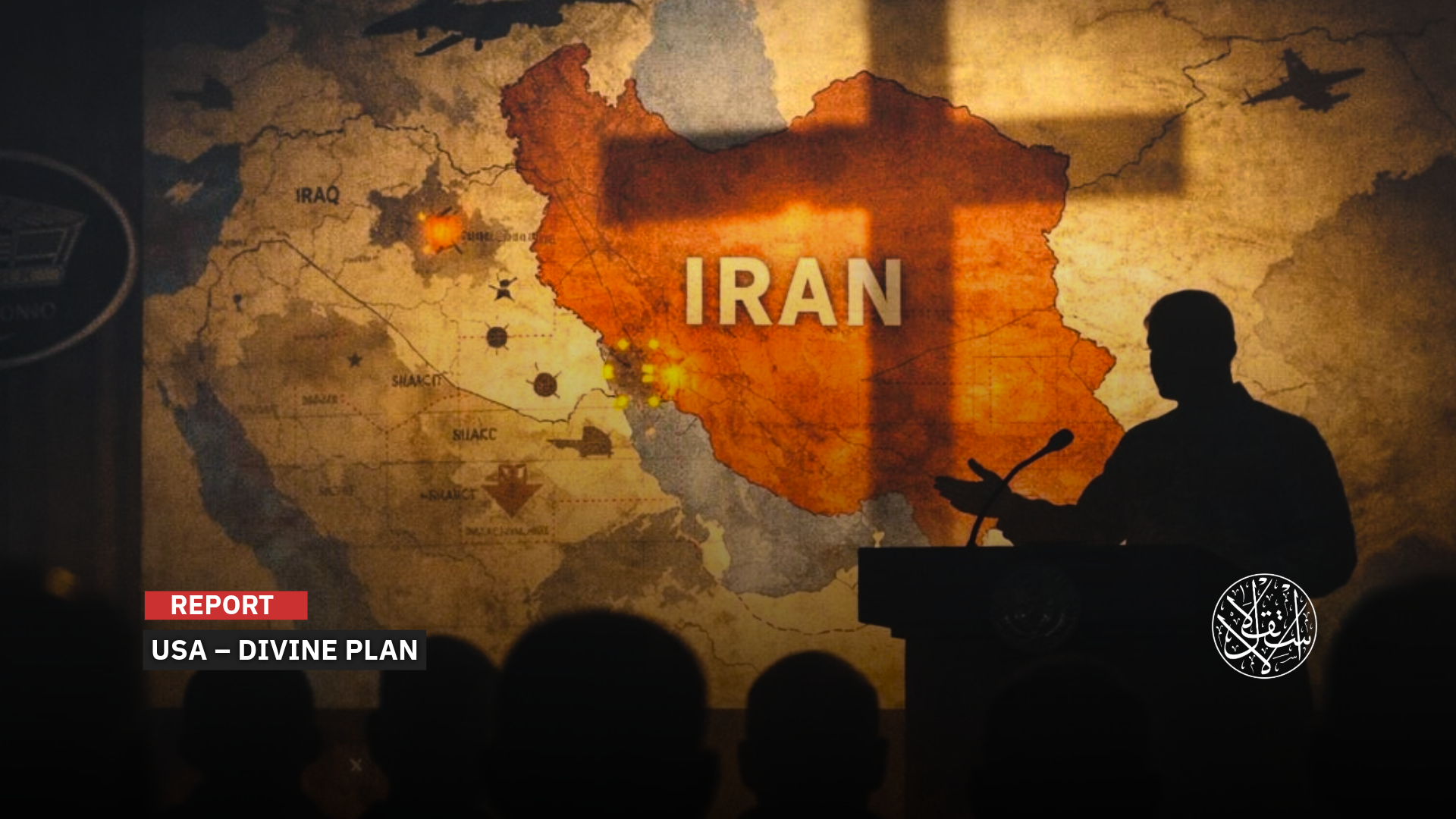
“Military leaders are now presenting the war against Iran as a biblical justification.”
Amid the escalating military tensions between the United States and “Israel” on one side, and Iran on the other, striking evidence has emerged indicating that the discourse surrounding the war is not being presented in some political and military circles merely as a traditional geopolitical confrontation, but rather as a conflict with profound religious and ideological dimensions.
This perception was reinforced after the Military Religious Freedom Foundation (MRFF) announced on March 3 that it had received over 200 complaints from service members across various branches of the U.S. military, including Marines, Air Force, and Space Force personnel, accusing their commanders of using extremist Christian rhetoric to justify military operations against Iran.
The Promised Battle
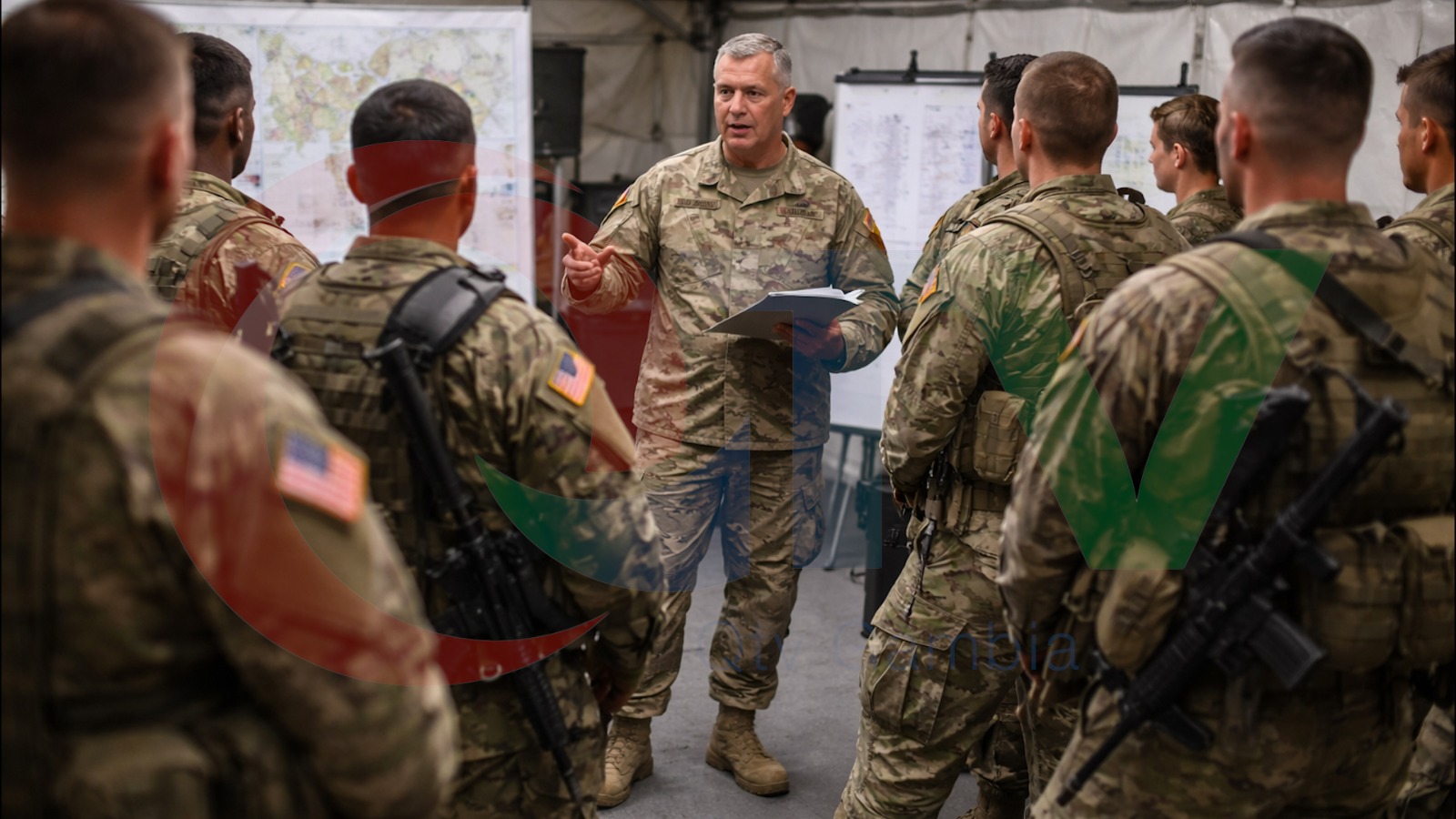
U.S. military commanders have been justifying involvement in the Iran war by invoking Christian rhetoric about biblical end times, according to a series of complaints made to a religious watchdog group.
One complainant from a unit that could be deployed at any moment told MRFF that their commander had urged us to tell our troops that this was all part of God’s divine plan and he specifically referenced numerous citations out of the Book of Revelation referring to Armageddon and the imminent return of Jesus Christ.
The non-commissioned officer (NCO) who made the complaint also said the commander had told them that President Trump has been anointed by Jesus to light the signal fire in Iran to cause Armageddon and mark his return to Earth.
The NCO’s complaint was filed on behalf of 15 troops, including 11 Christians, one Muslim person and one Jewish person.
The complaint was first shared by MRFF with Jonathan Larsen, an independent journalist.
Mikey Weinstein , president of the MRFF and a U.S. Air Force veteran, told The Guardian: “Anytime Israel or the US is involved in the Middle East, we get this stuff about Christian nationalists who’ve taken over our government, and certainly our US military.”
“Military members are not really able to stand up for themselves, because your military superior is not your shift manager at Starbucks,” he added.
Weinstein said the complaints showed a clear violation of the separation of church and state, saying the reports indicated an increase in Christian extremism in the military.
He noted that the complainants report the unrestricted euphoria of their commanders who perceived a biblically sanctioned war that is clearly the undeniable sign of the expeditious approach of the fundamentalist Christian End Times.
This debate coincides with the rise of a political discourse in the United States linked to what is known as Christian nationalism, an intellectual movement that believes the country should be founded on a Christian identity and play a pivotal role in fulfilling what it considers religious prophecies related to the end of history.
In this context, the positions of US Secretary of Army Pete Hegseth stand out, as he is known for his support of these intellectual trends, particularly the so-called domain supremacy doctrine.
This doctrine, prevalent in some conservative evangelical circles, is based on the idea that Christians are called to impose their religious vision on all areas of public life and politics, including governance and law.
In August 2025, Hegseth sparked widespread controversy when he shared a video by the far-right American pastor Doug Wilson, a prominent figure in Christian nationalism and founder of the Reformed Evangelical Churches movement.
In that video, Wilson expressed his desire to see the world transformed into a Christian one, and he also rejected the idea of women assuming high-ranking combat roles within the military.
Critics considered this an indication that this ideology might influence certain aspects of political and military thinking in Washington.
In contrast, Israel exhibits a parallel religious discourse, albeit one with a different character, linked to biblical symbolism in naming and describing military operations.
Israeli Prime Minister Benjamin Netanyahu has repeatedly expressed this view, emphasizing that confronting Iran is a strategic necessity that cannot be postponed.
In fact, the use of religious symbolism in naming military operations is not a new phenomenon in “Israel”.
Since the establishment of the state in 1948, the Israeli army has consistently given names derived from biblical texts or Jewish history to many of its military operations.
This tradition aims to connect the present to an extended historical narrative, reinforcing the idea within the Israeli discourse that the Israeli army is not merely a modern military force, but rather an extension of a religious history spanning thousands of years.
This connection between the biblical past and the military present creates a symbolic framework that makes the conflict appear, in some discourses, as a continuation of a long historical struggle for survival.
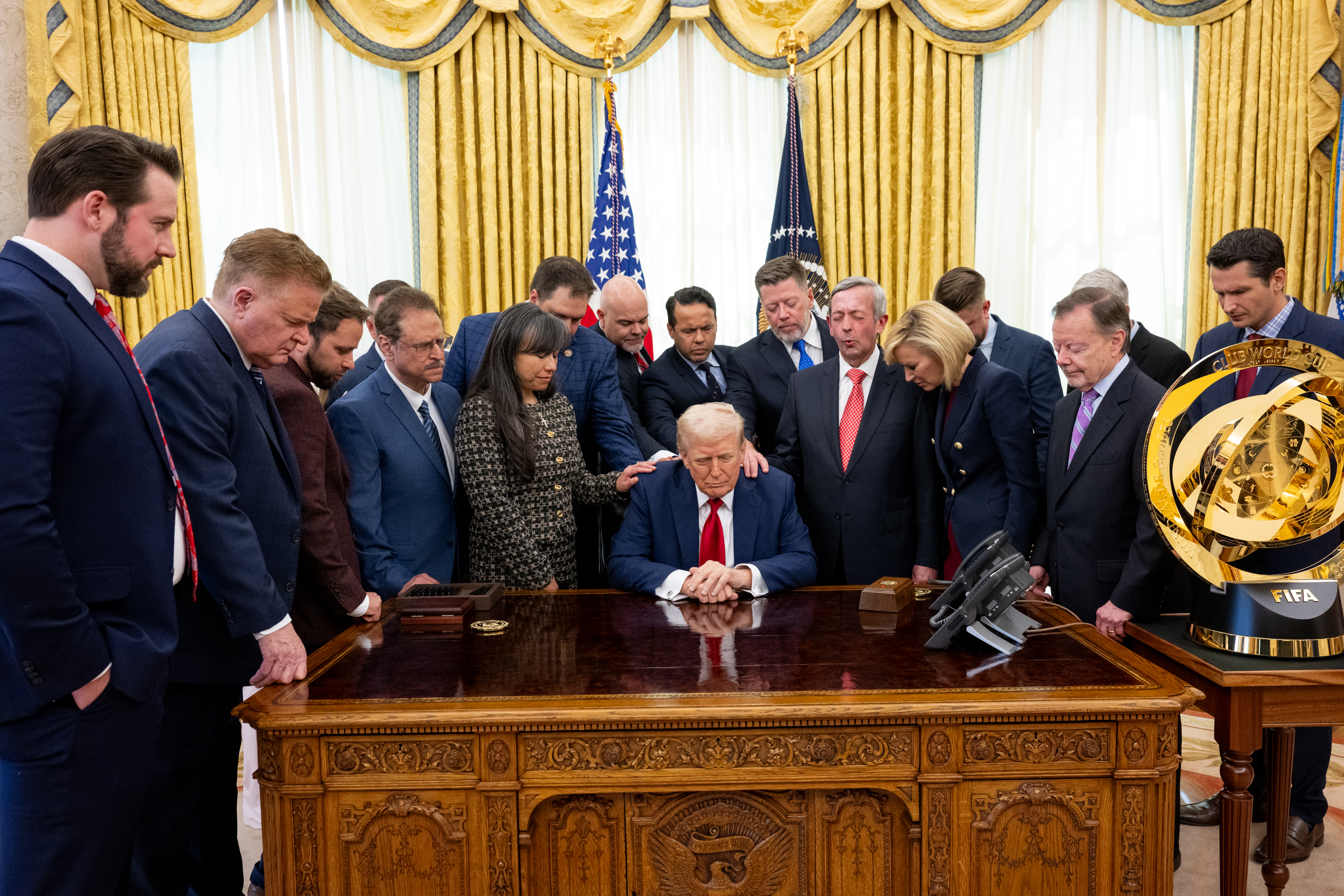
Religious War
Amid this atmosphere, American journalist Tucker Carlson warned that the assassination of Iranian Supreme Leader Ali Khamenei could plunge the world into what he described as a global religious war.
In an episode of his program broadcast on March 5, titled Could This Be a Religious War Designed to Rebuild the Third Temple on the Ruins of the Al-Aqsa Mosque?, Carlson raised questions about the underlying motives for a war on Iran.
He pointed to what he described as deeply held Christian Zionist beliefs among some influential figures in the United States, including the US Ambassador to Israel, Mike Huckabee.
According to Carlson, some adherents of this doctrine believe that rebuilding the so-called Third Temple in Jerusalem is a necessary condition for fulfilling religious prophecies related to the return of the Messiah.
The American journalist went on to say that some Israeli soldiers wear badges on their uniforms indicating that their religious mission is related to rebuilding the Temple.
Carlson also presented a video of a rabbi speaking publicly about a scenario in which a missile is launched at the Al-Aqsa Mosque and Iran is blamed, potentially igniting a wider war in the region.
He also discussed the possibility of a so-called false flag operation, in which the Dome of the Rock might be targeted by a missile or drone, and then Iran would be accused—a scenario he said could occur amid what he described as the fog of war.
It is noteworthy that these criticisms come From within the American right wing itself; the Israeli newspaper Haaretz published a lengthy report before the Carlson episode aired, examining the rise of the American media figure's influence within the right-wing elite in the United States.
The report was titled: “How Tucker Carlson Became the Most Powerful Man in America’s Right-Wing Elite?”
This controversy indicates that the debate surrounding the religious dimension of a war with Iran is no longer confined to academic or media circles, but has become part of the political divide within the United States.
In the same context, US Senator Lindsey Graham described a potential American-Israeli war on Iran as a religious war that could determine the future of the Middle East for a thousand years.
In televised remarks, he stated that what is happening represents a pivotal moment in the region's history, questioning whether the victors in this confrontation would be the radical Islamic terrorists who want to kill all Jews.
He added that the outcome of this war could shape the Middle East for centuries to come.
Ideological Intersection
Dr. Muhammad Abu Zaid, Professor of Islamic Theology at Al-Azhar University, believes that understanding the war being waged by the United States and “Israel” against Iran should not be limited to military approaches. Rather, it must be viewed within a broader context that includes the ideological dimension, which clearly permeates the discourse surrounding this conflict.
In a statement to Al-Estiklal, he explained that biblical and evangelical symbols are no longer merely rhetorical tools in Western political discourse, but have become instruments of political manipulation that imbue the conflict with an ideological dimension and are used to mobilize public opinion.
He pointed out that this discourse reflects a transnational ideological overlap, manifested in the convergence between extremist religious currents in Israel and the evangelical Christian right in the United States, and even in Europe.
In this context, Abu Zaid recalled statements by former Hamas leader in the Gaza Strip, Yahya Sinwar, who had previously asserted that the ongoing conflict has a profound religious dimension.
He pointed out that the invocation of biblical texts and religious symbols in Israeli political and military discourse reinforces this characterization and gives it a broader interpretive dimension.
He explained that the rhetoric emanating from leaders of the extreme Israeli right, with its explicit invocation of religious symbols and texts, confirms that religion is being used as a tool for political and ideological mobilization in this conflict, and not merely as a cultural or symbolic framework.

He warned that transforming the conflict in the region into an open ideological framework could deepen polarization and prolong conflicts, as religiously motivated wars are usually more difficult to contain and more susceptible to extremism and expansion.
He emphasized that such a path could ignite the region for decades because it undermines the chances of political settlements and fuels sectarian and ideological polarization, which negatively impacts the stability of the entire region.
He stressed in conclusion that analyzing what is happening in the region should not be limited to a military reading of events, but must also include understanding the nature of the accompanying religious discourse, as grasping this dimension helps in interpreting future policies that could threaten the stability of the Middle East in the coming period.