Bangladesh Caught Between Ballot Legitimacy and Constitutional Power as July Charter Crisis Erupts in Parliament
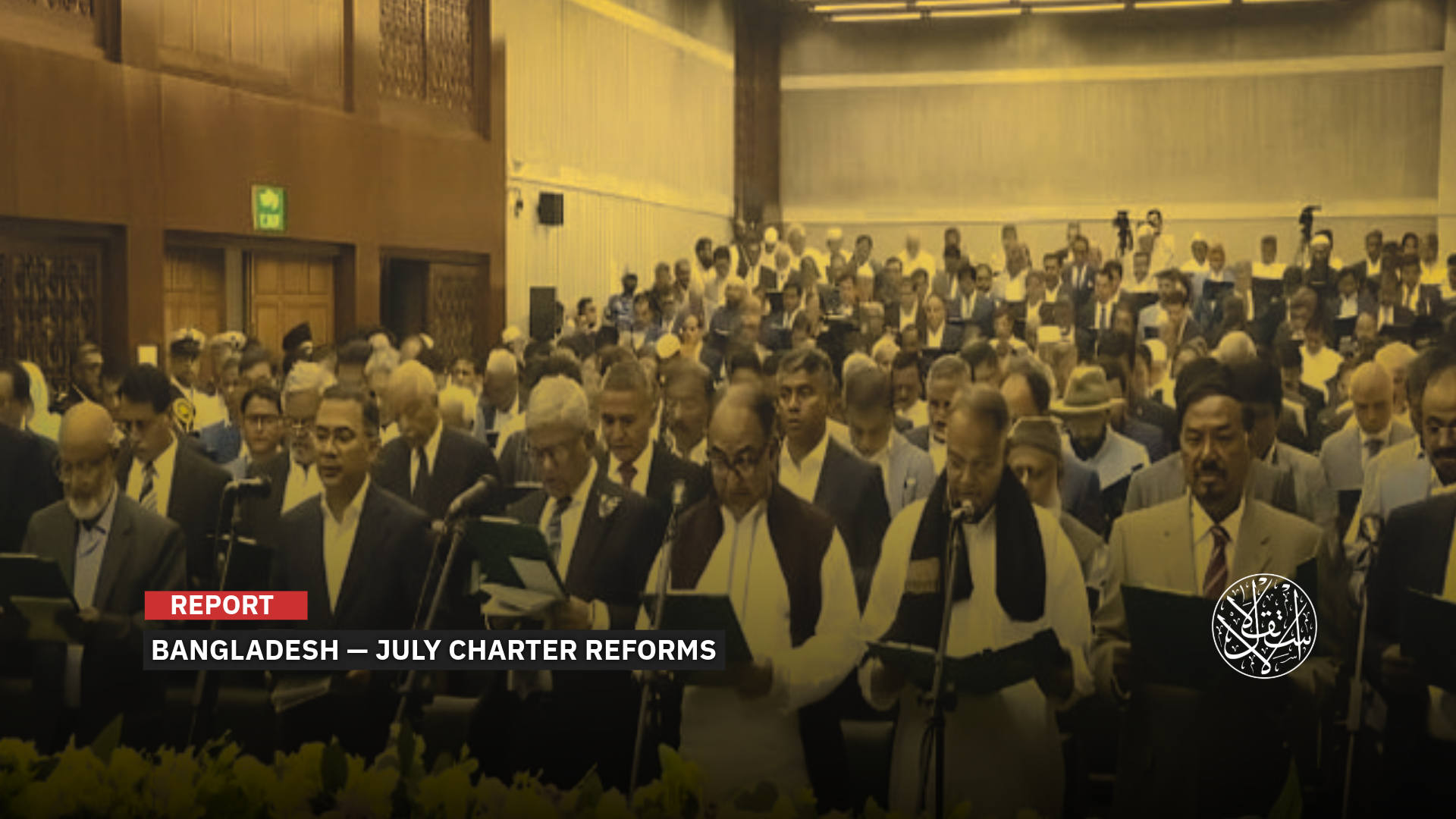
The Bangladeshi parliament elected on February 13, 2026.
The Bangladeshi parliament, elected on February 13, 2026, which was formed after a popular uprising that toppled former Prime Minister Hasina Wajed, nearly faced a sharp institutional crisis just four days after convening.
The crisis centered on the refusal of lawmakers from the Bangladesh Nationalist Party, which holds the parliamentary majority, to take the oath as members of the Constitutional Reform Committee stemming from the July 2024 consensus, limiting themselves instead to the constitutional oath as members of parliament.
By contrast, the 77 opposition lawmakers, belonging to an alliance of 11 parties led by Jamaat-e-Islami Bangladesh, along with several independents, took the constitutional oath as members of parliament and also swore in as members of the Constitutional Reform Committee stipulated in the post-uprising reform package.
Lawmakers from the Bangladesh Nationalist Party, who hold 212 of the 300 seats, justified their position by confining themselves to the parliamentary oath without committing to membership in the constitutional reform committee, a move seen as a practical retreat from implementing the previous constitutional agreements.
Abdullah Mohammad Taher, deputy emir of Jamaat-e-Islami Bangladesh, responded by saying that maintaining this stance would obstruct parliament’s work, initially announcing that his bloc would refrain from taking the parliamentary oath in protest at the ruling party’s refusal to adhere to constitutional reforms.
However, the Islamist party later reversed course and decided to participate and take the oath, while stressing that a parliament that does not commit to implementing constitutional reform loses its political justification, leaving the crisis unresolved on both constitutional and political grounds.
The Story of the Dispute
The parliamentary elections included a vote on a second ballot concerning the Constitutional Reform Charter, which secured the approval of more than 60 percent of voters, granting it binding status and bringing it into force.
Under this popular mandate, a Constitutional Reform Council was established, alongside the adoption of binding decisions on the government, including no extension of the prime minister’s terms, broader powers for the president and enhanced judicial independence.
The refusal of Bangladesh Nationalist Party lawmakers to take the second oath before the Constitutional Reform Council, limiting themselves to the oath as members of parliament, raised questions about their position on one of the most prominent reform provisions approved by the interim government of Muhammad Yunus after the referendum, and whether this amounted to a political rejection or rested on a different legal interpretation.
Jamaat-e-Islami Bangladesh’s initial refusal to have its lawmakers take the parliamentary oath, unless members of the Bangladesh Nationalist Party took both oaths, nearly led to the invalidation of the new parliament or even its dissolution before it began work.
However, the Islamist party ultimately decided to take both oaths, affirming that the existence of a functioning parliament is a political priority, while warning that continued refusal by the ruling party to adhere to the referendum results could trigger a political and constitutional crisis.
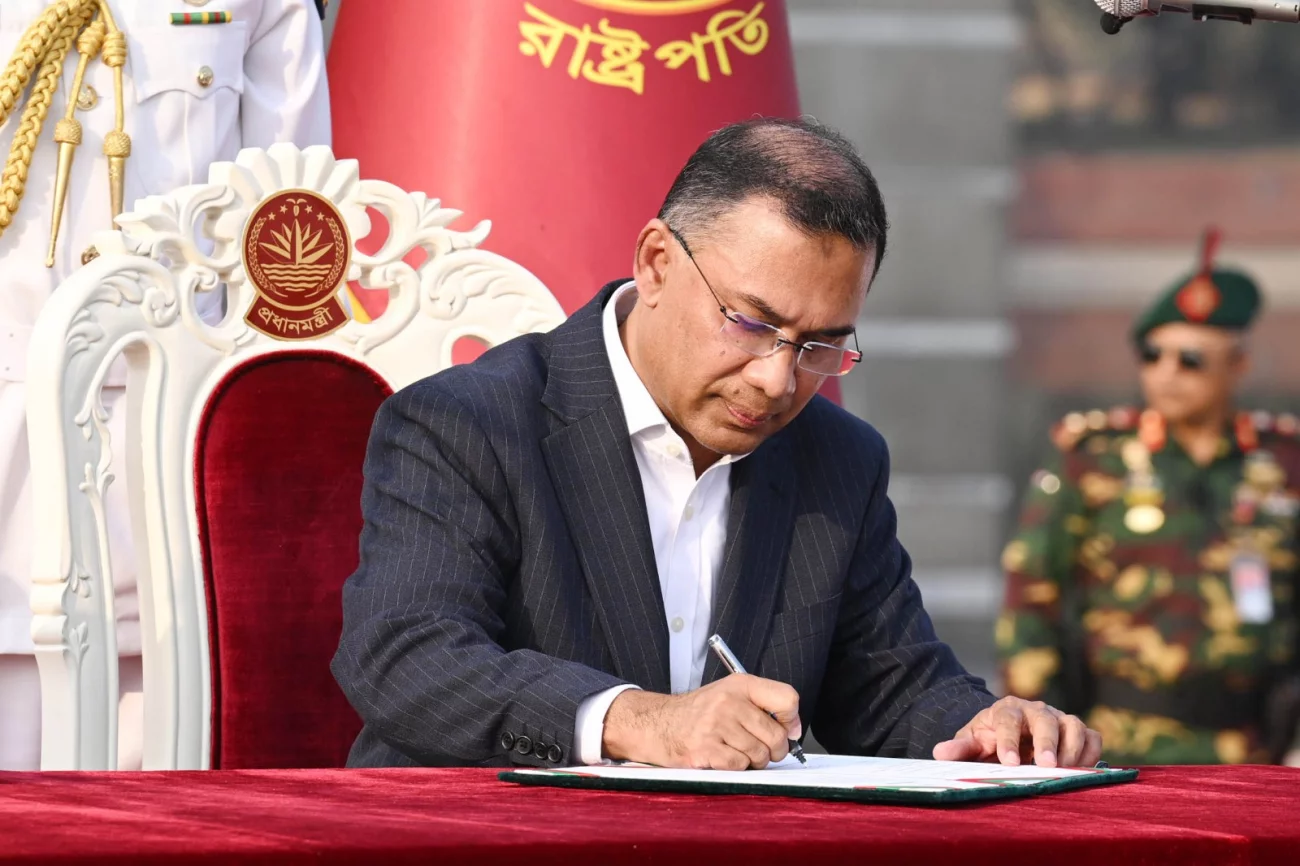
Under the referendum results, Tarique Rahman, head of the majority-winning party, became responsible for implementing the “July National Charter,” which includes more than 80 governance reforms, among them the Constitutional Reform Committee that lawmakers from his party declined to swear into.
The Constitutional Reform Committee had been established following the student uprising and the collapse of the previous rule, with the aim of reshaping the constitutional framework to ensure democracy and transparency.
In July 2025, the committee proposed the creation of a National Constitutional Council to secure separation of powers, the adoption of a bicameral parliament and limits on the prime minister’s powers, with plans to submit these reforms to a public referendum.
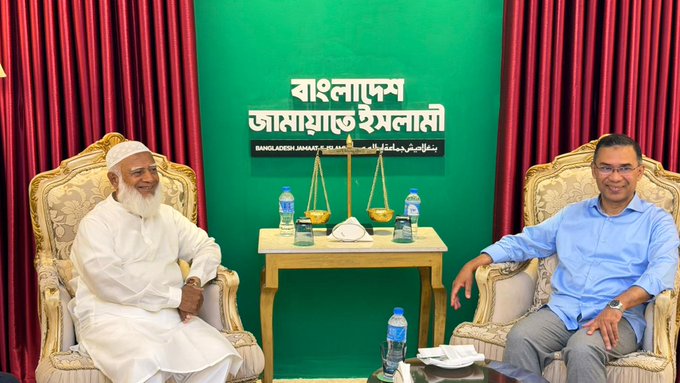
Opposition leader and head of Jamaat-e-Islami Bangladesh, Shafiqur Rahman, expressed disappointment at the new government’s decision not to adhere to the July Charter, saying in a statement dated February 17, 2026, “We do not understand this decision, as they previously signed the Charter and campaigned for the “Yes” vote. The people of Bangladesh deserve consistency between words and actions, and fidelity to the commitments made before them,” calling for consistency between words and actions and fulfillment of prior commitments.
Nevertheless, he confirmed that his party had decided to take the oath and assume its seats in parliament “But we remain steadfast in our sacred trust to advance essential democratic reforms,” urging a renewed commitment to the promises on which the July uprising was built.
In the same context, Bangladesh affairs writer David Bergman warned of the risks of the Bangladesh Nationalist Party’s refusal to take the oath linked to the Constitutional Reform Charter, saying the party is “playing with fire unless it makes absolutely clear — which, at the time of writing, it has not — what exactly are its intentions regarding the implementation of the July Charter reforms.”
He explained that voters had endorsed a package of constitutional changes, and that any retreat by the Bangladesh Nationalist Party from implementing or upholding them could expose it to early political consequences during its term.
He noted that the party bases its refusal to take the oath on legal justifications, including that the current constitution contains no explicit provision regarding such an oath or the establishment of a Constitutional Reform Council in the first place.
July Reforms
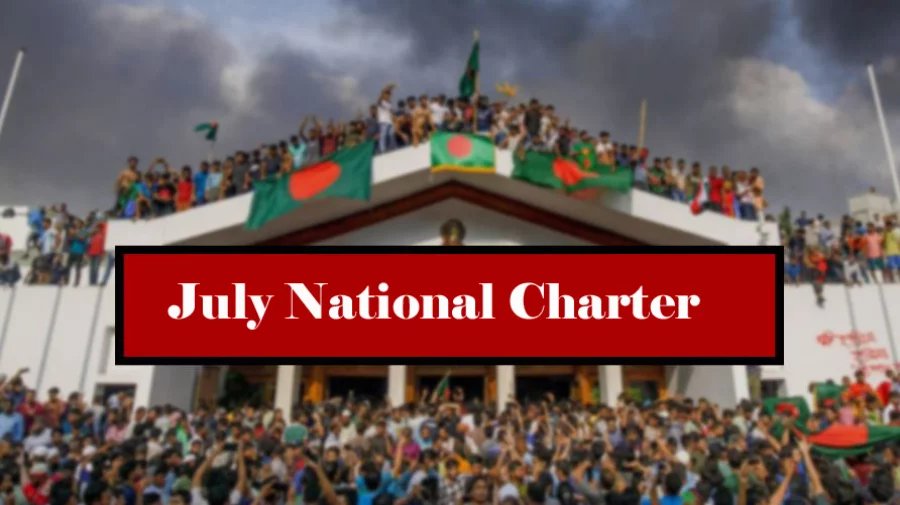
Following the “July Revolution 2024,” which toppled the previous government, the new political forces concluded that the existing constitution required sweeping amendments to prevent a recurrence of political violence and to strengthen institutional stability.
After the fall of former Prime Minister Sheikh Hasina’s rule, the transitional authorities, under the supervision of economist Muhammad Yunus, began preparing a broad package of political reforms under what became known as the “National July Charter 2025.”
The recommendations were drafted and put to a popular referendum held alongside the legislative elections, in a bid to bolster popular legitimacy for the new constitutional reforms.
The declared objective, according to The Daily Star on February 18, 2026, was to implement comprehensive constitutional reforms ensuring fair elections, judicial independence and checks on executive power, alongside other amendments paving the way for a full return to civilian rule.
The July Charter included reforms related to the constitutional system, the adoption of referendums on major amendments, the redefinition of institutional powers and the introduction of new electoral formulas.
Among the most prominent bodies stipulated in the reforms:
The Constitutional Reform Commission, CRC, announced on September 11, 2024, to review and assess the constitution, chaired by Bangladeshi American academic Ali Riaz, and comprising legal experts and student representatives, tasked with presenting comprehensive recommendations to reform the constitutional system.
The National Constitutional Council, a proposed body within the reform package, aimed at ensuring balance among the three branches of government, legislative, executive and judicial, and strengthening oversight of constitutional institutions.
The key recommendations of the National July Charter included a shift toward a more balanced parliamentary system, discussion of transforming parliament into a bicameral system, imposing term limits on the prime minister and establishing oversight mechanisms to prevent authoritarianism.
They also included strengthening fundamental rights, such as the right to food, housing and internet access, and replacing certain existing guiding principles with ones grounded in equality and human dignity.
Key Points
Both the Jamaat-e-Islami in Bangladesh and the National Citizen Party, founded by the students who led the September 2025 revolution, welcomed the reforms of the July Charter.
However, disagreements with the Bangladesh Nationalist Party escalated over three central points.
The first point of contention concerned the referendum and the legal authority of the charter.
Jamaat-e-Islami insisted on holding a popular referendum on the constitutional reforms before the national elections, arguing that the amendments should be approved directly by the people, a position rejected by the Bangladesh Nationalist Party.
The second point centered on the “National Constitutional Council,” which was supported by Jamaat-e-Islami and the student movement, while the Bangladesh Nationalist Party opposed the formation of an independent constitutional council tasked with selecting or appointing commissioners of oversight institutions.
The party argued that such amendments exceeded the mandate of the transitional period and that any constitutional change should be enacted by an elected parliament after the elections, not beforehand.
This dispute over the nature and mechanism of the constitutional council became one of the most prominent sources of tension between the two sides.
The third point involved differing visions regarding the constitutional form of the state and its governing principles.
Jamaat-e-Islami sought to incorporate formulations more explicitly reflecting Islamic identity, while the Bangladesh Nationalist Party preferred language closer to the country’s traditional political legacy.
Differences over concepts such as “liberalism” and “pluralism” led to divisions within the National Consensus Commission, despite continued dialogue among the parties.
Although the Bangladesh Nationalist Party agreed to participate in the reform process, it rejected making the charter superior to the current constitution or abolishing the right to judicial review before the courts.
It also objected to certain provisions, including setting term limits for the president or the executive government, offering its own alternatives and stressing that it signed the charter while formally registering reservations over some of its articles.
The continued disagreements led to the postponement of decisions on several provisions until the end of November 2025 due to the absence of political consensus.
In this context, Shadik Kayem, a leader of the student revolution, wrote on the platform X that the transitional government assumed power based on three main pillars, reform, justice and elections.
He explained that after lengthy discussions, the July Charter was drafted, followed by the issuance of the July Charter Implementation Order of 2025, before the public voted in favor of the reforms in the referendum.
He added that Article Eight of the implementation order stipulates taking the oath of the Reform Council concurrently with the parliamentary oath, accusing the Bangladesh Nationalist Party of disregarding the popular will and failing to comply.
He called on the party to respect the referendum results, warning that continued refusal could lead to a new constitutional crisis and raise questions about the legitimacy of the entire political process.
By contrast, The Diplomat, in an analysis published on February 9, 2026, adopted the Bangladesh Nationalist Party’s perspective, arguing that the proposed referendum on the Reform Charter could place the country’s constitutional framework under severe strain, given its conflict with certain existing constitutional provisions and formal amendment mechanisms.
The magazine questioned which authority actually holds the power to “re-found” a new constitutional order, and on whose behalf such a move would be undertaken.
Under the Charter Implementation Order issued in July 2025, a “yes” vote would have transformed the 13th Parliament into a Constitutional Reform Council for 180 working days, a provision that sparked debate over the council’s nature, its powers and its constitutional validity.
This political and legal divergence, as parliament began its work, created a tense atmosphere during the opening sessions, particularly regarding the oath linked to membership in the Constitutional Reform Council.
It raised constitutional questions over whether taking this oath was mandatory before the council was formally integrated into the constitutional system.
Although parliament did not collapse and its proceedings did not halt, the dispute over how to implement the July Charter reforms remains unresolved and could later evolve into a political or legal confrontation, possibly referred to the judiciary for a constitutional interpretation, with the risk of escalation if divisions among political forces deepen.