How a Republican Bill Threatens the Future of Millions of Dual-Citizen Americans

“Experts estimate that between 3% and 10% of American citizens worldwide hold dual citizenship.”
A Colombian-American congressman recently introduced a controversial bill that could reignite a broad and heated debate in the United States about the meaning of citizenship, loyalty, and homeland, especially in a multicultural society with millions of Americans living dual lives between the U.S. and their countries of origin.
The proposed bill would require any American citizen holding another nationality to choose between the two, unlike current laws that allow Americans to hold dual citizenship without having to choose.
The bill is expected to undergo extensive debate during the current legislative session, with significant official and public reactions anticipated due to the sensitivity of the issue and its impact on a wide segment of the population.
Automatic Renunciation
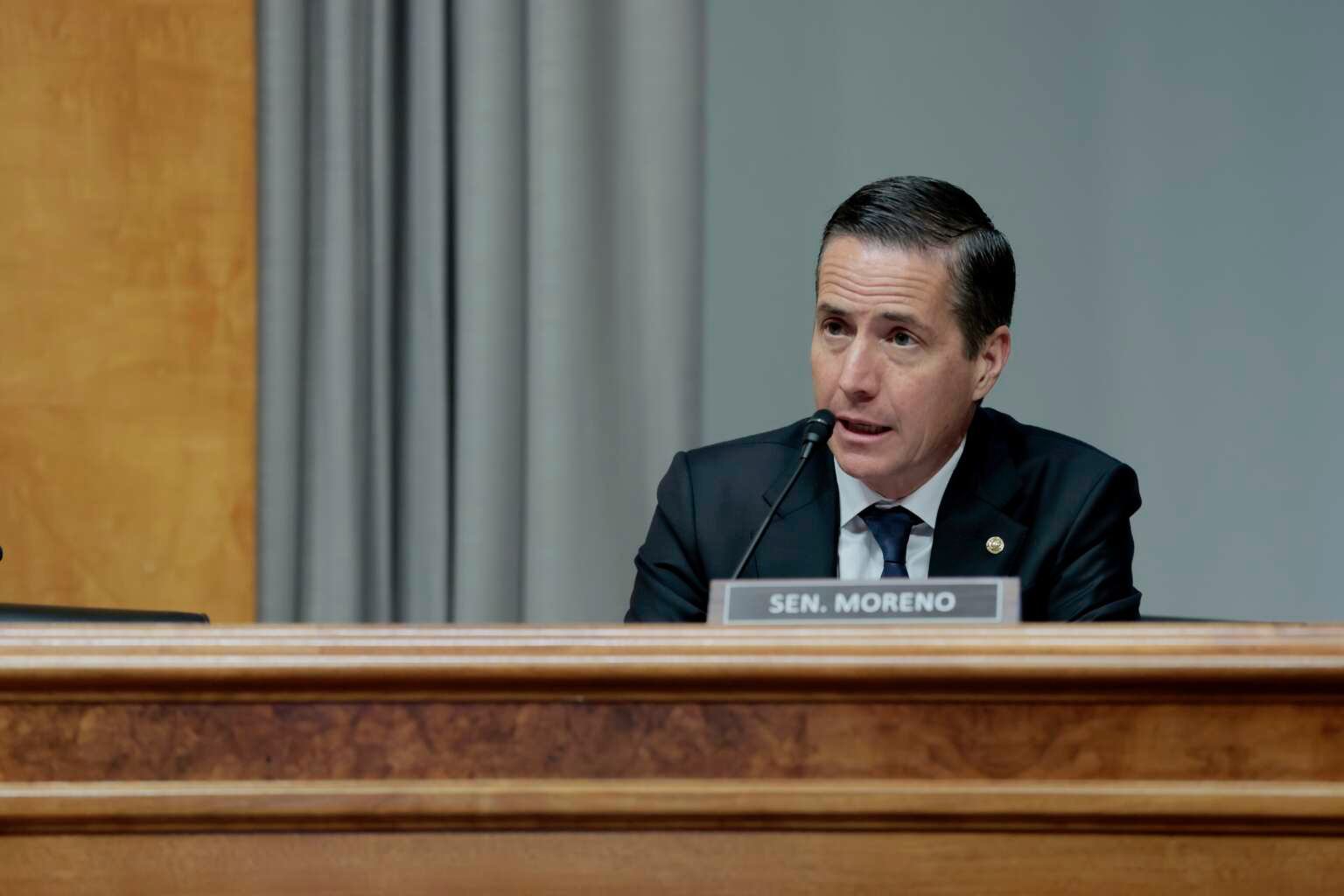
Amid the heated debate over immigration policies under US President Donald Trump, Congress has entered the fray, with Republican Senator Bernie Moreno of Ohio introducing a bill that would eliminate dual citizenship in the U.S.
The Exclusive Citizenship Act of 2025 would prohibit any individual from being a citizen of the U.S. and simultaneously holding another nationality.
If passed, the bill will take effect 180 days after its adoption. Any U.S. citizen who voluntarily acquires a foreign nationality will be required to renounce their U.S. citizenship after the law's enactment date.
Individuals with dual citizenship will be required to submit a written declaration renouncing their foreign citizenship to the Secretary of State or a written declaration renouncing their U.S. citizenship to the Secretary of Homeland Security within one year of the law's enactment.
If these individuals fail to comply with these procedures within the specified timeframe, they will be automatically considered to have renounced their U.S. citizenship.
Moreno, who was born in Colombia and renounced his original citizenship at age 18, said that U.S. citizenship is an unshared honor and that loyalty to the U.S. should be total and undivided.
There is no official database that counts the number of U.S. citizens with dual citizenship because current U.S. law does not require individuals to disclose any other citizenship they hold, and no government agency maintains a comprehensive registry of them.
But experts estimate that the proposed legislation could affect broad segments of the population both within and outside the U.S., including naturalized immigrants, children of dual citizens, those married to foreigners, and those who acquire a second nationality later.
It is estimated that between 3% and 10% of Americans worldwide hold dual citizenship.
The bill also poses a particular challenge to Israeli-Americans, whose number is estimated to be between 200,000 and 600,000.
The proposed legislation could strip many celebrities of their dual citizenship, potentially impacting First Lady Melania Trump and her son Barron, as well as celebrities such as Tom Hanks, Rita Wilson, Ryan Reynolds, Salma Hayek, and Charlize Theron.
The U.S. State Department has confirmed that current laws do not prohibit acquiring a second nationality, nor do they require citizens to declare or renounce it.
Legal Challenges
Although this is the first time a legislator has sought to eliminate dual citizenship, some Republican representatives have previously attempted to prevent anyone with dual citizenship from serving in Congress, but their efforts were unsuccessful.
Historically, the right to dual citizenship has been protected by the Constitution.
Under the 14th Amendment, the law states that U.S. citizens can only lose their citizenship if they voluntarily renounce it.
This was further reinforced in 1939 in Perkins v. Elg, and again in Kawakita v. United States in 1952.
The landmark case of Afroyim v. Rusk in 1967 also affirmed that U.S. citizens cannot be stripped of their citizenship without their consent, suggesting that the bill may face future challenges.
Even if the bill passes Congress, it is expected to face significant legal challenges before the federal courts and potentially the Supreme Court, the highest judicial body in the U.S.
The Supreme Court has previously ruled that dual citizenship is a long-established legal status, and that a U.S. citizen can only be deprived of their citizenship through voluntary and explicit renunciation, not simply through a particular act or a unilateral change in the law.
Therefore, the core idea of the bill could be deemed by higher courts to violate the principle of voluntary renunciation, which has been established in American jurisprudence for decades. This opens the door to lengthy legal battles if the law is passed.
This bill is also considered one of the most controversial legislative proposals in decades, given its direct implications for national identity and citizens’ freedom to maintain their international ties.
The bill is problematic for numerous reasons, ranging from the logistical to the ideological.
American Immigration Council senior fellow Aaron Reichlin-Melnik pointed out that many Americans would be unable to comply with the order even if they wanted to renounce their foreign citizenship.
Political Debate
As of now, the Exclusive Citizenship Act of 2025 remains merely a bill introduced by a single senator, and there is no clear picture of the level of support it might garner in either the Senate or the House of Representatives.
To become law, it must be debated in the relevant committees, then put to a vote in the Senate, followed by the House of Representatives, before being signed into law by the president.
For his part, lawyer Karim Youssef told Al-Estiklal that “for Arabs residing in the U.S. who hold American citizenship in addition to the citizenship of their country of origin, the matter—if the law is passed in its current form—will not be a mere theoretical political debate, but a fateful decision that forces them to choose between an American legal identity and another legal identity.”
“The bill reflects a desire to promote undivided national loyalty, but its approach risks signaling a broader intolerance toward the complex, multigenerational ties that many Americans maintain with their countries of origin,” he noted.
“The bill's assumption that an individual's inaction is equivalent to a voluntary renunciation of U.S. citizenship appears incompatible with the Fourteenth Amendment's protection of citizenship,” he said.
As interpreted by the U.S. Supreme Court, the Fourteenth Amendment requires voluntary affirmative, intentional surrender.
Voto Latino, a civic advocacy organization, called on Congress to reject this extreme legislation, and instead focus on bipartisan solutions that strengthen inclusivity, and uphold the constitutional rights of all Americans—regardless of their background.
Martha McDevitt-Pugh, Chair of Democrats Abroad, strongly condemned Moreno's bill: “Questioning loyalty because a citizen possesses another passport is not just wrong; it’s an attack on the millions of Americans whose lives span borders and who contribute every day to the strength of the U.S.”
“This bill is unconstitutional on its face, misguided in its assumptions, and harmful to the global American community. Congress must reject it outright,” she said.
Republican Rep. Randy Fine of Florida, who is infamous for his vehement defenses of “Israel”, has previously introduced legislation to bar people with dual citizenship from serving in Congress.
Donald Trump recently said that he would absolutely move to denaturalize supposed criminals naturalized under President Joe Biden if I have the power to do it.
His administration is seeking to vastly restrict citizenship requirements in the U.S., including in its executive order to end birthright citizenship that’s currently pending a response from the Supreme Court.