Mandatory or Voluntary: How Europe Is Moving Towards Militarizing Its Citizens
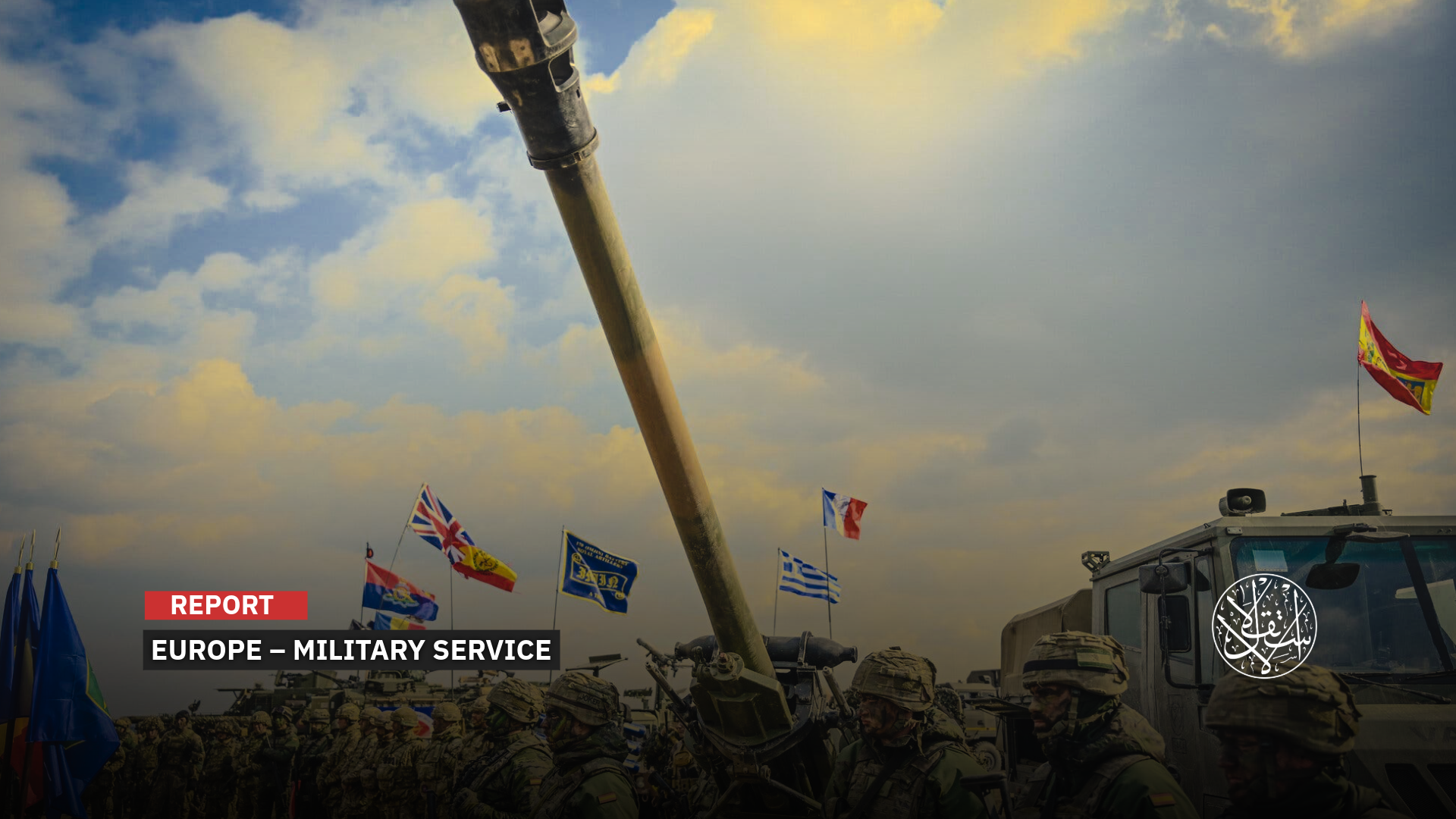
“Defence spending by European Union member states increased 37% in 2024 compared to 2021.”
Security concerns in Europe have escalated following Russia’s war in Ukraine and the worsening global geopolitical instability, prompting many EU countries to reassess their defense policies, including mandatory military service for young people.
After most EU countries abolished conscription in the late 1990s and early 2000s, some have begun to reinstate it, while others are considering its return in the near future.
Germany, the Baltic states (Lithuania, Estonia, and Latvia), Sweden, and Croatia have passed laws to reinstate military service, while Switzerland, Norway, Austria, Cyprus, Denmark, Estonia, Finland, and Greece have maintained conscription for decades.
After a hiatus of nearly 30 years, France recently announced the reintroduction of voluntary military service, a move that further illustrates how Russian President Vladimir Putin is reshaping the security landscape in Europe.
French Plan
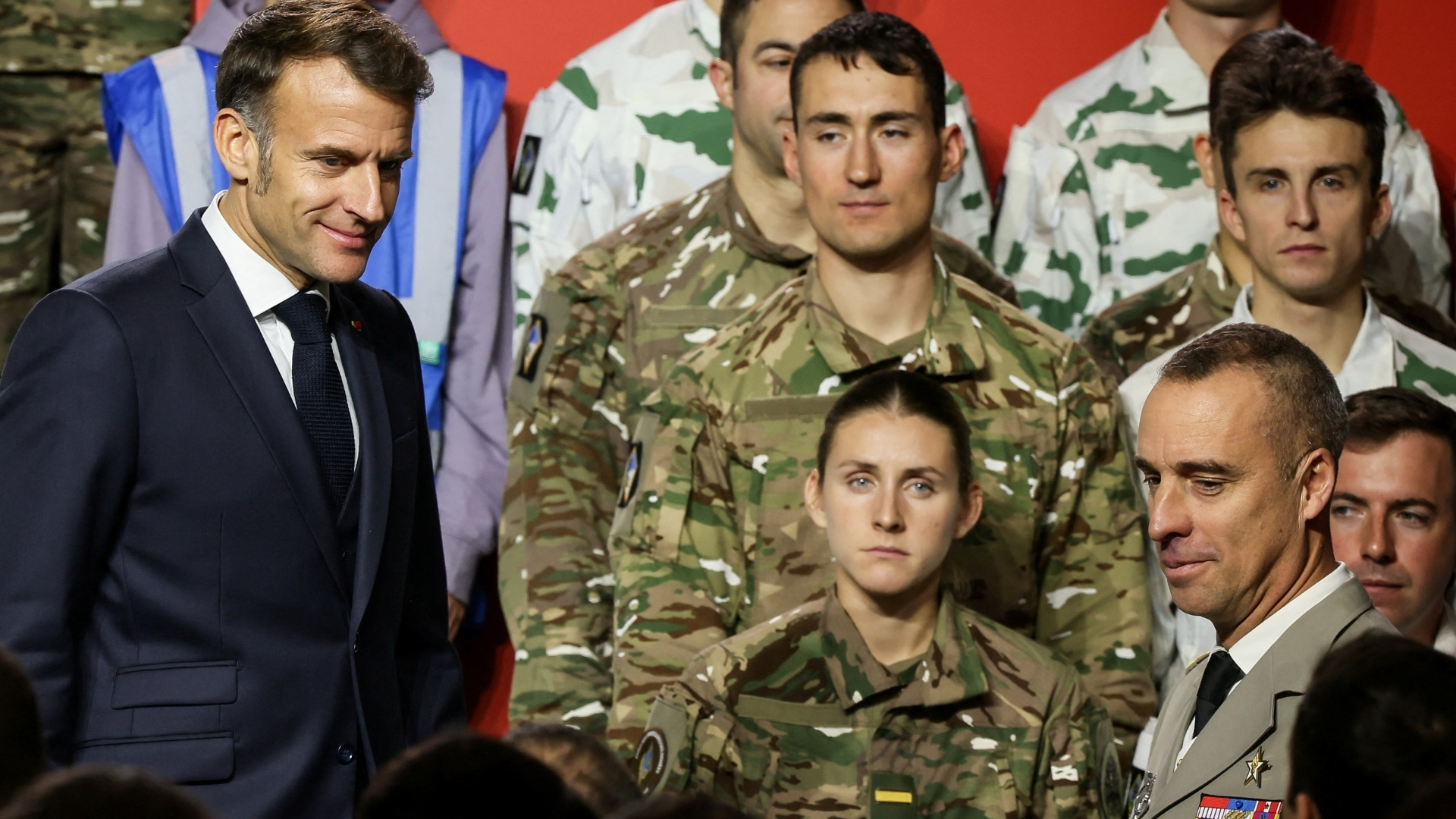
France has become the latest EU country to unveil plans to expand its military. French President Emmanuel Macron announced that volunteers aged 18 and 19 will begin mandatory military service next summer in a new 10-month program.
The French plan is unlikely to include the reinstatement of conscription, which was abolished in 1997.
Macron told RTL radio that service will only be mandatory in major crises, reiterating his opposition to a full return to conscription.
However, he emphasized that France could call upon skilled young people in the event of war.
He also announced an additional €6.5 billion in military spending over the next two years.
He said France will aim to spend €64 billion annually on defense by 2027, the final year of his second term. This would represent double the annual spending of €32 billion when he took office in 2017.
Le Figaro, citing informed sources, reported that several scenarios are being considered to explore the possibility of recruiting between 10,000 and 50,000 young people annually.
The French armed forces currently comprise over 200,000 active personnel and 47,000 reservists, with numbers projected to rise to 210,000 and 80,000 respectively by 2030.
French generals believe the country possesses the economic and demographic capacity to deter Russia, but lacks the psychological readiness to pay the price of defense, a point that has sparked heated political debate.
Chief of the Defence Staff General Fabien Mandon sparked a media and political uproar last week when he suggested the country should prepare for the loss of its sons, asserting that Russia is preparing to confront French nations by 2030.
According to an Ipsos poll conducted last March, 86% of French people support the reinstatement of some form of military service, with 53% favoring mandatory service and 33% preferring voluntary service.
Conscription
Faced with the Russian military threat and uncertainty surrounding the United States' commitment to defending its transatlantic allies, Europe is accelerating its efforts to bolster its defense industry and deployment capabilities, which it had significantly reduced since the Cold War.
In the Baltic region, Lithuania was the first to reinstate conscription in 2015, following Russia's annexation of Crimea, with a nine-month service period for men aged 19 to 26.
Latvia followed suit in 2014 with a 12-month service period for men aged 18 to 27, with conscripts selected by lottery.
Estonia imposes a service period of eight to eleven months for men aged 18 to 27, while Finland offers a service period of six to twelve months for men aged 18 to 30.
Sweden also reinstated conscription in 2017 for a period of nine to fifteen months, with selection based on motivation and qualifications, while Denmark is considering increasing the service period from four to eleven months.
In Croatia, young men aged 18 to 27 will be required to serve for two months starting January 1, 2025.
Also in Southern Europe, Greece imposes a service period of 9 to 12 months, while Cyprus requires 14 months, and Austria maintains a 6-month service requirement, confirmed by a 2013 referendum.
Some countries, such as Sweden and Denmark, have begun expanding conscription to include women, while women can volunteer in Austria, the Baltic states, and Finland.
In Spain, which has faced criticism for not meeting NATO's defense spending targets, Defense Minister Margarita Robles stated last year that the idea of reinstating conscription had not even crossed the government's mind.
In contrast, 17 EU countries no longer have conscription, including Luxembourg, Belgium, France, and the Netherlands, followed by Spain, Slovenia, the Czech Republic, Slovakia, Hungary, Portugal, Italy, Romania, Bulgaria, Poland, and Germany.
Ireland and Malta have never implemented conscription, relying instead on professional armies.
Recently, discussions about conscription have resurfaced in Belgium, the Netherlands, Germany, and Poland.
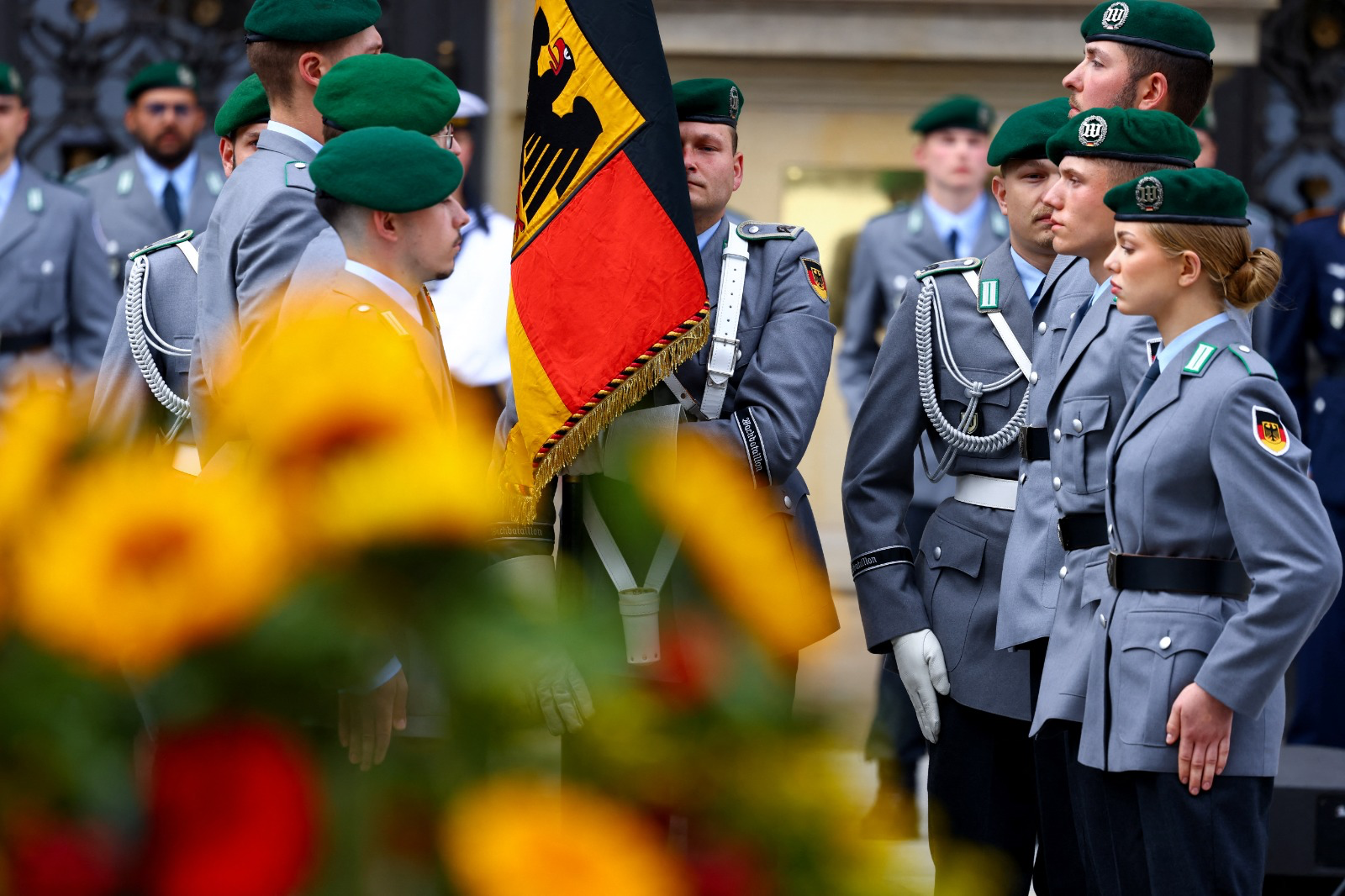
After heated debate, the German cabinet approved a draft law on August 27th allowing for voluntary military service, aiming to recruit 100,000 reservists by 2030 and increase the size of the armed forces.
However, if this model fails to achieve the required numbers, Berlin will reconsider the possibility of introducing nationwide conscription.
In 2026, a survey will be conducted among 18-year-olds to assess their skills and interest in joining the German army.
In 2026, Belgium is to introduce a 12-month voluntary military service for men and women, aiming to reach 1,000 volunteers by 2028.
On November 5, Poland launched a pilot program for comprehensive, voluntary military training, as part of a broader initiative. This follows the government's announcement in March of its goal to train 100,000 volunteers annually by 2027.
In Denmark, the government last year extended military service from four to 11 months and, since July 1, has made it compulsory for women as well.
Since the outbreak of war in Ukraine, the Netherlands, Bulgaria, and Romania have opted for voluntary programs for the time being.
Recent polls show that a majority of the population in several European countries, including Germany, France, and Poland, supports some form of compulsory military service, while other countries have thus far avoided this option.
In the UK, where only a third of the population said they were willing to defend the country, the idea of reinstating compulsory service was briefly floated in 2024 but then dropped with the arrival of the Labour government.
Reports indicate widespread aversion to conscription, which was abolished in 1960, and Keir Starmer's government has no intention of reinstating it at present.
However, it has pledged to increase the country's defense spending from the current 2.3% of GDP to 3% after 2029.
Vincent Connelly, a Professor of Psychology at Oxford Brookes University, said the war in Ukraine demonstrated that the decisive factor in warfare remains human resources, which explains recent developments in European defenses.
In Switzerland, all men aged 18 to 24 are required to perform military service. Conscripts must undergo 18 weeks of training at a conscription school or choose to perform civilian service.
Norway has maintained a semi-mandatory, voluntary military service, with only 15 to 20% of eligible candidates being selected each year.
Since 2013, Norway has decided to make this 12-month military service mandatory for women as well, in the name of gender equality.
European Defense Doctrine
Despite the heavy losses Russia has suffered in the Ukraine war, European militaries view it as a potential direct threat within the next two to five years.
At the same time, Washington has made it clear that it expects its European allies to assume a greater share of the responsibility for their own defense.
Last January, President Trump again called on NATO countries to increase their defense spending to 5% of their GDP, saying, “Previously, the target was 2% , and most countries weren’t even paying that much.”
Defence spending by European Union member states increased 37% in 2024 compared to 2021, according to European Council figures.
Meanwhile, Russian President Vladimir Putin is pushing for concessions in ceasefire talks in Ukraine, from which Europe has been completely excluded.
In parallel, cyberattacks and threats targeting critical infrastructure are escalating, from Italy to Iceland.
Benjamin Giltner, a researcher at the Cato Institute, argues that Europe can no longer afford to rely on Washington’s security umbrella and is now required to formulate a robust European defense doctrine that protects NATO’s borders from Russian ambitions.
The idea of creating a European army emerged during the Cold War, and the proposal was revived in the 1990s with the formation of the European Union. However, it lost momentum due to US opposition and the EU's commitment to NATO.
While the idea is logical in principle, it has proven impractical due to the high financial cost and the lack of a unified strategic vision that defines collective defense objectives and extricates the continent, which suffers from a historically fragmented defense posture, from its state of security dependency.
Europe has nearly two million military personnel and spends approximately $338 billion annually on defense. These armies have been designed to serve narrow interests, not to defend the bloc as a whole.
Earlier, European Commission President Ursula von der Leyen unveiled a plan to rearm EU member states, noting that the plan includes European investments in Ukraine's military-industrial complex.
She proposed raising €800 billion over four years to finance the rearmament, relying primarily on the budgets of EU member states.
However, the newspaper Argumenty i Fakty revealed that the EU wants to create its own army because member states are unwilling to increase funding for NATO bases.
They believe it is better to allocate the funds to their own armies rather than a foreign one.
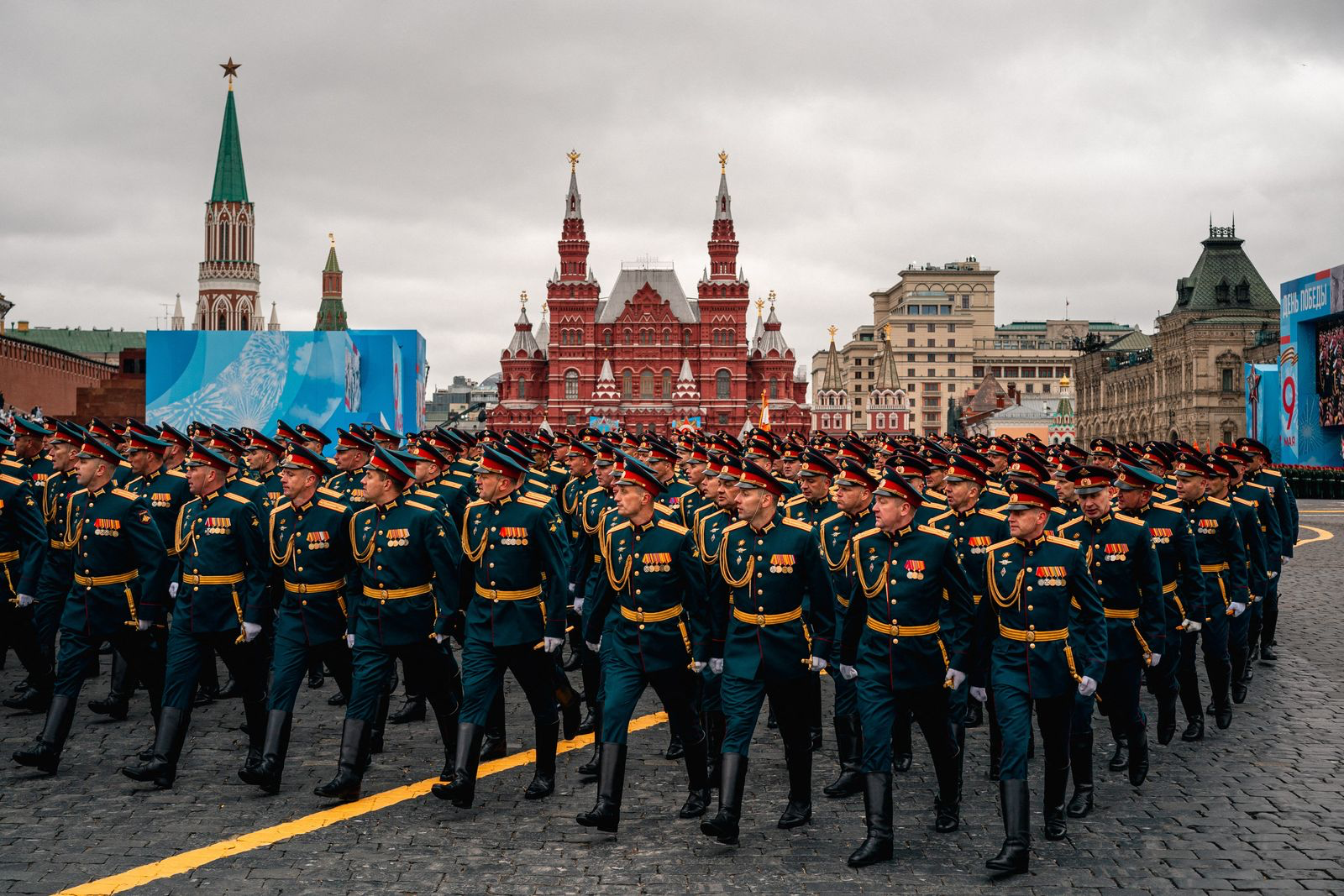
Politico stated that strengthening the armed forces in Europe to counter potential Russian threats faces numerous challenges, including securing sufficient funding and gaining the support of the younger generation.
Studies, according to Deutsche Welle, have shown that many Europeans are unwilling to defend their countries on the battlefield.
French expert Benedicte Cheron, who studies the relationship between society and the armed forces, explained: “In a liberal society, imposing military restrictions has become virtually impossible.”
Sources
- Defense: Emmanuel Macron relaunches military service
- France joins Europe’s military service bandwagon
- Congress Clings to Cold War Framework for U.S. in Europe
- The European countries with mandatory military service - and how they compare
- Military Youth Service, a Cold War Relic, Makes a Comeback in France