Between Elections and White House Pressure: Why Is Netanyahu Seeking a Pardon Now?
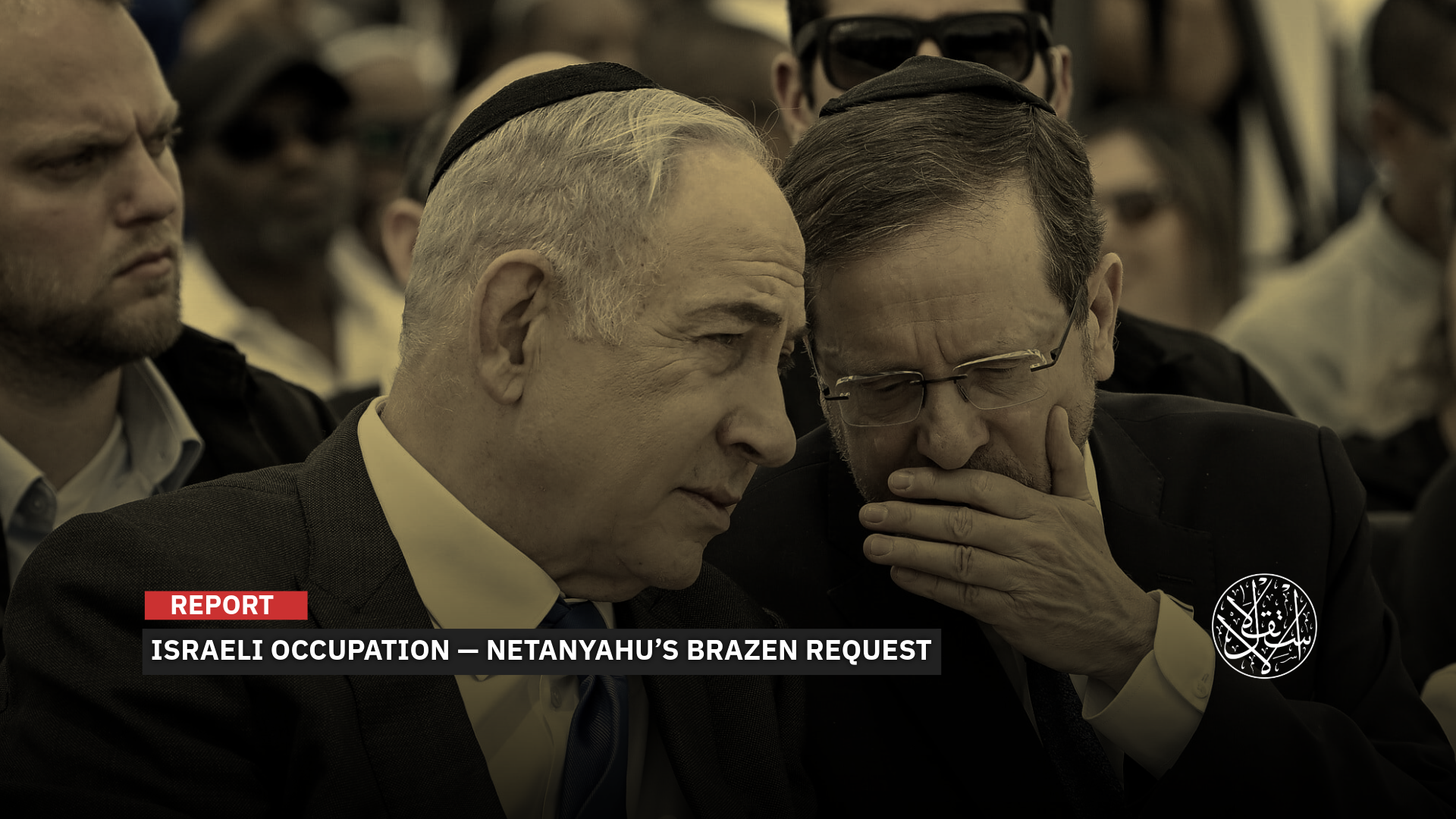
“It appears to be the most brazen request ever submitted.”
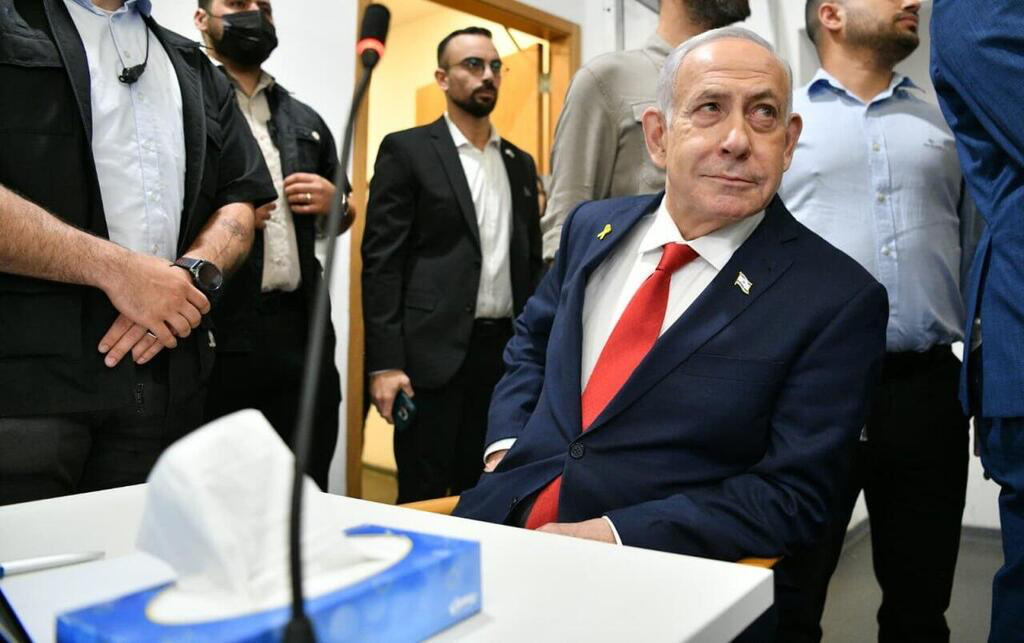
Following a scenario sketched early by U.S. President Donald Trump, Israeli Occupation Prime Minister Benjamin Netanyahu submitted a request for a pardon to President Isaac Herzog on November 30, 2025, seeking immunity from corruption charges, including bribery, fraud, and breach of trust, for which he is currently on trial.
Netanyahu framed his pardon bid as a means to prevent division among Israelis and to unite the country in addressing strategic challenges affecting both “Israel” and U.S. interests in the region.
But the request was presented as a directive rather than a plea. It contained neither an apology nor any admission of guilt, departing from the usual protocol for pardon applications. While it caused an uproar in “Israel,” critics insist he must formally apologize and leave political life entirely to qualify for any clemency.
Israeli analysts warn that the way Netanyahu’s office submitted the 111-page request complicates matters for Herzog and deepens his dilemma. The prime minister shows no remorse, does not acknowledge the charges, and refuses to consider retiring from politics, despite the legal requirement that a pardon should be conditional on stepping down.
The paradox is stark: Netanyahu, convicted on three criminal counts of bribery, fraud, and breach of trust, who has faced trial since 2020 over internal corruption, remains politically shielded by Washington regarding his war crimes in Gaza.
The question now looms: will he fall for corruption charges but escape accountability for genocide in Gaza, or will he evade both, undermining the Israeli Occupation’s justice system in the process?
Political, Not Legal
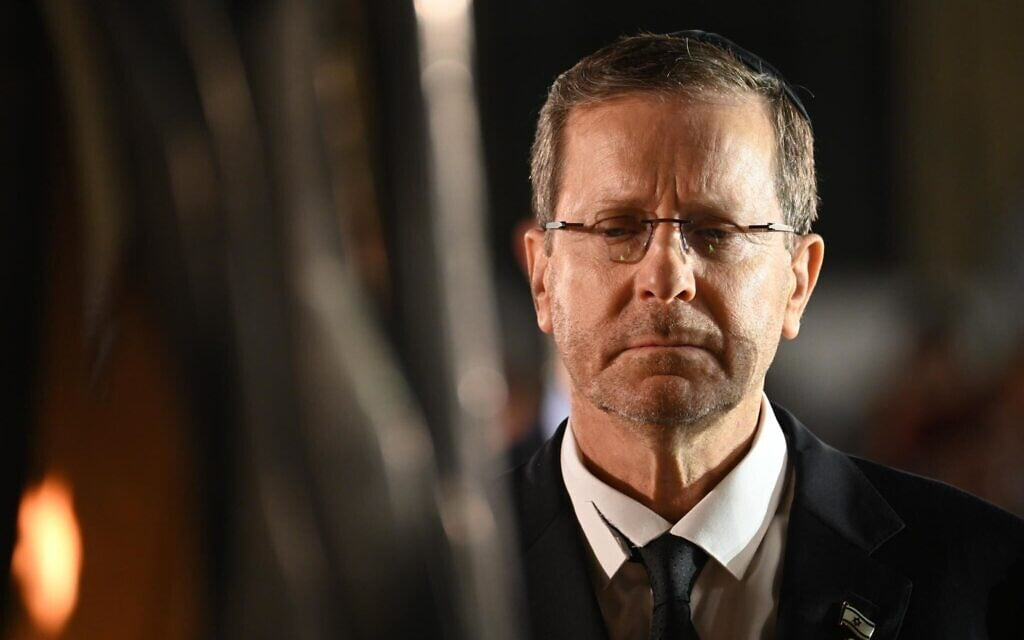
Netanyahu’s pardon request presents a thorny dilemma. It could succeed under pressure from Trump, granting him clemency—but only if he steps down and leaves political life. Refusal to resign or an unconditional pardon without acknowledging guilt would circumvent “Israel’s” legal system, effectively turning the pardon into a political deal rather than a legal one.
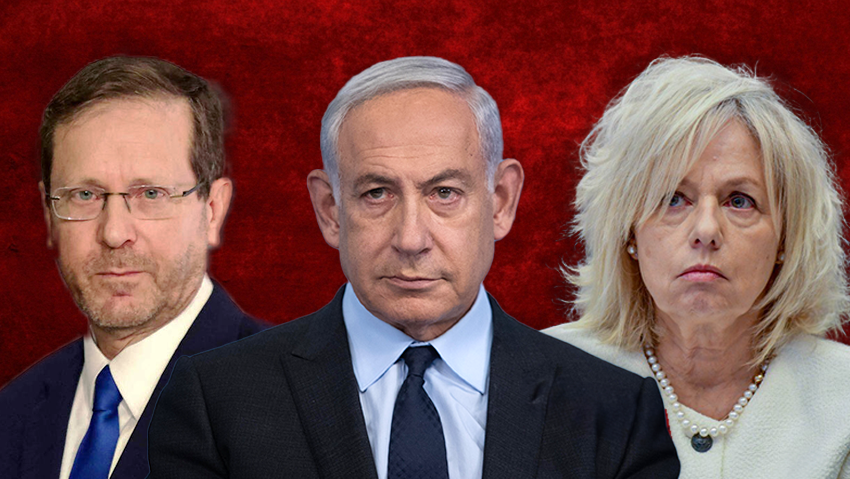
On November 12, 2025, Trump sent a letter to President Isaac Herzog calling for a pardon for Netanyahu, who faces multiple corruption charges across several cases. According to Yedioth Ahronoth on November 30, any pardon would follow negotiations among three key figures: Herzog, Justice Minister Yariv Levin—a natural supporter of the pardon—and Attorney General Gali Baharav-Miara, who heads the prosecution in Netanyahu’s corruption trial. Should opponents challenge the pardon, “Israel’s” High Court of Justice could step in to reject or overturn it.
Baharav-Miara previously rejected proposals for a plea bargain, insisting that any resolution must include an admission of guilt and acceptance of moral corruption charges, which would compel Netanyahu to resign and exit political life.
Legally, Netanyahu’s request has entered formal channels. The Justice Minister must officially approve the submission and refer it to the Pardon Administration for professional evaluation. The administration will determine whether Netanyahu’s request meets legal criteria, such as acknowledging wrongdoing, expressing remorse, and accepting responsibility. Levin will then provide his own recommendation.
The Attorney General, in consultation with the prosecution team, will issue a legal opinion to the president and his advisors, likely emphasizing principles such as equality before the law. She is expected to insist on an admission of guilt and recognition of moral corruption. Under Israeli Occupation law, such a classification would automatically require Netanyahu’s resignation from the premiership—something he strongly opposes.
If the pardon is approved, Baharav-Miara will also address any petitions potentially filed with the High Court, deciding whether to defend the president’s decision or oppose it. Critics fear the current president might repeat what his father, former President Chaim Herzog, did in the “Bus 300 affair,” granting a pardon to Israeli killers who had executed Palestinians in cold blood after their capture.
In April 1984, four members of the Popular Front for the Liberation of Palestine hijacked a bus traveling from Tel Aviv to Ashkelon, carrying 41 passengers, and forced it to Gaza. The Israeli Occupation army killed two of the hijackers and captured two others, who were subsequently executed while in custody.
Chaim Herzog issued a preemptive pardon for the senior officials of the Israeli intelligence agency (Shabak) who had killed the Palestinian fighters, doing so before any trial began and without the officials admitting guilt.
The Supreme Court at the time upheld the pardon for the Israeli killers in the “Bus 300 affair,” and it is unlikely that a similar pardon for Netanyahu would be overturned.
A New Twist
According to Yedioth Ahronoth, sources close to President Isaac Herzog suggest he leans toward supporting Netanyahu’s pardon, seeing it as a potential step to ease mounting social unrest in “Israel.” Yet Herzog may demand a “comprehensive deal,” including at least a partial admission of criminal misconduct from Netanyahu, a promise to halt further judicial reforms hinted at in the pardon request, an end to attempts to sideline the attorney general, and a public commitment to social reconciliation.
Hebrew-language outlets note that Herzog is acutely aware of Netanyahu’s role in deepening societal divisions and his battle against the judiciary and free press, and that at least half the population shares these concerns. Analysts predict Herzog would likely reject the pardon unless Netanyahu formally apologizes and admits guilt.
Netanyahu’s request is unprecedented in Israeli history. He is the first sitting prime minister under criminal indictment to seek a presidential pardon before any verdict, according to The Guardian and Israel Hayom.
The request reflects a significant political shift, using clemency as a strategic tool rather than purely a legal one, at a moment when the balance of power within the Israeli Occupation is being redrawn.
If granted, the pardon adds a new dimension to the ongoing struggle over judicial independence and the rule of law, a battle that could erode public confidence in state institutions. Opposition leader Yair Lapid has urged Herzog not to issue any pardon without Netanyahu immediately leaving political life, stating, “You cannot grant Netanyahu a pardon without an admission of guilt, an expression of remorse, and an immediate withdrawal from political life.”
In his request, Netanyahu argued that “Israel” faces golden opportunities capable of radically transforming the Middle East, alongside risks, threats, and challenges. He said it is a matter of first public interest for the prime minister to devote all his time and energy to these critical tasks.
Netanyahu claimed that a pardon would allow him to address societal divisions and focus on key issues such as the judiciary and media, which he is currently barred from managing due to his ongoing trial.
Yet Haaretz, in early December 2025, described the pardon request as “the most brazen” yet, dripping with conspiracy and rewarding the prime minister’s intimidation of his opponents. The newspaper noted that anyone reviewing the court transcripts would see that no force could save Netanyahu from conviction on at least some charges, questioning why the pardon request made no mention of this reality.
Analysts have pointed out that the text of Netanyahu’s 111-page request frames a rejection by Herzog as a refusal to heal societal divisions, claiming that dismissing the pardon would undermine the very unity Netanyahu says his exoneration would promote.
Polling shows that over a third of Israelis support a pardon for Netanyahu in his corruption trials.
Why Now?
But why is Netanyahu seeking clemency now, after resisting such moves for nearly 16 years, since his return to power in 2009, and amid escalating conflict with the judiciary? The primary driver is Trump’s intervention, pressing Herzog to grant a pardon—an opportunity likely agreed upon prior to the submission.
Analyst Gili Cohen, writing for Kan 11 on November 30, 2025, suggests the upcoming elections in 2026 are also a factor. Three elections have taken place since Netanyahu became criminally indicted, and he lost them all. With the next election approaching, he aims to enter it unencumbered by trial, thanks to the pardon request.
Cohen adds that Netanyahu may also see his age as a factor, understanding that this could be his final election. With strong support from the White House, he can request clemency without admitting wrongdoing and continue to govern.
Netanyahu has also hinted at broader strategic reasons to sway Israelis in favor of the pardon, including imminent normalization with Gulf states. He wrote in his request that in the coming months, developments in the gas and energy sectors of the Middle East are expected under agreements taking shape between the United States, Israel, and Arab countries. This requires significant preparation, continuous diplomatic and security efforts, and round-the-clock attention.
Dismissal or Manipulation
Israeli analysts have been quick to describe Netanyahu’s pardon request as “not a legal step, but purely a political move,” highlighting the surrounding circumstances and the fact that he made the request without admitting guilt—the fundamental condition for clemency.
Nahum Barnea, a political analyst at Yedioth Ahronoth, argued that Netanyahu’s submission to President Herzog is not a judicial step but purely a political maneuver, legally questionable. He added that the goal is to reach a deal that ends the trial through a plea bargain, a pardon, or a combination of both, yet Netanyahu is unwilling to concede anything, effectively asking to grant himself clemency.
Barnea noted that with elections approaching, the political landscape is the primary consideration. If Herzog grants a full pardon, Netanyahu could evade trial entirely and demonstrate to his supporters that he is capable of anything, propelling him toward election victory.
Legal expert Mordechai Kremnitzer, writing for Haaretz, said there is no basis to consider the request; it must be rejected. This is not a request from someone admitting wrongdoing, and the power of pardon cannot be used as a substitute or shield against ongoing judicial proceedings at their peak.
Regarding Trump’s urging of Herzog to grant Netanyahu clemency, Kremnitzer said it is clear that Netanyahu orchestrated the intervention himself. He criticized the prime minister, as head of the executive, for conspiring against “Israel’s” rule of law and judicial independence by inviting foreign interference in domestic legal proceedings.
Palestinian journalist Mona Omary added that approving the pardon “would have far-reaching implications.” In a post on X on November 30, she said, “First, it signals that Israel legalizes corruption and that the judiciary has no authority. Second, it confirms that what amounts to a coup against the judicial system has already occurred.”
Possible Scenarios
According to political analyst Barnea, there are three main possibilities for the decision President Herzog might make regarding Netanyahu’s pardon request.
The first scenario is a clear refusal, on the grounds that the legal conditions for a pardon have not been met. Hebrew-language newspapers suggest that this would likely result in the trial continuing, increased pressure on Netanyahu, and a shift of the conflict from the courtroom to the streets—between opposition forces demanding his prosecution and right-wing supporters accusing the judiciary of targeting him.
The second scenario is granting Netanyahu everything he asks for—the pardon—with the hope that the High Court does not intervene. Analysts in “Israel” and abroad warn that this could be historic, undermining the system of checks and balances in the eyes of Netanyahu’s opponents. It could set a precedent for future pardons used to shield officials accused of corruption. The political fallout could be explosive, with the opposition calling the decision a judicial coup and potentially mobilizing mass protests. Netanyahu himself could emerge politically stronger, framing himself as a leader who “survived the conspiracy,” a narrative often used to boost popularity.
If he feels insulated from the trial, Netanyahu could pursue deeper reforms to limit judicial power and curb the authority of the attorney general, potentially reshaping “Israel’s” judicial system entirely. In essence, granting the pardon could mean a stronger executive branch, a weakened judiciary, and the official politicization of justice.
The third scenario is insisting that Netanyahu resign in exchange for the pardon and formally acknowledge his crimes. In this case, Herzog is not a mediator or lawyer but the decision-maker, and his decision will stand to the end of his term.
Some analysts propose a fourth scenario, closely related to the third: a deal between the prosecution and Netanyahu, such as halting the trial in exchange for his withdrawal from politics for a set number of years. If this happens, it could fracture the governing coalition, intensify the crisis, and push religious right-wing parties to pass immunity laws.
Barnea argues that if Netanyahu genuinely wants to heal societal divisions, the only service he could offer is to step down—not necessarily because of the trial, but because of failures like the October 7 crisis, the ongoing war, and his assault on the judiciary. Ending the trial through resignation would correct something, whereas ending it while Netanyahu and his allies remain in power would deepen the rift and fuel despair.
Based on current dynamics and power balances, analysts predict that whichever path is taken following Netanyahu’s pardon request could profoundly reshape “Israel’s” political and judicial landscape.
Sources
- This is how the Netanyahu presidential pardon process will play out
- Analysis A Pardon for Netanyahu Would Reek of Conspiracy and Be a Reward for Terror
- Benjamin Netanyahu asks Israel’s president for pardon in corruption case
- What charges does Benjamin Netanyahu face, and what’s at stake if he is granted a pardon?
- In granting a pardon, Herzog would validate PM’s narrative that only he can lead the country