‘Israel’ Escalates: Will the South Lebanon Model Be Repeated in Southern Syria?
“Israel does not want any security agreement or any settlement with the Syrian government.”
In a dangerous development that is reshaping the contours of the Syrian-Israeli conflict, it appears that “Israel” appears to be seeking to transform southern Syria into a point of political and military pressure on Damascus.
Talks regarding the signing of a security agreement between the two sides have reached a dead end after Tel Aviv rejected Syrian President Ahmed al-Sharaa's demand to withdraw from all the positions seized by the Israeli army following the fall of the Assad regime on December 8, 2024.
Incursions and Clashes
While Tel Aviv justifies its military incursions into Syrian territory under the pretext of pursuing wanted individuals, Damascus considers these actions a blatant violation of international law and an attempt to impose a new reality of occupation in the Golan Heights and its surrounding areas.
“Israel” appears determined to impose its conditions by force, viewing southern Syria as a strategic arena for protecting its settlements and expanding its regional influence.
Observers point out that the recent attack on the town of Beit Jinn in the Damascus countryside confirms this approach, after it resulted in dozens of martyrs and wounded.
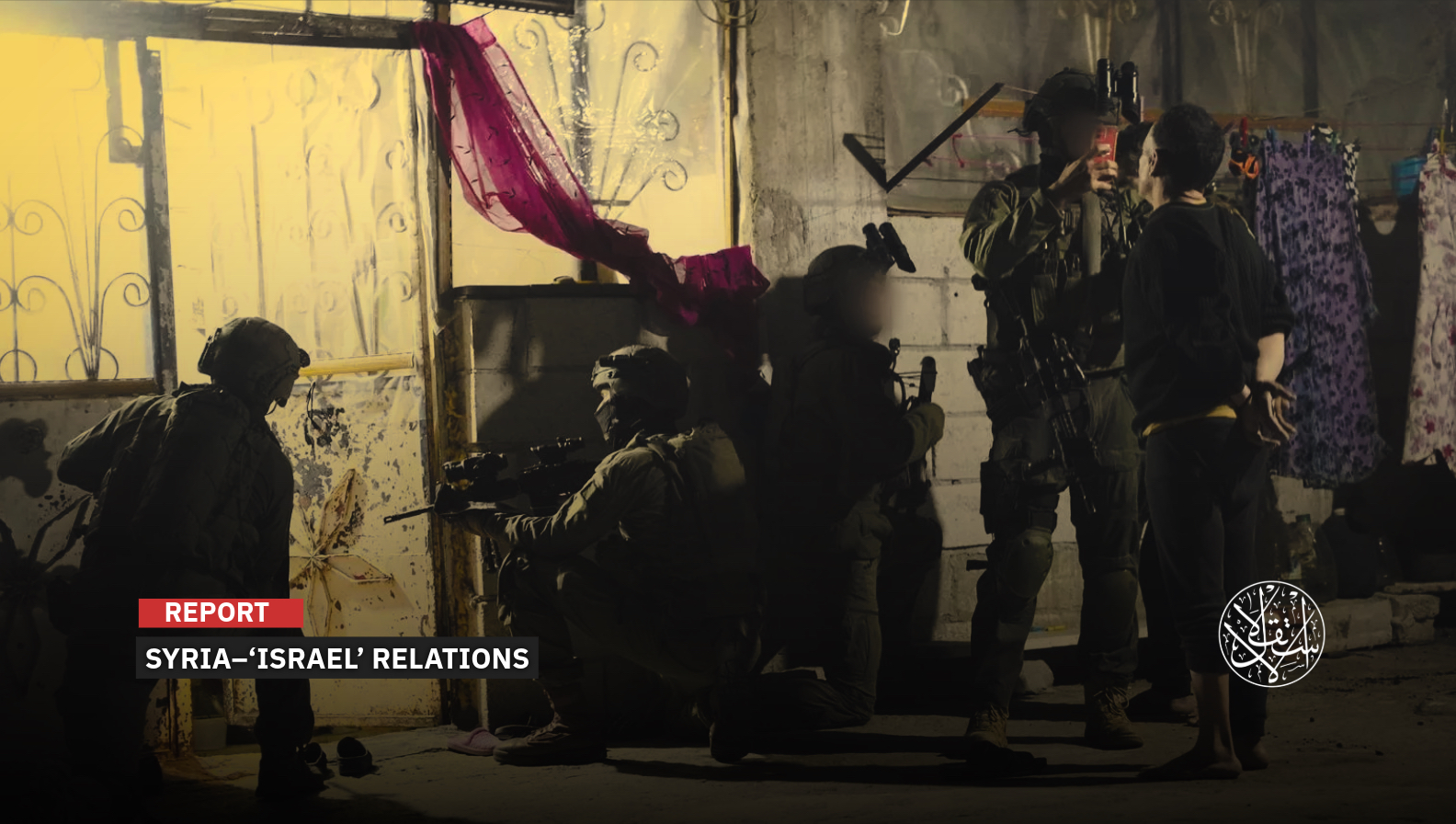
On November 28, 2025, 13 civilians were killed and 24 others wounded by Israeli artillery shelling that targeted the town of Beit Jann, following an incursion by occupation forces to arrest several young men.
This incursion led to direct clashes between the town's residents and Israeli forces, who later announced that six soldiers were wounded, including three officers in critical condition, according to Hebrew media.
Following the attack, the Syrian Foreign Ministry issued a statement condemning the criminal and blatant aggression that sparked clashes as a result of the town's residents confronting the invading patrol and forcing it to withdraw.
The ministry asserted that the Israeli occupation forces' resort to deliberate and brutal shelling after the failed incursion constituted a full-fledged war crime, considering what happened a horrific massacre against civilians.
The Syrian Foreign Ministry held “Israel” fully responsible for the serious aggression and the resulting casualties and destruction, noting that the continuation of these criminal attacks threatens regional security and stability and comes within the context of a systematic policy to impose an aggressive reality by force.
In contrast, the Israeli Broadcasting Corporation (Kan) reported that the operation began around 3:00 AM when the 55th Reserve Brigade carried out arrests targeting wanted individuals in the town of Beit Jann, whom it described as activists in the Lebanese Islamic Group.
The Israeli army spokesperson announced the arrest of three people linked to that organization, as part of what he described as thwarted operations in southern Syria.
Channel 13 reported that the Israeli military leadership is considering adopting a strategy of targeted assassinations inside Syria, following the wounding of its soldiers during the clashes in Beit Jann.
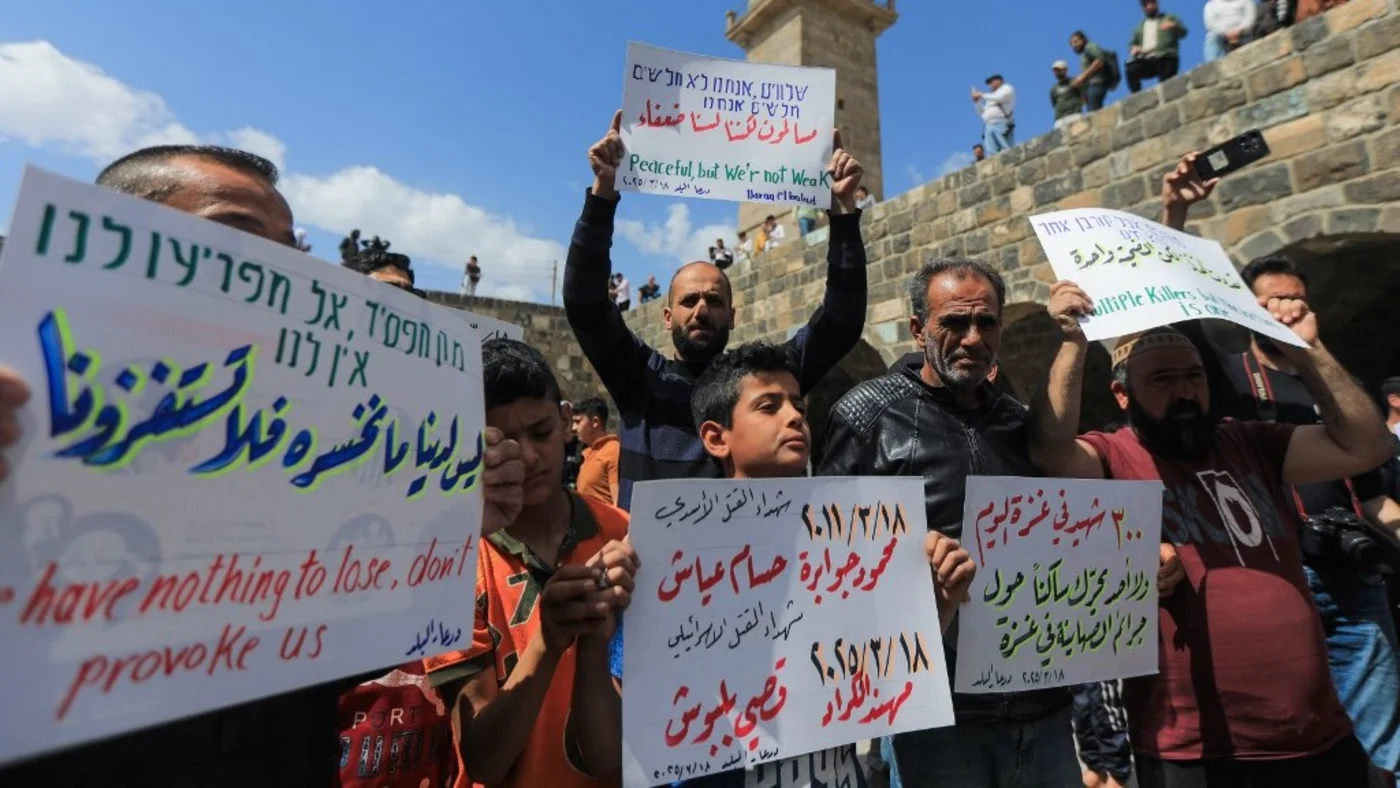
Security experts believe that what happened in the town represents popular resistance, reflecting the fierceness of the residents in confronting the Israeli occupation after a series of arbitrary arrests of civilians over the course of months, with a number of Syrian detainees being held in Israeli prisons for six to seven months.
Analysts assert that the events in Beit Jinn constitute a turning point in the Syrian stance toward the ongoing Israeli attacks since the fall of Bashar al-Assad's regime in December 2024 and Israel's declaration of the cancellation of the 1974 Disengagement Agreement with Hafez al-Assad's regime.
According to security and defense experts, the legal characterization of what happened in Beit Jinn—located just 50 kilometers from Damascus—falls under the category of an Israeli ground incursion that amounts to a cross-border crime, perpetrated through an armed attack targeting citizens belonging to a fully sovereign state.
New Reality
Analysts indicate that the recent Israeli escalation comes within the framework of an attempt to pressure Damascus following the failure of the latest round of negotiations, as Tel Aviv sought to impose new and unprecedented conditions on the Syrian side.
One of the most prominent points of contention is Israel’s demand to reopen a humanitarian corridor to the southern province of Suwayda, a demand that Damascus categorically rejected and considered a clear violation of its sovereignty.
In this context, Israeli Army Minister Israel Katz stated during a closed session of the Foreign Affairs and Security Committee on November 6, 2025, that “Israel” was not moving toward peace with Syria, claiming that Syrian forces near the border were considering a ground incursion into the Golan Heights settlements.
This followed a sharp political attack launched by Israeli Prime Minister Benjamin Netanyahu during a meeting of the Security Cabinet on November 21, 2025, criticizing Syrian President Ahmed al-Sharaa and alleging that he had begun doing things unacceptable to Tel Aviv, following his historic visit to the White House on November 11 and his meeting with US President Donald Trump.
Despite the absence of diplomatic relations between Syria and “Israel”, and the continued official state of war between them for decades, the two sides have held several meetings in recent years, mediated by the United States.
Syrian and Israeli officials met six times to discuss a security agreement aimed at stabilizing the border region, but negotiations have been stalled since September 2025.
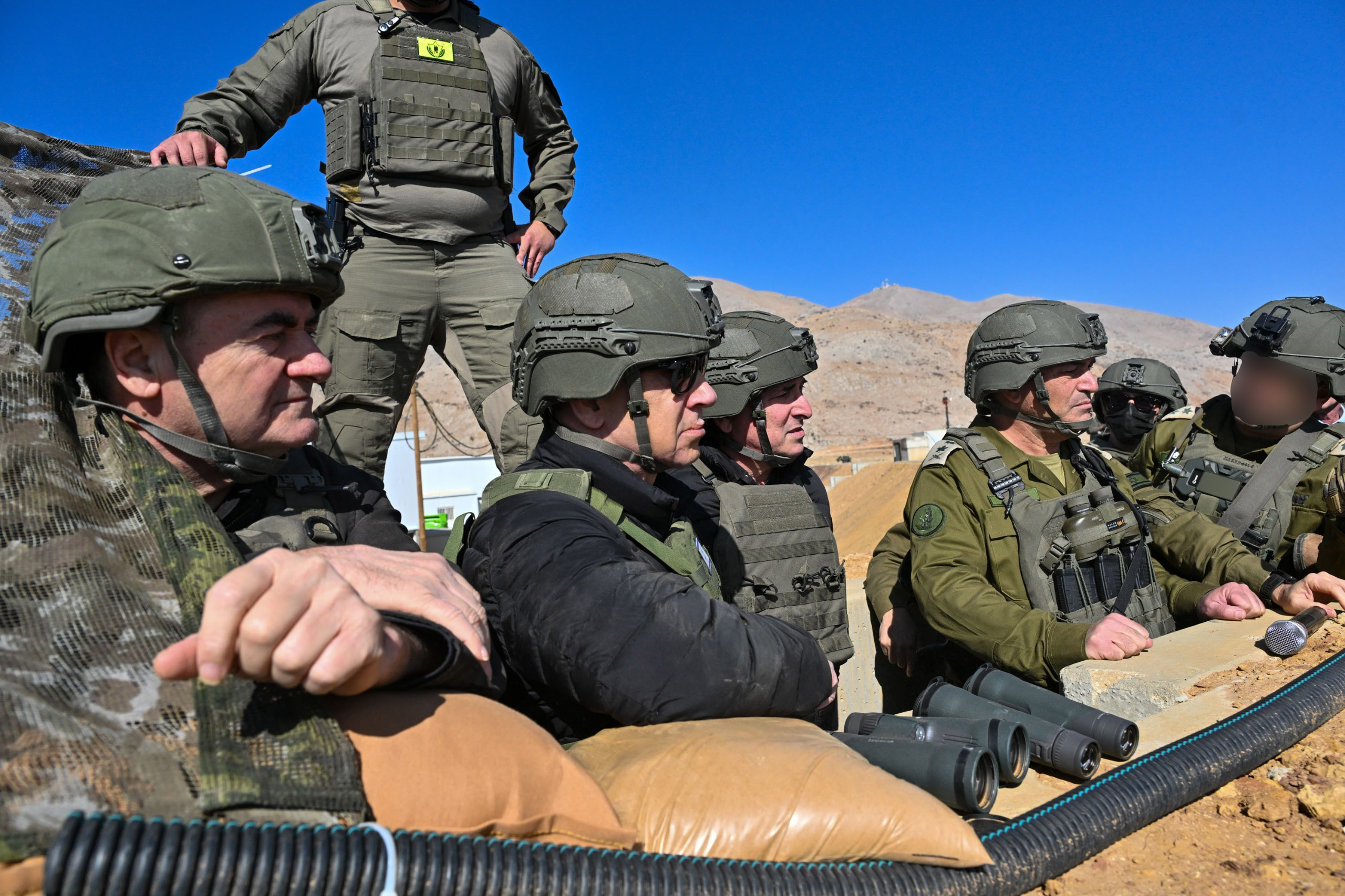
On November 20, 2025, Netanyahu toured the buffer zone outside the occupied Golan Heights, emphasizing the importance of the Israeli military presence there—a move Damascus deemed illegitimate and a clear violation of its sovereignty.
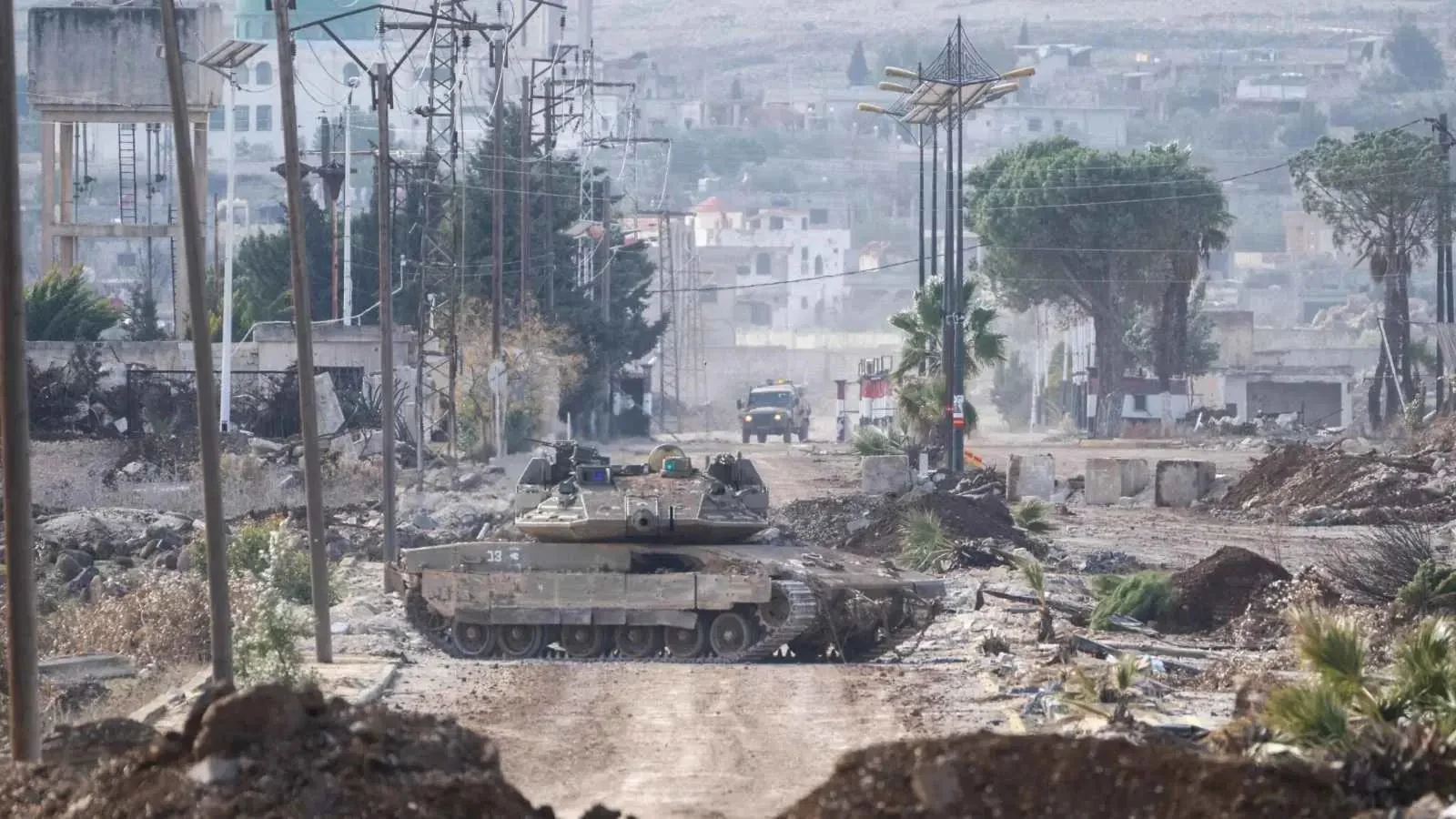
Although the new Syrian government has not, according to observers, posed any direct threat to “Israel”, the Israeli army continues to conduct frequent incursions deep into southern Syria, in addition to launching airstrikes that have killed civilians and destroyed Syrian army positions and equipment since the fall of the Assad regime.
Residents of border villages and towns complain of Israeli incursions that encroach on their agricultural lands—their primary source of livelihood—as well as the destruction of hundreds of acres of forest, the arrest of civilians, and the erection of military checkpoints to search passersby.
These developments come as “Israel” reinforces its military presence in the south, extending beyond the boundaries of the buffer zone established by the 1974 Disengagement Agreement, including its control of the strategic observation post on Mount Hermon.
Since the cancellation of the agreement, Israeli control has expanded to encompass Mount Hermon and several villages and areas extending more than 25 kilometers into Syrian territory, effectively annexing these areas to the Golan Heights, which “Israel” has occupied since 1967.
Mount Hermon is a strategically vital location, overlooking the occupied Golan Heights and situated at the intersection of the Syrian and Lebanese borders. It is also visible from Jordanian territory, making it a central observation and control point in regional security equations.
Specific Gains
Field data indicates that Washington and Tel Aviv are moving in divergent directions regarding the Syrian issue, while the Hebrew press clearly demonstrates the extent of Israeli concern about the growing rapprochement between Damascus and Washington.
In this context, retired Brigadier General Dr. Abdullah al-Asaad, head of the Rasd Center for Strategic Studies, stated in an interview with Al-Estiklal that the Beit Jann operation reveals that “Israel” does not want any security agreement or a genuine settlement with the Syrian government.
“Israel seeks to achieve specific gains, namely control over strategically important lands in southern Syria, rich in water resources and fertile soil, and its ambitions extend as far as the western countryside of Damascus,” he added.
He explained that “these factors lead Israel to view the Syrian government as an equal partner. Driven by its military superiority and American support, Israel believes it has the right to control areas that provide it with a wider buffer zone and room for expansion, serving the settlements in the occupied Golan Heights.”
He noted that the hills and strategic points in those areas are extremely vital, making “Israel” unwilling to relinquish them, as it considers them essential for maintaining its superiority and regional position.
In his estimation, the Israeli incursion poses a direct threat to Syria’s stability and is no longer merely a political dispute.
“Tel Aviv is attempting to force the Syrian leadership to submit to its conditions and maintain its forces within the territories it occupied after the fall of the Assad regime, preferring this military presence to reaching any security agreement with the Damascus government,” he said.
He indicated that “Israel is attempting to impose a model similar to what it implemented in southern Lebanon in recent years, as well as in the Gaza Strip, by establishing a new security zone deep inside Syria. This zone would guarantee Israel strategic superiority in the face of any potential political or military changes within Syria.”
Damascus affirms that Mount Hermon is sovereign territory that cannot be relinquished and expresses its readiness to return to the 1974 Disengagement Agreement under improved conditions that would ensure broader American oversight of the ceasefire's implementation.
Sources
- Amid Israeli air activity: Urgent efforts to repair damage in Beit Jann following the aggression [Arabic]
- Netanyahu, attacking the Syrian president: He has begun doing everything that Israel will not accept [Arabic]
- Katz: Israel is not heading towards peace with Syria [Arabic]
- Controversy erupted on social media following Netanyahu's visit to the buffer zone in southern Syria [Arabic]