The Fate of the Sahara: What Does Algeria Want from Its Mediation Offer Between Morocco and the Polisario?
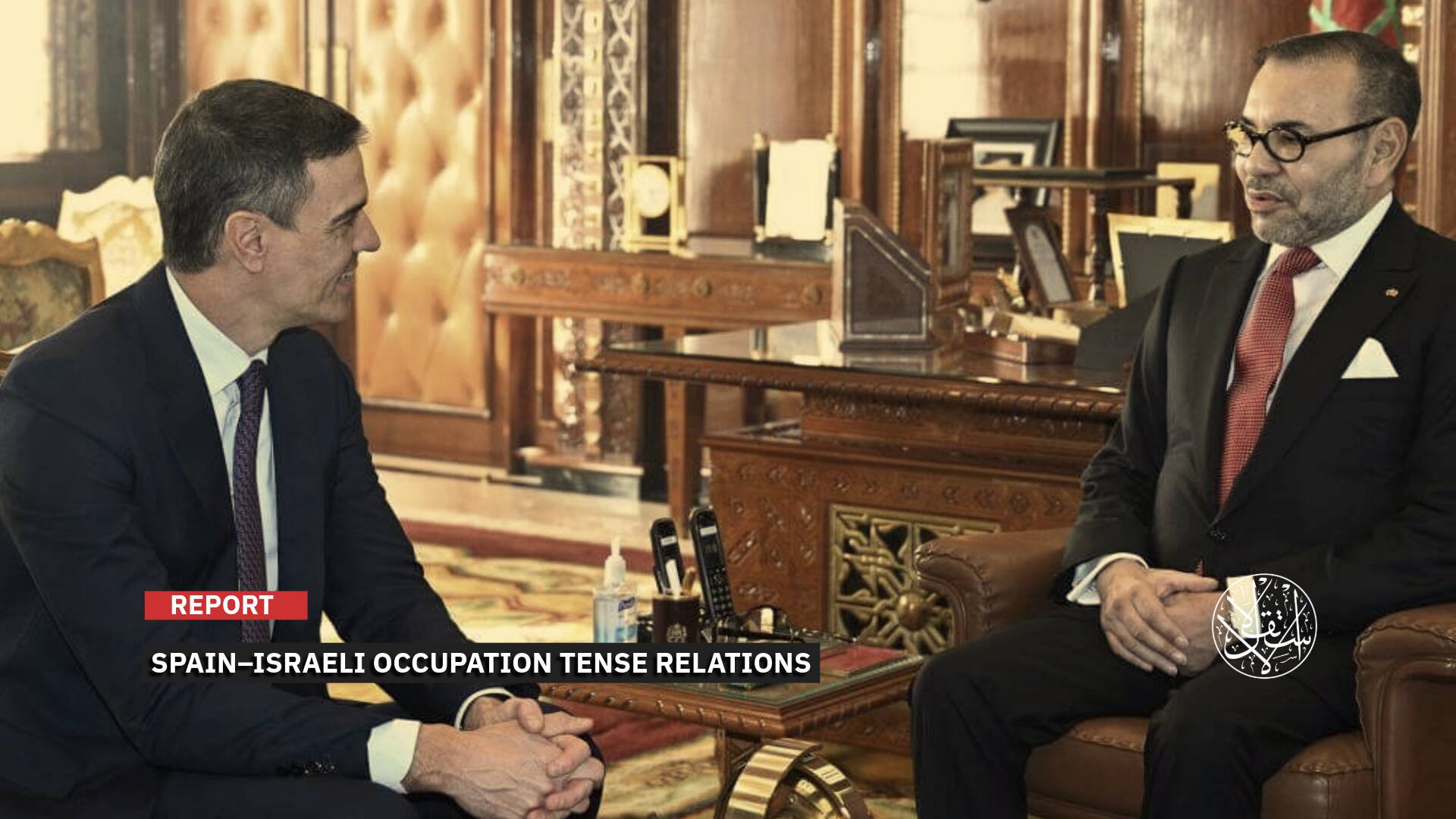
Russia and China won’t block Trump’s support for Morocco’s sovereignty in Western Sahara.
Amid the recent developments in favor of Morocco, bolstered by support from the U.S. administration, Algeria has announced its willingness to mediate between Rabat and the Polisario Front. But what does this move entail, what political aims does it serve, and how has Morocco responded?
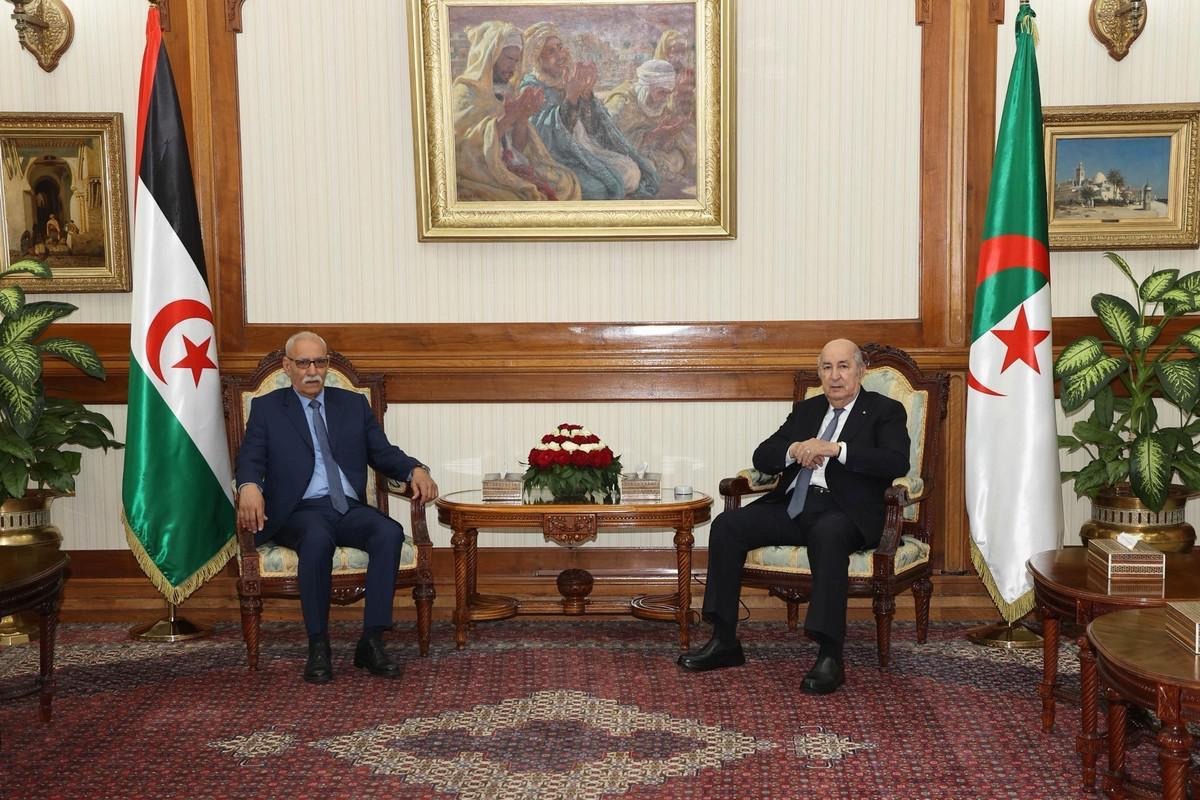
The announcement came from Foreign Minister Ahmed Attaf, who said Algeria would not hesitate to support any initiative aimed at mediating between Morocco and the Polisario Front.
Speaking at a press conference on November 18, 2025, Attaf stressed that the Western Sahara issue remains unresolved and is still before various United Nations bodies.
He underscored that the political process for resolving the Western Sahara question remains under the supervision and follow-up of the United Nations, and does not fall outside this international framework, as stipulated in most of the resolution’s preambular and operative paragraphs.
The foreign minister also pointed to what he described as the need for Morocco and the Polisario to agree on the final form of a settlement, adding that the ultimate solution must ensure that the Sahrawi people are able to exercise their right to self-determination.
Attaf linked Algeria’s keenness to help resolve the conflict in Western Sahara to its long-standing commitment to the security and stability of its neighborhood, a commitment he said stems from Algeria’s firm belief that its own security and stability are inseparable from those of its surroundings and the wider regions to which it belongs.
In the first reactions to Attaf’s statement, Polisario Front foreign affairs official Mohamed Ould Yacoub praised the Algerian initiative.
Speaking at the opening of a Polisario support conference, Ould Yacoub said the call reflected a genuine will for a solution and responded to what he described as the "requirements of a fair and lasting settlement."
He added that "the Front’s acceptance of any mediation remains conditional on its position within the UN framework and its reliance on relevant Security Council resolutions."
On October 31, 2025, the King of Morocco announced his country’s intention to update its autonomy initiative and submit it to the United Nations as the "sole basis for negotiations," framing it as the only solution to the Western Sahara issue, following a Security Council vote in favor of a resolution supporting the initiative.
At the end of October, the Security Council decided to extend the mandate of the United Nations Mission for the Referendum in Western Sahara (MINURSO) until October 31, 2026, according to a text drafted by the United States.
Eleven countries voted in favor of the resolution, which reaffirmed support for "Morocco’s autonomy initiative in Western Sahara," while Russia, China, and Pakistan abstained, and Algeria, which supports a self-determination referendum, did not participate in the vote.
In 2007, Morocco proposed a broad autonomy plan for Western Sahara under its sovereignty, while the Polisario Front continues to call for a referendum on self-determination, a proposal backed by Algeria.
No Preconditions
In response to these developments, Algerian academic and historian Lazhar Beddida said the "Algerian foreign ministry proposal is positive, sending a message to Morocco that, contrary to claims, Algeria could be part of the solution rather than part of the problem."
Beddida told Al-Estiklal that "the root of the dispute is a decolonization issue, and it remains on the United Nations’ table."
He added that the Algerian proposal also places Morocco before the facts, should it have genuine intent to resolve the issue, noting that the plan carries no preconditions and leaves all decisions to the two parties involved.
When asked about his view of Morocco’s likely official response, Beddida said he did not believe Morocco or its supporting states have a sincere intention to resolve the dispute, given that it is fundamentally a decolonization matter.
The Algerian academic added, "This is why Morocco still treats the conflict as a purely internal affair, and the Polisario Front is expected only to accept whatever it decides and grants."
Moroccan Skepticism
On the Moroccan side, George Mason University international conflict resolution professor Mohammed Cherkaoui said there is nothing in modern history since 1974 to support the idea of "mediation" hinted at by Minister Attaf.
Cherkaoui added in a Facebook post on November 21, "Whether one interprets a diplomatic, soft-spoken and opaque statement through the lens of altruism and political idealism, or through that of self-interest and political realism."
"Algeria cannot contradict itself. Given the reality of the Maghreb region and the understanding of the international community, it cannot be both a direct party with vested interests and, at the same time, offer a diplomatic mediation initiative," he continued.
The academic argued that "the lack of transparency in Minister Attaf’s statement does not dissolve the reality on the ground, nor does it erase the late Houari Boumediene’s commitment to arm the Polisario Front and block Muammar Gaddafi’s ambitions in 1974."
"The very idea of mediation is untenable when there has been fifty-one years of support for the Polisario Front, alongside efforts to constrain Morocco’s interests," Cherkaoui emphasized.
Writer Ezaouite Abdenasser stressed that "Attaf’s statement suggests as if the other party in the conflict, namely Algeria, has forgotten its real position and suddenly decided to don the mantle of judgment."
Ezaouite added in a Facebook post on November 18, "Algeria is neither a neutral observer nor a power distant from the field of dispute; it is the second party in the equation, with its political, military, and diplomatic presence having shaped the structure of this conflict since its inception."
“As long as the hand claiming to mediate is the same hand that created the alignment, nurtured it, and supplied it with the means to endure, the claim is nothing more than a linguistic circumvention of an immutable truth, which is that an adversary cannot present itself as the judge.”
In an analysis published on the Kafa Press website on November 18, journalist Abdelaziz Khabshi argued that Attaf’s statement is not without political confusion and exposes a paradox between Algeria’s support for the Polisario Front and its proposal for mediation.
Khabshi noted that the Algerian regime "does not recognize Morocco as a brotherly neighbor and has severed diplomatic relations with it, so it cannot suddenly step onto the 'mediation' stage as if it were a Nordic country in Northern Europe."
"Logic dictates, before any political analysis, that mediation cannot take place between parties with broken relations, conflicting positions, and no minimal diplomatic communication."
"Who would receive an Algerian delegation claiming to mediate, when it has closed its embassy, withdrawn its ambassadors, sealed its airspace, and cut all channels of communication? How can you mediate when you are the first to need to put the restoration of relations, the return of ambassadors, and the normalization of communication on the table?"
Khabshi said that a deeper reading of Attaf’s statement shows that it is not merely a slip of the tongue, but a calculated attempt by the Algerian regime to prepare domestic public opinion for a new phase dictated by the international balance of power regarding the Moroccan Sahara issue.
"Since the adoption of UN Security Council Resolution 2797, it has become clear that the international community decisively leans toward establishing Morocco’s autonomy proposal as the only realistic, practical, and credible solution. This effectively marks the collapse of the ‘self-determination’ myth as manipulated by Algeria, and the end of the illusion of a ‘referendum’ that Algerian diplomacy has continued to threaten, despite its practical impossibility," he said.
The journalist also noted that Attaf offered no concrete vision for mediation, provided no mechanisms or timeline, and did not even implicitly acknowledge that Algeria is a party to the conflict, instead relying on vague language suited for domestic consumption.
Achilles’ Heel
In response to Algerian Foreign Minister Ahmed Attaf’s statement, contemporary and modern history researcher Deddai Bebbout said the call amounts to little more than Algerian anxiety prompted by the current international context, which favors realistic solutions based on international law.
Bebbout told Al-Estiklal, "Support for Morocco’s unity is backed by broad international recognition and solid popular legitimacy among the inhabitants of the Sahara, across its various tribes and political and civil components, who have not lost faith in national unity despite attempts to undermine security and stability."
"UN Resolution 2797, which recognized Morocco’s autonomy initiative as the fundamental basis for any fair, serious, and negotiable political solution, upholds international peace and security while responding to the aspirations of the people of the Moroccan Sahara, including those forced to remain in the Tindouf camps for fifty years."
The researcher emphasized that the matter is not about envy on the part of the Algerian leadership over their ability to devise ideas whose motives are hard to trust, but rather a call to reason and conscience to deconstruct such proposals and assess their credibility after a long history of maneuvers and harm inflicted on the Moroccan neighbor, who has remained committed to the ethics of neighborliness, human values, and high diplomacy, avoiding political underhandedness.
Bebbout stressed that accepting Algeria as a mediator in a file it has turned into a "Achilles’ heel" of its foreign policy since the mid-1970s, after funding armed militias and devoting a significant portion of its economy to a proxy war against Morocco, defies logic.
He drew attention to the fact that Algeria’s call to the United Nations to divide the Sahara does not reflect diplomatic maturity or awareness of peaceful conflict resolution mechanisms, but reveals a frantic pursuit of geostrategic gains, at a minimum to secure control over the Dakhla-Oued Ed-Dahab region to manage its domestic crises, and to emerge as the victor from a war that was never its own. Evidence of this, he said, can be seen in "attempts to infiltrate the Sahel and Sahara to satisfy military sadism."
Bebbout noted that Algeria’s rejection of the international community initiative led by the United States in October 2025, its abstention from voting on the Security Council resolution, and its escalation toward France and Spain over the past two years, do not help it court the international community or present itself as a neutral mediator.
He added that Algeria never responded to King Mohammed VI’s friendly letters in a way that would resolve differences and strengthen unity and the building of a strong Arab Morocco, instead remaining tied to an old settlement formula regarding the Polisario, before severing even minimal ties with Morocco.
Bebbout also warned that what is most troubling is the continued dependence of the Polisario on Algerian decision-making, in the absence of any mobilization to unite Sahrawis on their own land and end the prolonged tragedy, because the opportunity for reconciliation available today under Security Council Resolution 2797 will not recur.
He stressed that any attempt to obstruct it would inevitably jeopardize the future of the Maghreb, thwart the aspirations of its peoples, prolong authoritarianism within Algeria, and extinguish the Sahrawis’ dream of returning with dignity to their homeland within a politically and socially rich environment capable of meeting challenges with determination and resolve.
Mauritanian Perspective
Among Maghreb voices calling for the moment to be seized was former Mauritanian Foreign Minister Ahmedou-Ould Abdallah, who described the Algerian mediation proposal as "a step forward for peace, good neighborliness, and the resolution of problems, including the Sahara issue."
Ould Abdallah, who heads the Strategic Center for Security in the Sahel and Sahara, told the Mauritanian news site Al-Akhbar on November 22, 2025, that "the Algerian announcement marks the beginning of dialogue with Morocco, and I hope Morocco will respond in kind."
He added that the announcement represents "a first step towards opening dialogue between Morocco and Algeria, reopening borders and economic ties, in a world where everyone seeks economic competitiveness."
He also argued that the one-year extension of the United Nations Mission for the Referendum in Western Sahara (MINURSO) "should be used to enable the two brotherly and neighboring countries to bring an end to this crisis."
The Mauritanian diplomat stressed that "Rabat and Algiers must speak the language of realism and, together with the Polisario, of course, find a solution to the Sahara issue."
He pointed out that the latest UN Security Council resolution on the Sahara "is very clear, as it relies on the autonomy plan proposed by Morocco."
In a similar vein, Mauritanian lawyer and political activist Mohamed Amin said he "welcomed the Algerian foreign minister’s expression of willingness to mediate between Morocco and Algeria, as a driving force to facilitate a resolution of the Sahara dispute."
Amin told Al-Estiklal, "It is clear from this statement that there is a positive development in Algeria’s position, one that deliberately signals a new and calculated distancing from direct involvement in the conflict."
He added that the statement suggests "a noticeable move away from the full and complete alignment with the Polisario Front that Algeria has traditionally maintained."
"If we take into account Algeria’s efforts to ease tensions with Europe and the United States," he said, "we can see that there is a strong reassessment of its position."
Amin argued that "the ball is now in the Polisario leadership’s court to respond to these developments, especially as Algeria’s room for maneuver has narrowed and shrunk."
"Russia and China will not stand in the way of American assertiveness and President Donald Trump’s full support for Morocco’s sovereignty over the Sahara."
The political activist suggested that his government offer its mediation in this matter, forming a positive driving force to restore peace to the region and bring an end to this complex conflict.