Lebanon Caught Between Najaf and the Guardianship of the Jurist: A Battle for Political and Religious Influence
Najaf now considers itself the main religious authority for Arab Shia.
As tensions deepen within Lebanon’s Shia community between Iraq’s Najaf school and Iran’s city of Qom, the debate over religious authority and its political use has resurfaced, highlighting one of the key factors shaping the country’s evolving political landscape.
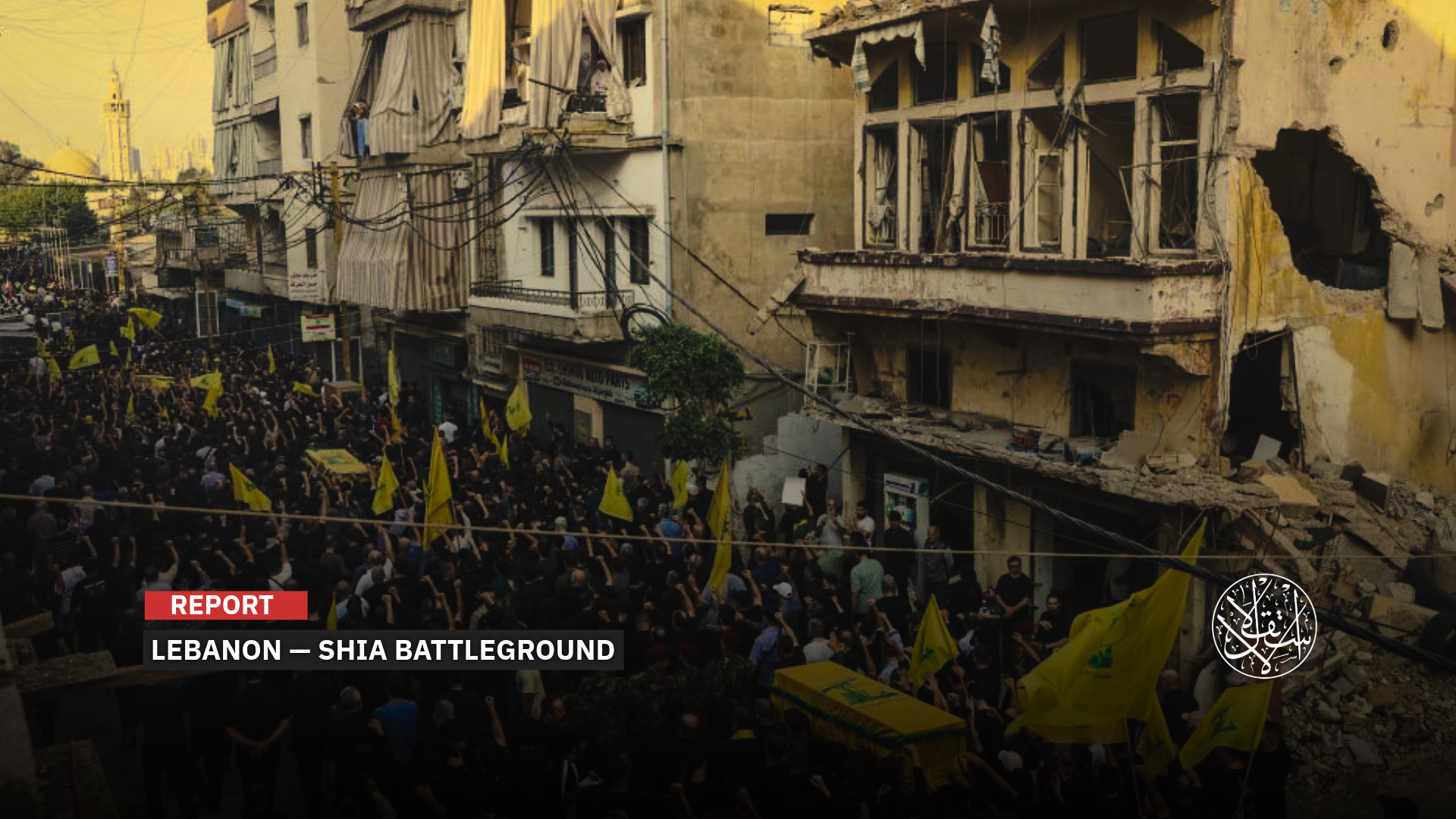
Hezbollah, backed by Iran, suffered setbacks in its recent confrontation with “Israel,” fracturing a Shia environment that had long appeared unified and raising fresh concerns about the continued exploitation of the community to advance Tehran’s interests.
A Message to Iran
The relationship between Lebanon’s Shia community and Iran has emerged as one of the most sensitive and controversial issues in the country’s political landscape.
Intertwining religious authority with political calculations, it has become a decisive factor in assessing the balance of power within Lebanon and its future role in regional dynamics.
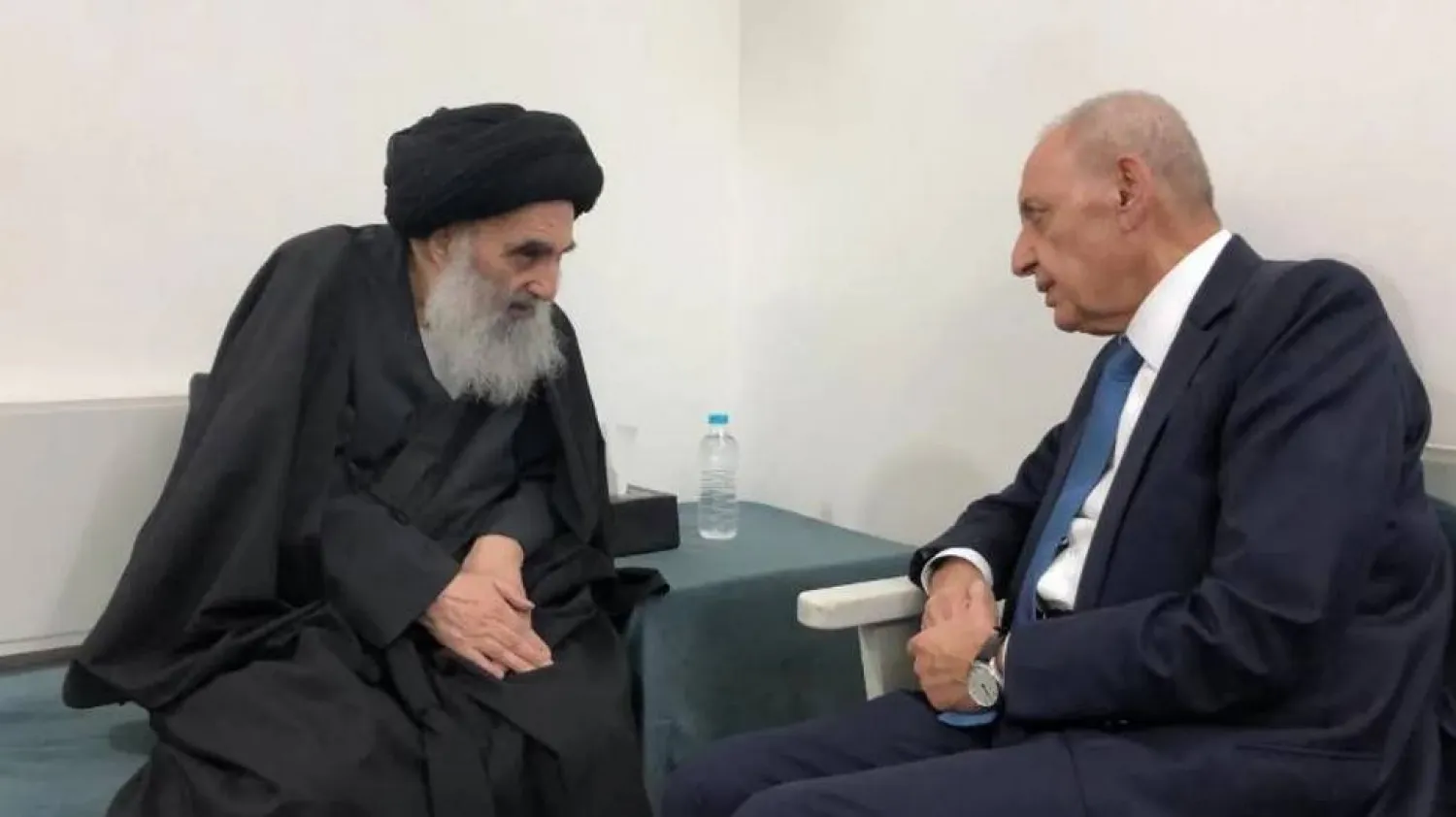
Recently, tensions have surfaced between Iraq’s top Shia cleric, Grand Ayatollah Ali al-Sistani, and Iran over the issue of Lebanon’s Shia community.
At 95, Sistani, based in Najaf in southern Iraq, remains one of the highest religious authorities for millions of Shia worldwide.
According to private sources cited by Kuwait’s al-Jarida on November 24, 2025, al-Sistani has taken an unprecedented step directly linked to the situation in Lebanon.
He reportedly sent a message to Iran, warning of the extreme sensitivity of the moment for Lebanon’s Shia community, stressing that the current circumstances are “extremely critical” and require urgent protection.
The message highlighted the need to prevent the Lebanese Shia from being exposed to a new war, which could trigger further waves of displacement, worsen security conditions in villages and towns, and deepen the social fragility already strained by recent conflict.
Sistani’s intervention coincided with a visit to Iran by Ali Hassan Khalil, the political assistant to Lebanon’s Parliament Speaker Nabih Berri, who participated in an official conference and met with Ali Larijani, secretary of Iran’s Supreme National Security Council, and Foreign Minister Abbas Araghchi.
A year after the signing of a ceasefire agreement, southern Lebanon remains far from the calm promised in November 2024.
Despite Lebanon’s strict adherence to the deal, the country faces a tense military and political reality, with ongoing Israeli operations and diplomatic warnings of potential escalation.
Amid rising tensions along Lebanon’s southern border, the Trump administration set a December 30, 2025, deadline for the Beirut government to disarm Hezbollah, threatening consequences for noncompliance, even as Israeli airstrikes intensified across multiple areas in southern Lebanon.
In this context, Sistani’s appeal to Iranian leadership underscores the urgency of addressing the threat to Lebanon’s Shia population and averting a full-scale conflict that could result in mass displacement and heavy losses.
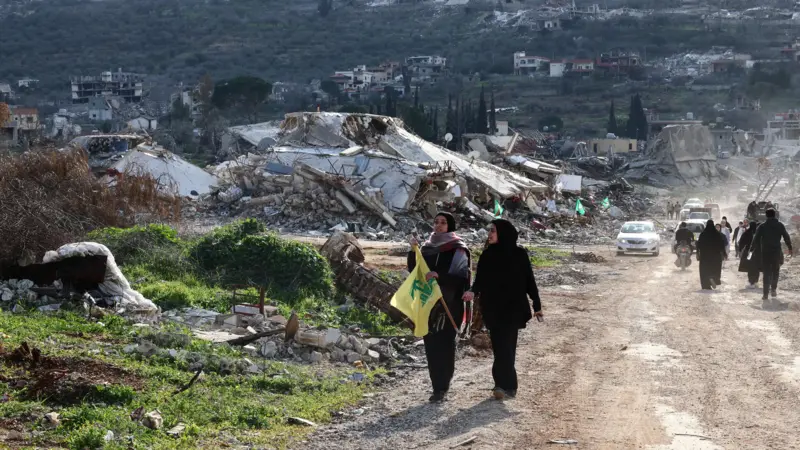
Southern Lebanese villages with predominantly Shia populations, closest to the Israeli border, have suffered extensive destruction at the hands of the Israeli Occupation Forces, which has demolished buildings and infrastructure on a wide scale.
Satellite image analysis by American researchers Corey Scher and Jamon Van Den Hoek from the University of Oregon indicates that Kfarkela has sustained approximately 65% destruction, Ayta al-Shaab 57%, and Yarine 55%, based on updates as of January 30, 2025.
Flashpoint
In recent weeks, the Lebanese government has intensified its criticism of Iran and what it perceives as Tehran’s interference in Lebanon’s internal affairs.
The tension escalated to the point where Lebanese Foreign Minister Youssef Reji accused Ali Akbar Velayati, senior advisor to Iran’s Supreme Leader Ali Khamenei, of meddling in Lebanon, following remarks he made regarding Hezbollah’s disarmament.
Iranian media reported on November 26, 2025, that Velayati said, “The ongoing attacks and crimes committed by the Zionist entity against Lebanon show that Hezbollah’s presence is now more essential than daily bread for Lebanon.” He added that “the Israeli violation of the ceasefire demonstrates the catastrophic consequences of disarming Hezbollah for Lebanon,” and stressed that “Iran has supported and will continue to support Hezbollah and the resistance front.”
In contrast, Lebanese politicians opposed to Hezbollah and Iranian influence argue that transferring weapons to the state is the only path to preserving Lebanon and the Shia community within it, warning that the sect now faces existential risks, including potential displacement.
Lebanon, like Iraq, has become a battleground between two Shia authorities: the Najaf clerical establishment, which maintains its traditional independence, and the doctrine of the Guardianship of the Jurist (Velayat-e Faqih) from Qom, which seeks to impose religious and political oversight over Shia communities worldwide.
Against the backdrop of one of Lebanon’s deepest existential crises, the national arena has transformed into a field of regional contestation that exceeds the country’s capacity to endure.
At the heart of this crisis lies a complex equation: Iran’s leveraging of the Shia community as a tool of influence that constrains the Lebanese state and undermines its cohesion.
What is presented domestically as “support for resistance” has in practice become an intricate network of political, military, and economic control, reshaping the position of the Shia community within Lebanon’s system and tying a significant segment of it to an external project at odds with national interests.
Iran’s repeated statements, particularly those of Ali Velayati, highlight the depth of this connection, showing how Hezbollah’s armed presence is marketed as a “vital” necessity for Lebanon, even as the Shia community bears the highest cost in terms of security and stability.
Grand Ayatollah Ali al-Sistani’s recent warning underscores that the issue is no longer merely political; it has become a matter of protecting a community exhausted by war and facing threats to its very existence.
For Beirut, restoring state sovereignty and strengthening national institutions is the only way to reintegrate the Shia population into the national project, rejecting the transformation of Lebanon into a stage for external power struggles.
Experts suggest that the Iraqi religious authority is attempting to extricate Lebanon’s Shia from decades of Iranian exploitation, offering a path toward greater autonomy and national cohesion.
Religious Split
Amid escalating political and religious tensions in the region, Iranian affairs researcher Ammar Jallou told Al-Estiklal that “the demise of the Shia authority in Jabal Amel, Lebanon, effectively concentrated influence between two main centers: Qom in Iran and Najaf in Iraq, with intense rivalry emerging between them since the founding of the Islamic Republic in 1979.”
“This rivalry was not merely political, but also involved profound theological disagreements. One of the most notable opponents of the Guardianship of the Jurist (Velayat-e Faqih) was the late Grand Ayatollah Sayyid Muhammad al-Sadr, who argued that the doctrine lacked solid religious foundation and was not based on absolute political subservience as the theory demands,” Jallou said.
“Velayat-e Faqih effectively positions the Iranian clerical authority as the primary overseer of Shia communities worldwide, whereas Najaf historically served as the main reference for Arab Shia, creating a complex overlap of religious and nationalist dimensions.”
“Grand Ayatollah Ali al-Sistani was one of the foremost figures who accepted Velayat-e Faqih only in narrow terms, such as matters of khums and personal status law, without political or authoritarian submission,” Jallou added.
“Although there has been no direct confrontation between Najaf and Qom, the disagreements are deep and unmistakable,” Jallou said, emphasizing that “Sistani has consistently rejected political guardianship over the years.”
The researcher argued that “Iran’s current objective is to eliminate Najaf’s authority entirely, particularly in the post-Sistani era, out of concern that a new Najaf marja’iyya could challenge Iranian policy.”
He continued, “Political transformations in Lebanon must go hand in hand with religious changes, because Shia citizens remain closely tied to their religious authorities.”
“Najaf today sees itself as the rightful reference for Arab Shia, and political shifts in Lebanon and Iraq reinforce this position,” Jallou added.
He pointed out that “the Arab world’s outreach, led by Saudi Arabia, to Arab Shia and those outside Iran’s Velayat-e Faqih is significant, exemplified by visits from Riyadh officials to figures such as Muqtada al-Sadr, and meetings between the Saudi ambassador and Iraqi Shia actors opposing Iran’s guardianship.”
“This initiative is often aimed at isolating Hezbollah’s support base or redirecting it towards a religious authority independent of Iran, a pattern also evident in Iraq, where Najaf benefits from these developments,” he said.
“The political context in Iraq and Lebanon intensifies the Najaf-Qom rivalry, which is particularly evident in the debate over disarming Hezbollah and transforming it into a political party, a political issue deeply intertwined with the religious dimension,” Jallou concluded.
Sources
- Israel assassinates Hezbollah’s number two, as Sistani moves to rein in the Iranians [Arabic]
- “Sistani’s message”: a final plea to save Lebanon’s Shia from Iranian exploitation [Arabic]
- The looming specter of “full-scale confrontation” with Israel casts a shadow over Lebanon [Arabic]
- Lebanon’s Shia: from domination to self-destruction [Arabic]