From Isolation to Alliance: The Strategic Implications of Syria Joining the Global Coalition to Defeat ISIS

Damascus has tapped into the intelligence network the Global Coalition has built since 2014.
Syria has recently stepped up its operations against the Islamic State, signaling a clear payoff from intelligence shared by the U.S.-led Global Coalition.
This escalation comes after Syria officially joined the Global Coalition to Defeat ISIS on November 13, 2025, becoming its 90th member state in a network spanning countries across the world.
The move was formalized during Syrian President Ahmed al-Sharaa’s historic visit to Washington on November 10, 2025, where he met with U.S. President Donald Trump.
Analysts see the decision as a significant shift in Syria’s regional and international posture, reflecting Damascus’s effort to rebuild ties with the global community—particularly the United States—through collaboration on a shared counterterrorism agenda.
Membership in the coalition also opens the door for closer operational and intelligence coordination, potentially boosting Syrian security capabilities against ISIS and curbing the group’s resurgence in areas it once controlled.

Rapid Strikes
Since officially joining the U.S.-led Global Coalition to Defeat ISIS on November 13, 2025, Syria has marked a major strategic shift under the new government formed after the fall of Bashar al-Assad on December 8, 2024. The move signals a reconfiguration of Syria’s regional and international alliances, with a clear focus on ramping up security and intelligence cooperation to confront the terrorist threat.
Since Assad’s ouster, the Global Coalition has carried out around five joint operations with Syria’s new government against ISIS across multiple regions. Following Damascus’s formal entry into global counterterrorism efforts, local Syrian security forces have also stepped up operations significantly, acting both independently and in tandem with coalition forces.
Experts note that the expansion of operations reflects growing coordination between Damascus and coalition command, with Syria receiving crucial intelligence for field operations, indicating an emerging mutual trust. The execution of multi-task operations against ISIS further highlights a high level of intelligence and operational collaboration.
In a notable field development, the U.S. military announced in late November 2025 the destruction of more than 15 ISIS weapons storage sites in southern Syria. According to U.S. Central Command, these sites in the Rural Damascus governorate were targeted via airstrikes and ground detonations between November 24 and 27.
The operation destroyed over 130 mortar shells and rockets, along with assault rifles, machine guns, anti-tank mines, and materials for improvised explosive devices. Admiral Brad Cooper, head of Central Command, said on November 30 that these strikes were part of ongoing gains against ISIS, emphasizing that the Joint Task Force-Operation Inherent Resolve aims to prevent the group’s resurgence and potential attacks abroad.
Domestically, Syrian security forces have seized large quantities of weapons and ammunition, including IEDs, detonators, and bomb-making equipment, while arresting dozens of ISIS members across several regions.
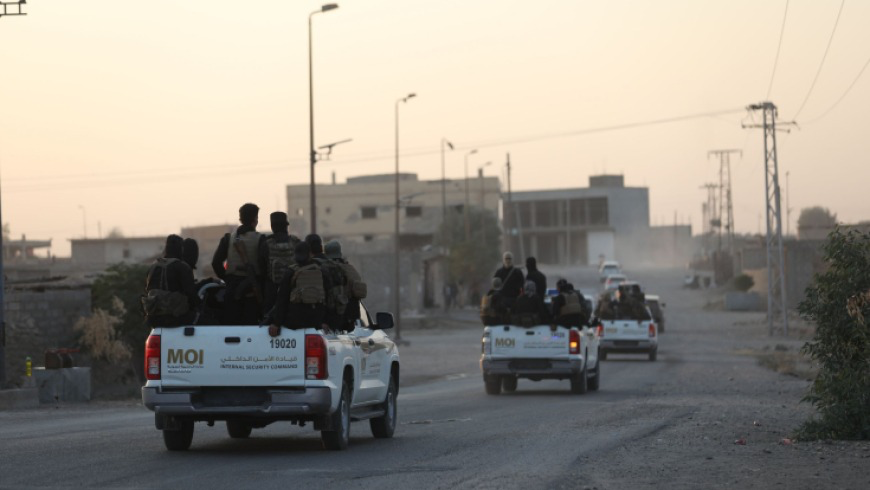
On November 24, 2025, Syria’s Interior Ministry announced the capture of an ISIS cell in al-Badrousiya, northern Latakia. Interior Security Chief Brigadier General Abdulaziz Hilal al-Ahmad described the cell as among the most dangerous, plotting attacks along the Syrian coast. All members were apprehended, with two neutralized after refusing to surrender, alongside a large weapons cache.
The following day, a second ISIS cell was arrested in Afrin, northwest Aleppo. Aleppo’s Interior Security Chief Colonel Muhammad Abdel Ghani confirmed all members were detained, and weapons, explosives, and bomb-making materials were confiscated as part of ongoing counterterrorism efforts.
In early December, Idlib’s Interior Security Chief Brigadier General Ghassan Bakir announced two precision operations targeting ISIS cells in al-Dana and western Idlib, conducted with the General Intelligence Directorate. These raids seized weapons, ammunition, explosive belts, and IEDs, and investigations linked some cell members to the killing of a civilian buried near Maarrat Misrin, underscoring the ongoing campaign to dismantle terrorist networks and stem their sources.
Developing Intelligence Systems
As Syria’s new security forces intensify operations against ISIS, certain areas continue to face sporadic attacks targeting both security personnel and civilian infrastructure.
On December 2, 2025, ISIS claimed responsibility for an assault on two Syrian army soldiers in Saraqib, Idlib, according to the group’s Amaq News Agency. Earlier that month, ISIS also attacked an oil tanker in northern Deir ez-Zor, aiming to disrupt the local economy and destabilize government-controlled areas.
The U.S.-led Global Coalition to Defeat ISIS, formed in September 2014 after the group seized vast territories in Iraq and Syria, remains the largest international military alliance of the 21st century. Today, it includes over 90 countries alongside major organizations such as the European Union and NATO.
A report by the Wall Street Journal on October 22, 2025, highlighted a noticeable spike in ISIS attacks across northeastern Syria that year, exploiting the reduced U.S. military presence and political turmoil following recent national transitions. Most incidents occurred in Deir ez-Zor, a key stronghold for roughly 3,000 ISIS fighters.
Although ISIS no longer controls territory in Syria and operates primarily through sleeper cells scattered across the Syrian Desert toward Iraq since March 2019, the threat it poses remains significant.
In a shocking act of terrorism, the first of its kind since Assad’s fall, 22 people were killed and dozens injured when a suicide bomber struck Mar Elias Greek Orthodox Church in Damascus. According to the Syrian Interior Ministry on June 22, 2025, the attacker entered the church, opened fire, and detonated an explosive vest, causing the mass casualties.
Over the past decade, the Global Coalition has built a sophisticated intelligence network to track ISIS cells across Syria, even after the U.S. declared the group territorially defeated in March 2019. This advanced system of field and technical intelligence has underpinned joint operations and interventions by coalition forces and Syria’s new security apparatus, maintaining pressure on ISIS despite its shift from a regional power to dispersed sleeper cells.
A New Approach
Syria’s security forces are increasingly conducting independent operations supported by advanced intelligence, signaling a qualitative shift in the new Syrian state’s approach to internal security. The country is moving from reliance on external support to building its own autonomous capabilities.
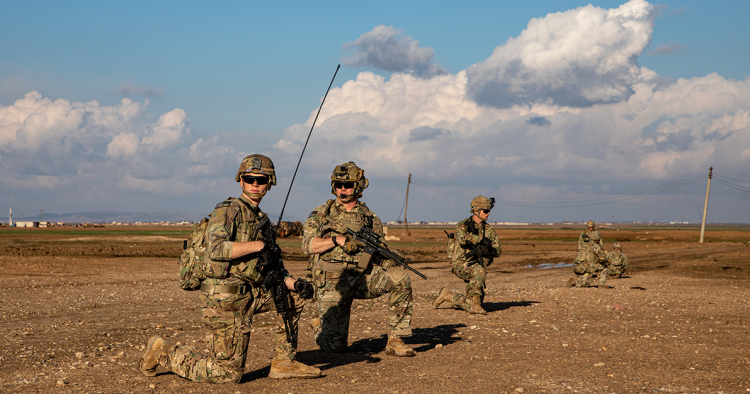
Data shows that Damascus has significantly benefited from the intelligence infrastructure developed by the Global Coalition to Defeat ISIS since its founding in 2014. One of the coalition’s key achievements has been the establishment of local intelligence systems in partner countries such as Iraq—and now Syria—enhancing the effectiveness of counter-ISIS operations.
In the second half of September 2025, a high-level meeting was held in Damascus with senior officials from the Syrian ministries of defense and interior to discuss Syria’s formal entry into the Global Coalition Against ISIS. The meeting also considered establishing a high-security prison for senior ISIS leaders and operatives in government-controlled areas, to be jointly managed with the coalition during an initial transitional phase—a clear indicator of increased focus on curbing ISIS activity within Syria.
Brigadier General (ret.) Abdullah al-Asaad, head of Syria’s Rasd Center for Strategic Studies, told Al-Estiklal that joining the coalition represents “a new operational approach that is radically different from the era of Bashar al-Assad, where counter-ISIS efforts have become a genuine partnership between Damascus and the coalition.”
“Intelligence cooperation is now robust and continuous, with information shared among neighboring states, regional powers, European countries, the United States, and all coalition members, giving Damascus comprehensive logistical and strategic support,” he said.
“Syria is now part of an intelligence and security network with other countries combating ISIS, enabling rapid, targeted operations based on timely intelligence exchanges.”
However, al-Asaad emphasized that ISIS still maintains an active intelligence presence through its agents, who monitor and gather information to plan attacks against the new Syrian state.
He stressed the importance of “enhancing the skills and expertise of Syrian security personnel through intelligence cooperation with the international coalition, which broadens the scope of counter-ISIS operations and helps prevent attacks, particularly from lone-wolf cells targeting institutions and individuals, disrupting stability and agreements in the region.”
Al-Asaad also highlighted Syria’s urgent need to locate ISIS cells and track their movements, especially in the Palmyra Desert, the Jazira region, and other areas, requiring advanced technical and technological capabilities possessed by coalition countries.
While the coalition expands operations in Syrian territory through formal partnership with the government to accelerate the elimination of ISIS, the Syrian government seeks political and logistical support to bolster its counter-terror efforts and establish stability—a foundation essential for reconstruction and reinforcing national sovereignty.
Observers note that this enhanced security cooperation extends beyond military operations, facilitating the reopening of trade routes and crossings, which directly contributes to reviving the Syrian economy through increased investment and progress on reconstruction efforts.