AFRICOM Chief Meets Libya’s al-Dbeibah and Haftar: What’s Washington Really Up to in Libya?
“There will be no political change in Libya before the end of April 2026.”
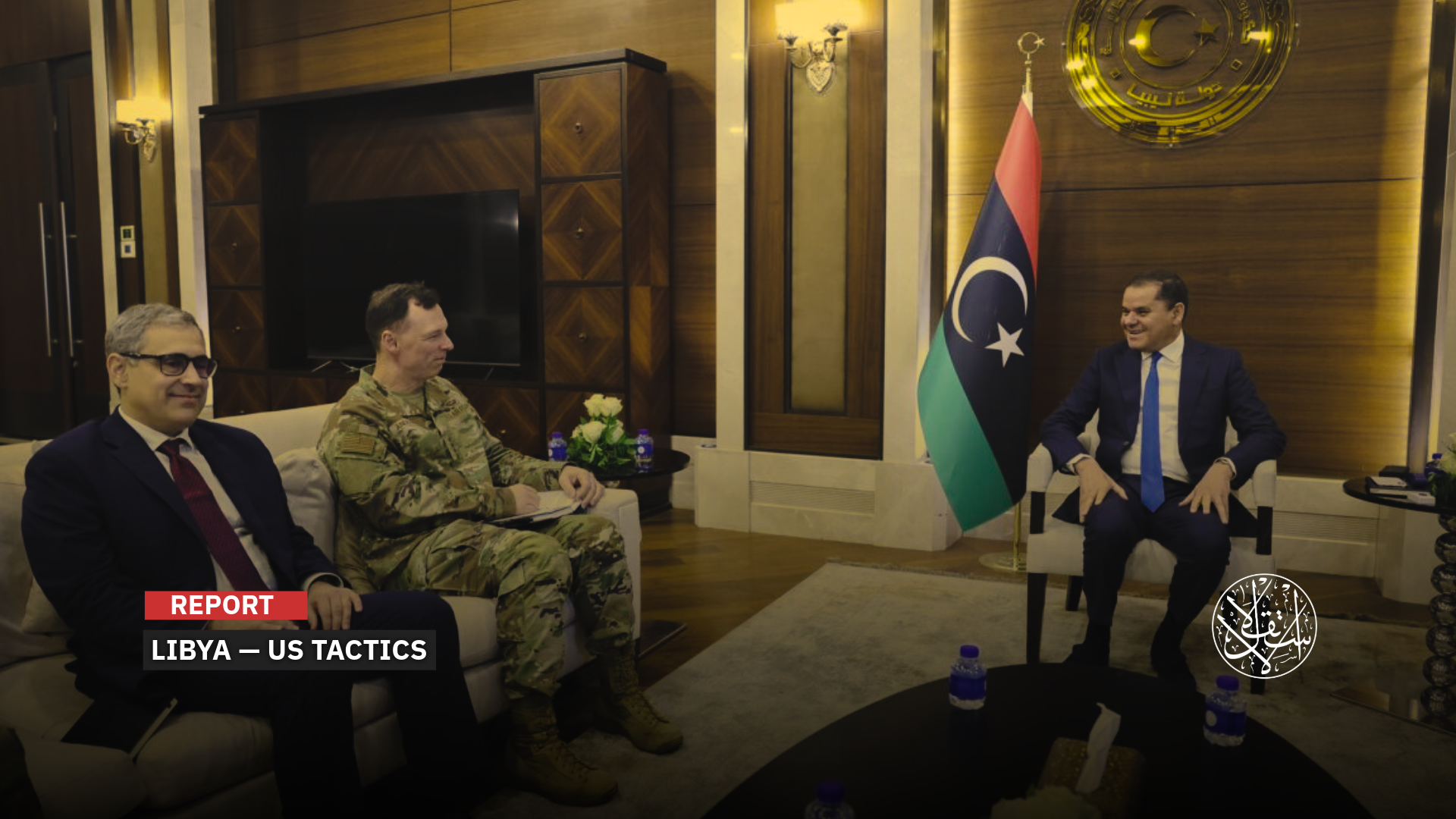
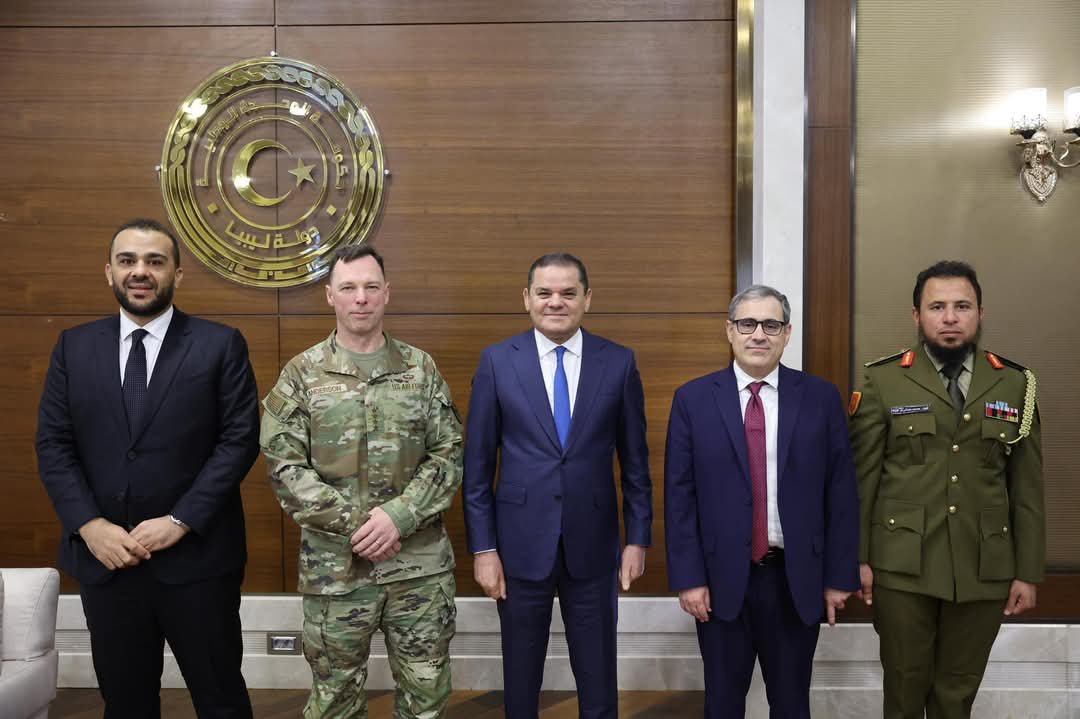
A growing American footprint is taking shape in Libya, made unmistakably clear by the first official visit of Gen. Dagvin Anderson, the head of United States Africa Command. His trip stood out not only for its timing but also for its breadth, bringing him face-to-face with political and military power brokers in both western and eastern Libya.
In early December 2025, Anderson held meetings in Tripoli with Prime Minister Abdul Hamid Dbeibah, Deputy Defense Minister Abdul Salam al-Zoubi, and Presidential Council Chief of Staff Mohammed al-Haddad. The visit was billed as part of a wide review of the country’s security and political landscape.
Strengthening Ties
During the talks, al-Dbeibah stressed what he described as his government’s commitment to promoting security and stability and countering regional threats. He also emphasized the need to bolster the military through meaningful partnerships and high-quality training programs.
Anderson also met in Benghazi on December 2, 2025, with the coup general Khalifa Haftar and his son and deputy Saddam Haftar. According to the General Command’s media office, the talks focused on strengthening security and military cooperation, particularly in counterterrorism, countering violent extremism, and targeting human smuggling networks and irregular migration.
A report published on the AFRICOM website on December 2 quoted Anderson as saying that meeting leaders from both sides was essential to understanding the current challenges. He encouraged Libyan actors to commit to dialogue and joint action in order to achieve lasting peace and stability.
Anderson noted that the coming months will involve coordinated work between eastern and western forces as they prepare for the Flintlock 2026 exercises. He said Libya will host part of the drills for the first time, a step he argued will help strengthen the integration of the country’s military institutions.
In the same context, United States Chargé d’Affaires Jeremy Berndt said he was pleased to accompany Anderson during his visit to Tripoli and Benghazi. He stressed that AFRICOM’s partnership continues to support United States objectives in Libya and reinforces counterterrorism efforts.
Berndt added that the visit offers a chance to deepen ties with Libyan partners. He emphasized that unifying the country’s military institutions remains a crucial step toward long-term stability.
The United States official said Washington supports the Libyan-led political process and stressed that strengthening security and economic integration are essential pillars for long-term sovereignty and stability.
He noted that the talks also covered threats linked to terrorism and organized crime, and said Washington hopes to push Libyan actors toward a more unified approach that strengthens the country’s ability to confront those challenges.
In its coverage of the recent developments, the Libyan newspaper Alwasat reported that Washington has for months adopted a pragmatic approach to the Libyan file, one built on direct coordination between the armed groups aligned with rival authorities in the east and west. The paper said this amounts to a form of mutual recognition.
A report published by the outlet on December 5 argued that Washington is largely brushing aside the escalation coming from political players who have been calling for self-rule, for creating a three-presidency council in Tripoli, and for sharply criticizing the United Nations mission and its head, Hanna Tetteh.
The report added that Anderson’s visit is part of a broader United States effort to reinforce its military and security presence in Africa. The paper pointed to the upheaval across the Sahel, shifting geopolitical dynamics in West Africa, and Washington’s loss of influence in a region it considers strategically sensitive.
The report continued that the Trump administration’s new approach reflects a desire to play a more active role in shaping political and economic understandings inside Libya through a process of direct dialogue under full United States supervision.
According to Alwasat, this approach follows a method adopted by President Donald Trump in conflict management, one that relies on direct communication between rival parties.
The outlet said United States mediation helped broker the November 18 agreement that laid the groundwork for a unified development program for eastern and western Libya and addressed the long-running dispute over oil revenue distribution.
It added that these efforts come as part of ongoing talks in which White House envoy Massad Boulos has served as the lead mediator. He brought together Saddam Haftar and Ibrahim Dbeibah at a meeting in Rome in early September 2025.
Regional Calculations
The United States military push in Libya cannot be separated from the wider regional chessboard, particularly Russia’s expanding ambitions. The Wall Street Journal recently reported that Sudan has offered Moscow the chance to build a military base at a strategic port on the Red Sea.
A United States official told the paper that a Russian base in Libya or Port Sudan would significantly expand Moscow’s ability to project power and give it new ways to operate outside the reach of sanctions.
Retired Air Force General Mark Hicks, who once led United States special operations units in Africa, argued that any Russian military foothold on the continent would strengthen the Kremlin’s hand by granting it greater international leverage and prestige.
The journal noted that the possible establishment of a Red Sea base has alarmed United States security officials who have been competing with both Moscow and Beijing for military influence in Africa for years. The paper added that a base in Libya or along the Red Sea would allow Russian ships to remain at sea far longer in both the Mediterranean and the Indian Ocean.
Masoud al-Salami, a professor of international relations at Libyan universities, said the AFRICOM commander’s visit to Libya fits within a broader United States strategy to solidify its role as a leading global power and maintain the balance of power in North Africa.
Speaking on the Libyan channel Wasat TV on December 4, al-Salami said the visit was not limited to Libya but followed earlier stops across North Africa as part of a wider American effort to manage regional conflicts and track Libya’s rival factions more closely.
He explained that the trip aims to gain a comprehensive understanding of Libya’s political and military landscape rather than a narrow snapshot. The central goal, he said, is to stabilize the current military environment and prevent the widening of rifts among Libya’s competing armed groups, which could easily trigger a much larger conflict.
Al-Salami added that unifying Libya’s fragmented armed forces under a single command is not the immediate objective because the conditions on the ground are nowhere near ready. For now, Washington’s focus is on ensuring the situation does not slide into deeper military division.
He also noted that AFRICOM’s movements in Libya run parallel to broader United States political efforts and that this trip marks the first personal visit by the AFRICOM commander after earlier visits by deputies and other delegations.
Al-Salami added that the AFRICOM commander’s public remarks made clear that the visit was centered on efforts to bring greater cohesion to Libya’s armed forces and to preserve a measure of military stability on the ground.
New Directions
Abdul Basit al-Qadi, head of the International Commission for Combating Corruption and Organized Crime, said AFRICOM’s visit sends a clear signal about Libya’s shifting political and military landscape.
“The trip signals there will be no political change in Libya before the end of April 2026, since arrangements for joint military exercises scheduled for that month have already been agreed and signed,” he told Al-Estiklal.
“This means that any expansion of AFRICOM’s footprint in Libya will directly affect the interests of regional and international players involved in the Libyan file.”
“Washington’s push to activate its new Africa strategy in Libya, along with the recent spike in military and diplomatic activity by AFRICOM, is primarily aimed at stabilizing the country and using its internal divisions to position Libya as an advanced front in political competition,” al-Qadi added.
“AFRICOM’s top priorities,” he noted, “include establishing a hub for monitoring, counterterrorism work, and securing the country’s oil fields.”
Al Qadi urged Libyan officials to take this seriously and to reassess the security cooperation embedded in existing contracts and agreements, placing strict legal limits that prevent Libyan territory and territorial waters from being used as a staging ground for military maneuvers or for threatening any third party.
For Libyan academic Osama Alshhoumi, the recent flurry of AFRICOM visits reflects a deliberate American trajectory and marks a clear rise in Washington’s engagement with the Libyan file, shifting the relationship from diplomatic contact to direct military involvement. He told Annahar that unifying the military institution sits at the top of the agenda, alongside counterterrorism, organized crime and border control, especially in the south, where instability in West Africa is spilling over.
He stressed that Russia’s presence in the region remains a key concern and that Washington is looking to put new security arrangements in place before Libya enters a decisive political phase. The meetings held by senior American officers, he said, send a clear message: military legitimacy in Libya will rest only with unified state institutions.
Alshhoumi added that Washington is also signaling that Libya’s future security architecture will not be built around competing armed groups and that the United States will not recognize any militia, regardless of its local influence, as a political or security actor. He expects other countries and the United Nations to follow the same line that Washington is now setting.
He said the international community increasingly understands that no political or economic process in Libya can endure without a unified security structure. The urgency Washington places on military unification, he argued, directly serves to create a less polarized environment and reduces the ability of armed actors to derail the political track.
Alshhoumi noted that a cohesive military institution is critical for protecting the country’s oil fields, especially as Libya works to reassert itself in the oil and gas investment market. He concluded that Washington wants Libya to manage its resources without resorting to violence or confrontation and that a unified security sector is the key to unlocking the country’s political and economic gridlock.
Sources
- Gen. Dagvin Anderson Marks First Visit to Libya; Stresses Unity and Peace Among Leaders
- Sudan Offers Russia Its First Naval Base in Africa
- Alwasat: Africom Preparing Drill in Sirte with Unified Forces for the First Time [Arabic]
- Alshhoumi: Washington Won’t Recognize Any Militia, No Matter Its Local Power [Arabic]