Open Confrontation: Is Trump Cutting Ties With Europe for the Sake of Greenland?
“No president has created so much doubt about America’s commitment to trans-Atlantic security.”
The Greenland crisis, which erupted in recent weeks following threats from US President Donald Trump, has highlighted unprecedented tensions within transatlantic relations.
Political statements and rapid diplomatic moves have transformed into what European officials have described as an existential crisis within NATO.
However, Trump's sudden reversal of his threat to impose tariffs on eight European countries has temporarily halted a sharp political and economic escalation that nearly shattered Washington's relations with NATO.
This came after Trump reached what he termed a framework for a future agreement with the alliance's leadership regarding the security of the Arctic region and Greenland, the semi-autonomous territory of the Danish crown.
The United States is expected to begin high-level negotiations with both Denmark and Greenland in the coming weeks regarding the potential agreement, amid international anticipation of the outcome of this sensitive issue in the Arctic region.
US Threats
US President Donald Trump recently threatened to impose tariffs starting at 10% next month and rising to 25% in June, to pressure Denmark and its European allies into accepting US control over Greenland.
He even went so far as to publicly assert his desire to acquire the island, including rights, ownership, and sovereignty.
However, he announced the cancellation of these threats after reaching an agreement with NATO Secretary General Mark Rutte on a framework for future cooperation in the Arctic, in a move that appeared to be an attempt to contain the wide-ranging political and geopolitical repercussions.
According to a European official, the proposed framework includes the deployment of US missiles and the granting of mining rights, in a move aimed at reducing Chinese influence and strengthening the NATO presence in the region.
It also includes updating the 1951 US-Denmark Defense Agreement, which allows Washington to build military bases in Greenland and establish defensive zones if NATO deems it necessary.
Trump linked the new understanding to further talks concerning Greenland within the framework of the Golden Dome missile defense project, a multi-layered defense system costing approximately $175 billion, which aims, for the first time, to deploy US weapons in space.
According to Bloomberg, the proposed framework helped defuse the escalating crisis over Greenland and paves the way for NATO to bolster security in the Arctic and counter any potential threats from Russia or China.
This is not the first time Trump has backed down from tariff threats. In April 2025, his statements about imposing high tariffs on global imports caused significant turmoil in financial markets before he reversed course under pressure from the negative economic fallout.
But this time, the reversal came after a controversial speech by Trump at the World Economic Forum in Davos, in which he focused heavily on Greenland and implicitly threatened to undermine NATO, one of the most stable military alliances since the Cold War.
In his speech, he said that what he was asking for was a piece of cold, poorly located land, and that it was a very small request compared to what the United States had given to NATO for decades, arguing that Washington had saved Europe during World War II.
He added, in a threatening tone, “Perhaps we will get nothing unless excessive force is used, at which point we will be unstoppable. But I will not do that.”
With Trump repeatedly questioning the alliance's commitment to defending the United States if it were attacked, NATO Secretary General Mark Rutte quickly reassured him publicly, affirming that the alliance would stand with Washington without hesitation.
Shortly after this statement, Trump officially announced the cancellation of the tariffs.
Danish Foreign Minister Lars Lokke Rasmussen welcomed Trump's reversal on the use of force and the suspension of the trade war with Europe.
He called for calm dialogue to address American security concerns in the Arctic while respecting the Kingdom of Denmark's red lines, foremost among them national sovereignty.
Meanwhile, the Greenlandic government took precautionary measures, issuing an advisory in English and Greenlandic, urging residents to prepare for any potential crisis by stockpiling food, water, fuel, and basic supplies for five days.
Following the announcement of the American retreat, financial markets, which had experienced a sharp decline due to trade war fears, recovered.
Several American officials expressed contentment, fearing that Trump's escalating rhetoric toward Denmark and NATO could harm broader American foreign policy objectives.

European Unity
While Trump's retreat may have eased the immediate crisis, it has left a lasting scar on trust within NATO.
A policy of maximum pressure might achieve tactical gains, but when applied to allies, it imposes a strategic cost that may be difficult to repair quickly.
According to Foreign Policy, Trump's threats to seize Greenland have prompted Europe to reassess its strategic calculations and demonstrate its willingness to defend its sovereignty, even if initially only symbolically or for show.
The European Union recently prepared a €93 billion tariff package against the United States if agreements are not honored, following Trump's threat to impose tariffs on eight European countries over Greenland.
A European diplomat stated that this package had been pending since a previous trade agreement, but it will be automatically activated on February 6 if Brussels and Washington fail to reach a solution.
Europe has what is known as the anti-coercion tool, or bazooka, which allows the EU to respond to economic blackmail from non-European countries through tariffs and trade and investment restrictions.
However, it is considered a last resort because it could harm the European economy, and its activation takes about a year.
In recent weeks, Trump refused to rule out the military option to seize Greenland, despite his statements at the World Economic Forum in Davos that he did not intend to use force.
This prompted EU countries to act with unprecedented speed in the traditional European landscape, from strengthening diplomatic cooperation and deploying reconnaissance units to boosting development investments in Greenland.
But despite this rapid response, this crisis has revealed the true limits of Europe's ability to confront Washington directly.
It is worth noting that European defense budgets have increased significantly since 2021, but they remain heavily dependent on American weapons, with continued fragmentation in armament programs and a lack of full military integration among member states.
Analysts believe that any collective action to counter a potential threat to the territory of a NATO member, such as Greenland, depends on the will of individual states, with protocol complexities making it difficult for the European Union to reach decisive military decisions in a unified manner.
The major European countries have shown clear differences in their levels of escalation in response to Trump's threats.
France adopted an explicit stance calling for the defense of sovereignty and threatened to unleash its trade artillery against Washington.
Germany insisted on coordination with NATO, considering a direct confrontation with the United States not an easy option.
Italy ridiculed these symbolic military operations, deeming the deployment of 15 soldiers per country a farcical start.
At the same time, this crisis has highlighted the difficulty Europe faces in translating strategic vigilance into a real capacity to protect its interests, especially given its continued military and economic dependence on the United States.
Observers believe that the Greenland crisis was not merely a diplomatic dispute or an economic threat, but a stark test of Europe's ability to think and act as an independent power, and a shocking revelation of harsh realities.
Despite escalating American threats, the European Union decided against immediately resorting to counter-coercion measures, preferring to prioritize diplomatic dialogue with Washington and coordinate a unified European position before the upcoming summit in Brussels.
Experts indicated that the EU's hesitation reflects an awareness of the sensitivity of a trade confrontation with the United States, especially given the ongoing security and defense issues such as NATO and Ukraine, which necessitates a degree of restraint from European leaders.
Many Upheavals
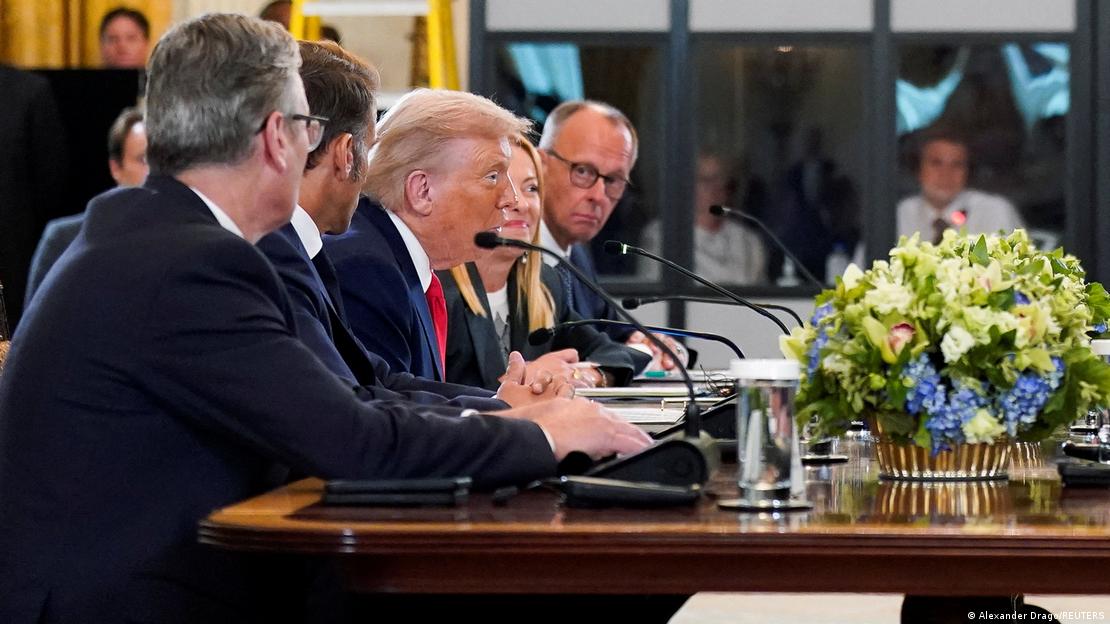
Under Trump's leadership, the United States is not so much seeking to repair alliances as it is working to redefine them based on hard power and political blackmail.
As for European countries, they find themselves caught between a weakening sense of sovereignty and a limited capacity for effective and impactful responses and confrontations.
In light of the Greenland crisis and its repercussions, American academic Rajan Menon wrote in an opinion piece in The New York Times that NATO, which has been the cornerstone of transatlantic security for more than 75 years, is nearing its end.
He explained that the disintegration of NATO will not be immediate and will cause considerable disruption, but it will not be a disaster.
He added that “Europe, which has long relied on Washington for security, possesses both the motivation and the means to protect itself. This was demonstrated this week when its leaders appeared to be working in perfect coordination to address the turmoil caused by Trump's policies, presenting an opportunity for Europe to break free from the United States' influence.”
He stated that “Trump had previously hinted that he might not defend NATO allies under threat, did not rule out withdrawing from NATO due to the Greenland dispute, and also expressed his discontent with the alliance in his speech at the Davos Forum.”
According to the writer, no American president has ever raised such doubts about Washington's commitment to transatlantic security.
He suggested that this stems from Trump's contempt for Europe, a sentiment clearly articulated in his administration's National Security Strategy.
Previously, Trump stated that he had done more for NATO than any previous American president, warning that the alliance would have ceased to exist without his intervention.
On January 21, Trump said, “We pay for NATO. For many years, until I came along, we paid, in my opinion, 100% of NATO’s budget because they weren’t paying their fair share.”
Time magazine commented that this was an inaccurate claim Trump had been repeating since his first term in office (2017-2021).
On January 23, Trump suggested putting NATO to the test by invoking Article 5 to protect the U.S. southern border from migrant incursions.
In a controversial statement, he wrote, “We should do Article 5 and force NATO to come here to protect our southern border, freeing up large numbers of Border Patrol agents for other duties.”
Article 5 of the NATO treaty provides for the automatic collective defense of a member state if it is attacked, but Trump links it to illegal immigration, which he describes as an invasion warranting international intervention.

Trump's remarks come at a time when his stance on the alliance and his relations with its allies are viewed with some tension.
In this context, former NATO Secretary General and former Danish Prime Minister Anders Fogh Rasmussen described Trump's previous statements advocating for Greenland's accession to the United States as the biggest test for NATO since its founding.
In an interview with Reuters on the sidelines of the Davos Economic Forum, he said, “The future of NATO is at stake.”
Political analyst Ibrahim Khatib pointed out that, starting in 2026, the dispute between the United States and NATO countries is no longer a mere difference of opinion, but has transformed into an unprecedented clash of wills since World War II.
In a statement to Al-Estiklal, he noted that Trump views NATO as a heavy financial and political burden on the United States.
“The true disintegration of NATO is a gradual process, and this may result from the Americans reducing their list of responsibilities, significantly cutting funding, and downsizing their military presence,” he said.
“We may also witness the abandonment of Article 5, which pertains to collective security, a step that precedes a complete American withdrawal,” he added.
He concluded that “between fears of a US withdrawal and a potential confrontation, the continent seems to be at a crossroads: either to remain cohesive and gradually build an independent European pole, or to settle for negotiating maneuvers that end in compromises that re-establish American hegemony on both sides of the Atlantic.”