Cloning a ‘New Hemedti’: Details of the UAE’s Silent Ridge Plan to Separate Southern Yemen
A new chapter in the enduring Saudi–Emirati rivalry, with tensions spanning from Sudan to Yemen.
The United Arab Emirates appears to have settled on sidelining Mohammed bin Salman from the southern Yemeni scene, particularly after the Saudi crown prince reportedly asked Washington to impose sanctions on Abu Dhabi over its role in the conflict in Sudan.
What has unfolded in the governorates of Hadramawt and al-Mahra, where forces loyal to Saudi Arabia were pushed out or withdrew at the hands of the UAE-backed Southern Transitional Council, no longer looks like a localized dispute. Instead, it marks a new chapter in a long-running power struggle between Riyadh and Abu Dhabi, one whose fault lines stretch from Sudan to Yemen and expose a widening rift between the two allies.
Leaks suggest that the UAE is working to build a parallel force outside Yemen’s formal state structures, echoing the model of Sudan’s Rapid Support Forces (RSF) militia.
This effort centers on strengthening the Hadrami Elite Forces under the leadership of Abu Ali al-Hadhrami, in what appears to be a bid to impose a new reality on the ground that could pave the way for southern secession, in a manner reminiscent of developments in Darfur.
Saudi Arabia, meanwhile, has mobilized the Hadramawt Tribal Alliance led by Sheikh Amr bin Habrish to secure the oil-rich plateau and vital supply routes. Yet the retreat and withdrawal of these forces from key southern positions has left the situation open to multiple scenarios, amid expectations of further escalation between the competing powers.
Analysts argue that the UAE’s ambitions extend beyond controlling oil wealth and strategic ports in southern Yemen, as it has done in Sudan and Libya.
More troubling, according to Yemeni political figures, is a broader project aimed at pushing toward southern separation under the leadership of a “new Hemedti,” reshaped for the Yemeni context.
Hadramawt is Yemen’s largest governorate, accounting for roughly 36% of the country’s territory. It contains the most significant oil reserves, as well as key ports such as Mukalla and Shihr, and the export terminal at al-Dhabba.
With around 80% of Yemen’s oil production originating from these areas, control of Hadramawt grants the dominant power decisive economic leverage and the ability to influence maritime routes leading to the Arabian Sea.
Will the South Secede?
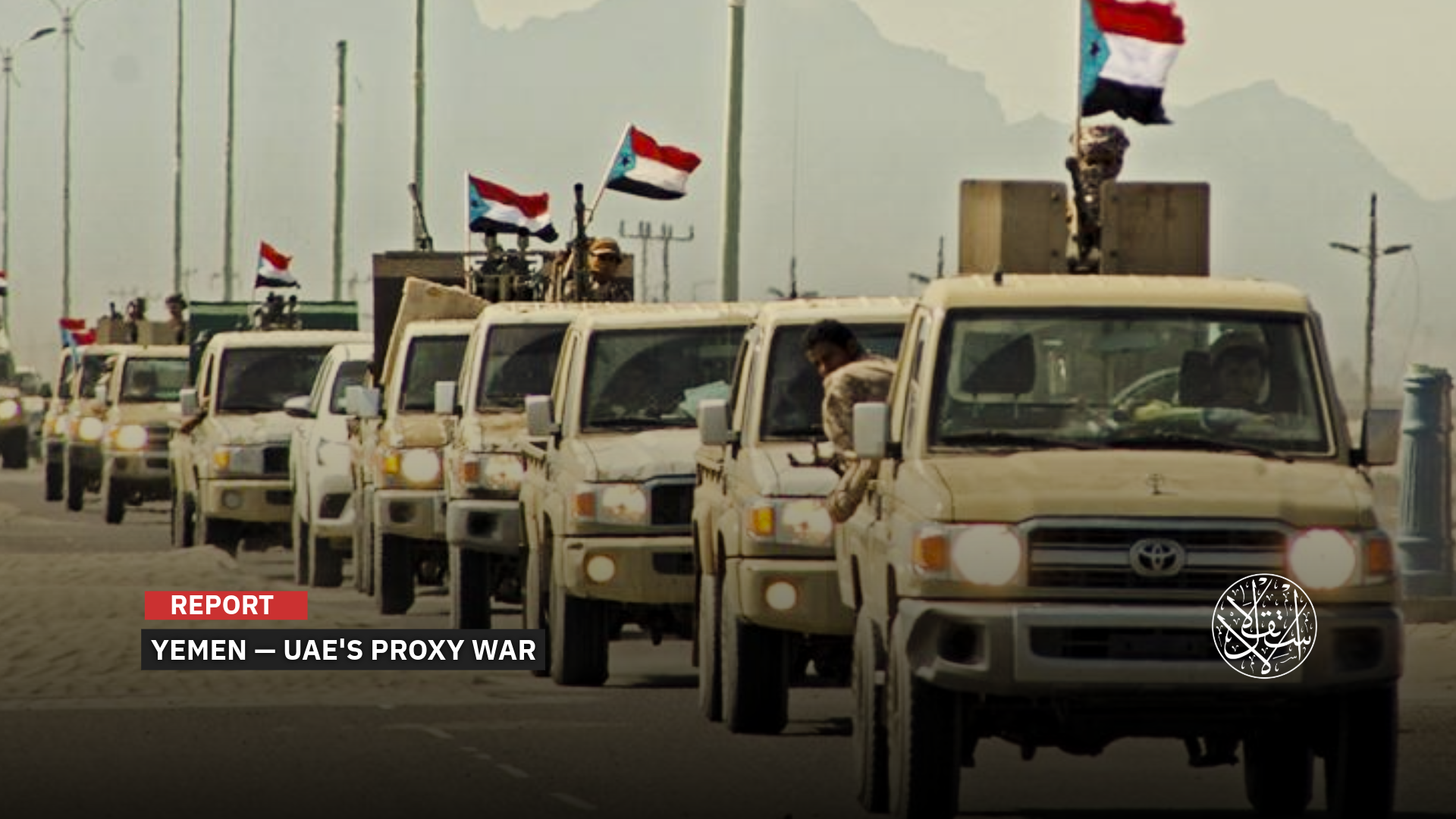
After a series of armed confrontations, the UAE-backed Southern Transitional Council, supported militarily and politically by Abu Dhabi, imposed its control over the governorates of Hadramawt and al-Mahra.
In an unexpected move, Saudi-aligned forces withdrew from Hadramawt on December 8, 2025, without significant resistance, opening the door to widespread questions about the future of southern Yemen.
In its early formation, the Southern Transitional Council was part of the Saudi-led coalition launched in 2015 against the Houthis.
It later turned against Yemen’s internationally recognized government, seeking to impose self-rule in the south, including in Aden, the political center of gravity for the legitimate government.
As separatist rhetoric within the council intensified, and as it floated the project of a “State of South Arabia” following its takeover of Hadramawt and al-Mahra, Riyadh retreated from the de-escalation understandings it had previously sponsored and repositioned its forces within government-held areas of Aden.
The situation in the south is now open to multiple scenarios, pending Saudi Arabia’s next move. The Southern Transitional Council has shown no willingness to reverse its recent gains, while uncertainty continues to surround Riyadh’s options amid a widening rift with the UAE and the expansion of their rivalry into other arenas, most notably Sudan.
In a report published on December 8, 2025, the British newspaper The Guardian suggested that UAE-backed forces may move toward demanding southern independence following their control of Hadramawt and Shabwa.
The report noted that the Southern Transitional Council now dominates all eight southern governorates, a development described as a major setback for Saudi Arabia.
The newspaper added that the UAE-backed military leadership’s grip on the entire south “opens the door to the possible declaration of an independent southern state, returning Yemen to the reality that existed before unification in 1990.”
Maysaa Shuja al-Deen, a senior analyst at the Sana’a Center for Strategic Studies, described the developments as “the most dangerous turning point since the fall of Sana’a to the Houthis in 2015.”
She argued that the UAE’s consolidation of control over formations previously backed by Saudi Arabia has reshaped regional and local alliances and paved the way for the possibility of a direct confrontation with Riyadh.
She added that the Southern Transitional Council is using its military gains as leverage to push for self-rule, while Saudi Arabia remains deeply concerned about the security of its southern border, particularly in light of previous Houthi attacks that reached deep into its territory.
The Guardian also reported that an Emirati green light may have been given to the council to advance, following anger in Abu Dhabi over Riyadh’s request to Donald Trump to intervene in the Sudan war, where the UAE is accused of backing the RSF militia.
Ahmed Nagi, a researcher with the International Crisis Group, told the Associated Press on December 8, 2025, that the Southern Transitional Council’s escalation would have direct regional repercussions for Saudi Arabia.
The shift in Yemen’s internal balance of power, he said, places Riyadh before a central question, how it will respond, particularly given the implications for its national security.
So far, Saudi Arabia has limited itself to restrained measures, most notably suspending the issuance of flight permits to and from Aden airport, particularly for Emirati aircraft.
A Yemeni government official described the move as “a clear political message” directed at the Abu Dhabi-backed separatists.
What Does the UAE Want?
Tensions in southern Yemen have accelerated after the United Arab Emirates pushed significant military reinforcements from Aden and Shabwa, before deploying its forces to seize control of Hadramawt and Shabwa.
The advance prompted local tribes to declare general mobilization, warning that any non-Yemeni presence would be regarded as a “direct occupation” of the governorate.
According to sources close to the tribal alliance, Abu Dhabi is operating under a plan known as “Silent Ridge,” aimed at controlling the oil-rich plateau and cutting desert routes leading to the Saudi border.
The move would effectively isolate Riyadh’s influence and consolidate Emirati control over eastern Yemen.
The platform Dark Box, which specializes in exposing Emirati strategies, described the battle for Hadramawt as a moment that laid bare the depth of the rift between Riyadh and Abu Dhabi, asserting that Yemen has become a direct arena of confrontation between the two.
In an investigative report, the platform said leaked information suggests that Emirati ambitions go beyond securing oil resources, extending to the creation of a parallel military force outside state institutions, modeled on Sudan’s Rapid Support Forces militia, in effect a “Yemeni Hemedti” being prepared in Hadramawt.
The report added that the battle for Hadramawt revealed the collapse of Saudi-Emirati understandings, and that disputes that first emerged in Sudan have now spilled into Yemen, paving the way for a reshaping of the regional balance of power.
Despite efforts by Yemen’s government to contain the crisis through the dismissal of a governor aligned with the UAE, the decision appeared to have little practical impact given Abu Dhabi’s strong security and military presence inside the governorate.
By contrast, Saudi-aligned committees in al-Mahra warned that the UAE is moving toward the creation of an “independent economic and military force” in eastern Yemen, reproducing a Darfur-style scenario and pushing the region toward a prolonged conflict.
Yemeni sources say the UAE is effectively seeking to replicate the RSF militia model in Hadramawt by building a parallel force that operates beyond the authority of the internationally recognized government.
They warn that the governorate stands on the brink of repeating Sudan’s experience, amid a clash of influence projects between Riyadh and Abu Dhabi and widespread local rejection of turning their land into a battleground for regional power struggles.
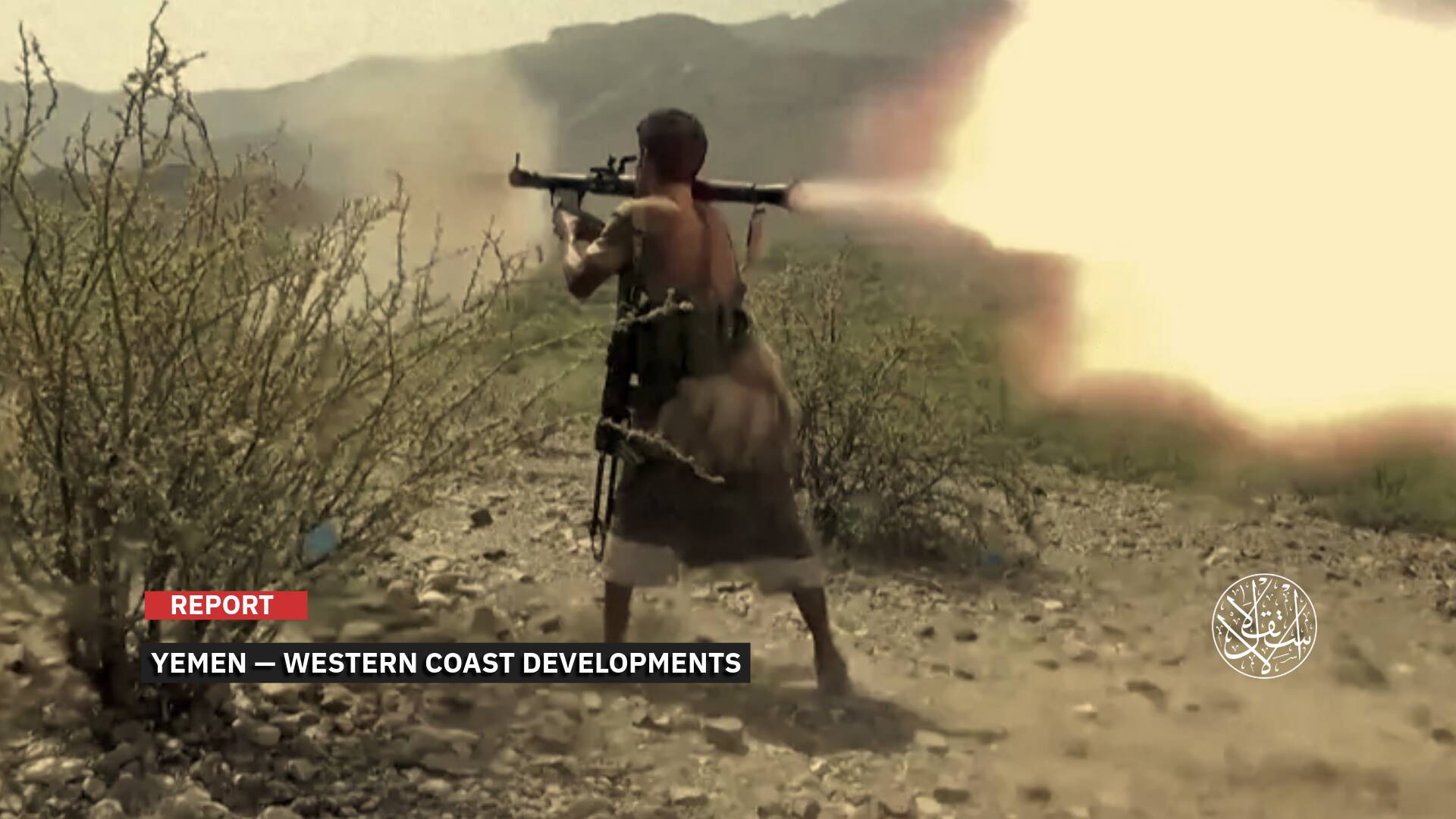
The Saudi-Emirati rivalry is not new in Yemen. However, the recent moves by the Emirati-backed Hadrami Elite Forces, led by Abu Ali al-Hadhrami, against the Saudi-backed Hadramawt Tribal Alliance reinforce the view that Abu Dhabi is working to establish a separate force outside Yemen’s state institutions, enabling it to exercise military, political, and economic control over the region.
Andreas Krieg, a professor at King’s College London and a geopolitical risk analyst, described the Emirati moves in Yemen as a powerful slap in the face for Saudi Arabia in a comment posted on X.
Krieg noted that Riyadh views the conflict in Yemen as a matter of national security rather than a war of choice, as it is for Abu Dhabi.
He argued that the UAE has seized the current political and military moment to expand its influence on the ground, giving separatist forces a green light to advance, while Saudi Arabia remains in a state of what he described as “strategic paralysis and confusion” in its management of the Yemen file.
Krieg added that Riyadh had been attempting to build momentum toward a comprehensive agreement with the Houthis through Omani mediation.
The UAE’s recent actions, he said, have driven “a wedge” into that diplomatic track, enabling its allies in the south to launch a surprise offensive.
He concluded that Saudi Arabia’s power and regional standing are now facing a clear challenge from Abu Dhabi, which he characterized as more agile, more resolute, and more hard-edged, operating with what he called a mindset rooted in doubling down to achieve its objectives, at least in the short term.
The “Silent Ridge” Plan
Questions are mounting over a UAE plan in Yemen known as “Silent Ridge,” which is widely believed to represent the deepest and most covert phase of Emirati influence-building in southern and eastern Yemen.
Although no official announcement has been made, local and foreign media and intelligence reports have revealed fragments of the plan, which appears to be unfolding largely out of public view.
The name is reportedly drawn from a thriller film of the same title, marked by brutal violence and complex plotlines, a reference analysts see as a deliberate metaphor for the nature of the Emirati project in Yemen, a plan that is quiet in appearance but lethal in effect.
The analytical platform Dark Box shed light on aspects of the plan in an extensive investigation, saying the UAE is working to transform local forces in Hadramawt, particularly the Hadrami Elite Forces, into a unified formation operating under the direct command of Emirati officers, bypassing Yemen’s state institutions.
According to the investigation, the force is tasked with seizing control of oil corridors and strategic routes, and with dominating vital assets such as oil pipelines, desert crossings, and the land corridor linking Hadramawt to the Saudi border.
Field command of this force is said to rest with the military leader Abu Ali al-Hadhrami, who reportedly maintains a direct line to an Emirati officer identified as Tareq al-Mazrouei.
Reports suggest he is operating within a secret Emirati program in Yemen aimed at establishing long-term strategic influence.
At its core, the Silent Ridge plan seeks to entrench an independent Emirati foothold in southern and eastern Yemen by building a parallel force to the state’s military, imposing a new reality on the ground that allows Abu Dhabi to exert control over resources and sensitive sites without passing through the internationally recognized government.
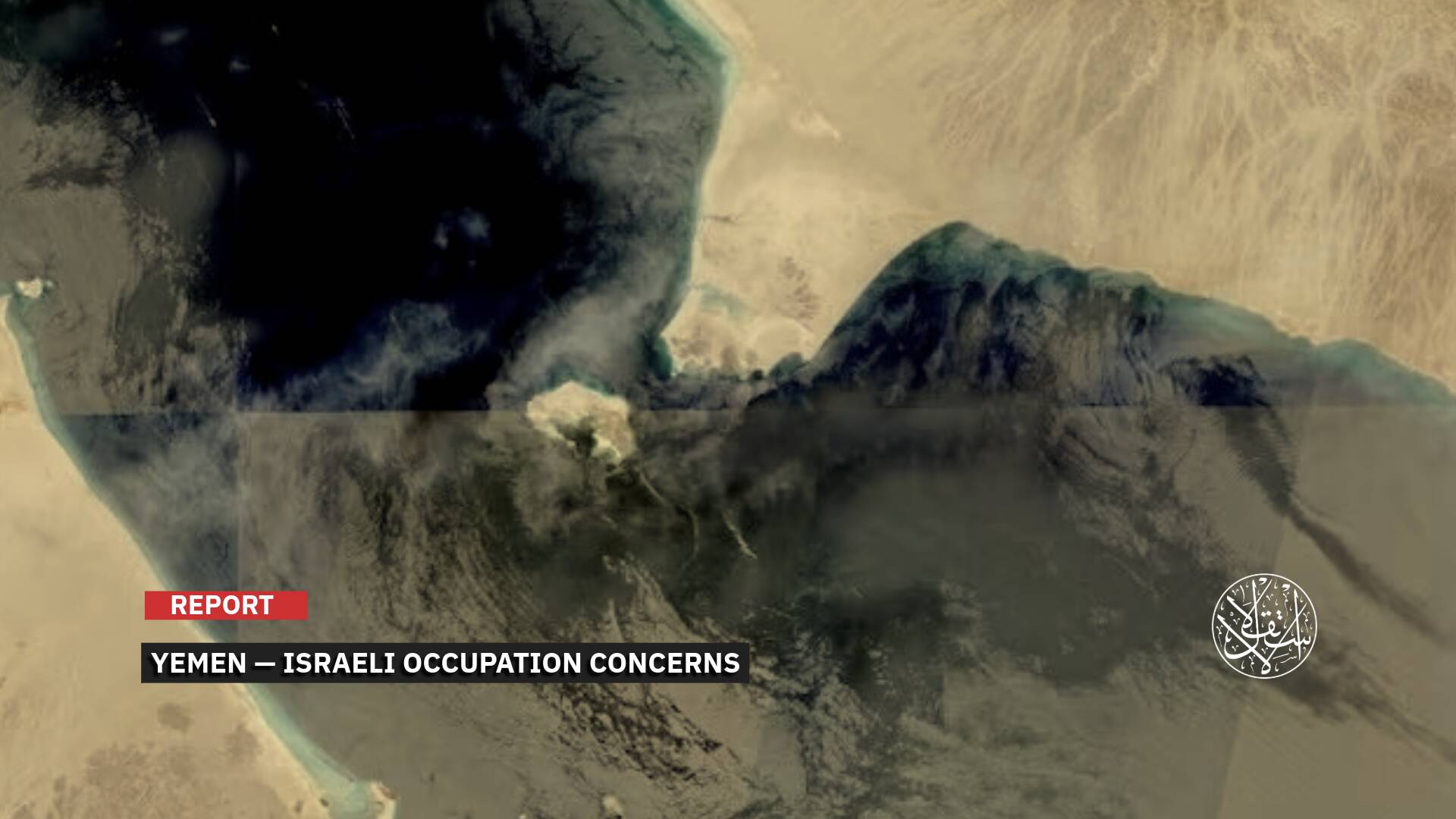
The project is not limited to Hadramawt. According to a report by the Associated Press dated October 21, 2025, it extends to air bases and runways on strategically important Yemeni islands, including Zuqar Island.
This is in addition to an expanding Emirati presence in the Red Sea and the Bab al-Mandab strait, granting Abu Dhabi leverage over one of the world’s most critical maritime corridors.
Although the UAE has issued no official statement confirming or denying the existence of the plan, developments on the ground suggest its strategic objectives include several key elements.
First, control over energy and vital corridors. Hadramawt is Yemen’s most oil-rich governorate, and dominance over export routes and desert gateways would give the UAE significant economic and strategic leverage.
Second, the expansion of maritime control. Yemeni coastal sites and islands provide the UAE with extended reach across the Red Sea and the Gulf of Aden, areas central to global trade and supply chains.
Third, bypassing a weakened Yemeni state. The collapse of state institutions has made it easier to reshape local forces into externally funded and supported formations operating outside formal structures, strengthening Emirati influence while reducing reliance on the government.
Fourth, securing leverage in any future settlement. Control of territory and resources translates into decisive influence over negotiations on Yemen’s future, whether over the status of the south, the structure of governance, or the management of the coastline.
Yemeni local reports warn that the plan’s consequences could be severe, further fragmenting the country and igniting competition over influence that may lead to internal clashes, particularly given local opposition in Hadramawt and al-Mahra to turning their regions into a stage for Saudi-Emirati rivalry.
The most serious risk, these reports argue, lies in weakening the legitimate government and indirectly strengthening Houthi control in the north, as the coalition becomes increasingly consumed by internal conflict between Riyadh and Abu Dhabi.
Emirati–Israeli Coordination?
Israeli analyses point to an additional and highly sensitive dimension. The Israeli expert Avi Avidan published an extensive analysis on X in which he outlined what he described as an Emirati and Israeli “pincer strategy” in Yemen, aimed at “rolling up its sleeves for genuine counter-terror work, has forged a pincer strategy with Israel that’s outsmarting the Houthis at every turn.”
Avidan said the pincer extends from the island of Socotra, where he claimed there are “joint intelligence centers” operated by the UAE and “Israel,” through Aden, and onward to Hadramawt, with its vast geographic reach. Control over these areas, he argued, would secure ports, oil resources, and trade routes affecting roughly 30% of global shipping.
The Israeli analyst also praised remarks by the president of the Southern Transitional Council, Aidarus al-Zubaidi, who in September 2025 declared “an independent South Yemen joins the Abraham Accords, cementing this as the ultimate anti-Iran fortress. ” Analysts viewed the statement as part of a newly emerging strategic landscape taking shape in the south.
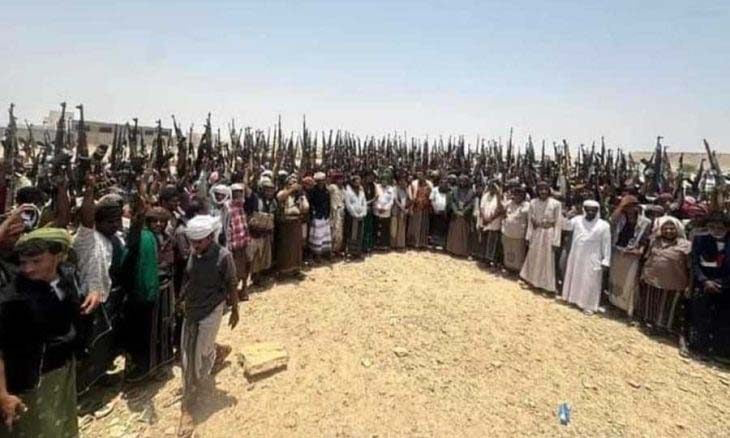
The Saudi–Emirati Conflict
The rivalry between Saudi Arabia and the United Arab Emirates is most clearly on display in Hadramawt, a strategically vital governorate rich in oil and natural resources.
The competition is embodied by two local forces, the Hadramawt Tribal Alliance, backed politically and militarily by Riyadh, and the Southern Transitional Council, managed and overseen by Abu Dhabi through Emirati officers. Both sides are seeking to entrench their influence in the region through local proxies.
Recent clashes between the two forces, however, have laid bare the depth of tension between the Gulf capitals and brought it into the open.
According to the New York Times on December 3, 2025, the confrontations highlight a widening rift that has grown despite the two countries having once led a joint military coalition against the Houthis.
In recent years, their foreign policies have increasingly diverged, with each backing rival actors in Yemen and Sudan.
Mohammed al-Basha, founder of the Basha Report and a specialist in risk management, described the UAE’s direction of southern factions to take control of the south as “part of a cold war between Saudi Arabia and the UAE,” according to the Financial Times on December 10, 2025.
The Cradle, in an article published on December 8, 2025, noted that Riyadh now views Hadramawt as a central pillar of its security, political, and economic influence.
This strategy rests on backing the Hadramawt Tribal Alliance and enabling it to manage security, ports, and oil resources, allowing Saudi Arabia to bypass the geographic constraints imposed by the Strait of Hormuz and the Bab al-Mandab.
By contrast, Emirati efforts to assert control over Mukalla, Shihr, and the al-Dhabba oil port, as part of a broader network of influence stretching from southern Yemen to the Horn of Africa, reflect Abu Dhabi’s determination to pursue a directly competitive policy toward Riyadh.
Saudi Arabia’s military deployment map, extending from Aden, Socotra, and al-Mahra to Mayun, Shabwa, Marib, and up to the northern border, along with its support for affiliated formations such as the Homeland Shield Forces, the Hadramawt Protection Forces, and the Yemen al-Saeed Brigades, underscores the scale of Riyadh’s commitment to strengthening its presence in Yemen.
The dispute is not new. The two states have clashed before over Yemen, most notably in 2019, when the Saudi-backed Yemeni government accused the UAE of launching airstrikes against its forces.
Sources
- Seizure of South Yemen by UAE-backed forces could lead to independence claim
- Saudi-UAE tensions rise over Yemen clashes
- UAE-backed separatists tighten grip over southern Yemen, and airspace is briefly closed
- Southern Transitional Council takes control of Shabwa and Hadramawt, halts Yemen’s gas exports [Arabic]