Algeria and France Caught in Fresh Crisis Over ‘Spy Journalist’: What’s the Real Story?
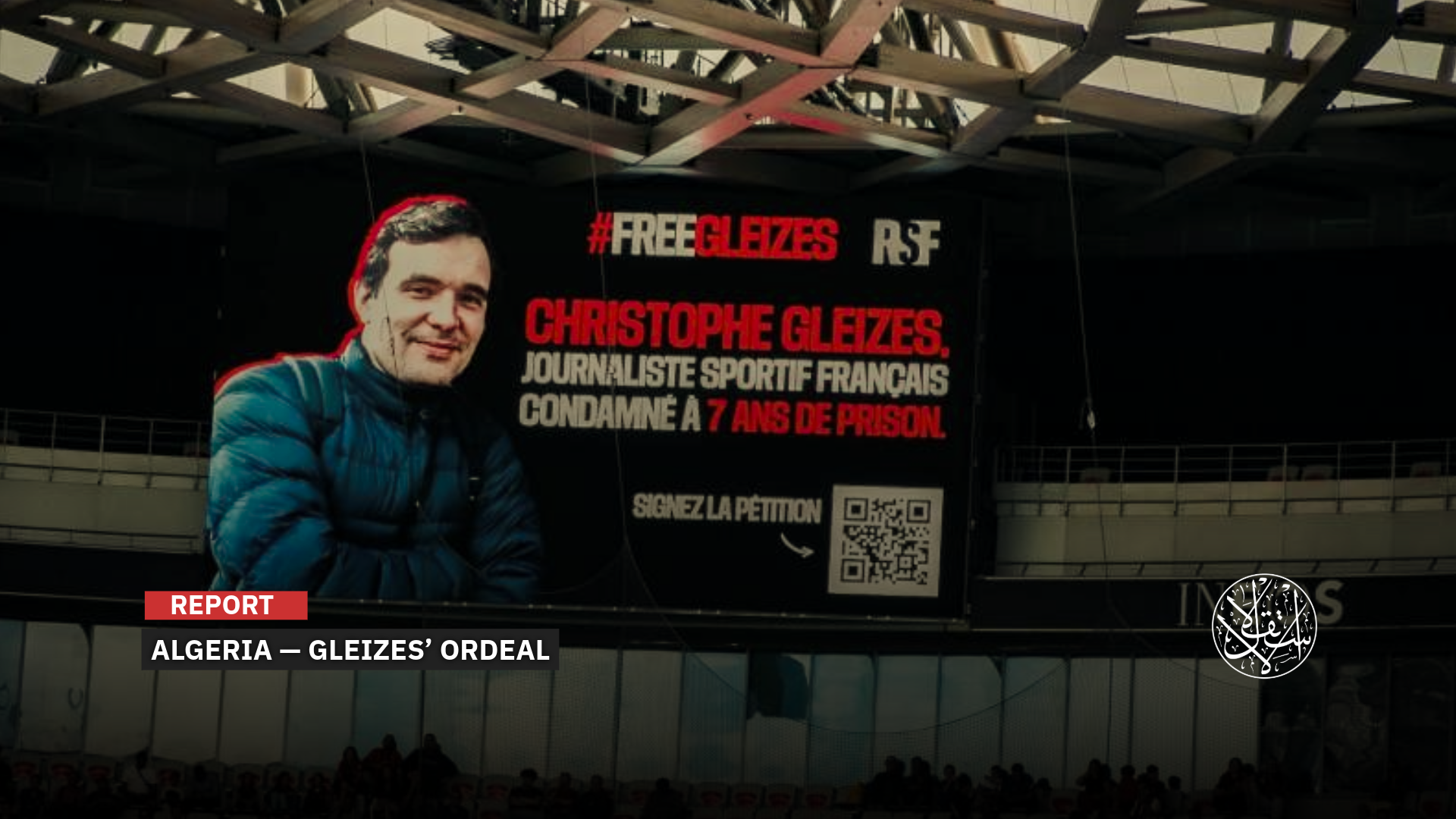
Algeria links the fate of journalist Gleizes to developments in its consular case in Paris.
The French government has sharply criticized a decision by an Algerian court to uphold a seven-year prison sentence for the French journalist Christophe Gleizes, a ruling that has once again heightened tensions between the two countries.
The judgment, issued on December 3, 2025, by the Algerian appeals court, comes despite sustained efforts by the French foreign ministry to persuade Algerian authorities to revise the sentence.
In a statement, the French Foreign Ministry said, “The ministry regrets that our full cooperation with the Algerian authorities and the clarifications provided by his legal team were insufficient to alter the verdict.”
The ministry called for Gleizes’ release, expressing hope for a suitable outcome that would allow him to be reunited with his family swiftly.
The Algerian Narrative
The French journalist, who has been detained in Algeria since May 2024, was sentenced on charges related to alleged contact with the MAK movement, which Algerian authorities designate as a terrorist organization, and for entering the country on a tourist visa to carry out journalistic work.
Algeria has insisted that the case is “purely judicial,” rejecting what it described as a “French pressure campaign” following the upholding of the sentence.
In this context, Algeria’s state news agency republished a report reflecting the official narrative, asserting that “the Christophe Gleizes case is not a journalist’s case in the professional sense, but rather that of an individual who entered Algeria disguised as a tourist to promote a separatist narrative.”
The agency claimed that the journalist had been tasked with a mission by the MAK movement, which Algeria classifies as a terrorist organization, and accused certain French circles of supporting it “covertly.”
The report criticized what it described as “political and media campaigns led by French circles hostile to Algeria,” arguing that “whenever the Algerian judiciary acts within its full sovereignty, Paris cries injustice and invokes press freedom, as though political espionage under journalistic cover were a sacred right.”
It added that “Algeria does not take lessons from anyone, and certainly not from a French authority experiencing moral collapse.”
During court hearings, Christophe Gleizes, 36, who works for the magazines So Foot and Society, said he had arrived in Algeria to prepare a journalistic investigation into JS Kabylie football club in the city of Tizi Ouzou, about 60 miles east of the capital.
Asked about his knowledge of the Kabylie independence movement, MAK, he replied, “I was not aware of it, and I am ashamed to say that. It reflects on my competence. I completely missed that information.”
He insisted that he bore no resentment toward Algeria, saying, “These mistakes allowed me to reflect. I hold no grudge. In fact, I love Algeria more now than I did when I arrived.”
Visibly emotional, he added that he felt one pain above all others, “the pain of being far from my family. I only asked to be allowed to return to them.”
Gleizes acknowledged that he had committed a procedural error, saying he should have entered the country on a journalist’s visa rather than the tourist visa he used while carrying out journalistic work.
Strained Relations
The case has added a fresh layer of tension to relations between the two countries, which have been strained since the summer of 2024 following a series of political and symbolic crises.
These disputes have ranged from disagreements over colonial memory to rows over migration and regional security.
The two sides have exchanged sharp criticism and recalled ambassadors, amid a climate of mistrust described as unprecedented in the history of bilateral relations.
Algerian authorities were also angered by France’s recognition of Morocco’s sovereignty over Western Sahara. The cases of Gleizes and the French-Algerian writer Boualem Sansal, who was also handed a lengthy prison sentence, further deepened the rift.
Relations were compounded by Algeria’s refusal to receive individuals deported by the French authorities.
More recently, however, the Algerian president issued a pardon for Sansal in November, at the request of German President Frank-Walter Steinmeier, a move widely interpreted as part of efforts to improve relations.
In this context, the local outlet Algeria Times reported on December 8 that multiple actors on both sides have sought to defuse tensions.
A high-level diplomatic delegation led by Anne-Marie Descotes, the secretary general of France’s foreign ministry, visited Algeria in November in an attempt to resume dialogue at the highest levels.
The same source cited remarks by the head of France’s external intelligence service, Nicolas Lerner, who told France Inter radio that Algeria had recently sent signals indicating its readiness to reopen channels of dialogue with Paris.
The outlet also reported that French diplomatic sources revealed the existence of informal efforts led by a former Algerian official now based in France to bridge differences and rebuild trust between the two capitals.
It added that discussions are under way to arrange a possible meeting between French President Emmanuel Macron and his Algerian counterpart, Abdelmadjid Tebboune, on the sidelines of the G20 summit in South Africa later this month, a step seen as reflecting a shared desire to avoid a slide toward rupture.
However, the decision to uphold the sentence against the French journalist Gleizes appears unlikely to support this trajectory.
Instead, it is expected to deepen divisions to an unprecedented degree. The report suggested that there are “figures within the Algerian power structure who oppose certain moves toward rapprochement with France and are sending messages to that effect.”
It concluded that “opening the door to de-escalation was not merely a concession by the Algerian side, but a pragmatic choice driven by calculations of the political and economic costs of prolonged estrangement,” adding that “this approach does not appear to enjoy the full backing of influential authorities within the Algerian state.”
French Reactions
On the French side, President Emmanuel Macron criticized the Algerian ruling, saying that the seven-year prison sentence handed down on charges of “glorifying terrorism” was “excessive” and “unjust.”
In remarks reported by Le Parisien on December 5, 2025, Macron said the conviction of the French journalist sent “a bad signal,” adding that he felt deeply moved by the situation of Gleizes, his family, and his colleagues in the journalistic profession.
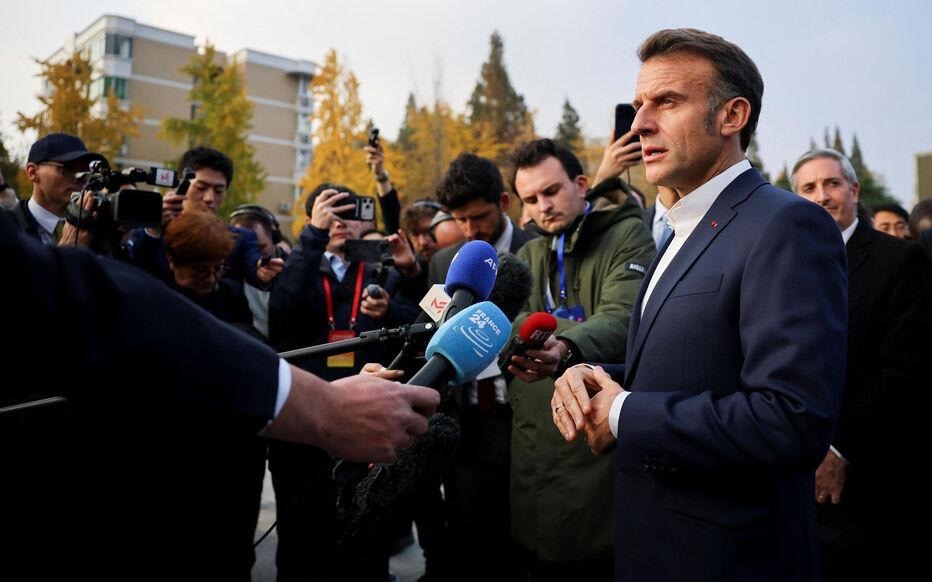
Speaking from Beijing, the French president indicated that Paris would work to “find a positive way out” of the case, hinting at the possibility of intensified diplomatic engagement with Algeria in the coming period aimed at securing the journalist’s release.
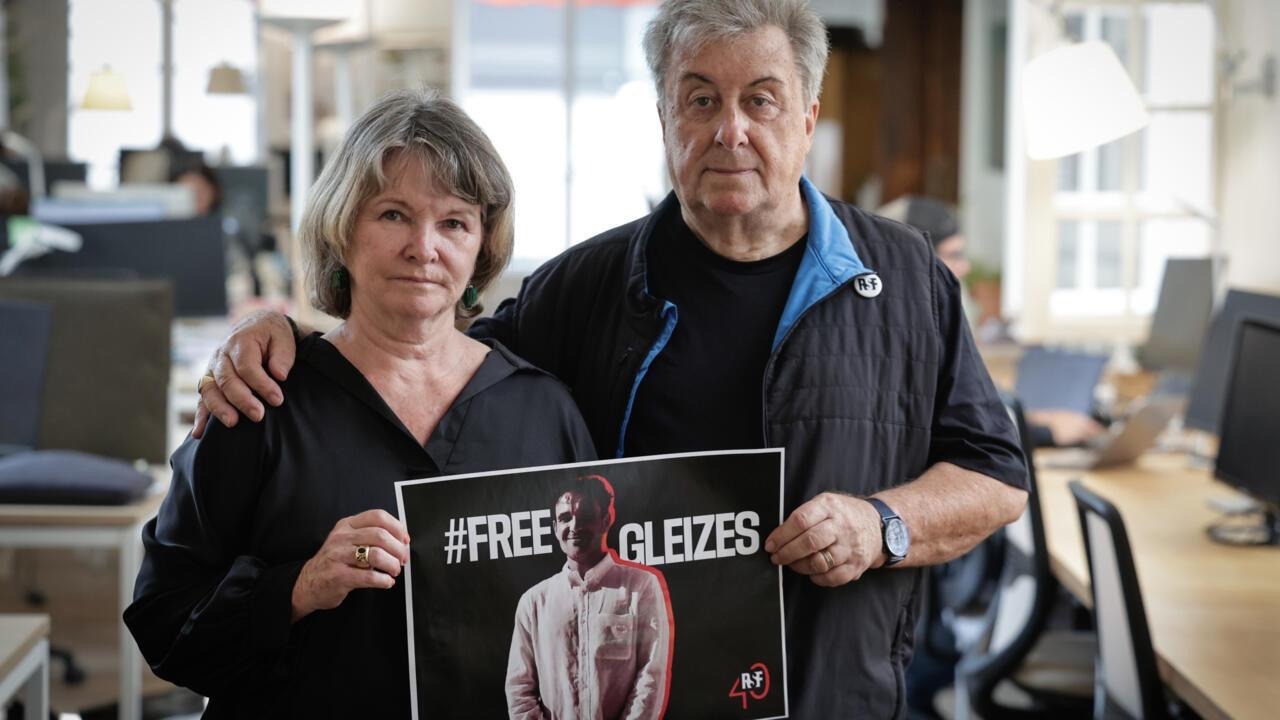
Gleizes’ lawyer, Emmanuel Daoud, also expressed “great disappointment and deep incomprehension” over the ruling, in comments reported by Le Figaro on December 5.
Daoud said the legal team would continue to challenge the decision, adding, “We will keep fighting, because when you are defending an innocent person, you fight until the very end.”
He described the case as baffling, saying, “Rarely have I seen a case file so empty end with such a harsh sentence.”
An analysis published by Radio France on December 4 said the appeals court ruling against Gleizes came as a shock, particularly given the recent signs of de-escalation between Paris and Algiers.
The outlet argued that “this diplomatic setback, even if temporary, places Paris in an awkward position and reignites the campaign of support for the journalist.”
It noted that “all the signals coming from Algeria had been positive just hours before Christophe Gleizes’s trial, yet the ruling was severe and upheld the initial verdict.”
The report questioned what had led to such a harsh judgment, one that plunged Gleizes, his family, his friends, and even the French authorities into shock. Was it a double game, or a power struggle within the Algerian government? The opacity of the Algerian system, it said, leaves such questions unanswered.
According to Radio France, the setback has embarrassed the French government. After the release of Boualem Sansal, several ministers had praised diplomacy as a means of achieving results, rather than the “more hardline” approach advocated by Bruno Retailleau during his tenure as interior minister. That diplomatic strategy, however, appeared to hit a dead end with this ruling.
“It is difficult to pretend nothing has happened,” the outlet added. “There is no doubt that this new obstacle to normalization must be addressed at the highest levels, on both sides of the Mediterranean, if it is to be overcome.”
Ultimately, the report concluded, the fate of Christophe Gleizes lies in the hands of the two presidents, Abdelmadjid Tebboune and Emmanuel Macron, who bear the responsibility of bringing to an end, as swiftly as possible, the ordeal of a journalist who has no place in Algerian prisons.
Political Bargaining
In his reading of these developments, the Algerian political and human rights activist Salah Hadjab said that many Algerians see in this case, and in similar ones, a clear overlap between the political and judicial spheres.
Hadjab told Al-Estiklal that some individuals are treated with exceptional harshness by the courts, with ample evidence of this, while others facing documented allegations or violations that have become matters of public concern are never pursued, simply because the authorities choose not to act.
He argued that the French journalist had fallen victim to the use of the term “terrorism,” a label first popularized by the West, which long tolerated its application elsewhere when those targeted were members of conservative Islamist currents.
Hadjab added that there is now a sense of shock after this label was used against a French Christian journalist.
In his view, the seven-year sentence handed down to the journalist will not be final, and he is unlikely to serve the full term. Instead, Hijab expects a reduction or a political bargain between the Algerian and French authorities.
He warned that the widespread perception of this detention among neutral observers carries negative consequences, as it transforms the judiciary from an institution governed by norms and intended to deliver justice into an instrument of political negotiation.
Hijab stressed that France’s previous request for the release of Boualem Sansal, followed by its renewed pressure in the Gleizes case, reinforces the perception that Algeria’s judiciary lacks independence from political authority.
He also criticized what he described as France’s own double standards, noting that President Emmanuel Macron was previously presented with a file detailing the cases of 300 prisoners of conscience in Algerian jails, to which he responded by calling it an internal Algerian matter. By contrast, when a French national is involved, he said, Paris “raises the roof.”
Even so, Hadjab expressed hope that the matter could be closed by giving each party their due. He clarified that the demand is not for leniency toward foreigners simply because they are foreign, but for equal treatment of all individuals before the law.
He pointed out that this is a core demand among ordinary citizens, who have watched as Sansal was accused of being an agent and faced serious allegations, only to be released later following a political bargain. This, he said, deepens the belief that the judiciary is politicized.
“We need rational voices within the Algerian authorities,” Hadjab said, arguing that what is unfolding exposes unlawful practices and reveals discrimination among detainees, both in the application of the law and in the exploitation of judicial institutions for political calculations.
He concluded that this has damaged both the authorities and Algeria as a whole, expressing hope that the state will return to the right path by committing to building a genuine state governed by the rule of law, with no discrimination before the courts.
From another perspective, the journalist Mazen Bilal wrote in an analysis for North Africa News, published on December 8, that Algeria’s judiciary remains under persistent accusation in French political discourse and among some human rights organizations.
Bilal said this narrative views the Algerian judiciary as a tool in the political struggle between the two countries. Algeria, he added, counters by accusing France of double standards, pointing to its silence on cases involving Algerian nationals detained on French soil, such as that of an Algerian consular employee accused in Paris of “kidnapping the dissident YouTuber Amir Boukhors,” while escalating its defense of a French journalist who “violated residency and employment laws.”
Bilal argued that Algeria appears to be linking the fate of the Gleizes case to developments in the consular dispute in Paris, meaning that justice, while retaining a legal form, has become part of a broader diplomatic equation.
In practical terms, he said, the case has moved beyond its judicial dimension to become a mutual pressure card between two countries well versed in using political symbolism in matters of justice and media.
As for the prospects of further escalation, Bilal warned that continued tension would impose mounting costs on both sides. Algeria, facing a severe economic crisis due to declining gas revenues and a deteriorating investment climate, needs stable European partners, with France foremost among them.
Paris, meanwhile, as its influence in Africa steadily wanes, cannot afford a rupture with Algeria, its second-largest trading partner on the continent.
Even so, Bilal concluded, a managed level of tension now appears to define the relationship. There is neither a complete break nor genuine reconciliation, as the two countries need one another as much as they remain wary of each other.
Sources
- Algeria, Appeal Court Upholds Conviction of Journalist Christophe Gleizes [Arabic]
- French Journalist’s Sentence Complicates De-escalation Efforts Between Paris and Algiers [Arabic]
- “Not a Good Signal,” Emmanuel Macron Criticizes the Conviction of French Journalist Christophe Gleizes in Algeria [French]
- “Nothing Justifies Such a Verdict,” Says Christophe Gleizes’ French Lawyer Who Defended Him in Algeria [French]
- The Algerian–French Crisis, Journalism Becomes a Battleground for Diplomatic Confrontation [Arabic]