Officers Running a Civilian Human Rights Institution in the UAE
In a move that sparked a wide human rights uproar, the UAE government appointed, a few days ago, a number of officers at the head of the country's National Human Rights Institution (NHRI), which was formed in August 2021, according to what was reported by Emirates Detainees Advocacy Center (EDAC).
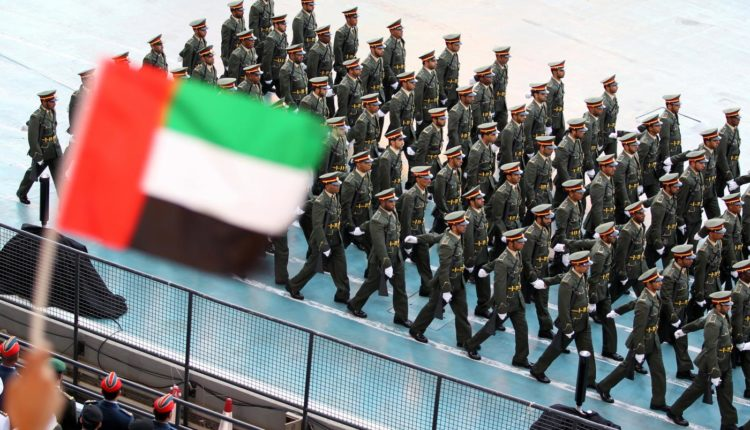
The human rights center also revealed that most of the new members of the institution are former police officers or have a direct relationship with the UAE regime, what makes the institution more like a state security apparatus and not an independent human rights institution that operates in accordance with the Paris Principles, as was promoted by the UAE government.
This means that the Emirati authorities are using human rights as a slogan and a bridge to raise the status of the state in international forums, in an effort to obtain international praise for the so-called falsehood and in reality, about its efforts to promote human rights.
Polishing the Reputation
According to the Emirates News Agency (WAM), UAE President Khalifa bin Zayed Al Nahyan issued a decision on December 18, 2021 to form the Board of Trustees of the NHRI in the country.
The decision stipulated the formation of the Board of Trustees, headed by Maqsoud Kruse, in addition to a Secretary-General and 11 members, most of whom are former officers and graduates of the Dubai Police Academy.
In the same context, human rights activists sharply criticized Abu Dhabi for what they said were its undisguised camouflaging and provocative practices in the human rights file, and the latest is the assignment of former police officers to run the NHRI in the UAE.
According to the reports of international human rights organizations, Abu Dhabi did not leave a mechanism to polish its image and hide its bad human rights file, but did it, and the NHRI that it recently established is just a new tactic in the framework of a polishing campaign launched by the UAE a decade ago.
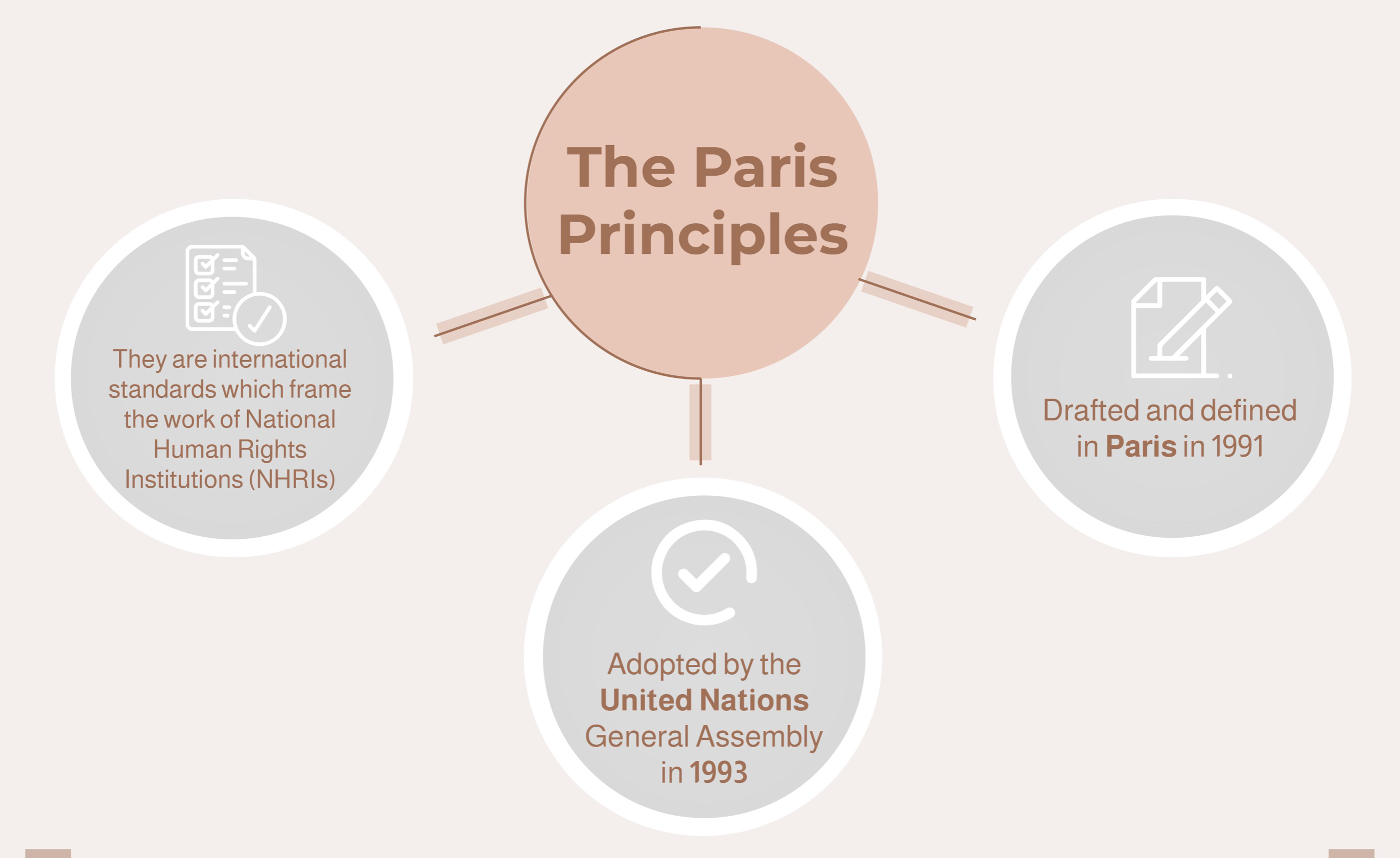
In turn, Maqsoud Kruse claimed, in a statement on the occasion of assuming his duties as head of the NHRI, that “the NHRI is an independent institution with a legal personality that exercises its activities in accordance with the Paris Principles regulating the role of national institutions for the promotion and protection of human rights.”
“The institution will work closely with international organizations concerned with human rights represented by United Nations bodies and mechanisms in order to develop the human rights work system in the country, in accordance with global best practices and international standards,” Kruse added.
The Guardian newspaper had revealed that it had seen documents confirming the UAE's pledge to provide 312 million pounds to the University of Cambridge in order to polish its reputation and image abroad.
The American network CNN was also widely criticized for its involvement in polishing the tarnished reputation of the UAE by sponsoring the Expo 2020 Dubai, which was held in October 2021.
In turn, the Emirati judicial and legal advisor, Mohammed bin Saqr Al-Zaabi, said in a statement to Al-Estiklal: “The Emirati authorities have committed all violations against their opponents at home and abroad, without exception, from arrests and enforced disappearances to torture, then farcical trials, spying on opponents’ phones, targeting their family members, and many more.”
“Therefore, when the UAE was unable to respond to human rights organizations and the reports they issued, it prevented their representatives from entering the country, which makes the UAE more like a closed prison from which only leaks come out,” he added.
Regarding the extent of the seriousness of this institution and the chances of success of this step in the UAE, Al-Zaabi said: “A police state is not expected to have a real human rights institution, it is originally fighting civil society, preventing gatherings, arresting human rights activists, framing them with charges, and closing associations.”
“Therefore, this step is not for the sake of strengthening the human rights situation in the UAE, but to cover what the state does in relation to human rights violations,” he pointed out.
Commenting on the UAE's readiness to deal with human rights organizations to respond to allegations of human rights violations or to access and visit detainees, Legal Advisor Al-Zaabi said: “We are sure that this institution has only the right to justify the violations committed by the security services. Where 10 years have passed so far since the beginning of the Arab Spring, it is enough to reveal the goals of the rulers of the Emirates inside the country and throughout the Arab world.”

Unexpected Formation
On its part, Emirates Detainees Advocacy Center (EDAC), in a report, shed light on the backgrounds of the new members of the Board of Trustees of the NHRI in the UAE, noting that “the violations of the UAE authorities have reached an unprecedented stage after militarization of the human rights file.”
The state media in the #UAE celebrate the Board of Trustees of the #NHRI without mentioning the military and security background of the professions most of them held or still hold, is it a security apparatus or a #National_Human_Rights_Institution? pic.twitter.com/EHSW03KPv7
— Emirates Detainees Advocacy Centre (EDAC) (@EDAC_EN) December 21, 2021
Maqsoud Kruse, the new head of the NHRI, is a former officer in the UAE army for 10 years between 2000 and 2010, and was a strategic communication advisor to the Ministry of Presidential Affairs. In addition, he is currently a member of the media team in the UAE Cabinet.
The NHRI included: Colonel Ahmed Al-Mansouri, an officer in the Dubai Police, Colonel Abdulaziz Al-Noman, a former officer in the Sharjah Police, and First Lieutenant Fatima Al-Kaabi, an administrative officer in the Abu Dhabi Police.
The panel also included: Maryam Al-Ahmadi, a former social researcher at the Ministry of Interior, Fatima Al-Beddawi and Amira Al-Suraidi, who are graduates of the Dubai Police Academy.
The members of the institution were also appointed: Zayed Al-Shamsi, a graduate of the Dubai Police Academy and known for his ties to the State Security and his abuse of Emirati prisoners of conscience, and Mohammed Al-Hammadi, a journalist known for regularly attacking and abusing Emirati prisoners of conscience.
The institution's board of trustees includes only 3 people who may be considered independent, and they are: Kalitham Al-Matrooshi, Shahryar Al-Nubani and Nour Al-Suwaidi, “although they have previously held government positions, the extent of their independence is also in doubt,” EDAC noted.
Saeed Al-Ghafli was also appointed Secretary-General of the NHRI with the rank of Undersecretary, knowing that he was working in the Dubai Police Command.
“After reviewing the names of the members of the institution, it revealed the absence of pluralistic representation of social forces in civil society and independence from government departments,” EDAC said.
In addition to the absence of members of governmental organizations concerned with human rights, representatives of religious and philosophical currents, members of Parliament, and qualified experts.
“As a result of what was previously mentioned, the mechanism for forming the NHRI violates the Paris Principles, as was promoted by the UAE government,” EDAC confirmed.
As for the members of the newly formed Board of Trustees of the institution and their role in committing human rights violations in the UAE, Legal advisor Al-Zaabi said in a statement to Al-Estiklal: “The new members are the best who work in such an institution, which is similar to the state security branch.”
“The mechanism for forming the NHRI is not in line with the principles of the United Nations. Where all state institutions are not independent and subject to the ruling individual. It is impossible to form an independent institution that is consistent with the principles of the United Nations,” Al-Zaabi also clarified.
“If the UAE wanted to form an independent national institution, it would not find anyone who meets the conditions except from among the elite in Emirati prisons from prisoners of conscience, such as Dr. Muhammad Al-Roken, Dr. Muhammad Al-Mansouri, Dr. Nasser bin Ghaith, Dr. Ahmed Al-Zaabi, Dr. Hadef Al-Owais, Professor Ahmed Mansour, Adviser Ali Al-Kindi, Judge Mohammed Diab, and many others,” He added.
Bad Human Rights Record
On August 30, 2021, the UAE authorities issued a law establishing the NHRI, with its headquarters in Abu Dhabi, claiming that it will enjoy financial and administrative independence in the exercise of its duties to promote and protect human rights and freedoms.
At that time, human rights organizations revealed that “the UAE regime deliberately announced this institution at this time, in order to relieve international pressure on its bad human rights record ahead of the start of the Expo 2020 Dubai.”
However, the Emirati move failed to convince the majority of EU lawmakers that it is serious about taking concrete steps to improve the human rights situation in the countries that lag behind on the rights and freedoms record.
As a result, on September 15, 2021, the UAE regime received a severe blow from the European Parliament, which issued a resolution in which it was highly critical of the notorious human rights record in the Emirates, and also called for a boycott of the Expo 2020 Dubai.
The parliament clarified in a statement that its decision came in response to Abu Dhabi's continued disregard for the requests of European Union and United Nations officials concerned with human rights violations and advocacy organizations to allow them to visit the country and verify the conditions of political detainees and the methods of their treatment.

It is noteworthy that Abu Dhabi faces severe criticism due to its bad human rights record locally and regionally.
UAE prisons are filled with many politicians, human rights activists, and reformers because of their activism, which makes the decision to establish a national human rights body just an attempt to whitewash the reputation, according to human rights circles.
The American Foundation, Freedom House, which evaluates freedoms worldwide, had classified the UAE as a non-free country, especially after the Emirati regime enacted one of the most restrictive laws on freedom of opinion and expression in the Arab world.
Sources
- A group of officers is heading UAE's NHRI
- The NHRI between the Paris Principles and the Abu Dhabi Principles
- Formation of a Board of Trustees for the National Human Rights institution [Arabic]
- The state of human rights in the UAE: Increasing 'injustice,' collapsing 'justice' and encouraging impunity for criminals