Fixing Gaps or Power Grab? Constitutional Changes Expand the Algerian President’s Power
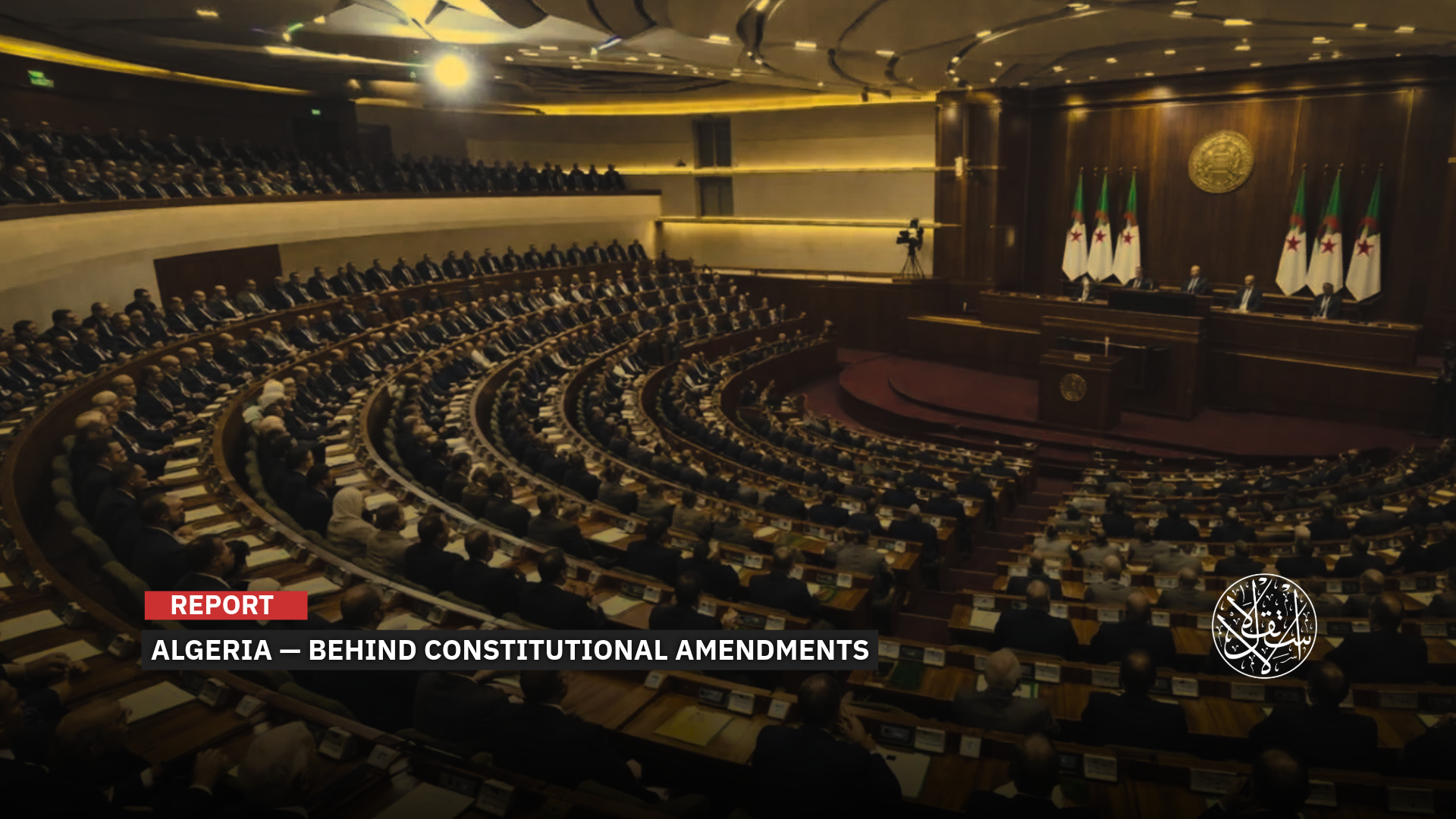
Abdelmadjid Tebboune, Algeria’s president, has significantly expanded his presidential powers.
Under the pretext of “closing constitutional loopholes,” Algerian President Abdelmadjid Tebboune has overseen a sweeping expansion of presidential powers, backed by a parliamentary majority that has tightened his grip over key political and judicial institutions.
On March 25, 2026, Algeria’s bicameral parliament approved a constitutional amendment package by a 75 percent majority, with 542 votes in favor out of 583. The reform introduced 12 amendments that significantly broadened the president’s authority and equipped the presidency with greater leverage over the country’s institutional and political direction.
Under the new provisions, the president can now curtail the influence of certain constitutional bodies, most notably the Supreme Judicial Council, particularly in matters of judicial appointments. Its opinions are no longer binding on the head of state, effectively strengthening direct presidential control over the judiciary and expanding his reach into political management, including the power to call early elections.
The changes raise a central question: are these reforms a technical correction aimed at fixing constitutional gaps, as the authorities argue, or do they signal a deeper shift in the balance of power in favor of the presidency?
Amendments Details
The amendments, according to Algerian Justice Minister Lotfi Boudjemaa, stem from “shortcomings revealed by constitutional practice over the past five years” since the adoption of the 2020 constitution and are presented as “purely technical improvements” aimed at enhancing institutional performance.
The presidency had first introduced what it called a “technical constitutional amendment” in December 2025, before presenting it to political parties in January 2026 ahead of parliamentary approval, arguing that it did not require a public referendum as it did not affect “fundamentals.”
That framing, however, quickly sparked debate. Even the justice minister acknowledged that the revision touches “the core of the organization of powers,” including presidential prerogatives, parliamentary functioning, judicial independence, and the role of the Independent National Electoral Authority (INEA), which has been reduced to an advisory body. This suggests that the changes go well beyond the technical label attached to them.
The amendments expand presidential authority in several key areas, including greater influence over judicial affairs and the power to call early local elections, a role previously limited to presidential and legislative polls.
According to Algeria Press Service (APS), some provisions are presented as strictly administrative, such as introducing an undefined education requirement for presidential candidates, adjusting the timing and protocol of the presidential oath, and shifting the parliamentary session opening to September with a ten-month duration.
Yet the political weight of the reforms is difficult to ignore. One of the most significant changes removes the requirement for approval from the Supreme Judicial Council in certain judicial appointments, including senior posts and annual transfers of judges and state commissioners, further strengthening executive influence over the judiciary, especially since the president chairs the council.
The Supreme Judicial Council itself has been reshaped, with several categories of representation removed, including members appointed by both chambers of parliament, trade union representatives, and the head of the National Human Rights Council, and the attorney general at the Supreme Court added to its composition.
At the same time, the INEA has been significantly downgraded, its role now limited to consultation after previously overseeing the preparation, organization, and supervision of elections, with no clear definition of its new mandate.
Other changes extend the term of the speaker of the upper house from three to six years, while also granting the president the authority to call early local elections, justified by officials as a way of “fixing constitutional gaps.”
The amendments also address presidential vacancy procedures in an effort to avoid constitutional deadlock while reintroducing academic requirements for presidential candidates, a provision that has drawn renewed political and media scrutiny.
On the judiciary side, the reforms remove union representation of judges from the Supreme Judicial Council, justified as a measure to prevent conflicts between professional union activity and constitutional duties, while also excluding the head of the National Human Rights Council and reinforcing the role of judicial figures such as the attorney general.
Ultimately, Algeria’s parliament, in both chambers, adopted the package with a sweeping three-quarters majority, with 542 votes in favor out of 583, underscoring the strong political backing behind a reform that many see as extending far beyond technical adjustment.

Tightening Presidential Control
Le Monde described Algeria’s latest constitutional amendment as purely political in nature, arguing that it is primarily designed to strengthen Abdelmadjid Tebboune’s grip over the state’s institutional framework and consolidate his authority, eighteen months after his re-election.
The paper also criticized what it called a growing crackdown on the opposition, framing the reforms as part of a broader pattern of legislative and constitutional maneuvering aimed at reinforcing executive dominance over other branches of government.
Le Monde cited constitutional law professor Massensen Cherbi, a researcher at the Mediterranean Institute for Advanced Studies (MECAM) in Tunisia, who said the latest amendment further increases presidential powers, even though Algeria already operates under a strongly presidential system.
The newspaper highlighted the Supreme Judicial Council as the most symbolic target of the changes. The body, which is meant to guarantee judicial independence, previously included representatives from parliament, judges’ unions, and the National Human Rights Council.
The revised text removes these groups and replaces them with the attorney general at the Supreme Court, a figure widely seen as closer to the executive, shifting the balance of the judiciary further toward the presidency.
It also eliminates the requirement for a binding opinion from the Supreme Judicial Council on senior judicial appointments, effectively giving the president near total control over key positions in the justice system, including oversight functions the council was meant to ensure.
Legal experts told the newspaper that this amounts to a clear setback for judicial independence, as it weakens the mechanisms of balance and accountability within the justice system.
Another major change affects the INEA, created in September 2019 in the wake of the Hirak protest movement to safeguard electoral integrity. Its role has now been significantly reduced, with key logistical responsibilities transferred to the Interior Ministry.
Under the new framework, the Interior and Foreign Ministries will handle the material and logistical organization of elections, while the electoral body is left with a largely supervisory role, stripped of meaningful executive authority.
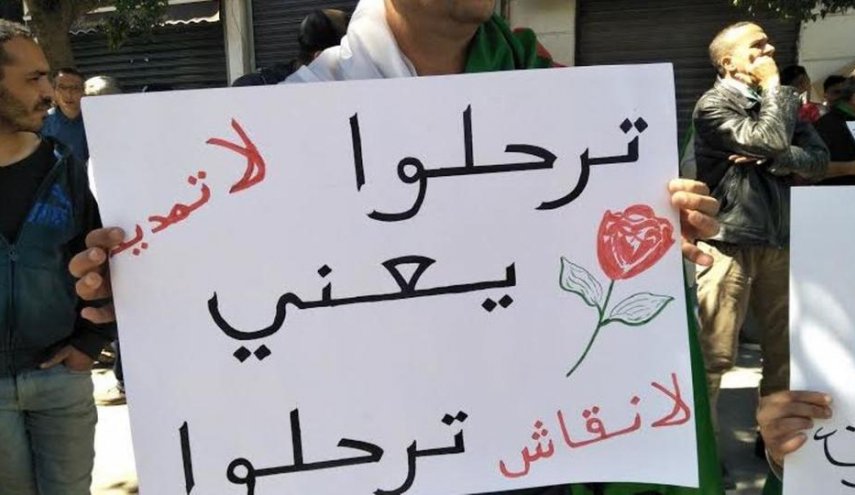
Observers see this as a reversal of one of the key demands of the 2019 Hirak movement, which erupted against Abdelaziz Bouteflika’s bid for a fifth term and called for deep political reform.
Tebboune, first elected in December 2019 in the aftermath of that upheaval, initially governed in a weakened political environment shaped by street pressure. Over time, however, the balance has shifted, with the president now operating from a position of stronger institutional backing.
In its coverage on March 25, 2026, Le Monde noted that although the reforms are officially presented as technical adjustments, they carry clear political implications, reshaping the balance of power in favor of the presidency.
After seven years of Tebboune’s rule, the paper argues, Algeria appears to be entering a new political phase marked by tighter executive control, coupled with sustained pressure on dissent and coordinated institutional restructuring.
It also pointed to the still-sensitive relationship between the presidency and the military leadership, the backbone of Algeria’s political system, noting signs that Tebboune is seeking greater autonomy by leveraging his constitutional powers.
The newspaper concluded that the reforms come amid a tense regional environment, reinforcing a model of an increasingly powerful presidency that dominates appointments and electoral processes while reducing institutional constraints.
It added that Algeria’s political system has gradually re-stabilized after the shock of the 2019 to 2020 Hirak movement, relying on a mix of restrictive legislation, security policies, and oil revenues.
In contrast, a report by the Middle East Forum, echoed by The Times of Israel on March 11, 2026, described the reforms as largely symbolic, reflecting the regime’s concern over genuine democratization ahead of upcoming elections.
The report argued that new legislation, including political party laws, further tightens control over party formation, funding, and activity while restricting lawmakers from switching affiliations, measures seen as an effort to manage the political field and limit viable competition.
From this perspective, the system is moving toward what is often described as managed democracy, where elections function less as a mechanism of political change and more as a tool to legitimize existing power structures through controlled participation.

Party and Islamic Backing
Despite the reforms running counter to the demands of the Hirak protest movement and further expanding presidential powers while reducing the role of the judiciary, leaders of the Movement of Society for Peace, Algeria’s main Islamic opposition party, instructed their MPs to vote in favor of the amendment package, even while admitting they were not fully convinced by its content.
Pro-presidential parties that dominate parliament quickly rallied behind the reforms, including the National Liberation Front, the Democratic National Rally, and the Future Front, alongside the National Construction Movement, which is also aligned with Islamic currents and endorsed the text.
In contrast, Atmane Mazouz, leader of the opposition Rally for Culture and Democracy, warned that the constitutional overhaul risks reversing democratic gains and paving the way for what he described as a return to an “absolute presidential system.”
He sharply criticized the expansion of presidential authority, including the power to dissolve local councils in advance and the restructuring of the upper house, arguing that these measures form part of a broader effort to tighten control over institutional succession mechanisms.
The party, which was not included in consultations over the draft amendments, also condemned what it called a lack of public debate and criticized parliament’s move to adopt the reform without sufficient scrutiny, warning that turning counter powers into symbolic roles undermines the very foundations of institutional balance in the country.
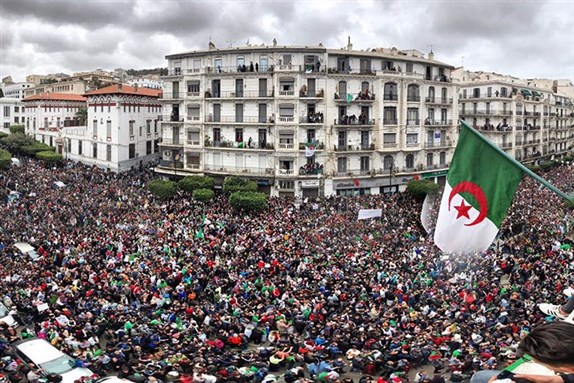
Has the Hirak Movement Ended?
Since Abdelmadjid Tebboune’s election in 2019, following a mass popular uprising calling for a fundamental overhaul of Algeria’s political system, the country has entered a phase of gradual political reordering, marked by efforts to contain, fragment, and ultimately absorb the demands of the Hirak movement.
The roots of the Hirak date back to February 22, 2019, when protests erupted across major cities in rejection of then-president Abdelaziz Bouteflika’s bid for a fifth term. What began as a specific demand quickly evolved into a broader nationwide movement challenging entrenched corruption, economic stagnation, and the dominance of ruling elites, alongside worsening living conditions and high unemployment, eventually coalescing around the call for systemic change under the slogan “they all must go.”
With the adoption of the 2020 constitution, the first phase of institutional containment began. The new framework expanded presidential powers, strengthened the president’s role in senior appointments, and consolidated authority over foreign policy and defense, effectively formalizing a stronger executive-centered system.
The next phase saw a gradual tightening of pressure on opposition parties and activists linked to the Hirak, combined with efforts to defuse social tension through a mix of security measures, reformist rhetoric, and the use of oil revenues to raise wages and expand subsidies for basic goods.
Against this backdrop, Tebboune continued to expand executive authority through constitutional, political, and economic tools, a process culminating in the 2026 constitutional amendment that further strengthened presidential powers and reduced judicial autonomy, widely seen as reshaping the political landscape and curbing the momentum of the Hirak’s original demands.
As a result, the Hirak does not appear to have fully disappeared but rather to have entered a phase of contraction and containment within a tighter political and security environment, raising open questions about its potential reemergence and its future capacity to influence political change in Algeria.
Sources
- Algerian President Abdelmadjid Tebboune strengthens his grip on power
- Algeria’s Sham Reforms Expose Regime’s Fear of Real Democracy Ahead of Elections
- Key Technical Amendments Proposed to the Constitution [Arabic]
- Algerian Parliament Unanimously Approves ‘Technical’ Constitutional Amendments [Arabic]
- The Technical Constitutional Amendment Marks the Start of a New Era of More Cohesive and Unified Institutions [Arabic]