Netanyahu’s Talk of Ditching U.S. Aid: Reality Check or Political Maneuver?
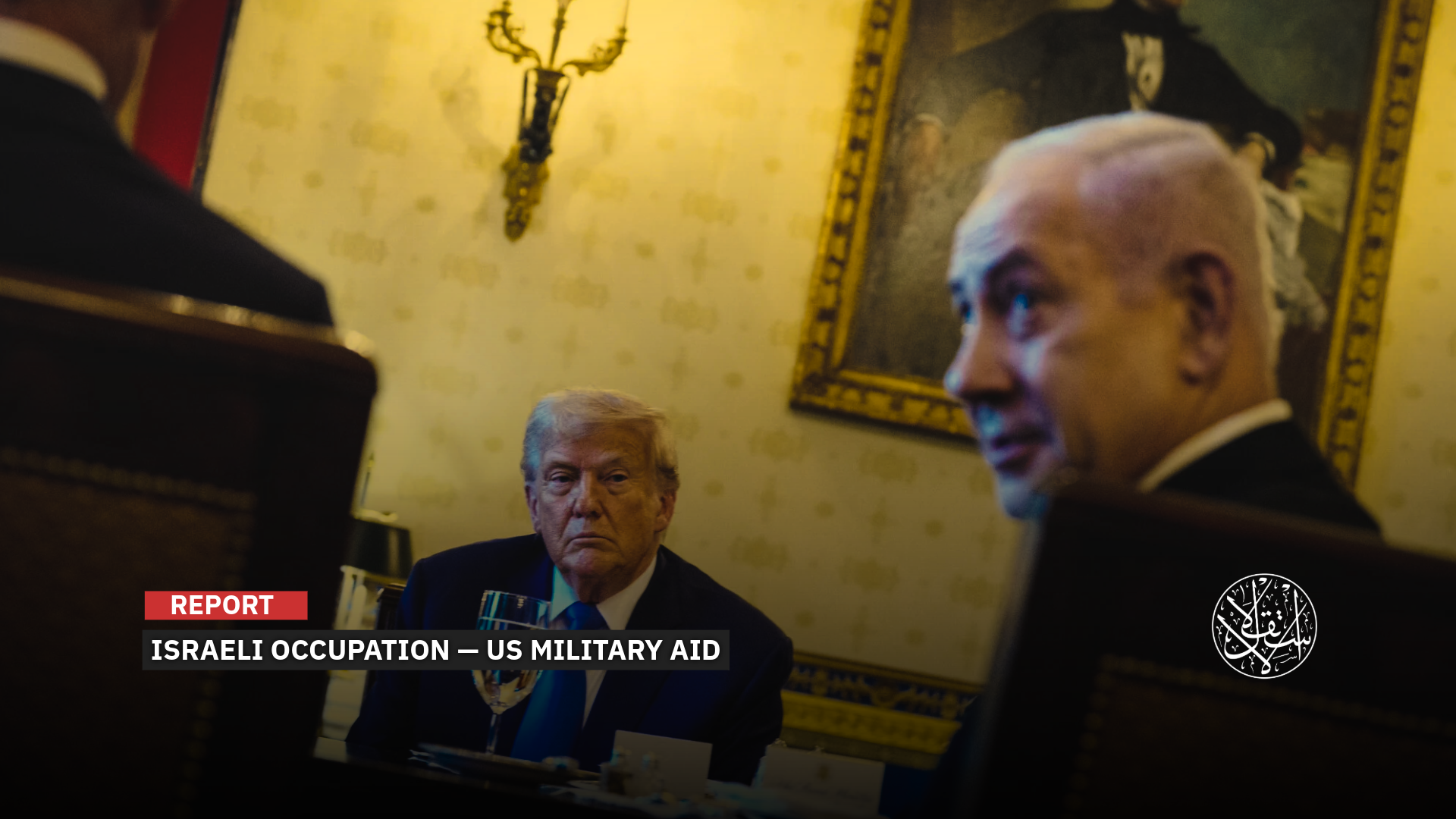
An Israeli official warned that it would be better not to overstep their bounds.
The United States provides the Israeli Occupation with roughly $3.8 billion in military aid each year under a 10-year agreement signed in 2016, locking in $38 billion in support. Since Operation al-Aqsa Flood and the devastating Israeli war on Gaza that followed, that assistance has ballooned, with “Israel” receiving more than $21.7 billion in weapons and military hardware, according to Brown University’s Costs of War project.
Israeli media have openly acknowledged that the war would have been difficult to sustain without U.S. backing. Still, Prime Minister Benjamin Netanyahu told The Economist on January 9, 2026, that he wants “Israel’s” arms industry to achieve full independence within a decade.
The statement sounds like a vision of long-term self-reliance, but critics see calculation rather than strategy. Netanyahu’s message appears aimed at Washington as much as “Tel Aviv”—an attempt to soothe growing American anger over the scale of military aid, particularly among Donald Trump’s MAGA base, which has grown louder in calling for U.S. funds to be spent at home rather than abroad.

What Does Netanyahu Want?
Since Benjamin Netanyahu floated the idea of ending “Israel’s” reliance on U.S. military aid—cutting it to zero within a decade—questions have piled up. Is this a genuine strategic shift or a tactical move to ease American pressure on specific files? And more fundamentally, can the Israeli Occupation actually afford to forgo U.S. support?
American aid still accounts for a substantial share of “Israel’s” military spending. At the same time, Netanyahu’s government has moved in the opposite direction at home, approving a dramatic increase in the war budget, an additional 350 billion shekels (about $107 billion) spread over ten years, about 70 percent higher than it was before the Israeli war on Gaza.
In his interview with The Economist, Netanyahu was explicit. He said he wanted to gradually scale back U.S. military aid over the next decade and confirmed that he ultimately meant eliminating it altogether. “We want to be as independent as possible,” he said, adding that he had conveyed the message directly to Donald Trump. “Israel,” he argued, deeply appreciates decades of American support but has now “come of age” and developed significant capabilities of its own.
Pushing the point further, Netanyahu, wanted by the International Criminal Court (ICC), said “Israel’s” economy could reach nearly $1 trillion within ten years, framing the reduction of aid as part of a broader story of national maturity and economic strength.
This was not an offhand remark. In November 2025, he told Australian television that his government was already considering a gradual reduction in U.S. military assistance, again stressing the goal of making “Israel’s” arms industry as self-reliant as possible. Months earlier, in a May 2025 cabinet meeting, he made a similar point, saying “Israel” receives close to $4 billion annually in U.S. security aid and would eventually have to reduce its dependence on it.
Senator Lindsey Graham, who oversees military aid issues in the Senate, welcomed Netanyahu’s comments and said he would push to significantly accelerate the timeline. Writing on X, Graham argued that ending aid to “Israel” would save American taxpayers billions of dollars that could instead be reinvested in the U.S. military.
Whether Netanyahu’s vision reflects a realistic roadmap or a carefully calibrated political message remains an open question. What is clear is that his talk of independence is resonating far beyond “Israel’s borders,” especially in an America increasingly divided over how much it should spend and where.
Claims vs. Reality
Before Netanyahu’s statements, Axios reported in November 2025 that “Tel Aviv” had requested during Israeli-American talks on the next military aid package to extend the agreement with the United States to 20 years instead of the current 10, suggesting intentions at odds with his later claims.
Axios, citing American and Israeli Occupation officials, noted that discussions had stalled due to growing isolationist sentiment among Trump’s base, and no agreement was reached.
Netanyahu denied the Axios report, framing the discussion around “Israel’s” “independence.”
American media noted that the divergence between the U.S. and Israeli positions came as negotiations were underway on the next memorandum of understanding, with the current 10-year agreement set to expire in 2028. Under that deal, the Israeli Occupation is allowed to use part of its foreign military funding for domestic purchases—a privilege scheduled to phase out with the new agreement.
On January 13, 2026, Jewish Insider questioned whether “Israel” intended to live without aid and highlighted reported disagreements between Trump and Netanyahu over Israel’s plan to end its reliance on U.S. military assistance.
Contrary to Netanyahu’s stated goal of phasing out aid within ten years, Trump reportedly expressed confusion and withheld immediate support, according to two sources familiar with the matter.
Jewish Insider identified Ron Dermer, “Israel’s” former strategic affairs minister and a senior Netanyahu adviser, as the architect of the plan. He reportedly told members of Congress and other officials that the move would improve “Israel’s” damaged image in the U.S., where Americans accuse Trump of spending taxpayer money on weapons sent to “Israel” for the genocide in Gaza.
One source told the publication that Netanyahu suggested “Israel” might refuse or return some of the U.S. military aid scheduled for 2027 and 2028 under the current memorandum.
Trump, however, stated he did not believe Netanyahu’s proposal to end U.S. military aid would improve “Israel’s” standing with the American public, according to the Dermer-Netanyahu plan.
U.S. involvement in managing “Israel’s” affairs to protect it from its wars on Gaza, Lebanon, and Iran reached the point where Trump threatened Israeli officials, judges, and politicians with cutting off aid if they prosecuted or jailed Netanyahu, in order to prevent “the state” from collapsing from within and safeguard its survival.
Following Trump’s warning, the Israeli business magazine Calcalist cautioned on June 25, 2025, that suspending U.S. military aid would be costly for the Israeli economy.
An Israeli official told the publication that it’s better not to overstep; U.S. security aid to “Israel” amounts to $3.8 billion a year, and without it, “Israel” would have to find another source of funding for American weapons.
Another official warned that the Israeli economy could not withstand a pause or suspension of U.S. military assistance. The magazine noted that “Israel’s” military and war industries fear that stopping free U.S. aid would force them to cover the cost of any weapons purchases, potentially requiring painful cuts in other areas such as education, healthcare, and social services.
Calcalist observed that while “Israel” boasts of its air force’s ability to strike Iran and Yemen, it remains dependent on the billions in aid Washington provides annually, effectively receiving these expensive weapons for free.
Economic analyst Yuval Azulai said “Israel” receives roughly $4 billion in U.S. weapons annually, and when Netanyahu hinted during the war on Gaza that “Israel” might eventually phase out this support—similar to previous reductions in economic aid—he faced pushback from the military.
In addition to the standard military assistance, an extra $5.2 billion was transferred to “Israel” in recent months through a special grant from former President Joe Biden, enabling the acquisition of vast quantities of war missiles for the Iron Dome and David’s Sling systems, as well as the Magen Or laser interception system, bringing “Israel’s” total U.S. military aid for the year to around $9 billion.
A Pipeline of Billions
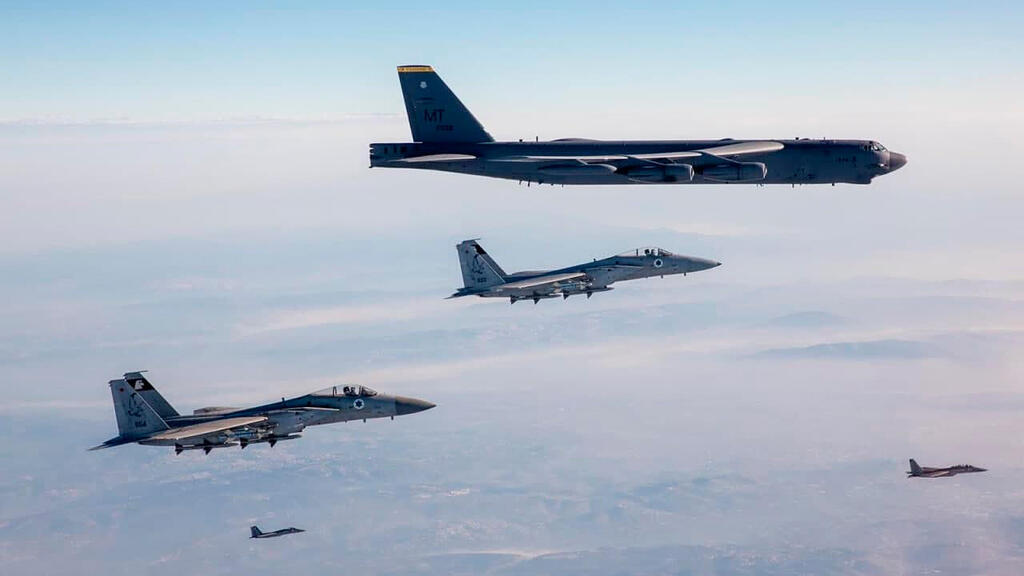
For decades, U.S. presidents from both parties have treated military aid to “Israel” as a near‑sacred obligation, keeping the tap of modern weapons flowing freely to support its genocide in Gaza. That longstanding commitment has poured billions of dollars’ worth of advanced American arms into the hands of the Israeli Occupation military.
“Israel’s” combat aircraft inventory is almost entirely U.S.‑made, including 39 F‑35 stealth fighters, some 75 F‑15s, and 196 F‑16s. Its fleet also includes dozens of attack helicopters—46 Apaches, 25 CH‑53 Sea Stallions, and 49 Black Hawks—all funded or supplied through U.S. assistance.
These weapons, from warplanes to tens of thousands of bombs, missiles, and sophisticated targeting systems, have been central to “Israel’s” genocide in Gaza, inflicting heavy human tolls on the territory’s civilian population.
According to Congress, since Operation al-Aqsa Flood on October 7, 2023, and the subsequent Israeli wars on Gaza, Lebanon, and Iran, the Israeli Occupation has received additional emergency military aid on top of its annual $3.8 billion assistance.
This included $3.5 billion in military funding in April 2024, another $3.5 billion later that year, $5.2 billion for missile war, $4 billion for “Israel’s” new laser defense system, and $1.2 billion for the Iron Beam system, bringing the total to $21.2 billion.
The Israeli Occupation is expected to receive its first new F‑15 IA fighter jet from the United States in 2031, at a rate of four to six planes per year. This massive $5.2 billion deal is fully funded through U.S. military aid.
A few months ago, the Israeli Ministry of War signed an agreement with the U.S. government to purchase a third squadron of F‑35s, with deliveries set to begin in 2028. Valued at roughly $3 billion, these jets will join the approximately 25 fighters “Israel” has acquired over the past decade—bringing the total to 50—which have already been used in the aggression on Iran and Lebanon.
In recent years, “Israel” has rushed to acquire Boeing KC‑46 aerial refueling tankers to extend the Israeli Air Force’s reach for attacks on Iran and Yemen, alongside modern Sikorsky CH‑53K transport helicopters, currently controlled by Lockheed Martin.
Under U.S. military assistance and related side agreements, the Israeli Occupation is set to receive 12 new helicopters to replace its aging Yasur fleet, largely at no direct cost.
According to Brown University’s Costs of War project, Washington has shouldered 70 percent of “Israel’s” military expenses since October 7, 2023. This includes $17.9 billion in direct aid, $4.86 billion for Pentagon regional operations, $20.3 billion in deferred arms deals, and additional billions covering shipping losses, stock transfers, and corporate assistance.
Analyst Thomas Keeth, citing the same Costs of War data, noted that “Israel” drew $124 million daily from the U.S. Treasury for an entire year under the pretext of war, much of it hidden behind opaque allocations and congressional loopholes—while Americans debated rent hikes, grocery bills, and student loans.
Keeth added that 30 percent of the war costs in Gaza were borne by “Israel,” while 70 percent came from the United States.
Political analyst William Hartung, a senior research fellow at the Quincy Institute for Responsible Statecraft affiliated with Brown University, estimates that total U.S. spending on post‑October 7 wars ranges between $31.35 billion and $33.77 billion and continues to rise.
He said in the two years following “the Hamas attack on Israel,” Washington provided $21.7 billion in military aid, not counting tens of billions allocated for arms sales and services that will be paid for and delivered in the coming years.
Hartung added that the U.S. spent an additional $9.65–$12.07 billion on attacks in Yemen and the wider region that erupted as a result of, or in support of, Israeli aggressions since October 7, 2023.
Israeli military analyst Hagai Amit wrote in Haaretz on June 29, 2025, that in addition to U.S. military aid to “Israel,” Washington also helped fund Israeli aggression on Iran at an estimated cost of around $40 million.
Five Reasons Behind Netanyahu’s Statements
Netanyahu’s comments were no passing thought; they reflect a mix of strategic, political, and economic factors, particularly the erosion of his image in the U.S., with some Trump supporters themselves calling for cuts under the “America First” plan. Analysts point to five main reasons:
First: Strengthening military independence and self‑reliance. Netanyahu aims for “Israel” to reach a stage of detachment from U.S. aid, building advanced military capabilities and a robust domestic arms industry to maintain “defense” without full reliance on America. He has discussed a major investment of roughly 350 billion shekels ($110 billion) to boost military independence.
The Israeli Occupation army is currently developing a multi‑year plan for 2026–2030, called Hoshen, aimed at rebuilding military strength. According to the Israeli Army Radio on January 12, 2026, the plan relies on an “unprecedented” 350 billion shekel budget over a decade, taking into account the potential unreliability of continued U.S. aid.
Second: Developing and relying on “Israel’s” domestic war industries, reducing dependence on U.S. military aid while fostering economic returns and relieving pressure on the national budget and political agenda, according to Israel Hayom.
Third: Preparing for the possibility that the U.S. may not renew the military aid agreement after 2028, a demand from Washington, especially after the Israeli genocide in Gaza, and under pressure from Trump’s supporters and opponents alike.
Fourth: Netanyahu is aware of shifting U.S. political sentiments. Both Republicans and Democrats are increasingly resistant to continued foreign military spending on “Israel,” focusing instead on domestic priorities and an “America First” approach. He is thus contemplating a scenario in which U.S. support might not continue at the same level or under the previous terms.
Fifth: Domestic and economic calculations. Analysts suggest that reducing “Israel’s” reliance on U.S. aid is part of a broader strategy to limit American political influence over Israeli military and policy decisions. Differences in priorities between Washington and “Tel Aviv” over the war on Gaza and U.S. pressure to end the Israeli aggression have been cited as indicators.
Sources
- Trump, Netanyahu at odds over Israeli plans to end reliance on U.S. military aid
- Binyamin Netanyahu’s plan to win Israeli—and global—hearts and minds
- U.S. Foreign Aid to Israel: Overview and Developments since October 7, 2023
- U.S. Military Aid and Arms Transfers to Israel, October 2023 – September 2025
- United States Spending on Israel’s Military Operations and Related U.S. Operations in the Region, October 7, 2023-September 30, 2024
- Israel reconsiders the future of US military aid
- Why Netanyahu says it’s time to cut US aid to Israel