Has Iran’s Crisis Ended? Assessing the Political Landscape After Trump Backs Away From Military Strike
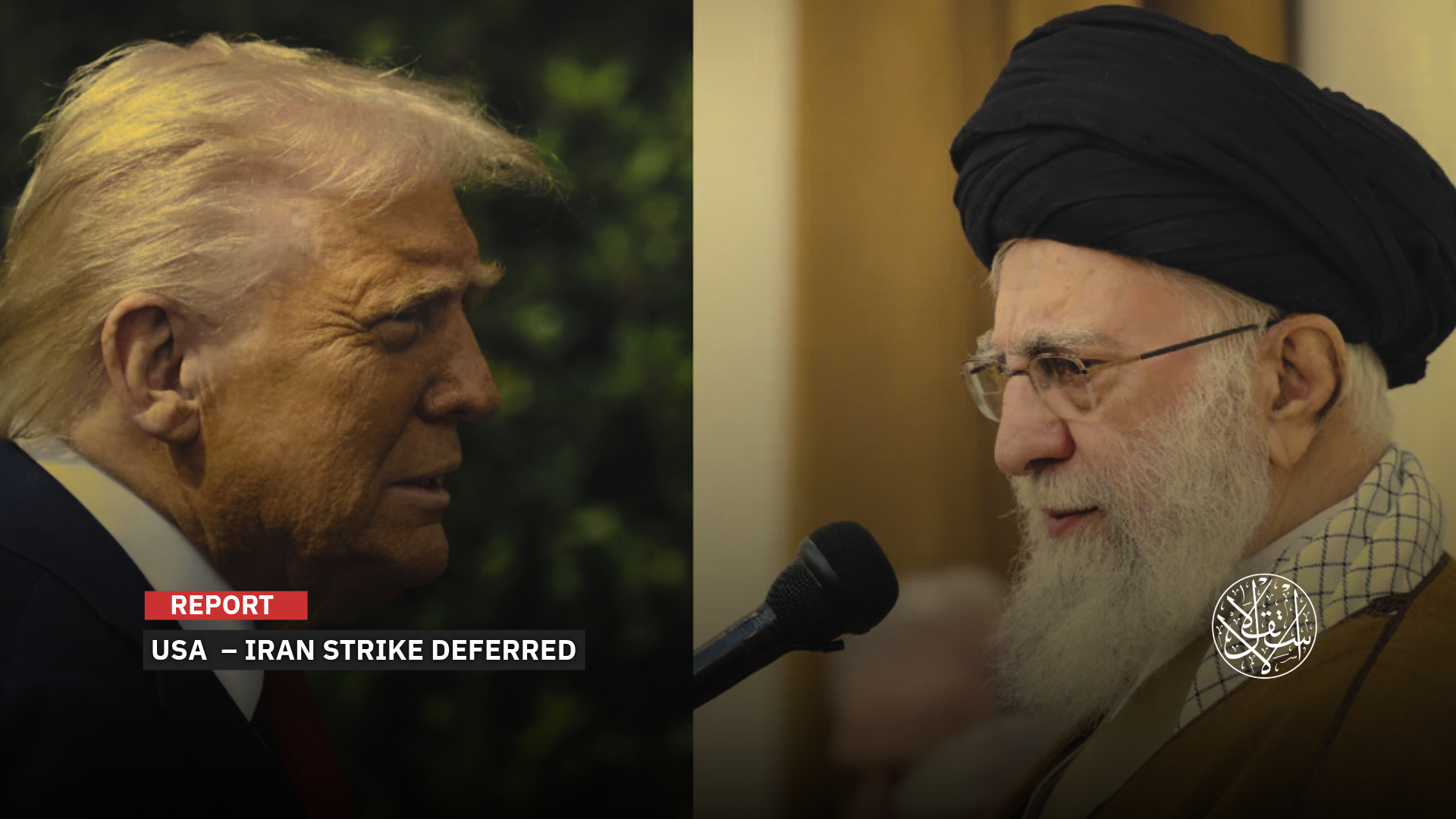
Trump, while stepping back from a strike on Iran, insisted the country requires new leadership.
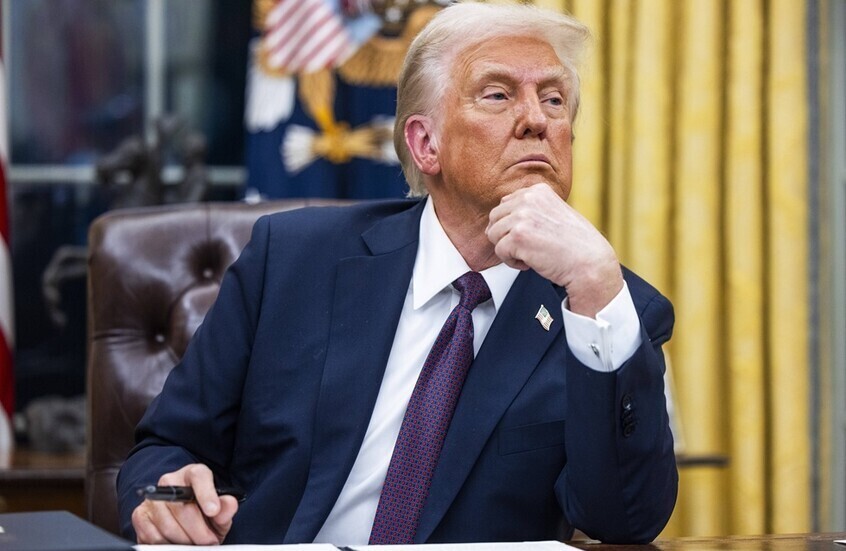
Trump’s decision to pull back from launching a military strike against Iran aimed at toppling the system of ‘Velayat-e Faqih’ has raised pressing questions about whether the Iranian regime has moved beyond the stage of possible overthrow, particularly as protests in Iranian cities subsided less than a month after they began.
On January 13, 2026, Trump announced on his Truth Social platform that he was canceling all meetings with Iran’s leaders. He called on protesters to bring down the regime while preserving state institutions and documenting the names of those responsible for killings, declaring that “help is on the way to you.”
A Sudden Retreat
As for the backstage calculations behind his retreat from ordering a strike, Western reports revealed that Trump had received warnings from allies in the Middle East, notably “Israel” and Saudi Arabia, that launching an uncertain military attack to topple the regime could trigger dangerous repercussions affecting regional stability.
The Wall Street Journal reported on January 17 that U.S. officials said Washington could not be certain that the fall of the regime in Tehran could be achieved through a rapid series of airstrikes alone.
It was also unclear whether bombing military and civilian sites would bolster the protests or further entrench the government.
The newspaper said presidential aides made clear that the United States lacked the military capabilities required to carry out a large-scale, sustained assault that would force the regime to retreat while simultaneously protecting U.S. forces and allies in the Middle East.
According to unnamed U.S. officials cited by the paper, Israeli officials and representatives from Arab states told Washington that the timing was not right for military strikes.
They added that the situation inside Iran was highly volatile and that the protests had been violently suppressed by the regime.
It was also unclear who would lead the opposition should Tehran’s government collapse under the weight of airstrikes.
The U.S. outlet Axios reported that Trump had initially leaned toward ordering a military strike against the Iranian regime because of its violent crackdown on protesters, but ultimately stepped back due to a shortage of sufficient military assets in the region, warnings from allies such as “Israel” and Saudi Arabia, concerns among his advisers about the consequences, and secret talks with the Iranians.
The report added that it took several days before the U.S. administration came to view the demonstrations as a potential turning point in Iran.
U.S. intelligence initially assessed that the protests lacked the momentum needed to pose a serious threat to the regime, but that assessment shifted as demonstrations escalated beginning on January 8.
According to the report, on the evening of Tuesday, January 13, after returning from Detroit, Trump chaired a meeting in the Situation Room devoted to the protests.
Several military options involving wide-ranging strikes were presented, but the discussion ended without a decision, amid a relative decline in the protests and growing regional anxiety.
The following day, Wednesday, January 14, it was widely believed within the U.S. administration and in regional capitals, including Tehran, that Trump would approve the strike.
This expectation prompted U.S. forces to evacuate bases in Qatar and Bahrain, while Iran closed its airspace, signaling the seriousness of the threat.
Trump ultimately chose to pause, and the decisive meeting with senior national security officials was postponed without a formal announcement from the White House.
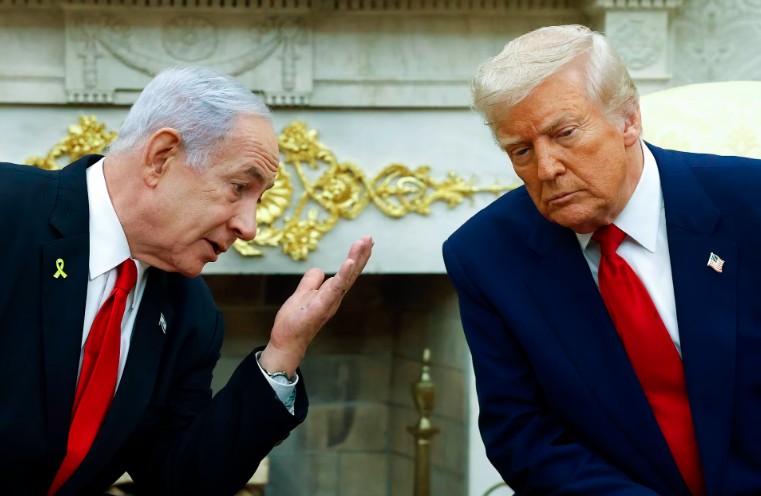
In a surprise call, Israeli Prime Minister Benjamin Netanyahu warned Trump that the strike might not be decisive, stressing that “Israel” was not prepared for potential Iranian retaliation.
Saudi Crown Prince Mohammed bin Salman also voiced concern about the strike’s impact on regional stability.
On January 16, Trump told reporters outside the White House that his decision not to proceed with the strike was based on personal conviction, denying that he had been pressured by other leaders and describing developments inside Iran as significant.
“No one convinced me. I convinced myself,” Trump said. “There were more than 800 executions scheduled, but they canceled them. That is something that deserves recognition.”
Overcoming the Ordeal
On whether Trump’s retreat signaled that the Iranian regime had passed the stage of existential threat, Ali al-Hail, a professor of political science at Qatar University, said Tehran had managed to overcome the current ordeal, though the Israeli-American threat remained in place.
Speaking to Al-Estiklal, al-Hail said Iran is a large country with a population of around 110 million, and that the protests involved roughly three million people, driven by a mix of legitimate demands and other motives aimed at violence and destruction.
He pointed to what he described as infiltration by Israeli and American intelligence services through the recruitment of Iranian citizens to kill security personnel, adding that pro-regime counter-demonstrations had also taken place, drawing crowds in the millions.
Al-Hail said Gulf states do not want the Iranian regime to collapse, as it serves as a barrier to “Israel” and obstructs its efforts to reshape the region.
He added that Iran is a strong state, not a “banana republic,” despite having endured continuous economic sanctions for more than 40 years.
According to al-Hail, Iran’s hostility toward “Israel” and the West is real, which explains the persistence of sanctions, and carrying out military strikes against Iran would not be an easy task, even for the United States.
Despite U.S. and Israeli claims of controlling Iranian airspace, al-Hail spoke of American aircraft falling into Iranian radar traps that forced pilots to retreat.
He argued that the 12-day war launched by “Israel” against Iran in June 2025 affected “Israel” more than Iran, stressing that the Iranians did not easily sacrifice their nuclear program, having relocated materials related to nuclear manufacturing away from sites Trump said he had targeted.
“Israel”, with U.S. backing, launched an assault on Iran that lasted 12 days in June 2025, targeting military and nuclear sites as well as scientists. Iran responded with missile strikes inside “Tel Aviv.”
Al-Hail said Iran remains under threat from “Israel” and the United States, which coordinate their interests against Tehran, while Iran is backed by allies such as China, Russia, and North Korea.
He emphasized that pressure from Gulf states, most notably Saudi Arabia and Qatar, had been exerted on the U.S. administration to prevent a military strike on Iran, out of fear that destabilizing the Gulf would threaten oil and gas exports.
Al-Hail added that Gulf states, particularly Saudi Arabia, Qatar, and the United Arab Emirates, are focused on investment, and that political and economic instability in the region could have negative repercussions for those investments.
In this context, an Axios report noted that the military option against Iran remains firmly on the table and could be revisited within weeks.
An Enduring Ambition
Political researcher Mohannad al-Azmi said Trump’s desire to change the Iranian regime had not diminished despite his decision to pull back from a military strike, stressing the volatility of Trump’s decision-making and its inherent unpredictability.
Speaking to Al-Estiklal, al-Azmi said the Iranian regime would not experience stability as long as Trump remained in the White House, given the inconsistency of his policies.
On January 17, Trump voiced support for changing the leadership in Tehran, describing Iran as “the worst place to live because of bad leadership.”
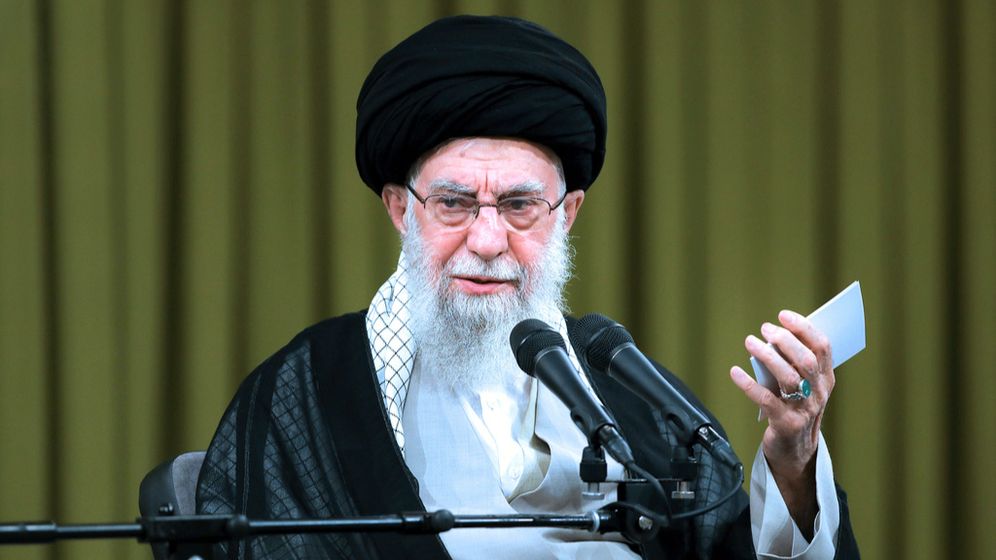
He also launched a sharp attack on Iran’s supreme leader, Ali Khamenei, accusing him of resorting to violence on an unprecedented scale.
Khamenei, in turn, described Trump as a “criminal” for backing the protests and held the United States responsible for the losses and damage suffered by the country.
He added that the United States must be “held accountable” for its actions, stressing that Iran does not seek war but will not allow what he called domestic terrorists to escape punishment.
According to the semi-official Fars News Agency, Khamenei acknowledged the severity of the economic situation, which he said was a primary driver of the protests.
He called on officials to intensify efforts to ensure the availability of basic goods, livestock feed, and other essentials.
The protests erupted on December 28, 2025, in response to a deepening economic crisis, but quickly evolved into widespread demonstrations calling for an end to the system of velayat-e faqih led by Khamenei.
Throughout the unrest, Trump repeatedly threatened intervention and adopted a hardline stance against the execution of protesters.
Sources
- “The Order That Never Came”: Inside details and additional insights into Trump’s retreat from striking Iran [Arabic]
- The Wall Street Journal: How Trump froze plans for strikes on Iran [Arabic]
- Trump: No one persuaded me on Iran, I persuaded myself [Arabic]
- Trump to Iranians: Keep protesting, help is on the way to you [Arabic]
- Trump: It is time to look for new leadership in Iran [Arabic]
- Iran protests: Khamenei says Trump is a “criminal” and the US must be held accountable [Arabic]