Israeli Closure and International Marginalization: How Gaza Is Paying the Price of the War on Iran
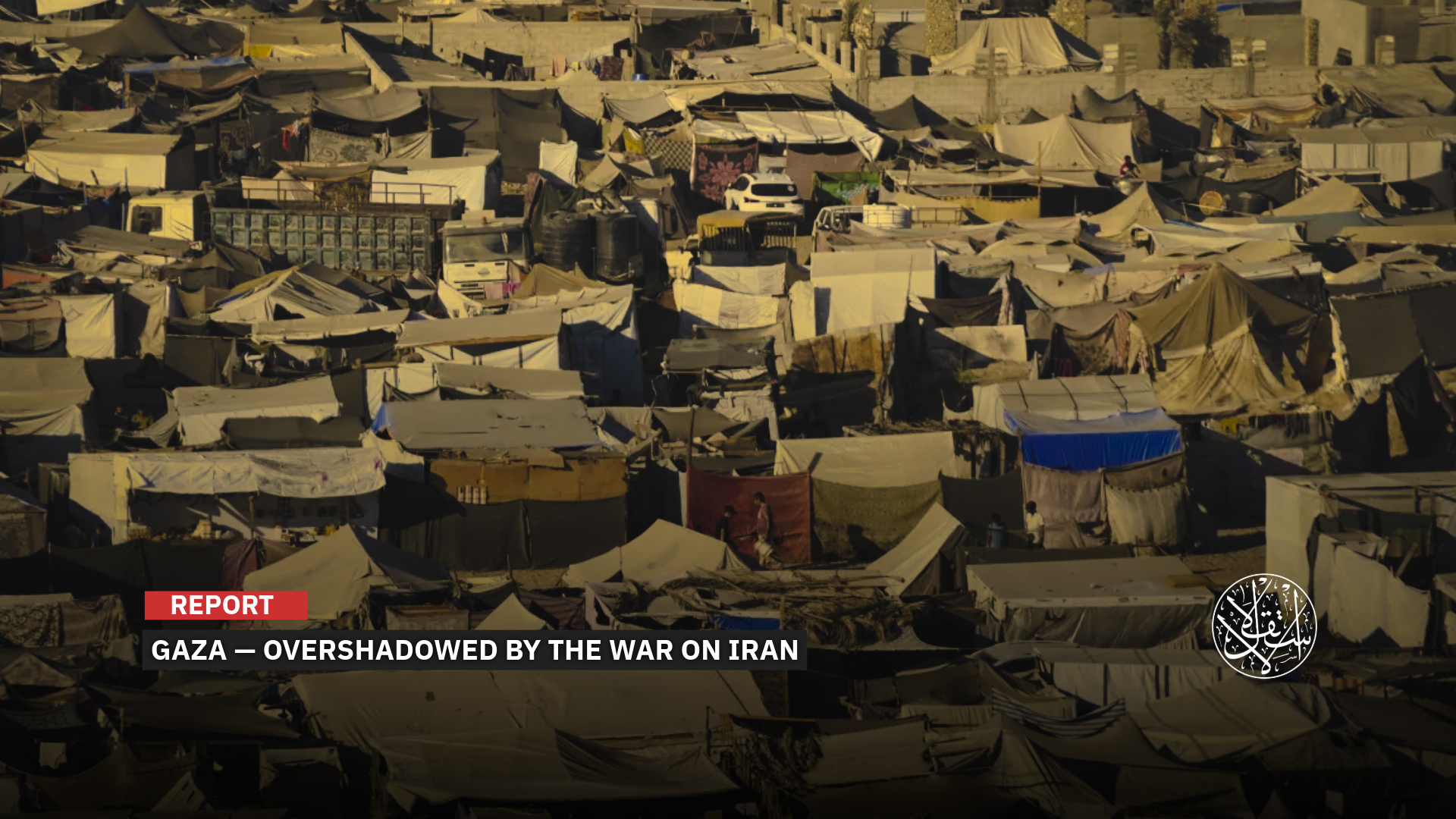
“Israel” has blocked the entry of fuel and goods into the war-torn Gaza Strip for two whole years.
Gaza was not a direct party to the war that broke out in late February 2026 between the United States and “Israel” on one side and Iran on the other, but it was among the first to pay the price.
Within hours of the confrontation’s outbreak, “Israel” closed all crossings leading to the Gaza Strip, and vital supplies came to a halt, quickly turning shortages into a suffocating living crisis, with fuel and food becoming scarce and prices rising rapidly inside a besieged territory that is barely trying to recover after two years of a devastating Israeli aggression.

Major Concerns
The Coordinator of Government Activities in the Territories announced the closure of all crossings leading to the Gaza Strip, most notably the Kerem Shalom crossing and the Rafah crossing in the south, which had been reopened in early February after nearly a year and a half of closure.
“Israel” barred the entry of fuel and goods into the enclave, already exhausted by a war that lasted two full years, justifying the decision as a consequence of the fighting with Iran.
The agency claimed that operating the crossings during the war would expose Israelis to the risk of Iranian rockets and drones, saying they would reopen once the security situation allowed, something that occurred days later in a limited manner.
By contrast, Palestinian organizations and United Nations workers said the decision amounted to collective punishment, given Gaza’s near-total dependence on fuel and goods entering through those crossings.
They warned that continued closure threatens residents’ lives and restricts the movement of patients.
Khaled Hijazi, 38, from Gaza City and a father of three, said the sudden closure of the crossings, especially the Rafah crossing, stirred memories of the war again, “even as calm appears to prevail on the surface.”
He told Al-Estiklal that the closure of Rafah crossing is always associated in people’s minds with war or tension. “Its closure means things are not normal, especially as we are living through a fragile phase in which shelling continues despite the ceasefire agreement.”
Speaking about the living consequences, he said that since the war began prices had suddenly risen for some basic goods such as sugar, eggs and several vegetables and fruits, while some traders had returned to exploiting the situation as their stocks began to run low because of the closure.
He expressed concern that the specter of famine could return to the enclave if the confrontation with Iran drags on.
“In that case no one will feel our suffering or pay attention to it, as the world focuses on this war,” he said.
Ahmed al-Maghribi, 43, said the issue goes beyond living hardship and economic crisis.
“From the first moment we felt that the Gaza file was being sidelined, something that has already been the case since the ceasefire in October 2025,” he said.
The father of four added that the greater danger is that the war could sideline Gaza’s future, which has yet to be decided.
“There is no effective government, no clear administration, and the technocratic committee that was recently formed is not present on the ground.”
He concluded that the greatest fear is the absence of a future. “Two and a half years have passed, and our children are without education. We live without electricity, we lack clean water and a dignified life. Even those who want to leave cannot do so, because travel was not truly available even when the crossing appeared formally open, as departures were limited to small numbers of patients.”

Immediate Consequences
After U.S. pressure, “Israel” reopened the Kerem Shalom commercial crossing south of the Gaza Strip on March 3, 2026, three days after closing it.
Local sources, however, said that only a “very limited number” of commercial trucks and fuel tankers were allowed to enter, while aid trucks coming from the Egyptian side were not permitted to pass.
Haaretz reported that the decision came after direct pressure, with Aryeh Lightstone, a senior adviser to U.S. Middle East envoy Steve Witkoff, contacting Prime Minister Benjamin Netanyahu and urging him to resume the supply of aid to the enclave.
Even before the closure, Gaza was suffering from a severe shortage of fuel, food supplies and clean water.
With the outbreak of the war against Iran, warnings intensified that stocks of basic goods could soon run out.
The enclave relies entirely on fuel transported by trucks from “Israel” and Egypt. Local officials warned that continued shortages could endanger hospital operations and threaten water and sanitation services, particularly as the majority of residents have been internally displaced by the Israeli aggression.
Until February 25, before the closure, the United Nations and its partners had managed to bring about 7,500 aid pallets through the crossings, with food supplies accounting for 66.5 percent of them.
Another 7,200 pallets had been prepared for distribution inside the enclave, 82 percent of them food items.
Despite this, only 30 percent of the trucks arriving through the Egyptian corridor at Kerem Shalom were unloaded during February 2026.
The United Nations Office for the Coordination of Humanitarian Affairs also reported that 55 humanitarian missions coordinated by the United Nations inside Gaza between February 20 and February 26 faced significant obstacles, with 13 percent rejected and 27 percent delayed due to Israeli restrictions.
Although food security indicators had gradually improved after months of truce, the latest closure erased those gains.
The World Food Programme said the average number of daily meals had risen to two in February, with a relative improvement in the availability of vegetables and meat, but the closure of the crossings marked another setback.
Karuna Herrmann, director of the U.N. Office for Project Services in Jerusalem and responsible for fuel distribution in Gaza, said, “I expect we have maybe a couple of days' running time.”
Amjad al-Shawa, a relief official working with the United Nations and nongovernmental organizations in Gaza, estimated that fuel supplies might last three or four days, while stocks of vegetables, flour and other basic materials could soon run out if truck movements do not resume properly.
These concerns deepened as residents headed to markets to stockpile goods, fearing a repeat of the famine the enclave experienced during the Israeli aggression.
The World Food Programme warned that its stocks would run out quickly unless truck movements resume fully, stressing the need to accelerate the entry of aid once the crossing is reopened.
The World Central Kitchen organization, which distributes about one million hot meals a day, also said it could run out of supplies within a week if the crossings remain closed.

Neglect
As the war with Iran escalated, international media coverage of discussions surrounding the political future of the Gaza Strip declined, as attention shifted to Tehran and the broader regional consequences of the confrontation.
A report by The Associated Press noted that “Gaza’s Ceasefire Had Some Momentum. Now, Some Fear a New War Will Distract the World,” despite the momentum the issue had gained in previous weeks.
The agency added that the ceasefire still faces complex challenges, including the issue of disarming Hamas, forming and deploying an international stabilization force, and enabling the newly appointed Palestinian committee tasked with administering Gaza to begin operating inside the enclave.
During the week before the war broke out, U.S. President Donald Trump met with several leaders to launch the “Peace Council” initiative aimed at rebuilding Gaza, but that track stalled once the military confrontation erupted.
Meetings of the United Nations Security Council related to the enclave also declined, while the war with Iran dominated official statements issued by Western capitals.
The truce is part of a broader U.S.-backed plan to end the war, including reopening the Rafah border crossing with Egypt, increasing the flow of aid and launching reconstruction efforts, but Israel has not yet fully complied with these provisions.
According to Palestinian activists, the marginalization is not limited to the international community, as they argue that Benjamin Netanyahu’s government is using the regional conflict to delay implementing its commitments, including expanding humanitarian access and accelerating reconstruction.
Khaled Hijazi said, “This is a golden opportunity for Israel to freeze the future of the Gaza Strip and deepen the suffering of its residents. We hope this battle ends before the situation deteriorates and we ourselves return to another war.”
He added that the absence of a quick solution regarding Gaza gives “Israel” room to return to war whenever it chooses. “What is happening with Iran affects us directly, and the occupation will make the most of this moment to impose a new reality.”
Hebrew-language media outlets, including the newspaper Haaretz, acknowledged that the war in Iran could push the Palestinian issue further down the international agenda and lead to continued delays in the reconstruction of the enclave.
This decline in attention comes just before the middle of the month of Ramadan, as widely circulated images show Palestinians gathering around long tables among the ruins of buildings destroyed by bombardment.
Ahmed al-Maghribi concluded by saying that from the first moment of the war people rushed to the markets to buy their needs, as if they themselves were directly concerned by the crisis.
“This scene showed how fragile the situation in the enclave is and how people have been left on their own,” he said.
He added that they had been living through a fragile calm for months, punctuated by daily shelling, but had adapted in the hope of reaching a solution.
“We do not want to return to something worse.”
Sources
- Gaza’s Ceasefire Had Some Momentum. Now, Some Fear a New War Will Distract the World
- Israel Reopens Kerem Shalom Crossing in a Limited Capacity [Arabic]
- Gaza Humanitarian Response | Situation Report No. 69
- Gaza Fuel Running Short After Israel Closes Borders Amid Iran War
- COGAT Says Closure of Gaza Border Crossings Won’t Affect Humanitarian Situation in Gaza