Fierce Battles in Afghanistan; the Taliban Are Advancing Rapidly among Escalating International Concern
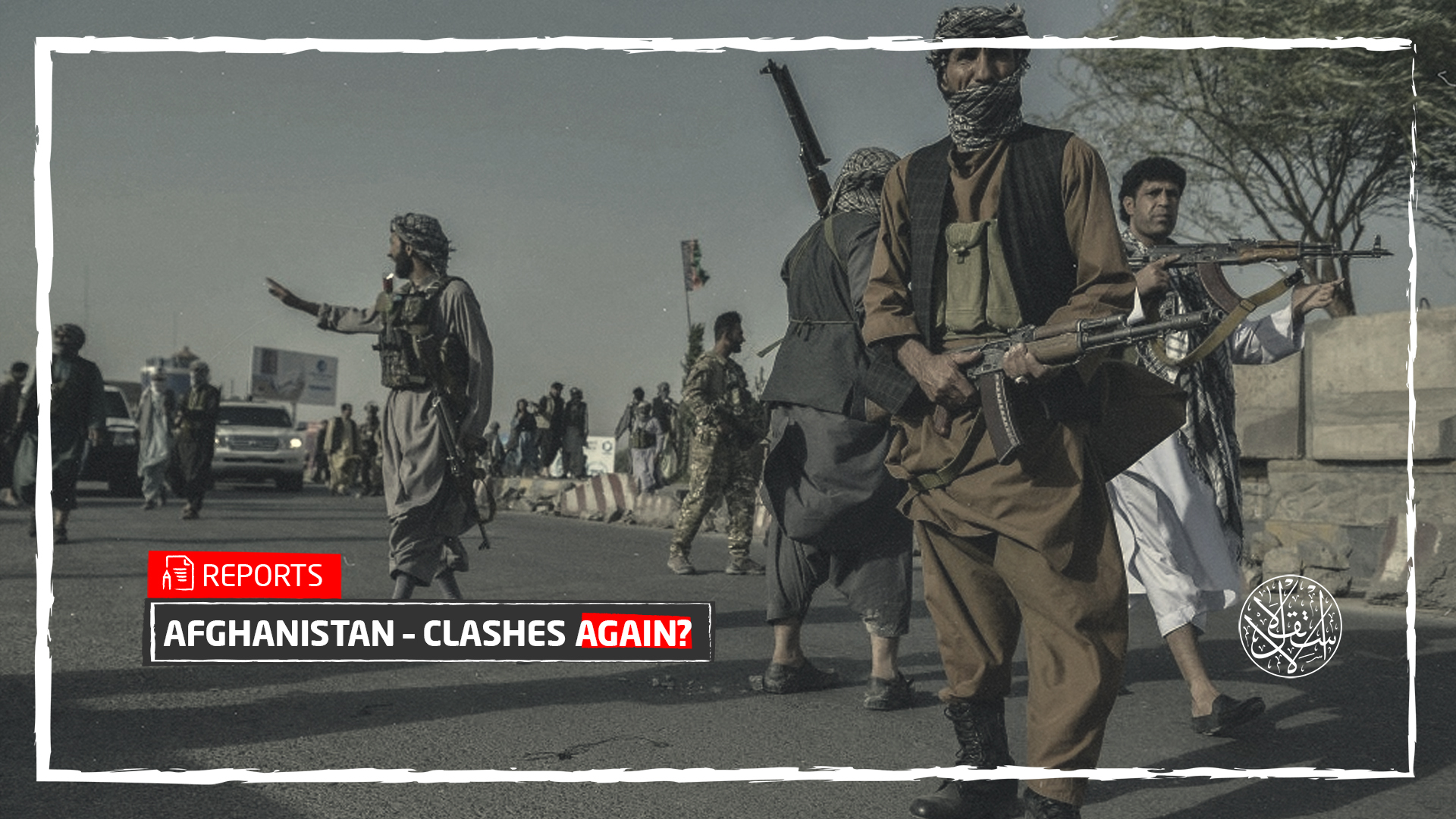
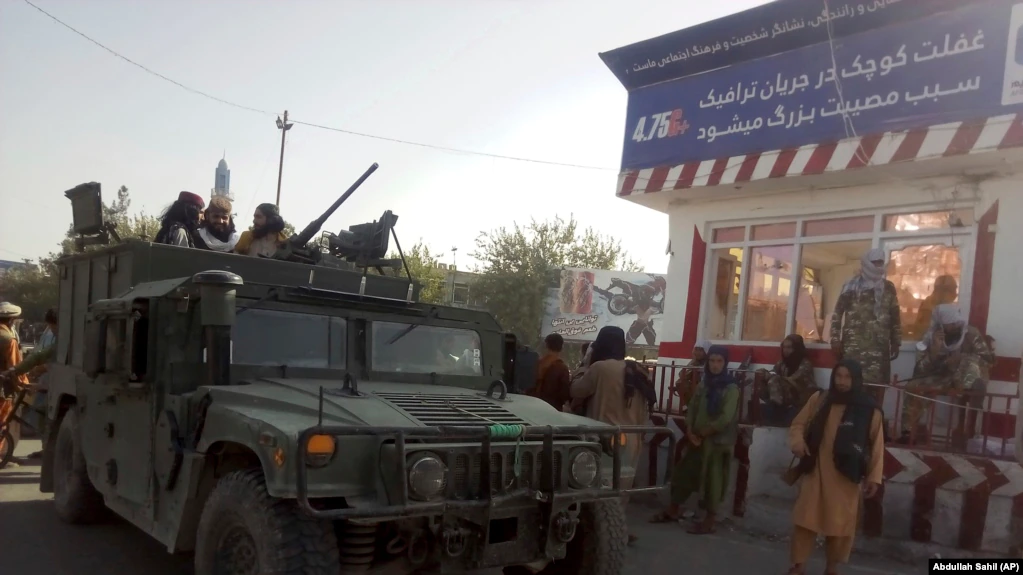
The fall of Afghan cities at the hands of the Taliban movement has continued over the past few days, following the continuous battles with the Afghan government forces, and as a result of the withdrawal of US forces from the country.
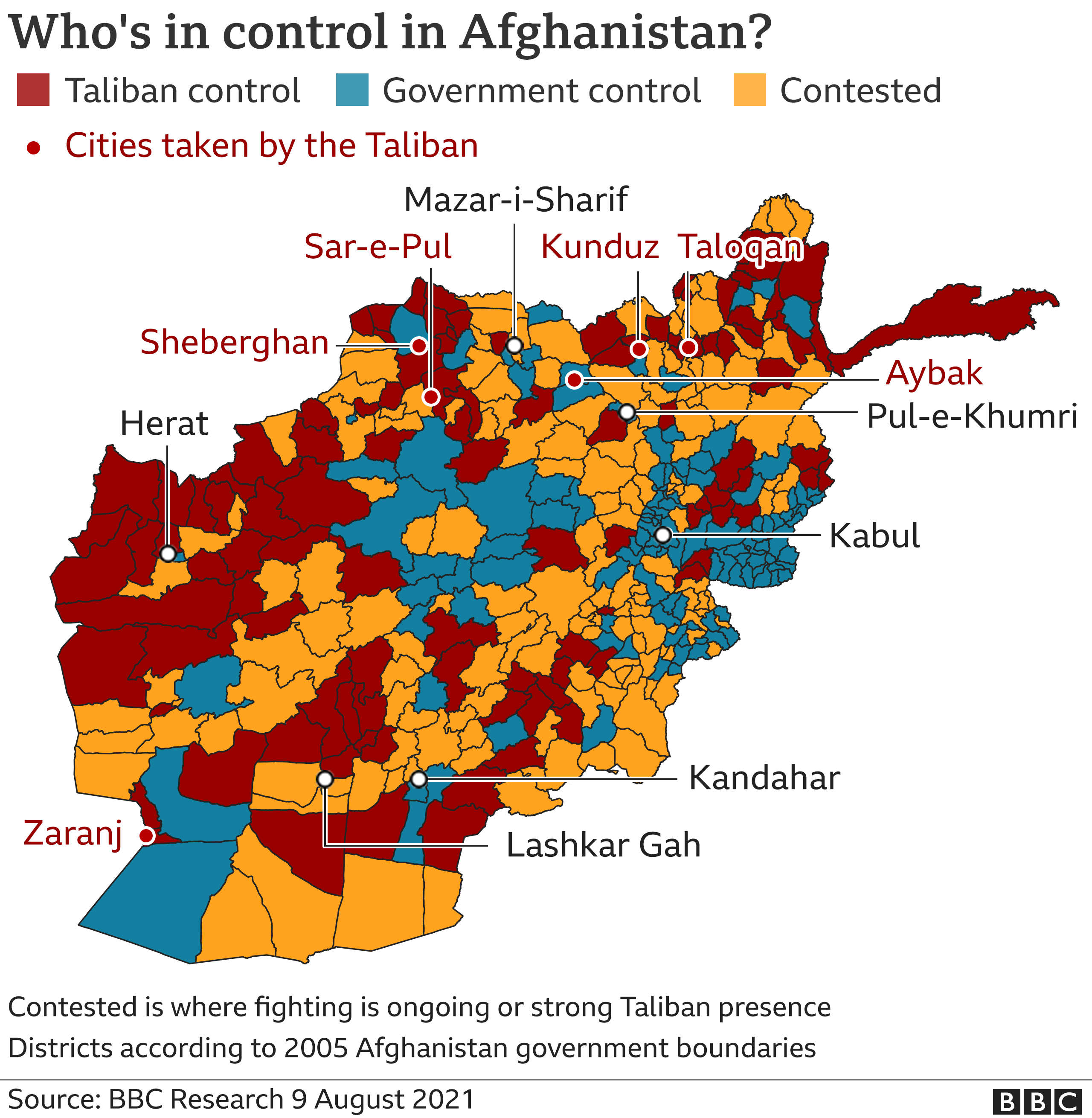
The Taliban achieved significant gains after seizing 6 of the 34 Afghan state capitals, in a major attack that began on August 06, 2021, denying any ceasefire agreement with government forces.
Taliban Imposes its Rule
The Taliban appears to have become more emboldened and self-confident in recent weeks, following the withdrawal of US forces on the one hand, and regained many vital areas and cities from government forces on the other hand.
On August 06, 2021, the Taliban captured the first state capital, Zaranj in Nimroz. Then on August 07, it took control of Sheberghan in Jawzjan. Also, on August 8, it took control of the cities of Kunduz, Sar-e-Pul and Taloqan, after fighting fierce battles against the Afghan government forces.
The city of Kunduz bears symbolic importance for the Taliban because it was their main stronghold in the north before 2001. The Taliban took control of the city in 2015 and again in 2016, but she could not hold it for long.
The city of Kunduz is the gateway to the mineral-rich northern states of the country. The Taliban's control of the city means tightening a grip on one of the most important opium and heroin smuggling routes in the region towards Central Asia and Europe.
On August 09, the Taliban continued their rapid advance and managed to take control of the city of Aybak, the capital of Samangan Province.
The Taliban also announced the launch of a new attack on the city of Mazar-i-Sharif, and the battles are still going on its borders.
Kandahar and Herat, the second and third cities of the country, have also been under attack by Taliban fighters for several days, in order to control them.
The Taliban had taken control of border crossings with a number of neighboring countries in recent weeks, and the movement closed the Afghan border with Pakistan.
International Concern
The United States has escalated its air strikes, according to Major Nicole Ferrara, a spokeswoman for the US Army Central Command, on August 07, 2021.
“In recent days, US forces have launched several air strikes in defense of our Afghan partners,” she said.
The US Embassy in Afghanistan condemned the new attack carried out by the Taliban on Afghan cities, “The movement's actions to impose its rule by force are unacceptable,” it said.
Calling on the Taliban to immediately abide by the ceasefire, devoting their energy to the peace process, not to military attacks.
For her part, German Defense Minister Annegret Kramp-Karrenbauer said: “The Taliban in Afghanistan can only be defeated by another very difficult and long combat mission.”
As Pentagon spokesman John Kirby said: “We expressed concern that Pakistan would provide safe havens for Taliban fighters across the border.”
He pointed out that “the situation in the country is not going in the right direction.”
A few days ago, the United States and Britain had called on all their citizens in Afghanistan to leave the country immediately, because of the deterioration of the security situation there with the intensification of fighting.
Worsening Situation
In a related context, Bloomberg quoted Taliban spokesman Zabihullah Mujahid as saying: “The movement will storm Afghan cities including Kabul to overthrow the government if negotiations fail.”
Mujahid added that the movement expects that there will be a political settlement before the war becomes more deadly.
This coincided with the decision of Afghan President Ashraf Ghani to arm the local population to fight the Taliban with intensification of battles for control on the centers of the states of the country.
The positions of the parties to the conflict come at a time when the Qatari capital, Doha, is preparing to host an international meeting to discuss the situation in Afghanistan, with the participation of the United States, Russia, China, and Pakistan.
A group of countries will hold meetings on August 10 and 12, 2021 in the State of Qatar, with the aim of mobilizing regional and international support and consensus to achieve peace and stability in Afghanistan.
For his part, Pakistani Prime Minister Imran Khan recently revealed that “he had rejected a request by the Afghan president to carry out military action by the Pakistani army against the Taliban.”
Pakistani Foreign Minister Shah Mahmood Qureshi said that “Pakistan will not bear the mistakes of others in Afghanistan, whether they are internal or foreign parties.”
Commenting on the worsening situation, Iranian Foreign Minister Mohammad Javad Zarif “accused unidentified foreign parties of being responsible for deepening the crisis in Afghanistan”, describing it as very dangerous.
For his part, the UN envoy to Afghanistan Jean Arnaud stressed that “no country or a limited group of countries will succeed in resolving the Afghan crisis, and that the way to do so is through collective cooperation.”
"Despite the challenges, the @MSF supported Boost Hospital remains operational and has seen a marked increase in trauma needs over the last week."@leahysarah our project coordinator writes from Lashkar Gah. https://t.co/tIEfhisMU0
— MSF Afghanistan (@MSF_Afghanistan) August 8, 2021
20 Years of War
It is worth noting that violence has escalated throughout Afghanistan after the American forces and other international forces began withdrawing their forces from the country, following 20 years of military operations there.
US President Joe Biden has set a deadline of September 11 - the twentieth anniversary of the September 11 attacks on the United States - for the complete withdrawal of US forces from Afghanistan.
It is noteworthy that the Taliban movement emerged in the nineties of the last century, in northern Pakistan, after the withdrawal of the former Soviet Union forces from Afghanistan, it came to power in Afghanistan in the mid-1990s until 2001.
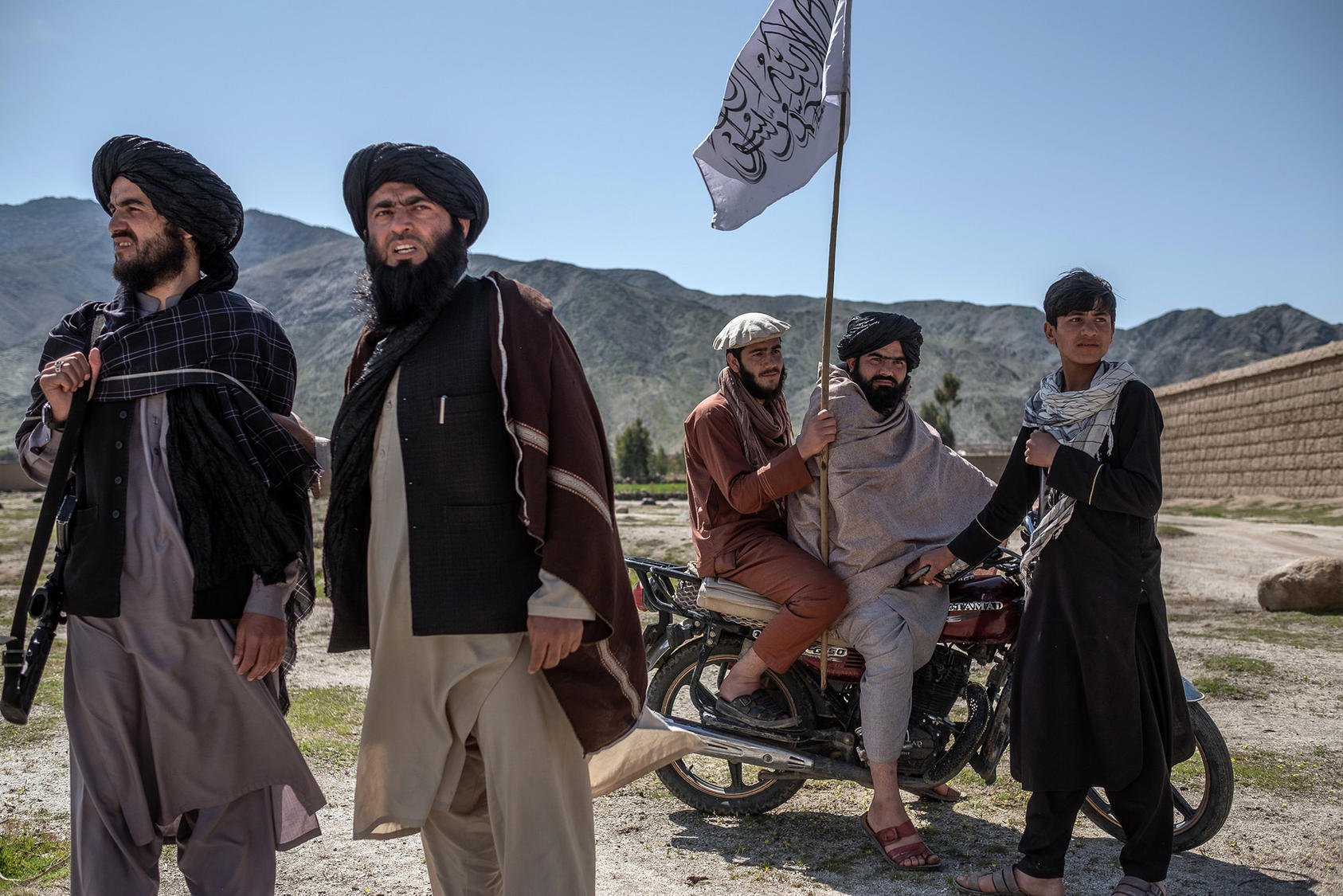
US forces and their allies in the North Atlantic Treaty Organization (NATO) removed the movement from power in November 2001.
The movement was harboring Osama bin Laden and other Al-Qaeda figures who were accused of being linked to the September 11, 2001, attacks on the United States.
But despite the continued presence of international forces in the country and the spending of billions of dollars to support and train Afghan forces, the Taliban were able to regroup and gradually regain strength in remote areas.
Reports indicate that about 15 million people, half the population of Afghanistan, live in areas that are either controlled by the Taliban or have an overt presence, and launch regular attacks on government forces there.
The United Nations blames most of the killings of civilians, which numbered so far 1,600, on the Taliban and other anti-government forces.
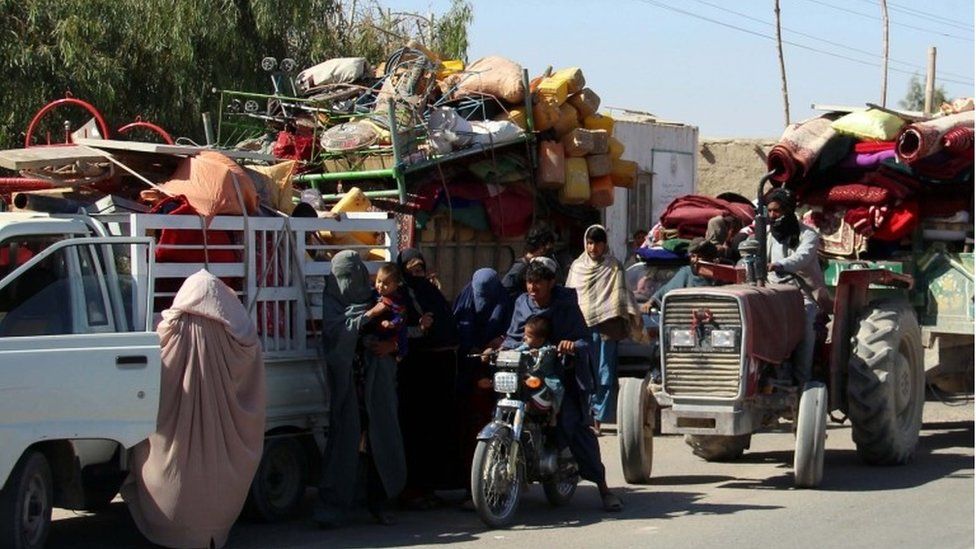
The clashes have also forced many civilians to flee their homes, about 300,000 people have been displaced since the beginning of the year.