Will Industrial Cities Become Syria’s Key to Rebuilding Its Post-War Economy?
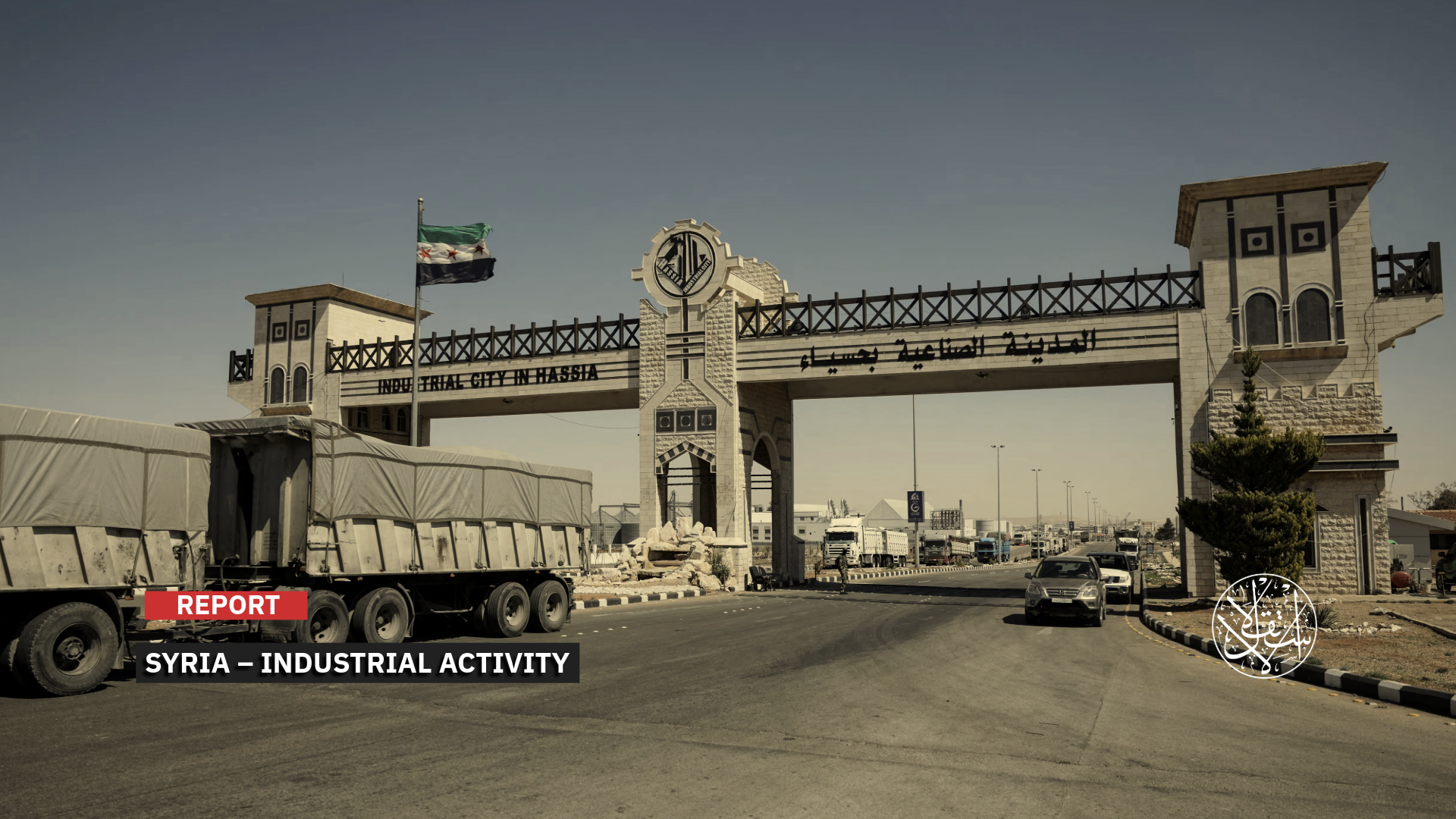
"The geographical distribution of industrial cities in the governorates links the economy to an integrated system."
The new Syria is moving towards revitalizing and developing industrial cities in the provinces to make them a key element in reshaping the post-war economy by expanding industrial activity and linking it to investment and production.
Experts believe that linking local and foreign investment to production and geographically distributing economic activity will strengthen the production base, support exports, reduce dependence on imports, and boost state revenues.
Industrial Cities
On August 28, 2026, Ahmad Kurdi, Director of Industrial Cities, announced plans to rehabilitate and develop industrial cities and zones in the Damascus countryside, Homs, Aleppo, Idlib, and Deir ez-Zor.
According to Kurdi, work is underway in the Adra Industrial City in the Damascus countryside to expand the city, allowing it to accommodate more investments and production projects and create new job opportunities.
In the Hassia Industrial City in Homs Governorate, plans are in place to expand the city by approximately 10,000 hectares to accommodate new projects and enhance industrial activity, infrastructure, and services provided to production facilities.
Kurdi pointed out that the Sheikh Najjar Industrial City in Aleppo is witnessing the development of approximately 1.5 million square meters within the city's master plan, with the aim of creating new industrial plots and attracting additional investments.
In the Bab al-Hawa Industrial City in the Idlib countryside, an industrial real estate project is being developed on 36 hectares to establish production and service facilities and stimulate economic activity in the region.
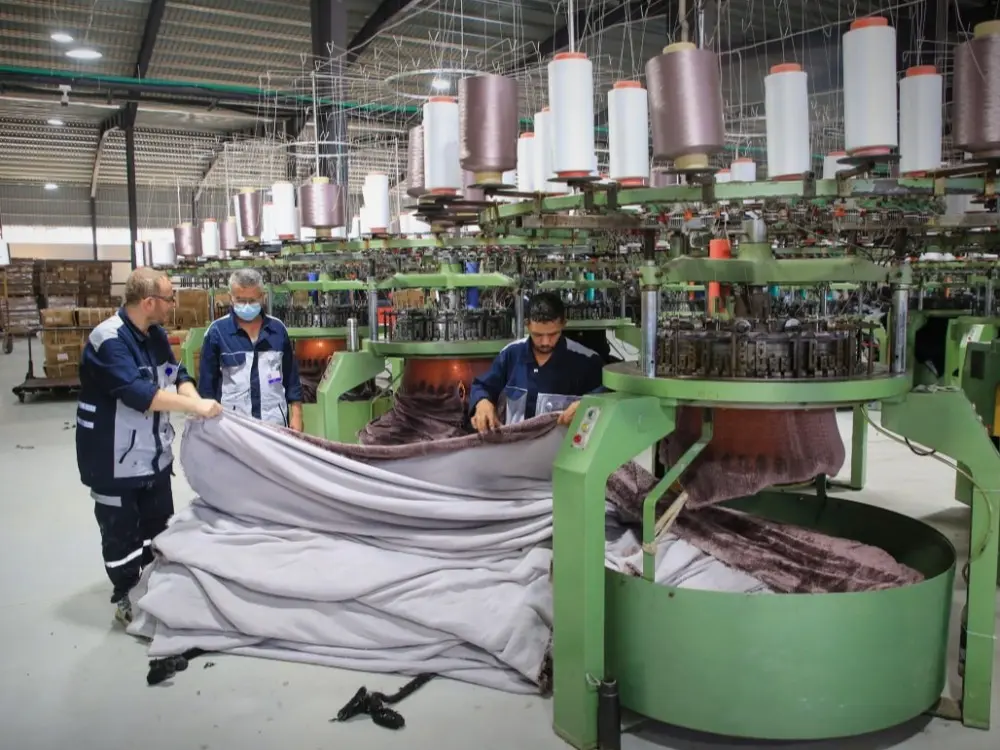
As for the al-Ra'i Industrial City in the Aleppo countryside, expansion work is underway to support the leather, textile, and light industries and encourage the establishment of production projects. The city covers an area of approximately one million square meters.
In the Deir ez-Zor Industrial City, located on the Deir ez-Zor-Hasakah road northeast of the city, and extending over a total area of 2,850 hectares, designated for food, textile, engineering, and chemical industries, the Syrian official stated that the city is being reorganized and revitalized to attract investors, boost production, improve services, and create job opportunities.
In support of this government initiative, the Turkish company Esra Holding signed a cooperation agreement with the Syrian Ministry of Economy and Industry at the end of August 2026 to expand the Bab al-Hawa Industrial City. This move aims to strengthen the industrial and commercial infrastructure in the border region between Syria and Turkiye.
According to the Turkish newspaper "Türkiye," the signing ceremony took place during the Damascus International Fair, in the presence of Turkish Trade Minister Ömer Polat.
The project aims to increase industrial capacity in the Bab al-Hawa area, a major commercial and logistics hub on the Syrian-Turkish border.
The newspaper reported that the expansion project is planned for a total area of 364,000 square meters, of which approximately 240,000 square meters are designated for plots of land ready for sale for industrial activities.
The project also includes the construction of an administrative and service facility covering 6,394 square meters, in addition to allocating approximately 67,500 square meters for transportation infrastructure and 50,000 square meters for green spaces and landscaping.
The project includes the establishment of electricity, drinking water, public water, telecommunications, and sewage networks, in addition to facilities for treating industrial wastewater, stormwater drainage, and fire suppression systems.

In late July 2026, the Ministry of Economy and Industry revealed that 530 industrial plots had been offered for investment in industrial cities. Of these, 253 plots were subscribed for, and 190 were allocated to investors. In addition, 561 building permits and 49 administrative licenses were issued.
According to Muayyad al-Banna, Director of Industrial Cities at the Ministry of Economy and Industry, the government approved a package of legal and customs facilitations to encourage industrial investment and simplify its procedures.
In a statement to the Qatar News Agency (QNA) on February 22, 2026, al-Banna revealed new measures to bring about a qualitative shift in the industrial investment environment. These measures are based on simplifying procedures, strengthening legal guarantees, and providing financial and customs incentives, which will contribute to repositioning Syria on the map of industrial investment in the region.
He pointed out that the Ministry of Economy and Industry issued a special system for investment in industrial cities, comprising 26 articles aimed at facilitating the investment process and enhancing confidence in the legal environment.
Among its most prominent features is the adoption of arbitration as a mechanism for resolving disputes between investors and the state, granting investors the right to choose their arbitrator, whether local or international. This shortens litigation time and provides investors with additional guarantees.
He added that the new system allows investors to own industrial plots in installments over five years at regionally competitive prices. The price per square meter is approximately $30 in Hassia Industrial City and $35 in Sheikh Najjar in Aleppo and Adra in the Damascus countryside.
The new system also includes the adoption of modern investment models, such as public-private partnerships and build-operate-transfer (BOT) systems, in addition to implementing a one-stop shop for completing investment transactions.
Al-Banna revealed that the number of investors in Syrian industrial cities is about 11,000, including about 294 foreign investors, expressing Syria’s aspiration to increase this number during the next stage, in light of the growing interest from Arab and international investors.
In this context, economic researcher and academic Firas Shaabo told Al-Estiklal: “The development of industrial cities is not merely a real estate, service, or investment project; it is, in fact, part of rebuilding the Syrian economic model after the war.
Today, we are not just talking about expansion—Adra, Hassia, Sheikh Najjar, Bab al-Hawa, and al-Ra’i—but about an attempt to reconstitute a geographically distributed production base. This is very important because it signifies geographical expansion.
He added: “This is very important because it leads to a kind of population concentration in certain areas. The government is currently focusing on developing cities and trying to transition from a reconstruction economy to a production economy.”
Shaabo believes that rebuilding roads, housing, and infrastructure is essential because it supports industrial projects, but it is insufficient if it is not accompanied by restarting factories, creating production capacities and job opportunities, and expanding the export base.
He added, "We need reconstruction, and at the same time, we need factories, exports, and employment for true reconstruction to take place."
Shaabo believes that establishing industrial cities expands Syria's production base, increasing GDP, boosting exports, thus reducing imports, creating more job opportunities, and significantly generating tax revenue for the state. Furthermore, it attracts investment and new capital inflows, both domestic and foreign.
Shaabo noted that Syria needs a comprehensive system: electricity, water, sanitation, communications, administrative services, security, legal frameworks, and legislation. The existence of industrial cities reduces the cost of entering the Syrian market and lowers investment risks, ultimately encouraging many investors to enter the Syrian market.
Shaabo pointed out that the geographical distribution of industrial cities in Syrian governorates is important in this context, and this distribution is not random. For example, the Bab al-Hawa border crossing has the advantage of being close to the Turkish border, as do the cities of Sheikh Najjar and al-Ra'i, located in Aleppo Governorate, which is considered the industrial capital of the country.
He added, "The industrial city in Hassia, in Homs in the center of the country, is important, and the industrial city in Deir ez-Zor could become a fully integrated economic system in the future."
He continued, "The attempt to revitalize all regions of Syria, in the north, center, south, and east, strengthens the interconnectedness of domestic markets and greatly facilitates access to border crossings."

Industrial Investment
A question often arises these days when discussing attracting investments to Syria: Are there additional guarantees and incentives for investors, especially in the areas of exemptions, ownership, and regulatory legislation, that are appropriate to the investment climate and investors' aspirations?
Local concerns have frequently been raised that any industrial project granted a license might be subject to new taxes or subsequent regulations, potentially undermining the long-term financial certainty of both local and foreign investors.
On March 30, 2026, Syrian President Ahmed al-Sharaa, speaking at the German-Syrian Business Forum in Berlin, affirmed that Syria had made extensive amendments to its investment law to streamline procedures for investors and encourage foreign capital, particularly European capital, to participate in the reconstruction process.
On June 6, 2025, the Ministry of Economy and Industry approved a new investment system for industrial cities, aiming to enhance the environment for industrial investment, encourage both domestic and foreign investment, and facilitate the transfer and localization of industrial technology and knowledge.
The system officially emphasizes objectives related to increasing local added value, achieving balanced development across governorates, and boosting the competitiveness of Syrian industries.
Here, Shaabo points out that the challenge lies not in building industrial cities, but rather in populating these cities with productive and sustainable projects.
He added: "This requires a sustainable electricity infrastructure, banking support, loans, specific banking advantages, tax incentives, a fixed exchange rate, cooperative customs, and the ability to repatriate profits."
He explained that foreign investors are interested in knowing how they will bring their money in, how they can withdraw it, and how they can operate within a legally sound and convenient integrated industrial investment system.
Sources
- Syrian-Turkish partnership to develop Bab al-Hawa industrial city and increase its capacity [Arabic]
- The Industrial Cities Authority reveals plans to expand industrial cities in several governorates [Arabic]
- President al-Sharaa: We amended the investment law to encourage capital... and al-Shaibani: Syria's vision is based on construction and development [Arabic]
- Increased investment activity... Learn about the achievements of industrial cities during the first half of 2026 [Arabic]