From Tehran to Baghdad: How Hammam Hamoudi Became an Iranian Power Broker
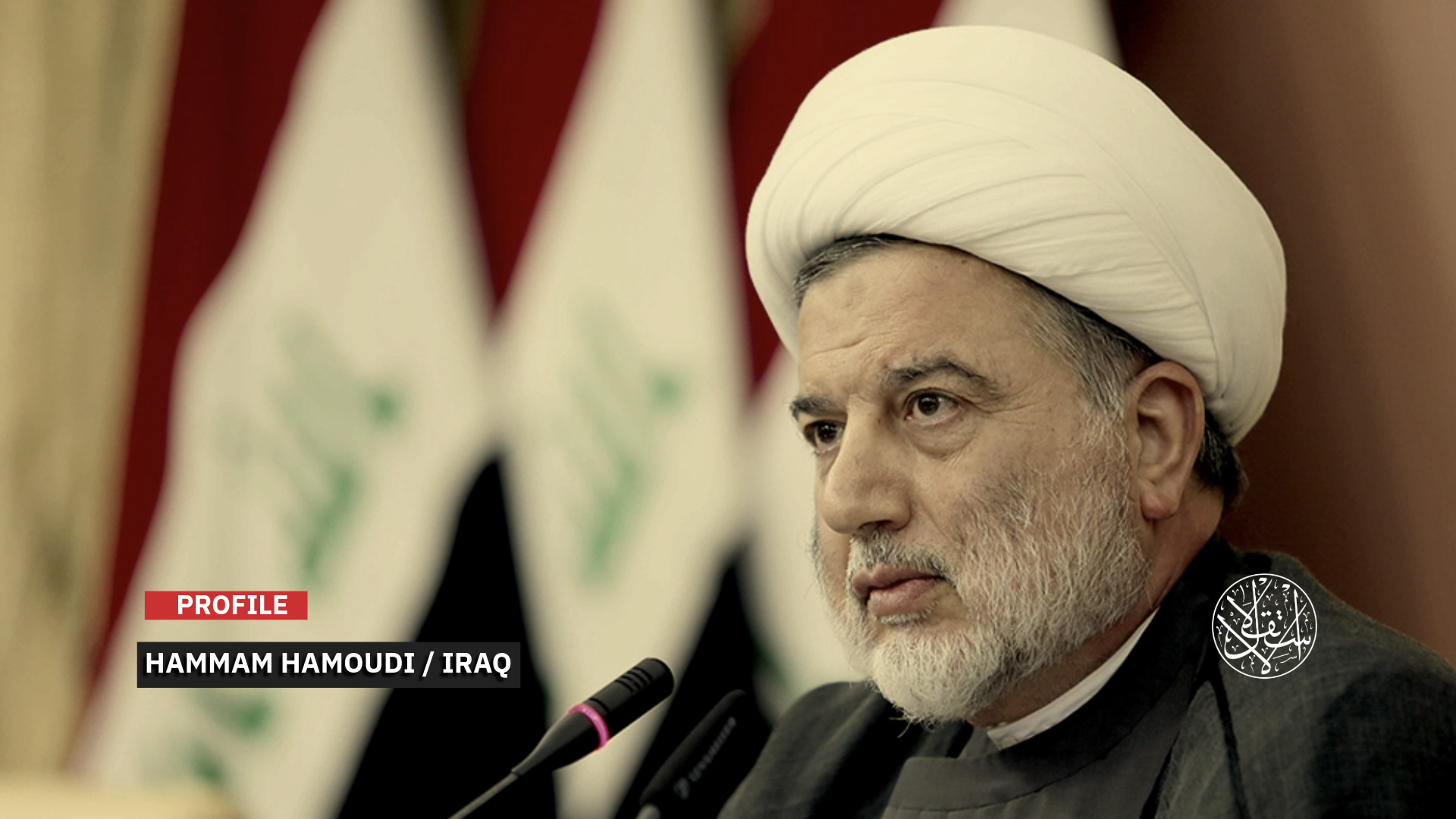
Iran’s Supreme Leader has appointed Hamoudi as a “link” between Baghdad and Tehran.
It was no passing development when the Iraqi Shiite leader Hammam Hamoudi was chosen as a “link” between Iran and Iraq. Hamoudi belongs to a generation of Shiite leaders whose political and organizational careers were shaped in Iran before they returned to Baghdad after Saddam Hussein’s regime fell in 2003.
On August 25, 2026, Hamoudi’s home in Baghdad hosted a meeting of leaders from the Coordination Framework (CF), attended by Mohsen Qomi, the representative of Iran’s new supreme leader, Prime Minister Ali Falih al-Zaidi, and a delegation from Iran’s Assembly of Experts.
Qomi informed the CF’s leaders that Hamoudi had been chosen as a “link” between Iran and Iraq, reviving long-standing questions about the extent of Iranian influence within Iraq’s Shiite political forces and the role that an Iraqi cleric and politician with more than four decades of political and organizational ties to Tehran could play.
Iranian Roots
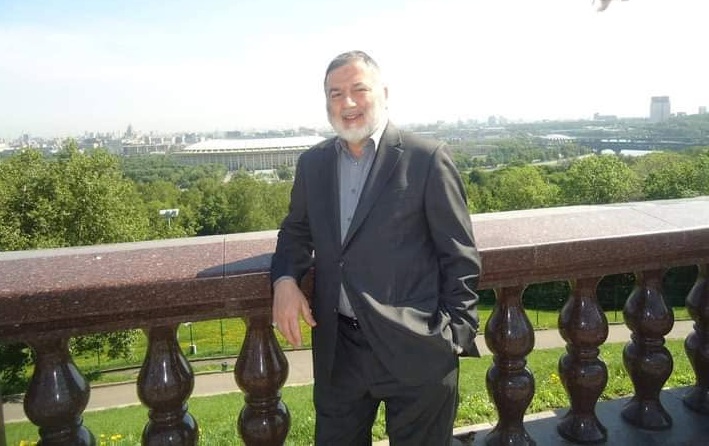
Hammam Hamoudi was born in Baghdad in 1952 and studied psychology at the University of Baghdad, earning a master’s degree in the field before turning to Islamic jurisprudence, philosophy, and Islamic economics.
He became involved early in Shiite Islamist opposition to the Baath Party regime of Iraq’s late president Saddam Hussein and was close to the ideas of the prominent Shiite cleric Muhammed Baqir al-Sadr, according to his published biography.
In 1975, Hamoudi was arrested because of his Islamist and organizational activities and remained in prison until 1977, before becoming increasingly involved in opposition politics.
As the security crackdown intensified, he left Iraq for Iran, where he joined the Iraqi opposition and became associated with the Islamic Supreme Council of Iraq (ISCI), founded in Iran in 1982 under the leadership of Mohammed Baqir al-Hakim and built around the doctrine of velayat-e faqih, or rule by the Guardianship of the Islamic Jurist.
During his years in exile, Hamoudi held a number of political and organizational roles, including serving as Mohammed Baqir al-Hakim’s political adviser, overseeing relations with the Gulf states and the United States, and supervising some of the ISCI’s overseas organizations.
That period is central to understanding Hamoudi’s relationship with Tehran. The ISCI and its military wing, the Badr Organization, were not conventional Iraqi movements that emerged inside Iraq. They were established in Iran and operated from Iranian territory for years, maintaining close ties with the Islamic Republic.
Hamoudi was part of this political world during the eight-year Iran-Iraq War, which lasted from 1980 to 1988 and helped shape much of Iraq’s Shiite opposition in exile.
His ties to Tehran, therefore, stretch back decades before Saddam Hussein’s fall and cannot be explained simply by his role in Iraq’s political system after the American invasion of 2003.
Constitution Drafter
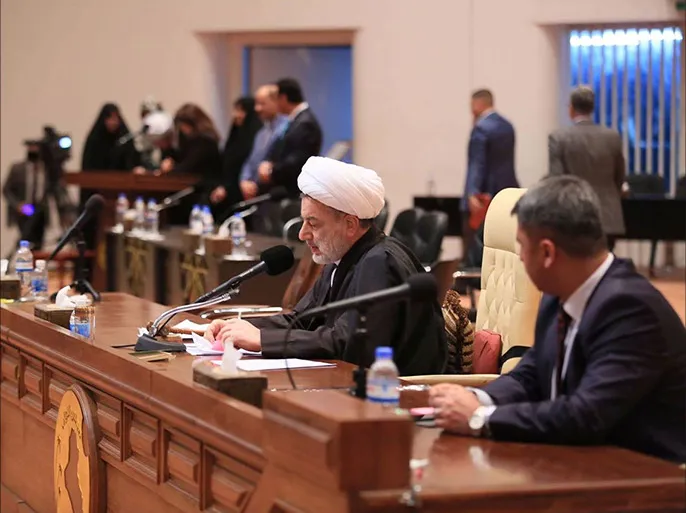
After the U.S. invasion of Iraq and the fall of Saddam Hussein’s regime in 2003, Hamoudi returned to Iraq and moved from opposition politics into state institutions. He served on the Interim Governing Council, was elected to the National Assembly, and later served several terms in parliament.
His most prominent political role came in 2005, when he chaired the committee that drafted Iraq’s permanent constitution, during one of the country’s most turbulent periods following the U.S. invasion.
Hamoudi oversaw debates on the identity of the state, the federal system, the powers of the regions, and the rights of different communities as political and sectarian divisions reached a peak. He was also a prominent advocate of federalism and of allowing Iraq’s Shiite population to establish its own region.
He later chaired parliament’s Constitutional Review Committee and Foreign Relations Committee before serving as first deputy speaker from 2014 to 2018.
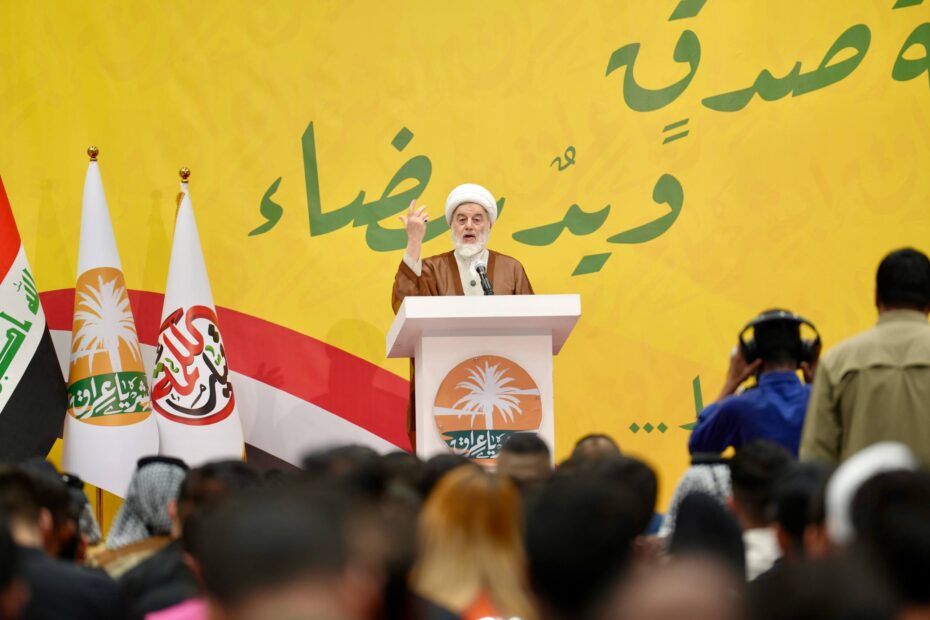
In July 2017, Hamoudi took over as head of the ISCI, succeeding Ammar al-Hakim after al-Hakim broke away to establish the National Wisdom Movement. Hamoudi thus returned to lead the organization in which he had been active during his years in opposition.
In recent years, Hamoudi has made no secret of his political closeness to Iran, particularly on regional issues that have placed Tehran at odds with the United States and the Israeli Occupation. In 2026, he publicly voiced support for the Islamic Republic, saying he rejected neutrality toward what he described as aggression against Iran.
He has also continued to meet Iranian officials and Iran’s ambassador to Baghdad, Mohammad Kazem al-Sadiq, stressing the importance of relations between the two countries. While such positions do not necessarily mean he receives direct instructions from Tehran, they clearly reflect a political and ideological alignment close to Iran.
The ISCI itself also emerged from a political tradition with Iranian roots and was historically associated with the doctrine of velayat-e faqih and Iran’s religious and political institutions.
Hamoudi’s evolution from a politician close to Iran into a “link” between Tehran and Baghdad therefore reflects Iran’s interest in relying on an Iraqi figure with deep knowledge of Iranian institutions while also holding a position within Iraq’s Shiite political establishment.
Such an arrangement could prove more effective than official channels alone, giving Tehran a way to communicate with the CF, political parties, and religious leaders through an Iraqi figure who has a presence within those circles.
In Khamenei’s Shadow
After reports emerged about the role reportedly assigned to Hamoudi, Iraqi activists drew comparisons with Iranian Supreme Leader Ali Khamenei’s decision in February 2025 to appoint Hezbollah Secretary-General Naim Qassem as his “religious agent and legal representative” in Lebanon.
But the comparison requires caution. There is no publicly available information suggesting that Hamoudi has been appointed as Khamenei’s religious representative. The reports surrounding his role refer only to his selection as a “link” between Iran and Iraq.
Still, the comparison with the Naim Qassem model reflects broader Iraqi concerns that Iranian influence could become more structured and institutionalized, extending beyond embassies and governments to influential religious and political figures inside countries allied with Tehran.
In Iraq, those concerns are particularly sensitive because of the nature of the Shiite CF itself, which brings together most of the country’s major Shiite political forces and armed groups, some of which maintain varying degrees of ties with Iran.
A figure trusted by Tehran within the CF could therefore give Iran greater scope to relay its messages and influence internal debates, particularly on issues involving security, weapons, and relations with the United States.
Hamoudi’s political career, however, has not been free of controversy. During his time as first deputy speaker of parliament, he faced criticism and allegations over public spending. In 2017, lawmaker Awatif Naama called for an investigation into the allocation of about 95 million Iraqi dinars, then worth roughly $800,000, for renovations to his home, arguing that the spending was difficult to justify at a time when the country was under austerity measures.
A year later, Alia Nassif, a member of parliament’s Integrity Committee, accused Hamoudi, then deputy speaker, of obstructing parliamentary efforts to investigate state-owned properties and linked the matter to powerful political interests.
The appearance of Hamoudi’s palace, where the CF meeting was held in the presence of Iraqi Prime Minister Ali al-Zaidi and Iranian Supreme Leader representative Mohsen Qomi, also sparked anger on social media. Activists questioned the source of his wealth, drawing attention to his earlier years as part of the Iraqi opposition in Iran.
Users circulated posts contrasting Hamoudi’s life during his years in exile with his current circumstances and accusing him of benefiting from political office and influence. Those claims, however, reflect the views of their authors and do not in themselves constitute evidence of financial wrongdoing.
Media outlets have also circulated allegations linking Hamoudi to the import of Iranian-made Saipa cars. But based on the available information, the matter remained at the level of political and media accusations, with no indication of court rulings or final integrity proceedings against him.
Hamoudi’s name was also linked to armed activity after the Islamic State swept across large parts of Iraq in 2014, when reports spoke of the formation of the Ashura Brigades to take part in the fighting against the group, during a period that saw armed factions gain increasing influence within the Iraqi state.
That chapter adds another dimension to Hamoudi’s political profile. His career has spanned party politics, parliament, and religious work, while also placing him within the world of armed factions that became an increasingly central part of Iraq’s political landscape after 2014.
Sources
- Hammam Hamoudi: Birth and Early Life [Arabic]
- Hamoudi: The New Leader of the Islamic Supreme Council of Iraq [Arabic]
- The Supreme Council Re-elects Sheikh Dr. Hammam Hamoudi as Its Leader [Arabic]
- Before Khamenei’s Eye: The CF Tells al-Zaidi: Don’t Repeat the Hashd Arrests [Arabic]
- Sheikh Hammam Hamoudi [Arabic]
- Hammam Hamoudi [Arabic]