Why Is the Maronite Patriarchate Trying to Unite Christian Parties Under Its Banner?

The Maronite Patriarchate, representing Christians in Lebanon, seeks to outline a roadmap for the next phase.
With the political horizon in Lebanon blocked over the election of a new president, the Maronite Patriarchate in Bkerke, north of Beirut, has initiated new efforts to reconcile the positions of Christian parties on several issues in this crisis-ridden country.
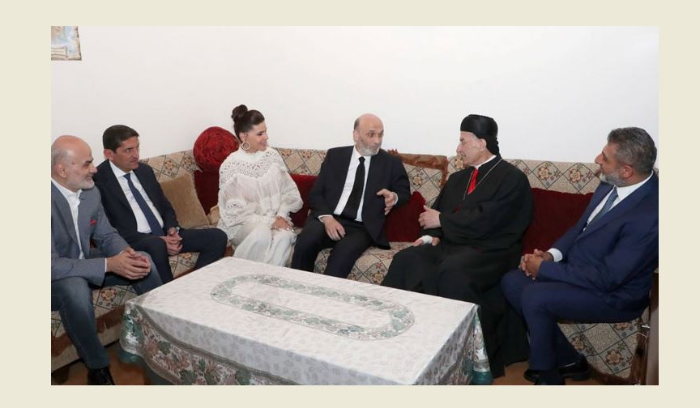
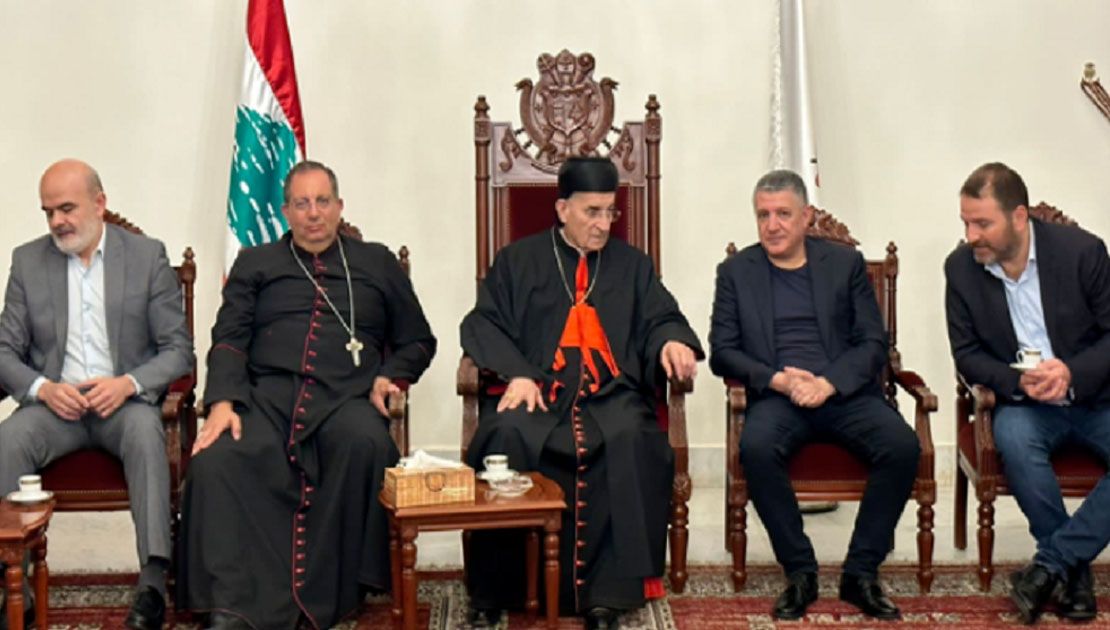
In mid-March 2024, the Patriarchate headquarters hosted a new meeting attended by representatives of Christian parties, except for the Marada Movement, a Christian party allied with Hezbollah, which refused to participate in these meetings.
During the gathering in Bkerke, the attendees continued their discussions on a document encompassing a unified Christian stance on "sovereign, national, and fundamental political issues, as well as the issue of national partnership, the decision of war and peace, neutrality, the Syrian displacement, and the presidency of the republic."
Bkerke Document
The initiative aims, according to Deputy Camille Chamoun, to "unify opinions and set common goals, i.e., to implement the constitution in accordance with the Taif Agreement."
It was also revealed that a new meeting might occur on April 14, 2024, for Christian groups, calling for "Lebanon's neutrality to restore trust in the country and accomplish the presidential entitlement."
These Christian workshops within the Maronite Patriarchate in Bkerke, with representatives of party leaders and Christian parliamentary blocs, aim to discuss a "comprehensive" working paper prepared by Patron of the Maronite Diocese of Antelias, Bishop Antoine Fares Bou Najem, who was tasked with gauging the opinion of Christian parties on general national issues.
The head of the Lebanese Maronite Church, represented by Patriarch Bechara al-Rahi, deemed it necessary, in the initial stage, to convene the Christian domestic sphere in Lebanon, meaning the Christian factions, amid some differences among them.
In Lebanon, the extent of disagreement among Christian forces over Hezbollah's dominance with its weapons across the country is no secret.
Non-aligned Christian parties urge the latter to hand over its weapons to the Lebanese state in accordance with the constitution and international legitimacy, especially UN Security Council Resolution 1559 of 2004, which calls for disarming militias in Lebanon.
The idea of establishing Hezbollah in Lebanon dates back to 1982 when it was overseen by the Iranian Revolutionary Guard, and Iran has been supplying it with arms and funds since then, making it an independent entity.
Currently, Hezbollah represents the largest manifestation of Iranian influence expansion in Lebanon, while the United States views the Lebanese army as a force that must remain equal to or stronger than the party, which boasts a force of a hundred thousand fighters, a number similar to the army's.
Hezbollah's leader, Hassan Nasrallah, openly stated on June 24, 2016, that "the party's budget, salaries, expenses, food, drink, weapons, and missiles come from the Islamic Republic of Iran."
The confrontations between Iran-backed Hezbollah and "Israel" at the southern borders since the second day of the Israeli aggression on Gaza on October 7, 2023, have raised warnings of a security threat to Lebanon and its entanglement in a new war despite the reluctance of the rest of the Lebanese.
Therefore, the Bkerke Initiative did not overlook Hezbollah's weapons, its Iranian ideological project, and its attempts to dominate the country's political decision-making.
The Maronite Patriarch aims to develop discussions among Christian parties to unite Christians on a document defining their stance on national issues and ending division, then presenting it if there is consensus among the various components.
Unified Positions
Lebanese writer Fadi Eid notes that "what has leaked from the Bkerke discussions indicates that this document will not be limited to focusing on the presidential file alone, or on excluding Christians from the state and administration, or on emphasizing partnership in decisive decisions such as war and peace, but will go beyond these files to draw a roadmap by the Maronite Patriarch representing Christians in Lebanon for the next phase."
Eid added in his article that "this document will be directed to all Lebanese from all sects and affiliations, defining constants, presenting differences, and emphasizing partnership in decision-making, authority, and state institutions, culminating in constitutional entitlements, without neglecting the reference to the application of the Taif Agreement, which is still unimplemented to this day."
The Taif Agreement, which ended the Lebanese Civil War (1975–1990), enshrined the equation of power-sharing in Lebanon based on religious and sectarian affiliations.
Although Christian discussions are ongoing, there are many knots that need to be untied to produce a comprehensive "Christian document," fearing that these meetings may deepen Christian divisions.
Amidst these circumstances, the Lebanese Forces party, led by Samir Geagea (an opponent of Hezbollah), commented on the invitation extended by the leader of the Free Patriotic Movement party, MP Gebran Bassil, to Patriarch al-Rai to convene a meeting bringing together Christian leaders.
The Lebanese Forces party stated that "the tragedy the country has reached can no longer tolerate neither meetings for appearances nor political maneuvers nor attempts to use these meetings to improve conditions with the ally [Hezbollah], with whom the only remaining dispute is of an authoritarian nature."
"Unless MP Bassil declares the necessity for the party to hand over its weapons to the state, we see no reason for convergence in a single scene, because any scene must genuinely reflect the Lebanese people's desire for the establishment of an actual state that the party's weapons and role obstruct," the party said in a statement.
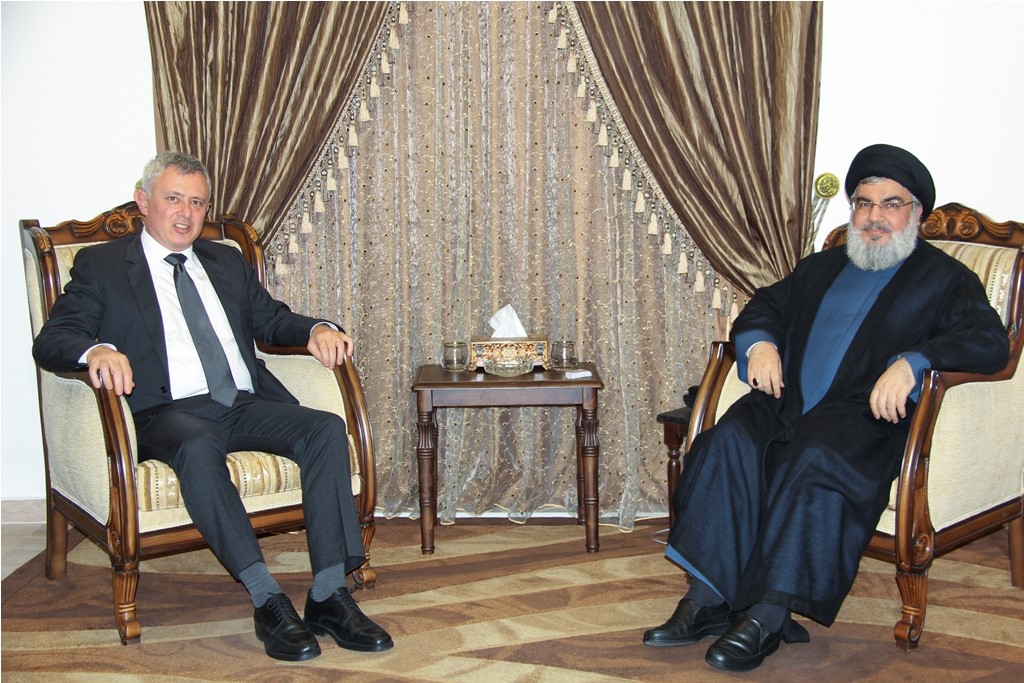
Days before the recent meeting in Bkerke, Gebran Bassil, the head of the Free Patriotic Movement, a Maronite Christian party allied with Hezbollah, called for a meeting of the Maronite leaders, which local media attributed to an attempt to gather first-tier leaders instead of advisors or second-tier figures in the Christian parties and forces.
'Christian Consensus'
In this context, Lebanese journalist Bassel al-Aridi saw that "the Bkerke meeting with some representatives of the Christian parties comes in an attempt by the Maronite Patriarchate to produce what is called the Christian document."
Al-Aridi added in a statement on TV, "The Maronite Patriarchate is effectively trying to enter into a national understanding similar to that which prevailed at the beginning of Lebanese independence."
He concluded, saying, "Bkerke's attempt to codify this document comes after realizing that there are a number of issues that must be resolved quickly, the first of which is the legitimacy of Hezbollah's weapons, a point of contention among the Christian political parties, where Bkerke calls for the weapons to be confined to the hands of the state and the Lebanese army.
"What is also causing concern for the Bkerke document is the Muslim–Christian balance, where it seeks to restore balance to the Lebanese constitutional authorities, regions, and institutions, especially in light of the ongoing presidential vacuum since the end of October 2022 due to Hezbollah's obstruction of the election and its insistence that the position go to Suleiman Frangieh, the head of the Marada Movement (Christian), which is rejected by Christian forces and considered a candidate of the 'resistance axis.'"
The issue of appointments has become a concern for both Bkerke and all Christian parties, along with the Syrian displacement issue within Lebanon.
The Maronite Patriarchate is striving to formulate a consensus among Christians, particularly amid demands for a Christian consensus capable of extending to other Christian factions, notably the Marada Movement.
The issue of Hezbollah's weapons is highly divisive among Christian factions, with the Maronite Patriarchate advocating for Lebanon's reform through the unification of weapons and decision-making.
Conversely, the Free Patriotic Movement believes that proposing the disarmament of Hezbollah is currently impractical.
Meanwhile, the leader of the Lebanese Forces Party, Samir Geagea, asserts on X, formerly Twitter, "Lebanese citizens increasingly perceive Hezbollah's militia as the embodiment of corruption within the ruling elite."
Previously, members of the Meeting of the Lady of the Mountain, a political-cultural gathering aimed at promoting the values of coexistence between Christians and Muslims in Lebanon, stated in a 2020 statement that "the majority of Lebanese reject involvement in the futile war waged by Hezbollah in Syria, obedient to Iranian orders, inherently against the shared Lebanese spirit."
Sources
- The anticipated Bkerke document: a national, not a Christian, language [Arabic]
- “Call of the Nation” publishes a draft of the “Bkerke Document”: Equality in partnership and weapons in the hands of the army [Arabic]
- Lebanese political gathering: The solution to Lebanon’s crises begins with handing over Hezbollah’s weapons to the state [Arabic]
- Bkerke document: It demanded something prematurely [Arabic]