The Limits of Gaza’s Fragile Truce: How Has ‘Israel’ Turned It Into a Killing Field?
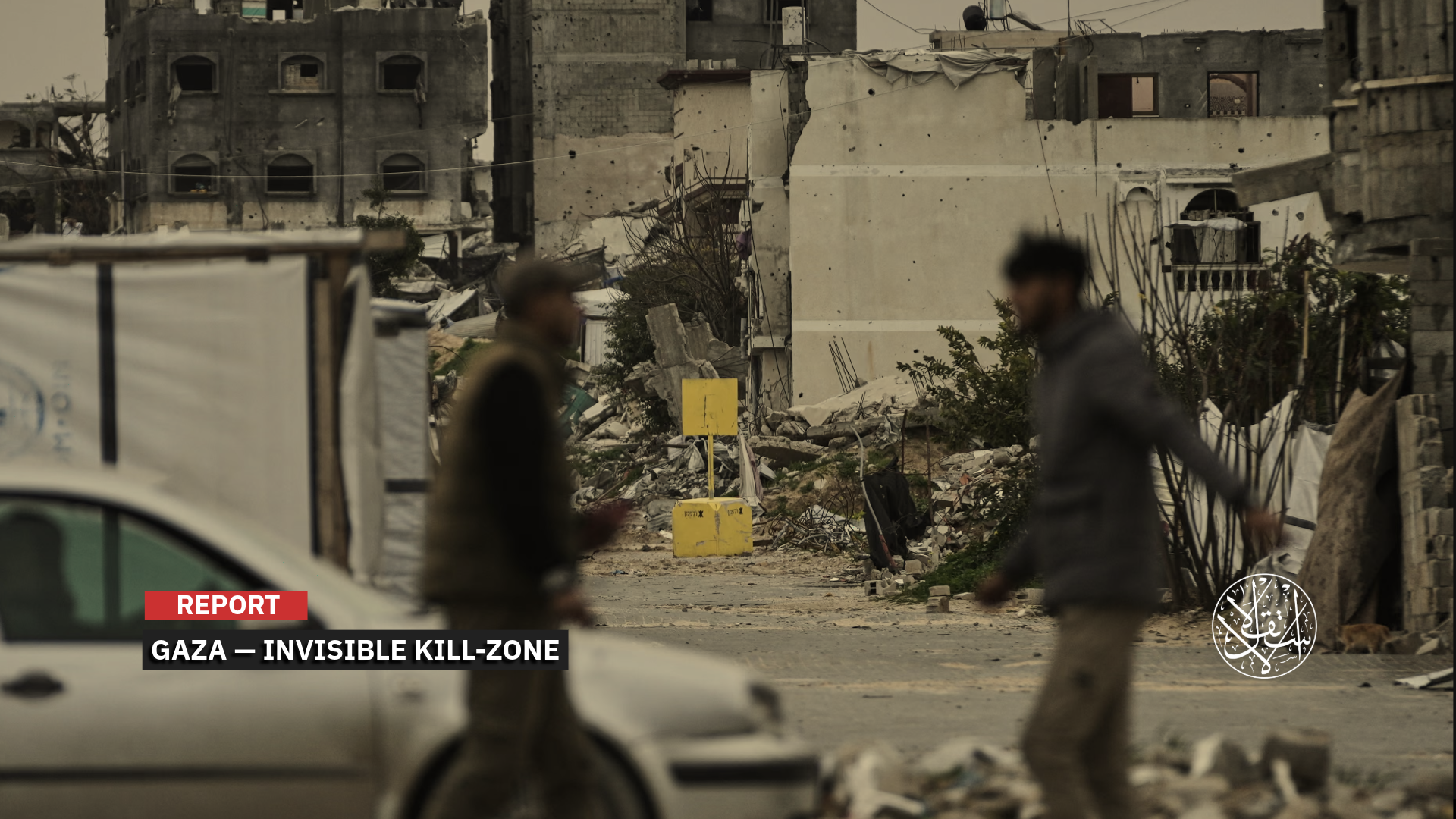
The fundamental problem is that the line exists only on military maps and is not visible on the ground.
The "yellow line" in Gaza is no longer merely a field boundary established under the ceasefire arrangements. It has instead become an open danger zone whose limits are not clearly visible, and through which the Israeli military targets civilians.
Recent testimonies from Israeli soldiers reveal that approaching the line may be treated as grounds for opening fire. As a result, Palestinians find themselves facing a line they cannot see, yet one that effectively determines where they can move and where they may be killed.
Opening Fire Orders
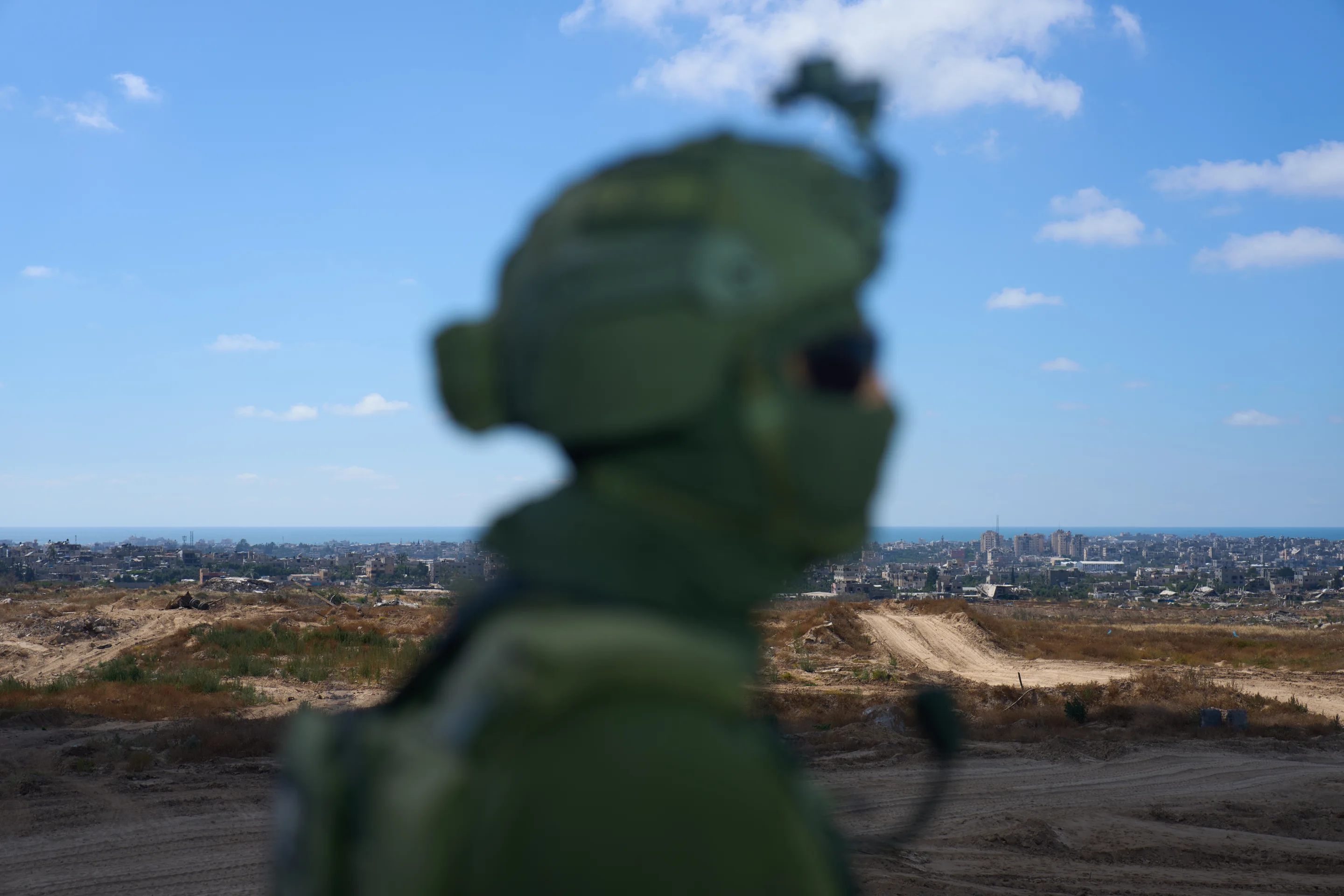
The testimonies were presented in the final days of May 2026 as part of an extensive investigation by the Associated Press, which interviewed three Israeli reservists who served between October 2025, the month the ceasefire agreement was reached, and January 2026. They said that the rules of engagement near the "yellow line" were broad and loosely defined.
One soldier described the area around the line as a "jungle" where troops sometimes opened fire based solely on suspicion. He said soldiers were often positioned so far from those they targeted that they could not distinguish between civilians and combatants, adding: "After the ceasefire, the rule was: if someone crosses the line, you shoot them."
Another soldier revealed that his commanders had instructed troops to kill anyone approaching the line. He said Palestinian lives had effectively ceased to carry value and noted that commanders viewed the task of physically marking the lengthy boundary on the ground as "too burdensome," assuming that civilians "should know where it is." In practice, this meant that unmarked crossing points became potential killing zones.
According to a third testimony, the psychological pressure was so intense that some soldiers became "eager" to see people standing near the line so they could target them. The soldiers spoke on condition of anonymity, fearing punishment or ostracism within Israeli military circles.
According to the Associated Press, an internal report circulated among humanitarian organizations concluded that Israeli strikes in Gaza had become "more pre-emptive."
Data from the Armed Conflict Location & Event Data Project (ACLED) showed that the number of people killed near the yellow line, or after crossing it, rose by more than 25 percent between January and April 2026, increasing from 58 to 73 fatalities.
These testimonies align with data shared by the United Nations Human Rights Office with Reuters, which showed that 152 of the 453 Palestinians killed by “Israel” between the start of the ceasefire and 5 February 2026 were killed near the "yellow line." Among them were 24 boys and 11 girls.
The head of the UN Human Rights Office in the Occupied Palestinian Territory, Ajith Sunghay, said the available information raised serious concerns that civilians were being killed simply for being near the line, potentially amounting to unlawful killings. He added: "No one knows exactly where the line begins and ends or how it shifts."
The soldiers told the Associated Press that military warnings often consisted of warning shots followed by live fire intended to kill, and that officers relied on "probabilities" rather than evidence when identifying targets.
Notably, the death toll extends well beyond the vicinity of the line. According to data from Gaza's Ministry of Health, more than 900 Palestinians had been killed since the ceasefire began, leading even some of the soldiers interviewed to question whether the situation could genuinely be described as a "truce."
The ceasefire agreement did not bring an end to Israeli military strikes, with fire particularly concentrated near the yellow line, where killings have continued to be recorded in circumstances that appear linked to the presence of this ambiguous and poorly defined boundary.
Deadly Crossing
The "yellow line" emerged as part of the ceasefire arrangements in October 2025 and was intended to define an area of Israeli military control over approximately 53 percent of the Gaza Strip.
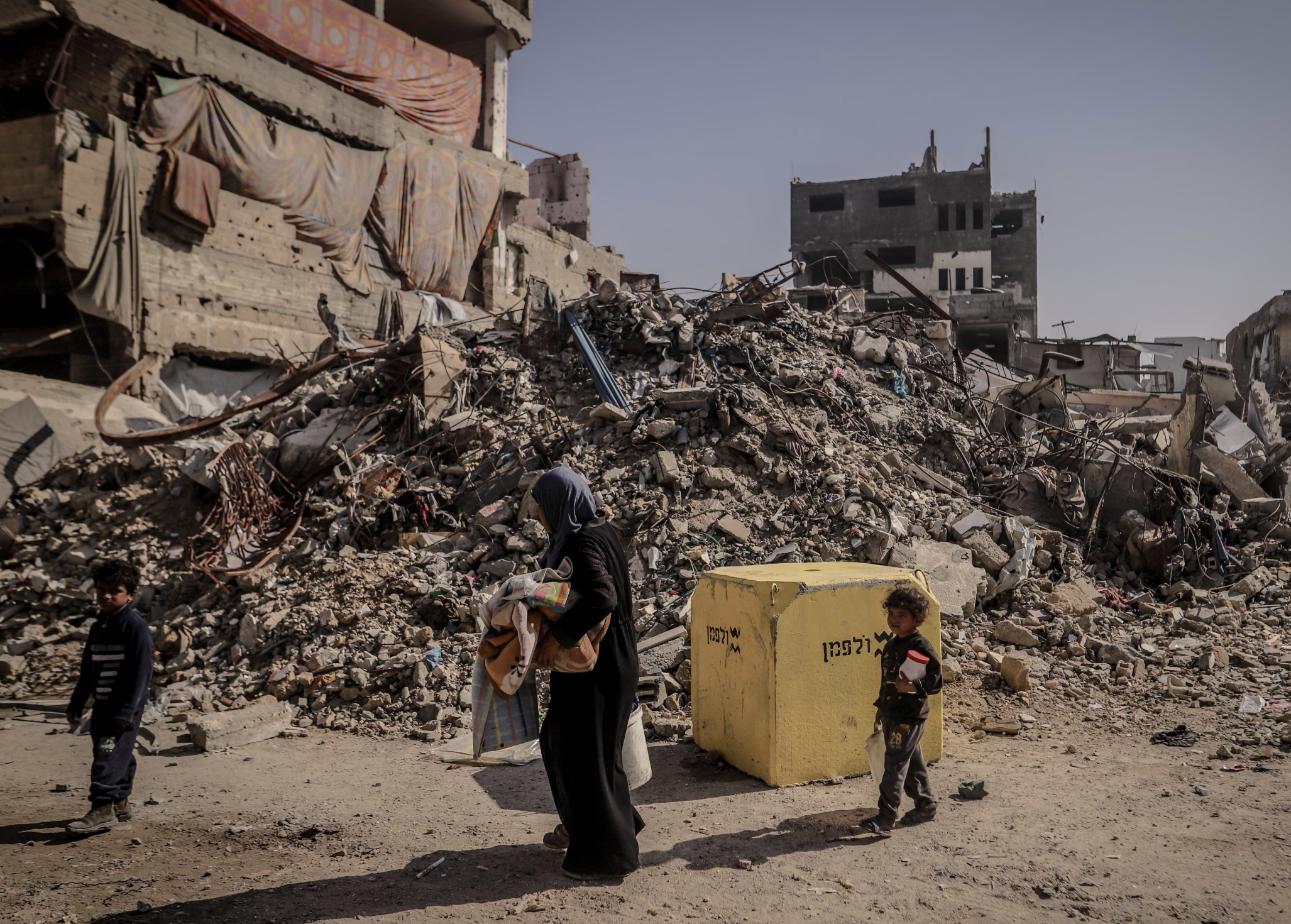
The boundaries are drawn on military maps and are sometimes marked on the ground with yellow concrete blocks. However, the Israeli human rights organization Gisha has noted that Gaza residents are forced to guess the line’s location, and that 15 people were killed in its vicinity during the first five days of the ceasefire.
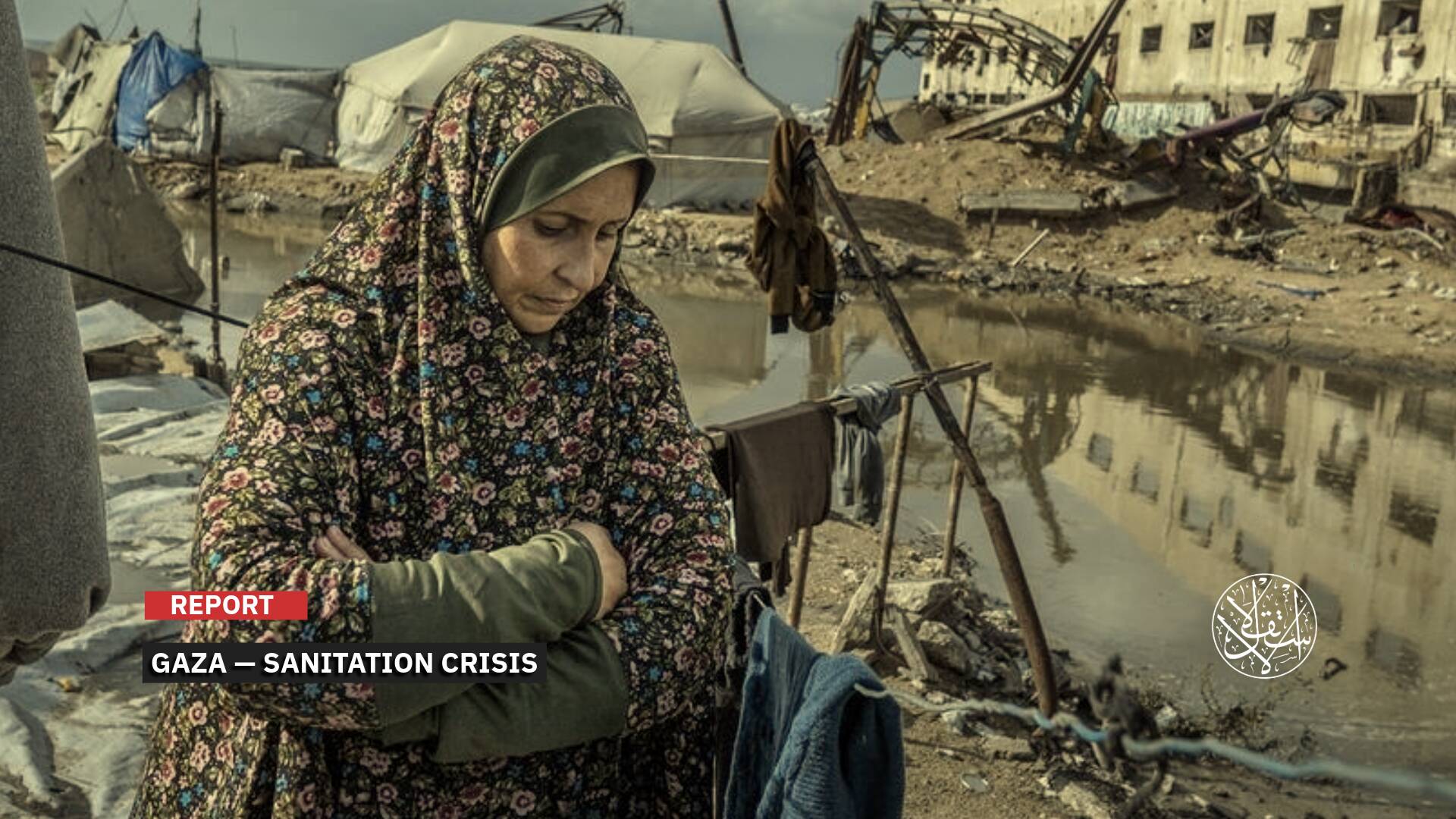
Other reports have confirmed that the military moved these blocks westward, expanding the area of control, and that many locations have no visible markers at all. In practice, tens of thousands of Palestinians are living in camps or in the ruins of destroyed homes near this unclear boundary.
A report by the UN Relief and Works Agency for Palestine Refugees (UNRWA) also stated that families sheltering within one kilometer of the line sleep while preparing to flee, due to gunfire and shrapnel hitting their homes or tents every night.
Mahmoud Qweider from the al-Tuffah neighborhood east of Gaza City told Al-Estiklal, "The line is here today, you sleep and then you wake up to find it has passed over you."
He explained that he lived for a period in a tent on the ruins of his home with his family, but the accelerating Israeli incursion from the east of the city toward the west forced them to leave.
He added that areas near this line lack basic services, especially water and food, due to ongoing Israeli demolition and bulldozing operations, as well as humanitarian organizations’ fear of operating in the area.
Qweider stressed that the main problem is that the line does not appear on the ground, but exists only on military maps that civilians do not have access to and that are not disclosed by the military.
Despite the Israeli military’s claim that the line has been "clearly marked," reports from the United Nations and human rights organizations such as Human Rights Watch and B’Tselem say it has become an undefined zone that is continuously expanding.
In this ambiguity, deaths near the line have been unsurprising. In separate incidents documented by UN and media sources in March, civilians, including women and children, were killed in areas near the lines of control or in exposed displacement zones.
The UN Office recorded more than 224 Palestinians killed east of or near the line during the first months of the agreement, in ongoing incidents that continue to this day, as Gaza hospitals and the Ministry of Health regularly report new deaths and injuries near this area outside Israeli control.
The Orange Line
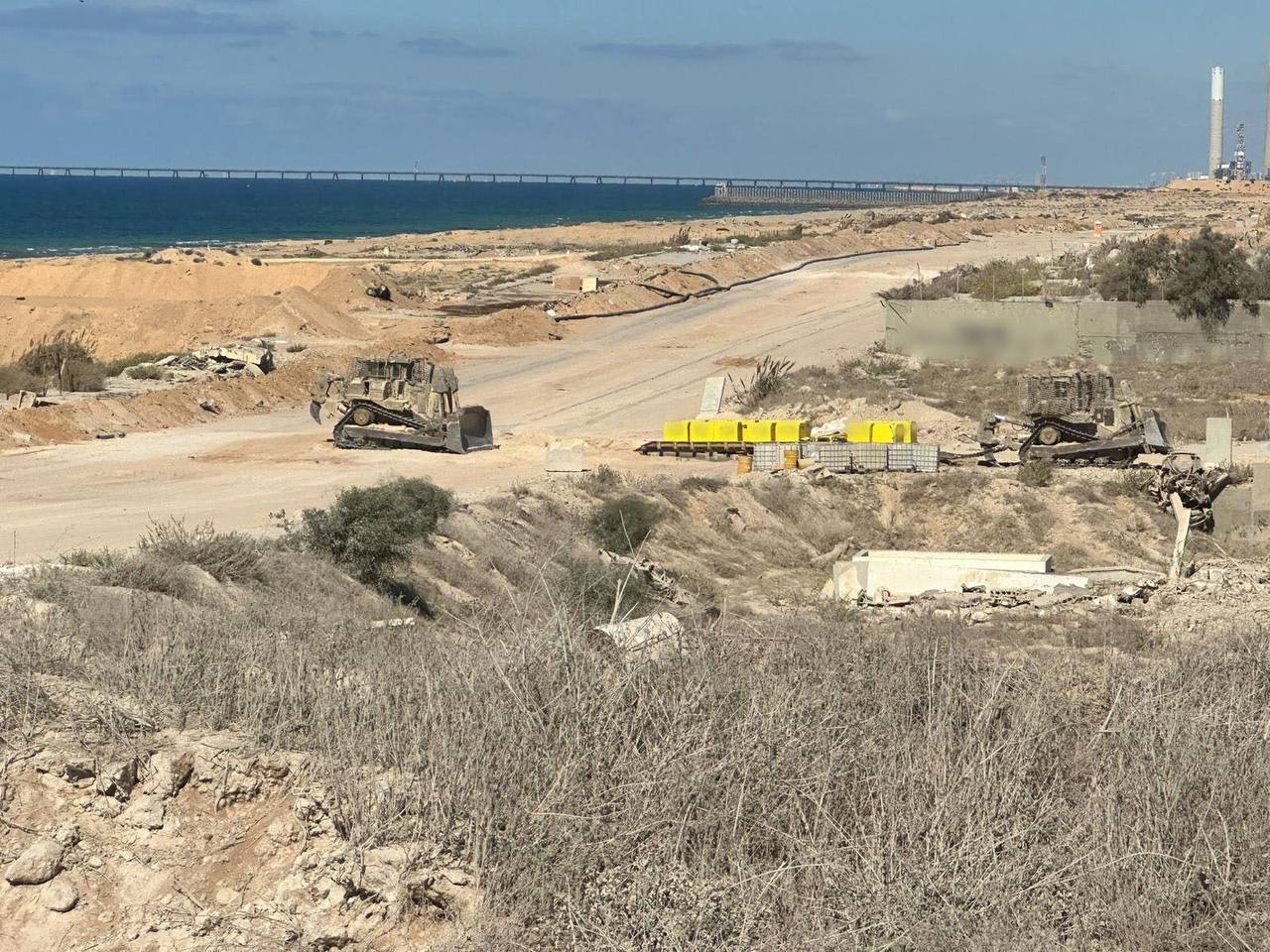
When the ceasefire agreement was signed, it stipulated that Israeli Occupation Forces would withdraw to the east of the Gaza Strip and control approximately 53 percent of its area. However, over time, the "yellow line" did not remain fixed and instead expanded.
The organization Forensic Architecture found in December 2025 that “Israel” controlled 58 percent of the Strip after moving the concrete blocks further west.
Later, in March 2026, Israeli Occupation Forces introduced a new line known as the "orange line," adding another 11 percent of territory to their control.
By adding this area to the zone east of the yellow line, Jad Isaac, director of the Applied Research Institute–Jerusalem (ARIJ), estimated that Israeli control or restriction extended to around two-thirds of the Strip (64 percent), according to Reuters.
Isaac said this leaves around two million Palestinians confined to a narrow coastal strip, and is intended to "place as many Palestinians as possible in the smallest possible area in order to push them to leave."
However, a major turning point came in late May 2026, when Israeli Prime Minister Benjamin Netanyahu announced that he had instructed the military to "take control of 70 percent" of the Strip.
At a press conference, he said, "We were at fifty, we moved to sixty. My directive is to move to - let's go step by step."
Netanyahu justified the expansion as necessary to create "buffer zones" to protect “Israel’s” borders, but Palestinians and human rights officials viewed it as a move to entrench long-term occupation and a strategy aimed at displacing the population.
At the end of May 2026, Israeli Defense Minister Israel Katz threatened that plans to displace Gaza’s population would be implemented “at the right time and in the right manner."
This expansion comes at a time when the United Nations and aid organizations are unable to obtain permission to access areas between the lines, worsening shortages of food, water, and medicine.
It also means that tens of thousands of Palestinians are being pushed into smaller, more densely populated areas, while agricultural land east of the line becomes inaccessible. With no clear maps or warnings, the line effectively becomes a mechanism for isolating civilians and determining who can move and who may be killed if they approach it.
The risks are not limited to civilians. Reuters reported that three Palestinian aid workers were killed since mid-March in the area between the yellow and orange lines.
Contractors working in operations linked to UNICEF and the World Health Organization were also killed in separate incidents, reflecting an expanding danger even for teams that are supposed to operate under humanitarian coordination.