The Kuril Islands: How Russia Is Trying to Redraw the Balance of Power in the Western Pacific
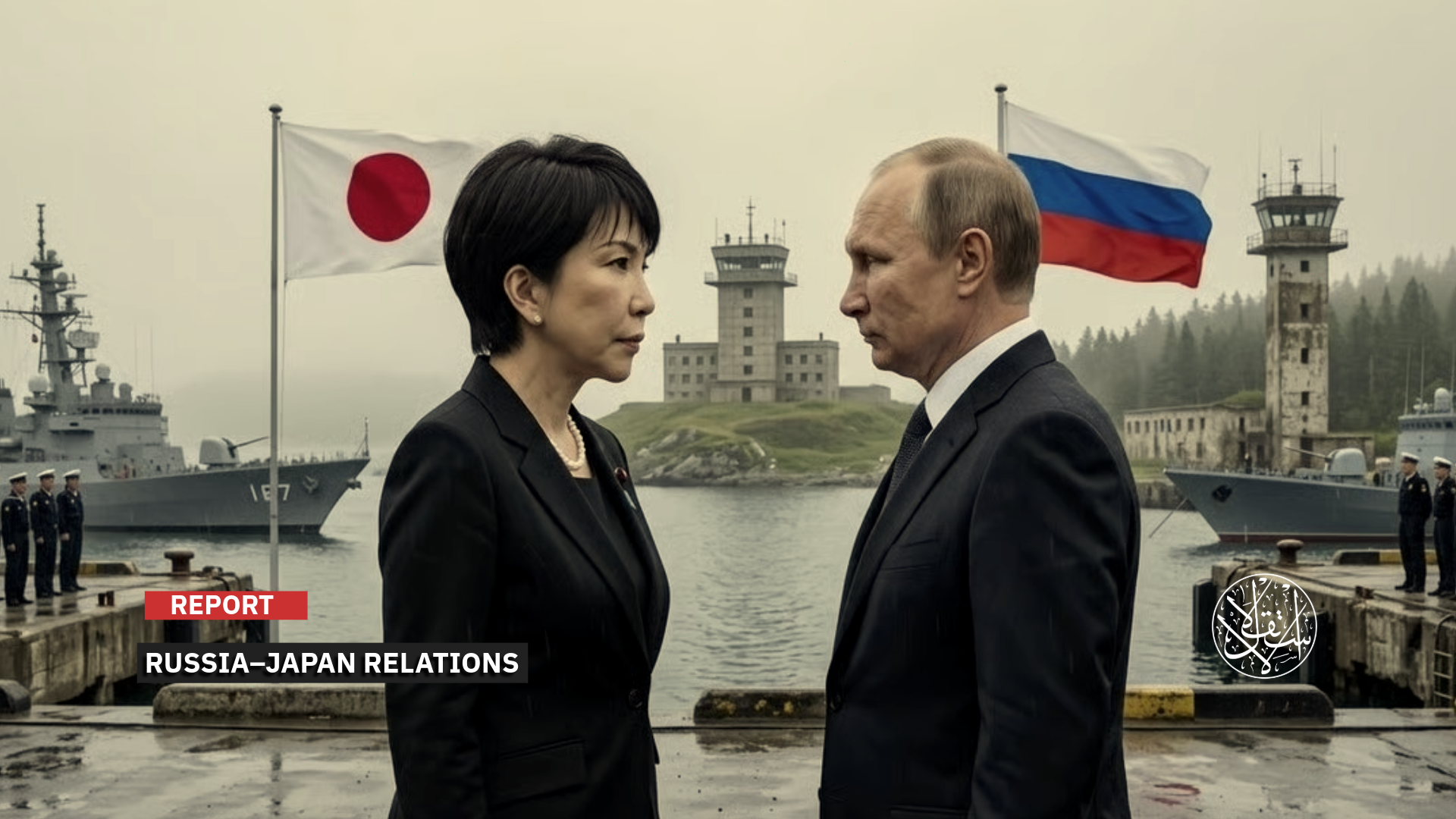
"Moscow summons Tokyo’s ambassador after the Russian president’s trip to the disputed islands last week."
Last week, Russian media outlets published a video showing Putin on Etorofu Island, known in Japan as Etorofu, tasting local caviar during a visit to a fish processing plant. This marked the first visit by a Russian president to the island since 2010.
Putin's visit is viewed in Japan not merely as a domestic tour for the Russian president, but as a Russian assertion of sovereignty over territory that Japan considers part of its own.
With the continued Russian military presence on the islands and increased military activity in the North Pacific, the issue appears to extend beyond a simple border dispute; it has become part of a broader web of security tensions that are reshaping the balance of power in the Western Pacific.
Putin's visit also comes at a time when Russia's eastern flank is becoming increasingly important in its security calculations, coinciding with growing military cooperation between Moscow, Beijing, and Pyongyang, and escalating tensions between Russia and the United States and its allies in the Indo-Pacific region.
Prior to his visit to Etorofu, on August 12, Putin attended a Russian Pacific Fleet exercise in the Sakhalin region of Russia's Far East.
Putin’s visit to the disputed islands places itself within a broader regional context, where historical conflicts intersect with military rivalries and new alliances in East Asia.
Strong Protest
Russian President Vladimir Putin’s first visit to the disputed Kuril Islands last week sparked controversy between Tokyo, which deemed it offensive to the Japanese people, and Moscow, which dismissed the criticism as baseless.
Russian-Japanese relations have long been strained by the dispute over these islands, known in Japan as the Northern Territories, which were seized by the Soviet Union in 1945.
The Kremlin released a video of Putin on the Kuril Islands, and Russian media reported that he visited a fish processing plant where he was served caviar.
In Sakhalin, Putin, 73, held a meeting on ensuring the security of Russia’s eastern borders, according to the RIA Novosti news agency.
Japanese Prime Minister Sanae Takaichi condemned the Russian president's visit to the islands as unacceptable and an affront to the feelings of the Japanese people.
She told reporters that the visit contradicts Japan's consistent position on the Northern Territories, which Tokyo considers an integral part of Japan's territory, both historically and under international law.
Japanese Foreign Minister Toshimitsu Motegi summoned Russian Ambassador to Japan Nikolay Nozdrev to lodge a strong protest against the surprise visit.
The ministry said that Motegi told the ambassador during the meeting that Putin's visit would have a very negative impact on Japanese-Russian relations, which are already strained due to the war in Ukraine.

Japanese Support
In response, the Russian Embassy in Japan stated that the ambassador emphasized that the islands are an integral part of the Russian Federation and that their status is indisputable, stressing that Putin's visit to them is not up for discussion with foreign countries.
Russian Foreign Ministry spokeswoman Maria Zakharova said in a statement, "We categorically reject these statements, which we consider politically inappropriate, insulting, and, of course, legally baseless."
Zakharova asserted that the Japanese position reflects an anti-Russian policy bordering on hostility, noting that sovereignty over the Kuril Islands was transferred to Russia after World War II, in accordance with agreements with the Allied Powers and the UN Charter.
She accused Japanese officials of arrogantly presuming to dictate to the Russian president which parts of his country he can or cannot visit.
Zakharova also criticized Tokyo's support for Kyiv and its imposition of sanctions on Moscow, similar to those imposed by Western countries, following the start of the Russian invasion of Ukraine.
Tensions between Japan and Russia, which fought a war in 1904-1905, have escalated since Russia's 2012 invasion of Ukraine.
Japan joined other G7 nations in imposing sanctions on Russia and providing financial and non-lethal military aid to Kyiv, which, like Washington, recognizes Japanese sovereignty over the disputed islands.
Japan also indirectly supports Ukraine's air defenses by exporting domestically produced Patriot interceptor missiles to the United States, helping to replenish US stockpiles depleted by military aid to Kyiv.
Analysts believe Putin's visit to the Kuril Islands may have been intended to warn Japan against increasing its support for Ukraine, particularly regarding the potential direct supply of Patriot missiles, as well as its cooperation with NATO.
Although Japan has eased restrictions on defense exports in recent years, it is still unable to directly supply lethal military equipment to a country engaged in war, including Ukraine.
Strategic Importance
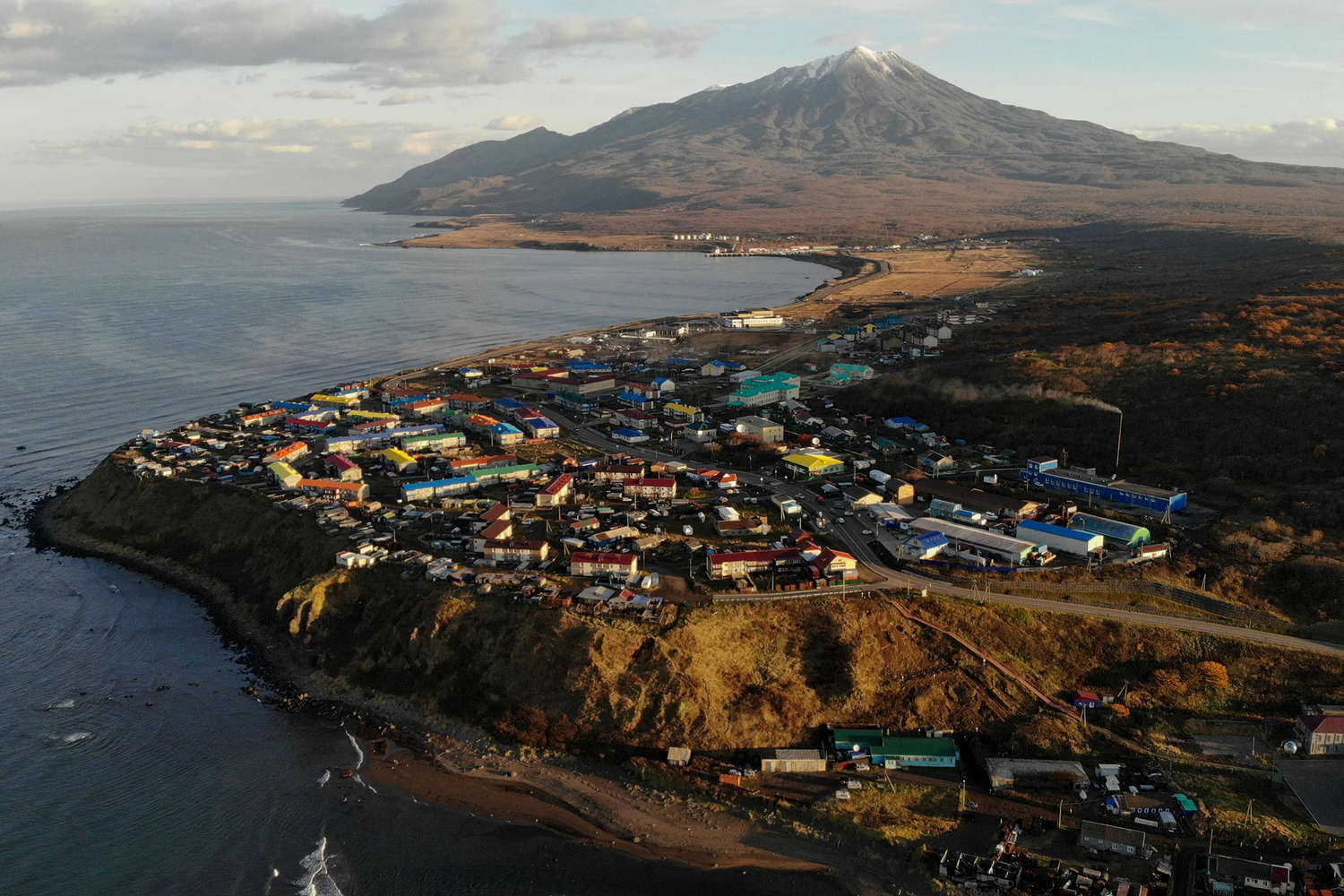
The ownership of the Kuril Islands, a chain of 56 islands straddling Japan and Russia, has been a defining issue in relations between the two countries for over 80 years.
The Soviet Union seized control of the strategically important volcanic archipelago, located north of Hokkaido, in the final days of World War II and has maintained a military presence there ever since.
The Kuril Islands lie between Japan's Hokkaido Island and Russia's Kamchatka Peninsula, separating the Sea of Okhotsk from the Pacific Ocean.
After occupying the islands in 1945, Moscow deported the approximately 17,000 Japanese residents.
The islands' roughly 20,000 inhabitants, now Russian citizens, live in a harsh climate, but the islands are rich in mineral resources, including gold and silver, and offer valuable fishing grounds.
Despite Japan's relinquishment of the Kuril Islands under the 1951 Treaty of San Francisco and the 1956 agreement that restored diplomatic relations with the Soviet Union, Tokyo rejected Moscow's offer to return two of the four islands claimed by Japan, arguing that the offer covered only 7% of the disputed territory.
The dispute over the status of these islands has persisted for nearly eight decades.
Since then, the islands have acquired strategic importance, providing air and naval bases during the Cold War between the Soviet Union and the United States, with Japan being Washington's closest ally in the Pacific.
Between 2010 and 2015, Dmitry Medvedev visited the islands four times, as either prime minister or president.
Stumbling Diplomacy
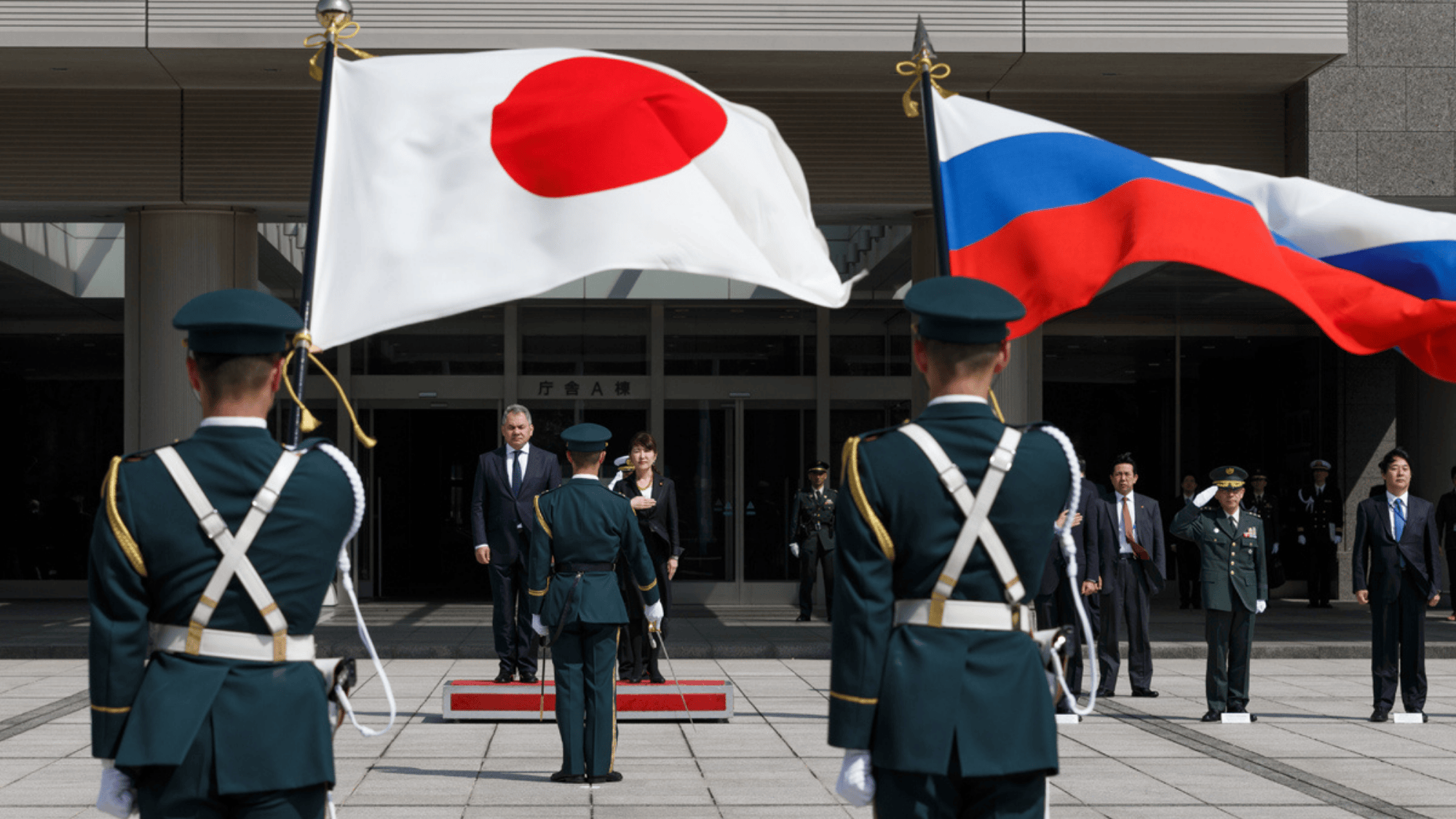
Japan and Russia have thus far failed to reach a peace agreement. Successive governments in both countries attempted to open new avenues for negotiations, but remained largely entrenched in their positions regarding the status of the islands.
Even after the end of the Cold War, when the United States appeared to be moving toward a new era of friendship and cooperation with Russia, Tokyo and Moscow remained deadlocked, unable to seize the opportunity to reach an agreement.
When former Russian President Boris Yeltsin visited Japan in 1993, few Japanese officials expressed genuine optimism about the possibility of a breakthrough, despite the shared interest of both governments in improving relations.
Yeltsin also faced considerable domestic pressure, and making concessions on the Kuril Islands would have strengthened his opponents and deepened the political crisis in Russia.
After Yeltsin's term, the situation did not improve, as mutual provocations led to diplomatic protests that stalled negotiations.
In 2004, Japanese Prime Minister Junichiro Koizumi inspected the island chain from a coast guard vessel, a year before President Putin was scheduled to visit Japan for the 150th anniversary of the Treaty of Shimoda.
In 2006, the dispute took a dangerous turn when the Russian coast guard shot and killed a Japanese fisherman after his boat entered disputed waters near the Habomai Islands, prompting strong condemnation from then-Japanese Foreign Minister Taro Aso.
In 2012, Russian President Dmitry Medvedev visited Kunashiri Island, angering Japanese Prime Minister Naoto Kan and his government.
Following this, Russian-Japanese relations began to show signs of improvement, particularly after both President Vladimir Putin and Prime Minister Shinzo Abe returned to power, entering a period of rapprochement that initially appeared serious.
Abe visited Moscow in 2013 for the first high-level talks between the two countries since 2005, opening a new path toward reconciliation and progress toward a formal peace treaty.
Following the 2011 Fukushima nuclear disaster, Japan was seeking ways to diversify its energy sources, which presented Russia with an economic opportunity to develop liquefied natural gas (LNG) infrastructure in its eastern regions.
Abe also saw Russia as crucial in counterbalancing China’s growing influence in the Pacific, while Moscow, despite its close political ties with Beijing, saw economic opportunities in strengthening relations with Japan.
However, the failure of Abe’s efforts became evident by 2016 when a two-day summit with Putin ended without significant progress on the Kuril Islands issue. Putin rejected a proposal to transfer only two of the four disputed islands to Japan.
By 2019, there had been no progress toward an agreement. In 2020, Abe left office as prime minister without achieving his goal of signing a formal peace treaty with Russia and regaining control of some or all of the disputed islands.
In March 2022, Russia conducted military exercises involving more than 3,000 troops and hundreds of pieces of military equipment on the Kuril Islands, days after the Japanese Foreign Ministry summoned the Russian ambassador to Tokyo following Moscow's withdrawal from talks on the islands in response to Japan's stance on the invasion of Ukraine.

Pressure Tactic
Japan considers Russia's control of what it calls the Northern Territories a betrayal of the 1855 Treaty of Shimoda, which recognized the islands of Habomai, Shikotan, Kunashiri, and Etorofu as part of Japanese territory, as well as the unjust expulsion of thousands of Japanese citizens from their homes.
Russia, on the other hand, justifies its claim to the islands by arguing that the Allies granted the Soviet Union control of what it calls the Southern Kuril Islands under the Yalta Agreement in exchange for Soviet participation in the war against Japan in the Pacific.
The Kremlin views any concession of these islands to Japan as an insult to the sacrifices of Soviet soldiers in World War II.
The island chain also holds significant geopolitical and strategic importance for both countries.
The sea lane between Kunashiri and Etorofu does not freeze, giving the Russian Pacific Fleet, based in Vladivostok, easy access to the Pacific Ocean even during winter.
The islands also offer Russia the ability to project power and exert significant control over maritime traffic toward the Arctic, as melting sea ice has opened faster trade routes between the Pacific and Atlantic Oceans.
For Japan, the region’s resources could hold considerable economic and strategic importance.
Deposits of rhenium, one of the world’s rarest and most dispersed metals, have been discovered on Etorofu Island. This metal is used in aircraft engine turbines, such as those used in F-15 fighter jets, representing a significant opportunity for Japan’s defense industry.
There is also unconfirmed speculation about offshore oil and gas reserves that could help Japan bolster its energy security while simultaneously diminishing Russia’s influence.
Japan’s control of the four disputed islands, if it were to occur, would dramatically alter the balance of power in the Pacific region, according to the Center for International and Regional Studies at Georgetown University.
“The Kuril Islands have been reinforced with Bastion coastal defense missile systems and Sukhoi-35 fighter jets,” said Yee-Kuang Heng, a professor at the Graduate School of Public Policy at the University of Tokyo.
“These weapons give Russia the ability to control the sea lanes in the region, as well as providing leverage regarding Japan’s claim to sovereignty over these islands.”
He added in a statement to AFP, “Putin’s visit may be a reminder of the cards he holds, as well as an expression of his displeasure with the sanctions that Japan has continued to impose on Russia since the war in Ukraine.”
Sources
- The Kuril Islands: how a visit from Putin reignited a 150-year-old dispute between Japan and Russia
- EXPLAINER – Putin’s 1st Kuril Islands visit: What is the territorial dispute between Japan, Russia?
- Japan strongly protests Putin’s first visit to disputed islands as Russian president tours fish factory
- The Kuril Islands in Rough Waters: Will Japan and Russia Ever Be at Peace? [Research]