‘Proxy Repression’: Why Iran Turned to Iraqi Militias to Repress Protests
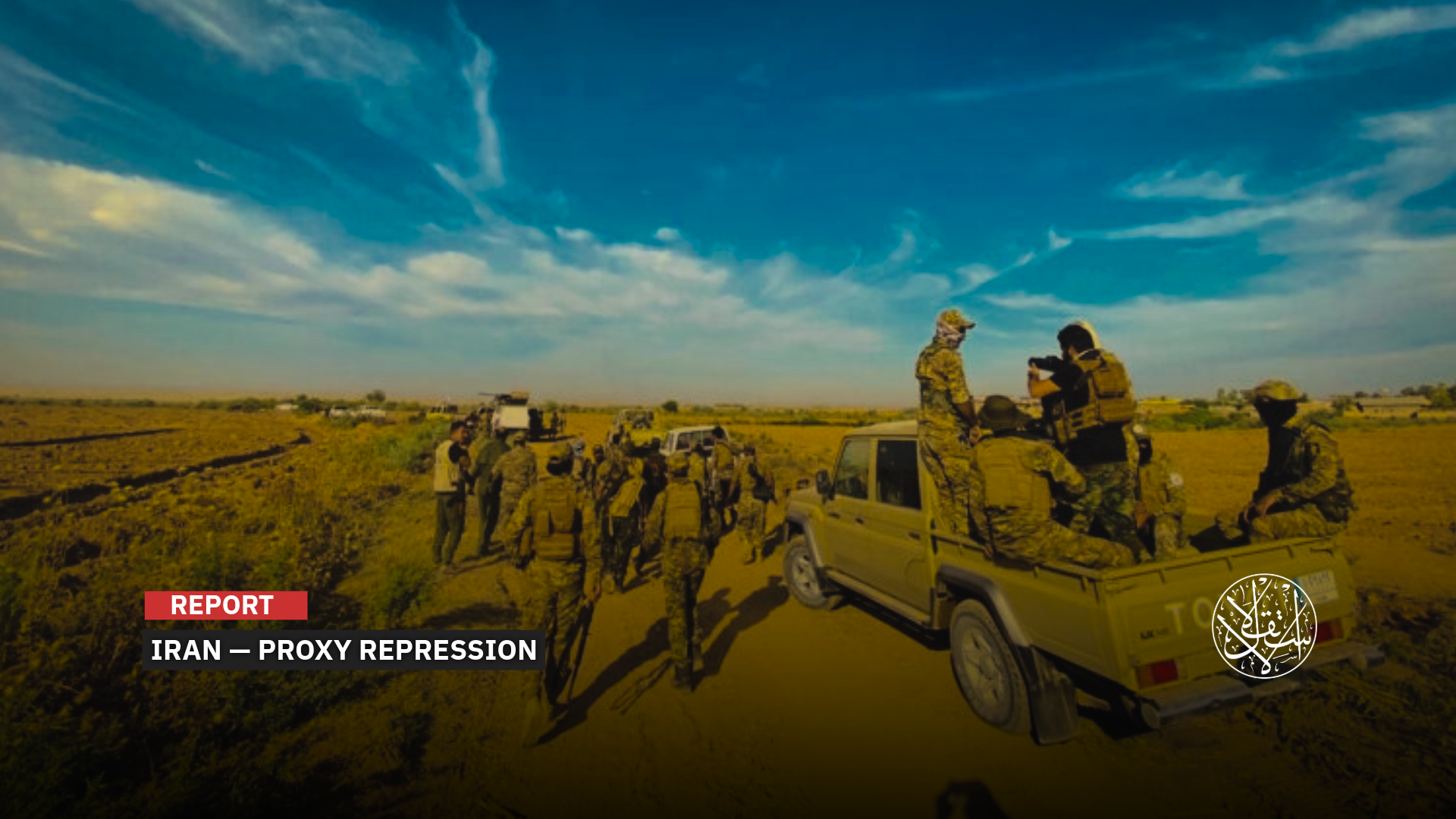
Nearly 5,000 fighters from powerful Iraqi militias entered Iran.
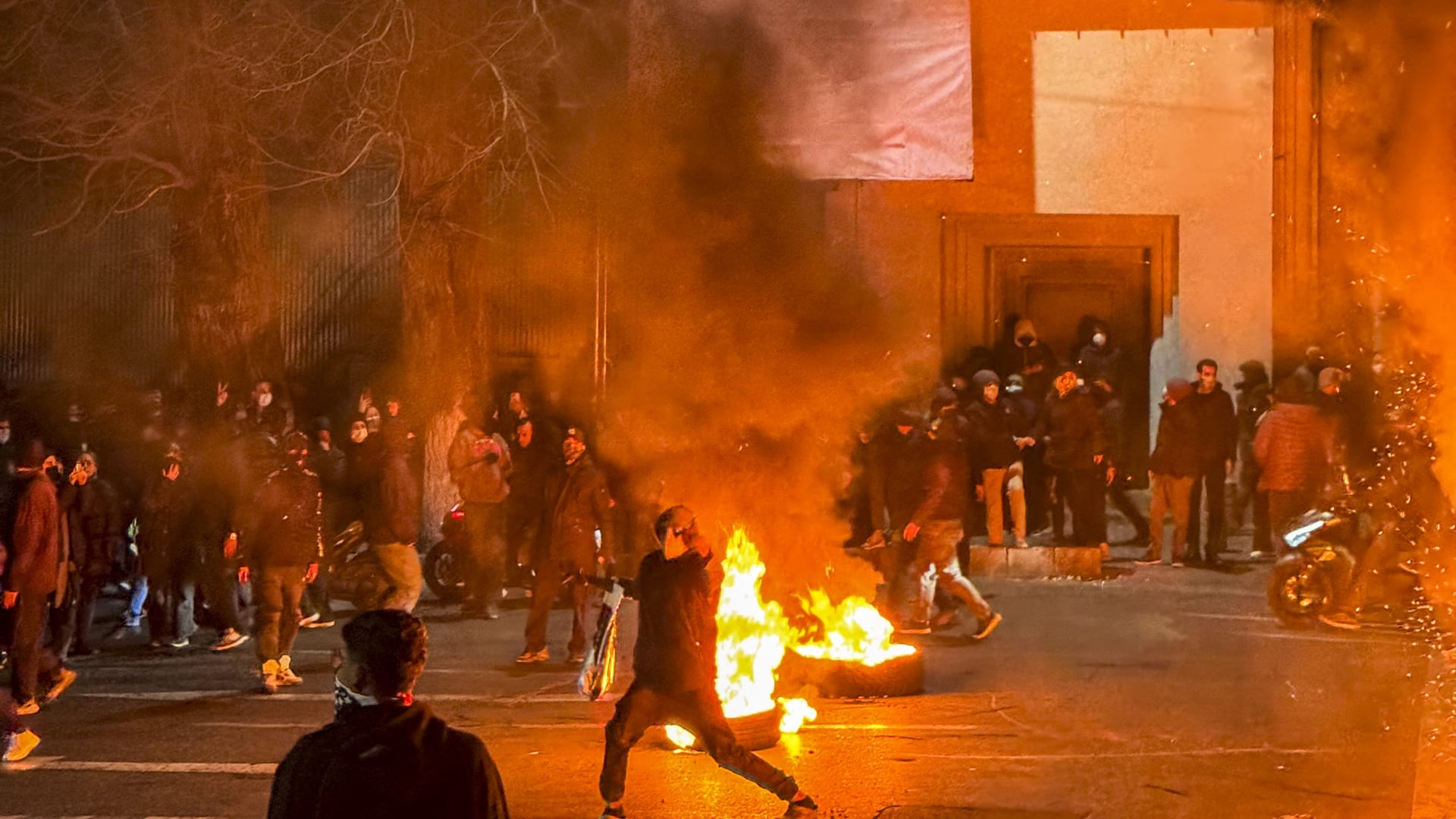
As U.S. President Donald Trump threatens to strike Iran if the authorities move to kill protesters, Tehran has relied on Iraqi militias loyal to it to help suppress demonstrations that erupted across the country on December 28, 2025, sparked by a sharp economic downturn.
At the same time, Washington has been stepping up pressure on Baghdad to dismantle Iran-backed militias and prevent them from taking part in the new Iraqi government, even though lists associated with these groups won roughly 80 seats in the parliamentary elections held on November 11, 2025.
During a meeting with Kurdistan Democratic Party (PDK) leader Masoud Barzani on January 13, U.S. chargé d’affaires in Baghdad Joshua Harris said that Iran-backed terrorist militias, which ignore Iraq’s calls for disarmament, have no place in the Iraqi government in any capacity.
Harris added in a statement posted by the U.S. Embassy on X that the United States will continue to make clear and insist that Iraq take immediate action to dismantle terrorist militias pursuing an external agenda that undermines Iraq’s sovereignty, impoverishes the country, threatens both Americans and Iraqis, and drags the nation into regional conflict.
Suppressing the Protests
On January 16, CNN reported, citing an unnamed European military source and an Iraqi security source, that Iraqi fighters had crossed into Iran in recent weeks to assist in quelling ongoing protests.
The Iraqi security source said nearly 5,000 fighters from powerful Iraqi militias entered Iran from two border crossings in southern Iraq: the Shaib border crossing in Maysan province and the Zurbatiya border crossing in Wasit province.
The European military source confirmed to CNN that 800 Shiite fighters crossed from the Iraqi provinces of Diyala, Maysan, and Basra to help with the Iranian crackdown under the pretense of religious pilgrimages.
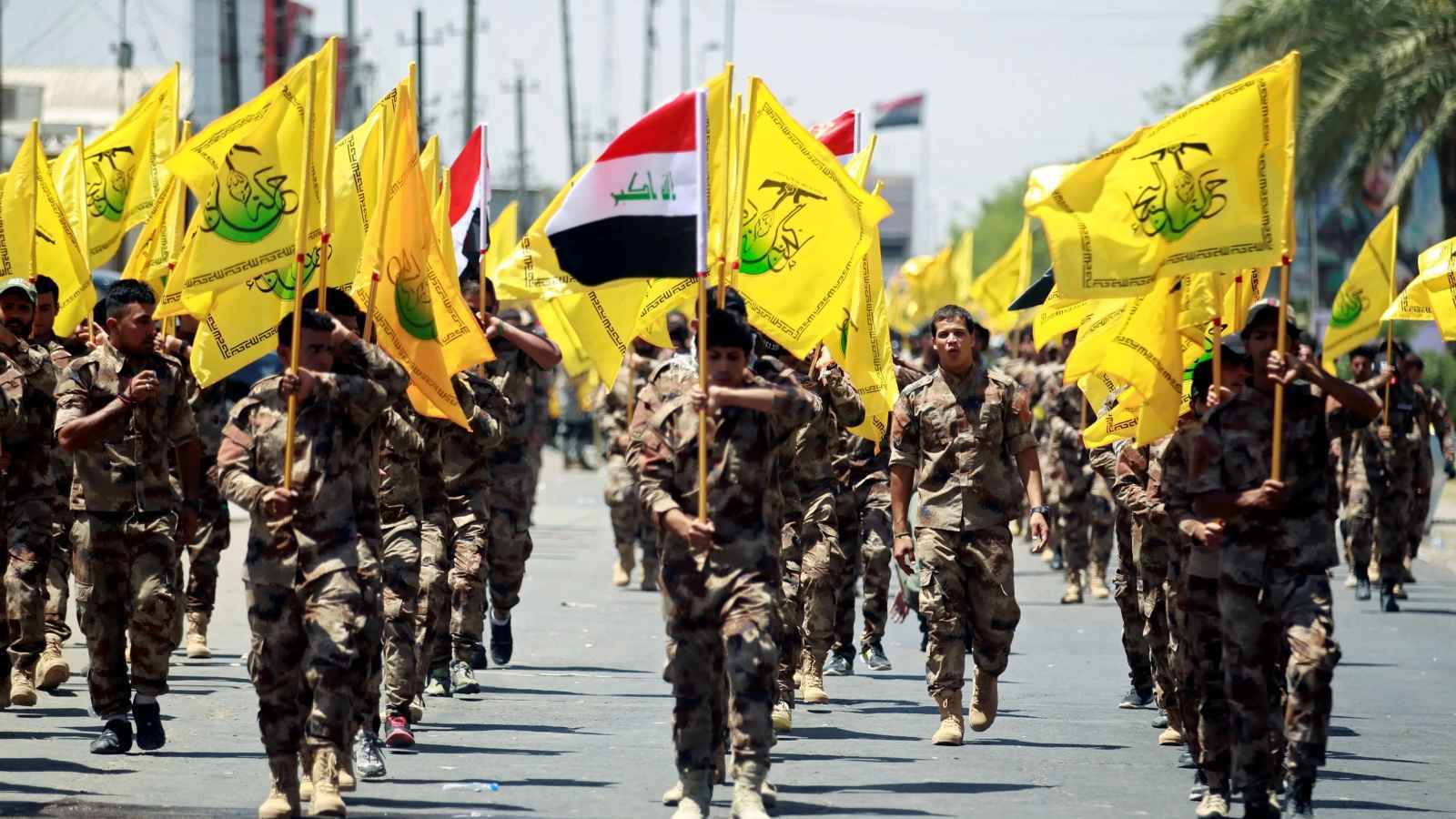
According to a European military assessment seen by CNN, the fighters belong to armed groups loyal to Tehran, like Kata’ib Hezbollah, Harakat Hezbollah al-Nujaba, Kata’ib Sayyid al-Shuhada, and the Badr Organization. These Iraqi militias operate within the umbrella group known as the Iraqi Popular Mobilization Forces (PMF).
The document indicated that these fighters were deployed to several sensitive areas in Iran, including the city of Hamedan, where they took part in suppressing demonstrations. Analysts noted that the use of non-Iranian fighters underscores the government’s vulnerability and its determination to cling to power despite the heavy casualties caused by the protests.
“The recourse to foreign militias falls under a clear security strategy: neutralizing any possibility of fraternization between the forces of repression and the demonstrators,” according to the assessment.
Earlier, on January 10, the U.S. State Department, in a statement posted on its Persian-language X page, expressed concern over reports that the Islamic Republic had deployed Hezbollah operatives and Iraqi fighters to suppress peaceful protests.
According to Iran International, an opposition outlet, Iraqi militias linked to the Iranian government began recruiting members in early January 2026 to take part in the crackdown. Most of the recruits reportedly belong to Kata’ib Hezbollah, Harakat al-Nujaba, Kata’ib Sayyid al-Shuhada, and the Badr Organization, with some Iraqi government officials allegedly aware of the mobilization.
The forces are said to be transported through three border crossings—al-Shalamcheh, Jazireh, and Khorramshahr—under the cover of religious trips to visit the shrine of Imam Reza in Mashhad. In practice, the fighters reportedly assemble at a site in Ahvaz controlled by Iran’s Supreme Leader before being dispatched to various locations to participate in the violent suppression of the protests.
No Trust
In a related development, Khalil Naderi, the spokesperson for the Iranian opposition Kurdistan Freedom Party (PAK), said that the Revolutionary Guard has been relying on Iraqi militia fighters affiliated with the PMF to suppress uprisings in Iranian cities.
According to the U.S. news site Alhurra, Naderi reported on January 14 that the militias’ operations have been concentrated in Lorestan, Khuzestan, and Balochistan, as protests peaked and local government forces proved unable to control the situation.
Michael Rubin, a senior fellow at the American Enterprise Institute, noted that Supreme Leader Ali Khamenei does not fully trust the Revolutionary Guard to carry out his orders against protesters—some of whom may include members of his own family, classmates, and former fighters. Rubin suggested that Khamenei appears to have contracted the PMF to ensure his survival.
In an article published on the institute’s website on January 14, Rubin argued that Khamenei’s reliance on Iraqi militias should serve as a warning to U.S. policymakers. He urged President Trump to take action and hold Iraqi militia leaders accountable if they are found to have killed Iranian protesters.
Meanwhile, The Global Post described Iraq as Iran’s strategic anchor and the most critical platform for maintaining its regional political, military, and economic influence.
The newspaper argued that Iraq is not merely a theater of Iranian influence but the most important stage, surpassing Syria and Lebanon in significance. Any attempt to expel Iran from Iraq or confine it within its borders, the report said, would trigger the collapse of its regional project, undermining its ability to arm and coordinate allied factions—particularly in the Levant—and exposing the fragility of its claims to regional dominance.
This assessment, the report concluded, explains Iran’s insistence on strengthening its presence in Iraq rather than retreating. The formation of the new Iraqi government represents a decisive test in this context.
The newspaper also noted that political forces and armed factions allied with Tehran are working to secure outcomes that serve Iranian interests, relying on the PMF, which remains the backbone of Iran’s influence in Iraq.
On January 12, Abu Hussein al-Hamidawi, secretary-general of Iraq’s Kata’ib Hezbollah and listed as a terrorist by the United States, called in a statement for support of Iran and to “defend the Islamic Republic.”
He said they would stand by Iran “through thick and thin,” vowing an unequivocal defense of the Iranian people and their sacred sites, while warning the United States against any attack on Iran.
A day earlier, Ayoub Faleh Hassan, known publicly as “Abu Azrael,” a commander in the Kata’ib al-Imam Ali militia operating under Iraq’s PMF, posted a video of himself directing military vehicles departing from a camp run by the Iraqi Interior Ministry.
The clip, shared on X, showed government-licensed military vehicles leaving the Eighth Unit of the Federal Police Law Enforcement Command, en route to target protests in Iran. In the video, Abu Azrael declared, “Those who burn the people’s institutions are neither revolutionaries nor reformers; they are tools carrying out Zionist agendas [...]. With the Republic against global arrogance.”
Potential Fallout
On the implications of Iraqi militias participating in the crackdown on protests in Iran, Iraqi affairs researcher Ali Almasare told Al-Estiklal that the consequences could spill over into Iraq. “These groups suppress demonstrators brutally,” he said, “and the Velayat-e faqih regime [the Guardianship of the Islamic Jurist] will simply look on, letting them dig their own grave.”
Almasare warned that the intervention could fuel anti-Iraqi sentiment in Iran, putting Iraqi citizens at risk of violence or displacement. He also noted the possibility of an unpredictable response from U.S. President Donald Trump, which could expose all Iraqis to consequences, including sanctions or other American measures.
He highlighted that these militias have a history of suppressing protests and quashing uprisings, citing the October 2019 protests in Iraq, the 2011 Syrian uprising, and even the fall of Bashar al-Assad’s regime in late 2024, during which they fought under the pretext of protecting holy shrines.
Strategic analyst Jawad al-Dahlaki said that reports of Iraqi factions operating inside Iran—along with their openly stated readiness to do so—risk pushing Iraq into a serious and complicated crisis. “This begins with the Iranian people, a neighboring country with which Iraq signed a ceasefire in 1988 explicitly prohibiting interference in internal affairs,” he said.
Al-Dahlaki told the Iraqi newspaper al-Aalam al-Jadeed on January 15 that any foreign military involvement could be leveraged internationally to push for new sanctions on Iraq, this time through channels that would be difficult to evade.
He also stressed that Iraq is bound by the Strategic Framework Agreement, which prohibits Iraqi security forces from engaging in military operations beyond its borders. Al-Dahlaki warned that the issue could jeopardize upcoming talks between U.S. presidential envoy Mark Savaya and the Iraqi government in Baghdad and might even risk returning Iraq to the scope of Chapter VII, with the accompanying threat of excessive force.
In response, Hussein Allawi, advisor to Iraqi Prime Minister Mohammed Shia’ al-Sudani, dismissed reports of Iraqi militias entering Iran. “Regarding the current conflict and developments in Iran, the Iraqi government will not allow its territory to be used to threaten any neighboring country,” he said.
Allawi added that reports of Iraqi fighters crossing into Iran are misleading and intended to drag Iraq into a dangerous position. He emphasized that Iran has sufficient capabilities and does not require support from Iraq and that it remains committed to international treaties to maintain regional security and stability.
According to Allawi, Iraqi security forces are focused on safeguarding domestic security and protecting the population, noting that “there is stability in Iraq, and we are awaiting the formation of the new government.”
Sources
- Reports: 800 Iraqi Militia Fighters Deployed to Help Repress Protests in Iran [Arabic]
- Sources: Iraqi Militias Headed to Iran to Repress Protests [Arabic]
- Iraqi Factions in Iran: A Risky Cross-Border Gamble for Baghdad [Arabic]
- Al-Sudani Adviser Responds to Reports of Iraqi Fighters Taking Part in Repressing Iranian Protests[Arabic]