Lebanon’s Amnesty Law: Could It Pave the Way for the Return of Traitors From the Lahad Army in Israeli Occupation?
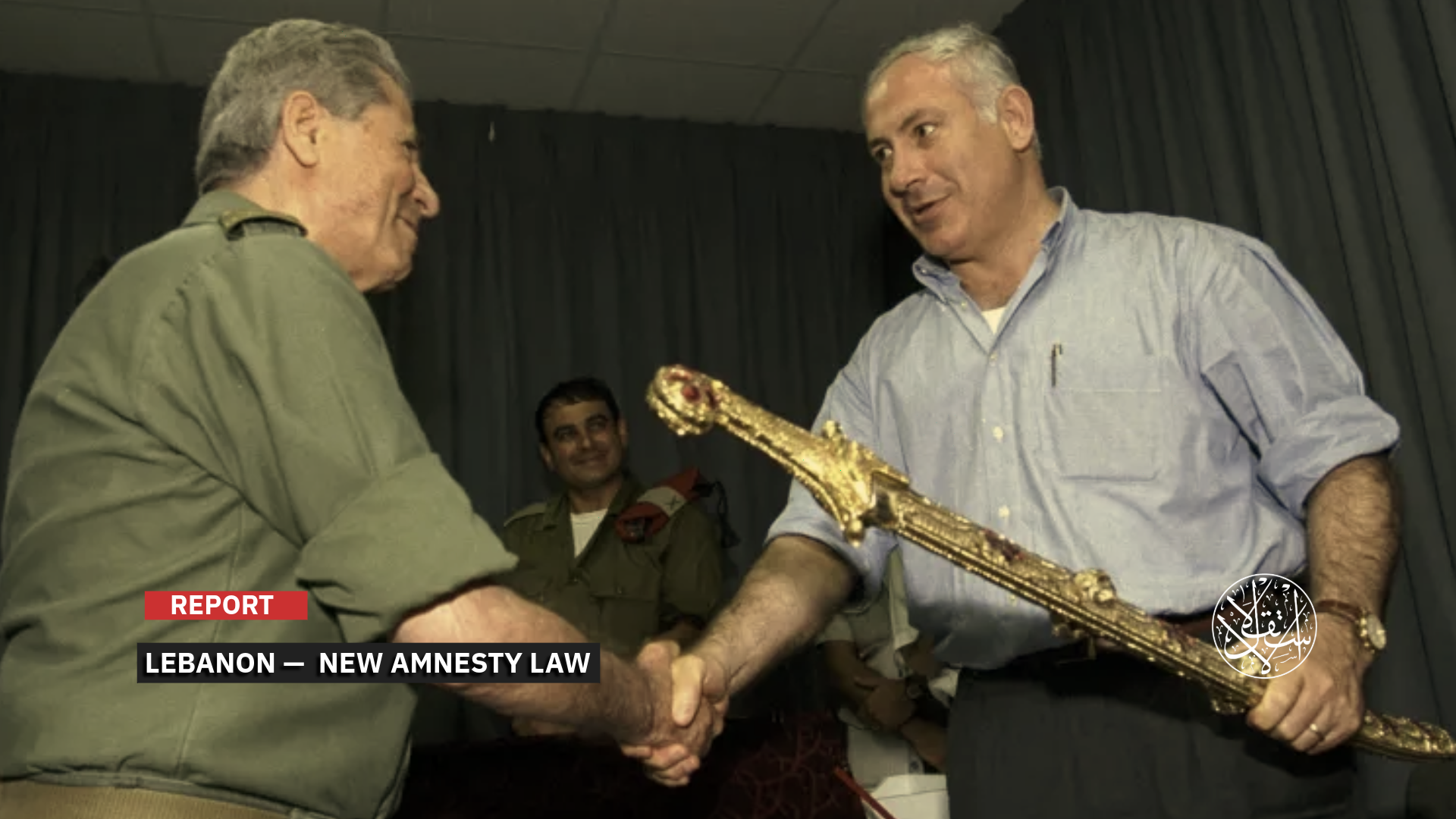
The law’s stated primary goal is to ease overcrowding in Lebanon’s prisons, which currently hold around 7,500 inmates.
The Lebanese parliament’s general amnesty law, approved on August 12, 2026, has sparked accusations that it was tailored to benefit some groups of defendants over others. Critics say one of its less visible aims may be to pave the way for an amnesty for around 3,000 former members of the South Lebanon Army, known as Antoine Lahad’s Army, who were branded traitors for serving under Israeli Occupation command and fleeing to “Israel” after the liberation of southern Lebanon, fearing prosecution by the Resistance and Lebanese justice.
That view is shared by a number of Lebanese who have criticized the law, which grants a general amnesty and exceptionally reduces certain sentences after amendments were introduced. The legislation passed amid the withdrawal of several lawmakers and objections from families of Islamist detainees and relatives of soldiers killed in security confrontations.
One of the most contentious cases concerns Lebanese who fled to the Israeli Occupation after Israeli forces withdrew from southern Lebanon in 2000. Among them were hundreds of members of the South Lebanon Army, an Israeli-backed militia that operated in cooperation with the Israeli Occupation.
Human rights reports estimate that around 6,400 people from southern Lebanon, including South Lebanon Army members and their families, fled to “Israel” following the withdrawal. More than 2,300 South Lebanon Army members and others accused of collaborating with “Israel” surrendered or were arrested inside Lebanon.
An estimated 4,000 people, including convicts, detainees, and those wanted by the authorities, could benefit from the law, either through the dropping of prosecutions and sentences or through sentence reductions. Others remain excluded because of the nature of the crimes attributed to them and the exemptions set out in the law.
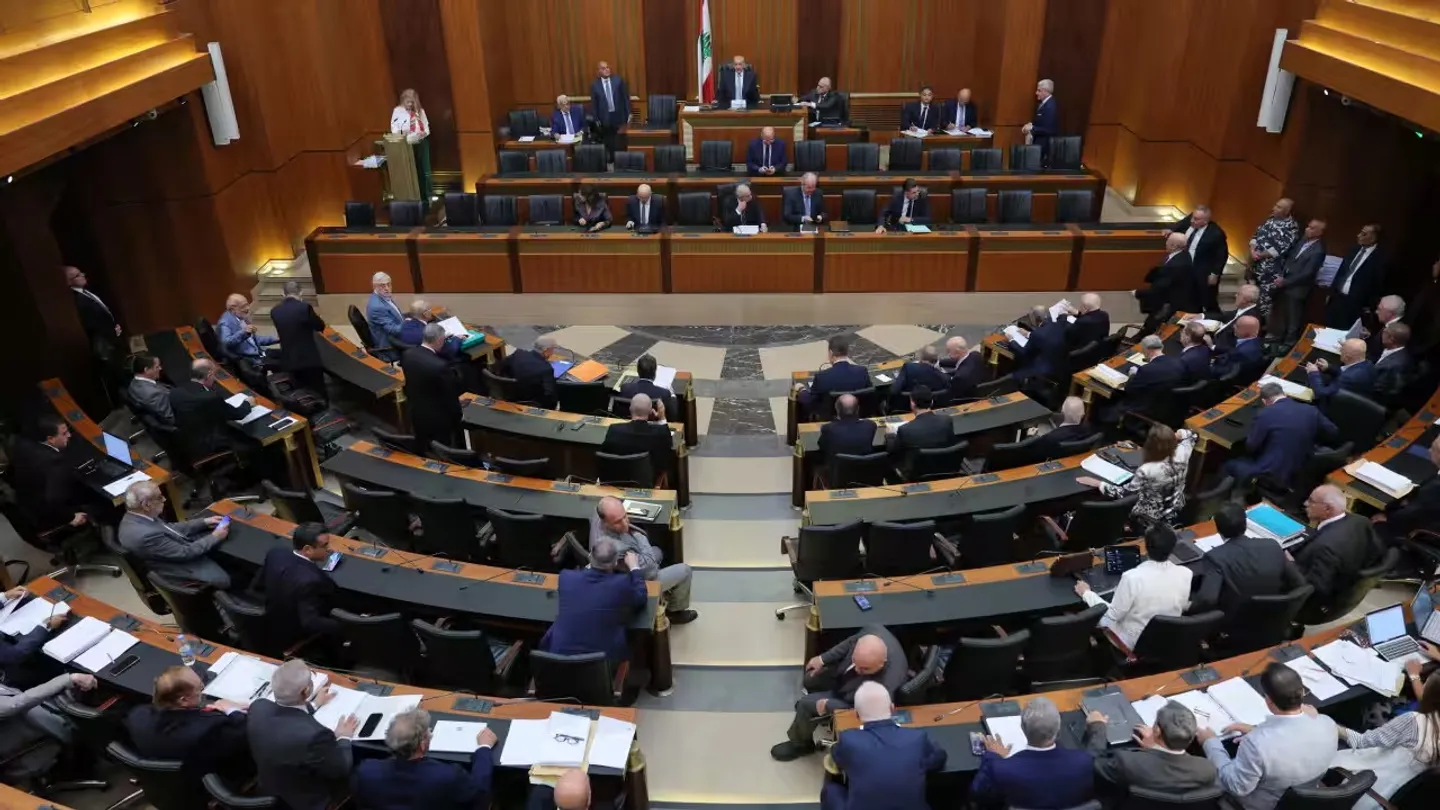
Key Provisions of the Law
The law’s stated primary goal was to ease overcrowding in Lebanon’s prisons, which hold around 7,500 inmates despite having capacity for only about 4,000. According to a 2025 report by the National Human Rights Commission, the overcrowding rate has reached nearly 300 percent.
But the amnesty law goes well beyond easing prison congestion. Its broad reductions in sentences have exposed deep political and sectarian divisions, as forces representing different communities pushed for amendments that would secure the release of people affiliated with them.
Sunni lawmakers pressed for the amnesty to address the cases of Islamist detainees, including people who supported the Syrian opposition and the uprising that began in 2011, before the fall of Bashar al-Assad’s rule. Among them is Sheikh Ahmad al-Assir, a Sunni cleric who opposed Hezbollah.
Hezbollah, meanwhile, called for the law to cover a number of Shiite detainees and people wanted by the authorities in the eastern regions of Baalbek and Hermel, most of them accused in drug-related and car theft cases.
Christian demands also emerged for an amnesty covering Maronites who fled to “Israel” after the collapse of the militia led by the collaborator Antoine Lahad. Other demands extended to drug traffickers and people involved in the killing of Lebanese army soldiers.
The law triggered widespread objections and walkouts from parliamentary sessions, as successive interventions and amendments weakened its cohesion. At the heart of the dispute was its inclusion of individuals and groups associated with both Muslim and Christian communities, while other Lebanese political forces and sectarian groups opposed granting them amnesty.
The legislation did not pass without confrontation inside parliament. During the August 11, 2026 session, lawmakers failed to reach a quorum after a dispute over comments from the army leadership on the proposed amnesty law, as well as Prime Minister Nawaf Salam’s objection to the reading of a statement issued by the army.
The dispute prompted protests from lawmakers affiliated with Hezbollah and the Free Patriotic Movement, with several leaving the chamber and causing the loss of a quorum. The debate on the law was then postponed.
Its eventual passage did little to resolve the divisions. Hezbollah and Free Patriotic Movement lawmakers walked out in protest at the inclusion of people accused of killing army personnel during previous security incidents. Other political forces argued that keeping thousands of detainees in prison, including people who have spent years behind bars without trial, was itself a form of injustice.
The general amnesty law approved by Lebanon’s parliament on August 12, 2026, therefore became about far more than reducing prison overcrowding or cutting sentences. It reopened one of Lebanon’s most sensitive questions: how should the country confront the legacy of war and occupation, and who deserves an amnesty and who should remain beyond any political settlement?
Supporters portrayed the law as a way to address the cases of detainees who had never been tried and to ease the country’s prison crisis. Opponents, however, saw it as the product of a political and sectarian bargain, warning that it could benefit people convicted of, or wanted in connection with, serious security and criminal offenses.
The new law allows reductions across a wide range of sentences and requires judges to release anyone who has spent more than 12 years in detention. Thousands of detainees are therefore expected to leave prison in the months following its implementation.
An estimated 4,000 convicts, detainees, and people wanted by the authorities could benefit from the law, either through the dropping of prosecutions and sentences or through sentence reductions. Others remain excluded because of the nature of the crimes attributed to them and the exemptions written into the legislation, according to Lebanese newspapers.
But Annahar reported on August 15, 2026, citing judicial data, that around 2,300 prisoners and detainees could be released in the first phase, once the law is published in the official gazette and the necessary procedures are completed.
The new amnesty law is hardly without precedent in Lebanon. Parliament has passed dozens of amnesty laws since the 1920s, although most were tied to specific crimes or groups.
Since independence, Lebanon has enacted 16 general amnesty laws, driven by a range of motives, from electoral calculations and efforts to preserve civil peace to attempts to address prison overcrowding.
One of the most significant was the 1991 amnesty law passed after the end of the civil war. It closed thousands of war-related cases and benefited a number of militia leaders and fighters.
In 2005, two notable amnesty laws were passed. One of them paved the way for the release of Samir Geagea, the leader of the Lebanese Forces, after nearly 11 years in prison.
Could Lahad’sTraitors Return?
The most dangerous aspect of the new amnesty law is that it has reopened the question of whether some Lebanese living in “Israel” could return to Lebanon 26 years after fleeing there in 2000. In doing so, it has revived a deeply sensitive debate over collaboration, normalization, and the limits of amnesty.
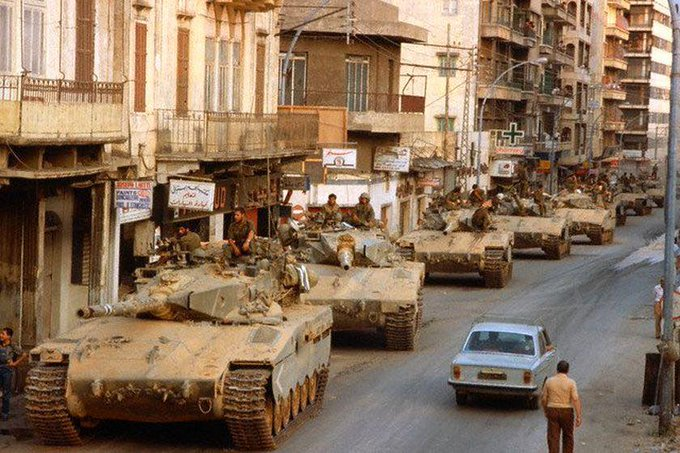
In 1982, during the premiership of former hardline Israeli leader Menachem Begin, Ariel Sharon, then war minister, led “Israel’s” invasion of Lebanon. Israeli Occupation forces occupied large parts of the south, and their tanks reached Beirut for the first time.
The occupation lasted nearly 22 years. Israel built a proxy force with some of Lebanon’s Maronite community, led by Antoine Lahad. But after fierce resistance, Israeli forces withdrew on May 25, 2000, without an agreement, following a decision by the new prime minister, Ehud Barak.
The Israeli withdrawal was followed almost immediately by the rapid collapse of the South Lebanon Army, or Lahad’s Army, which had operated with Israeli weapons, funding, and support inside what was known as the security zone along the Lebanese-Israeli Occupation border.
As Hezbollah and local residents advanced, Lahad’s soldiers and officers abandoned their positions and fled to “Israel” with their families. The militia effectively ceased to exist once the Israeli Occupation completed its withdrawal.
Israeli reports and a research report by the U.S. Congress documented the arrival of around 6,420 members of Lahad’s Army and their families in “Israel” in roughly a single day after the withdrawal. The Israeli Occupation housed them in hotels and reception centers and incorporated some into its military, while others later emigrated to European countries.
Other reports put the total at around 7,000, while an interview with Lahad's Army commander in June 2000 gave a higher estimate of 8,000 members and their families. Around 1,500 other South Lebanon Army members reportedly surrendered to Lebanese resistance fighters and the Lebanese army.
Those who fled with their families said they feared retaliation and prosecution after the collapse of the occupation, particularly because they had served as a force collaborating with “Israel” against fellow Lebanese. The exodus also affected some predominantly Maronite villages. In the town of Dibbine, for example, three quarters of the population fled to “Israel,” according to The Christian Science Monitor in December 2001.
Whenever an amnesty law was passed or demanded by Lebanese groups, Christian parliamentary blocs repeatedly called for hundreds of Lebanese who fled to “Israel” after 2000 to be included in the settlement, many of them former members of Lahad’s Army militia.
Charbel Eid, a lawyer and member of the Maronite Lebanese Forces, says the current law differs from previous amnesty legislation concerning those who fled to “Israel” in two key respects.
First, the previous law required presidential decrees for it to take effect. Those decrees were never issued, effectively blocking the amnesty it was intended to provide.
Second, the previous law required anyone returning from exile to surrender to Lebanese security authorities, leaving them potentially exposed to arrest.
The new law, Eid argues, is different: it takes effect immediately and requires no presidential decrees. Nor does it require those who fled to “Israel” to surrender themselves to any administrative, security, or judicial authority, meaning they could return immediately, without conditions or restrictions.
Lebanese who fled to “Israel” and currently live there, however, said they have no desire to return, fearing they could be arrested and interrogated if they did so. For them, life in the Israeli Occupation remains the preferred option.
The law does not grant a blanket amnesty to all Lebanese currently in “Israel.” It explicitly excludes crimes of treason, espionage, and unlawful contact with “Israel” from its scope while reopening the door for those covered by Law No. 194, passed in 2011, concerning Lebanese who left for “Israel.”
That law allows civilians and family members who had no military or security involvement with Lahad’s Army to return. Those who served in its military or security units, however, are to face prosecution upon their return under Lebanese law.

Restrictions on Sunni Detainees?
While the new law appears to ease the path to amnesty for former members of Lahad’s Army, it has imposed conditions and exceptions that mean the release of some Islamist detainees, including prominent cleric Ahmad al-Assir, will not be immediate. Their cases still require further legal procedures that could ultimately keep them behind bars.
The law does cover a group of Islamist detainees, most of whom supported the Syrian revolution against Bashar al-Assad and clashed with the Lebanese army in attempts to prevent it from intervening. But it does not cover all of them.
According to Lebanese legal and media sources, around 57 Islamist detainees currently held in Lebanese jails are expected to benefit from the amnesty and be released. Ahmad al Assir, however, is not among those eligible for immediate release because of his judicial status: the verdict against him is not final.
The law distinguishes between those granted an immediate amnesty and those who qualify only for sentence reductions. Among the most significant amendments to the final version was a reduction in the detention period required for the release of defendants who have not yet received a final verdict, from 14 years to 12 years. Their trials would continue while they are outside prison.
For those convicted of certain offenses, the law reduces their sentences rather than abolishing them altogether. That means some Islamist detainees will not walk free simply because the law has been passed; instead, their sentences will be recalculated under the new provisions.
Despite the considerable political and media attention surrounding Islamist detainees, the figures show that they represent only a small share of the law’s potential beneficiaries.
There are 256 Islamist detainees and convicted prisoners in total, including 13 people sentenced to death whose sentences have been commuted to 17 years in prison, equivalent to 12.7 years of actual time served. Three are due to be released immediately, two after one year, two after more than a year, and six in stages.
Another 50 are serving life sentences, which will likewise be reduced to 17 years, or 12.7 years of actual time served. Of them, 21 are expected to be released immediately, 10 within a year, seven after more than a year, and 12 in stages.
Among the remaining 193 detainees and convicted detainees, 140 are expected to be released now, while the rest will be released over the next three years, according to Annahar on August 15, 2026.
According to lawyer Mohammad Sablouh, Ahmad al-Assir will benefit from the abolition of his death sentence and a reduction in his prison term, but his release will not be immediate. Based on the legal calculation of his sentence, it could be delayed by around 19 months.
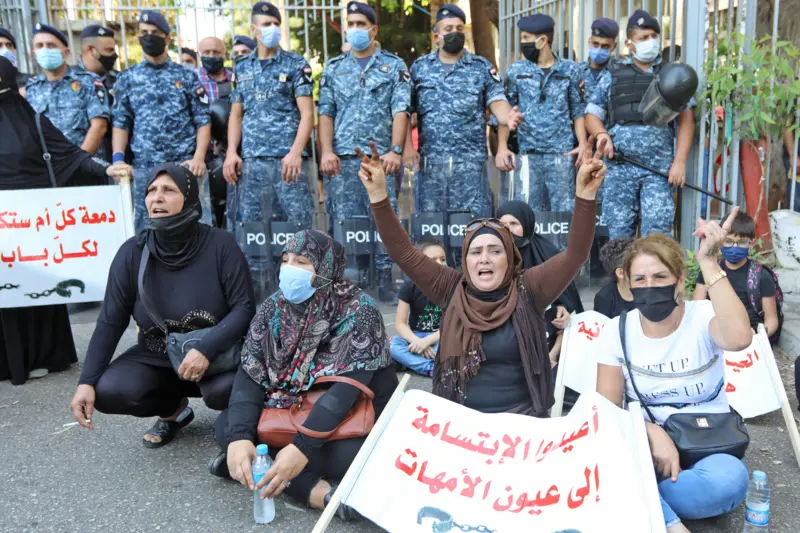
This led Sunni lawmakers and activists to describe the legislation as an “incomplete general amnesty,” arguing that while some Islamist detainees will be released, others, most notably al-Assir, will remain behind bars.
The dispute over al-Assir and other Islamist detainees nearly derailed the political compromise that allowed the law to pass. Sunni lawmakers and political forces insisted on addressing the cases of some of the detainees, while other factions rejected any amnesty that could benefit people convicted of killing Lebanese army personnel, according to Lebanese sources cited by Alhurra on August 14, 2026.
Al-Assir became known in Sidon for his fiercely anti-Hezbollah rhetoric and opposition to the group’s weapons. His rise coincided with the growing impact of the Syrian war on Lebanon and deepening divisions over Hezbollah’s decision to fight alongside Syrian government forces.
As Hezbollah became increasingly involved in the fighting in Syria, al-Assir intensified his opposition to the group. In April 2013, he called on his supporters who were able to fight, particularly those with military experience, to travel to Syria and join the opposition, specifically urging them to head to al-Qusayr and Homs, where Hezbollah fighters were involved in battles.
The confrontation reached a peak on June 23, 2013, when armed clashes erupted in Aabra between the Lebanese army and gunmen loyal to al-Assir.
The army said the fighting began when al-Assir’s gunmen attacked one of its checkpoints, killing two officers and a soldier. The clashes then spread and continued for about two days, leaving 11 gunmen and 20 soldiers dead and dozens wounded.
In September 2017, a military court sentenced al-Assir to death. But in January 2018, the Military Court of Cassation overturned the verdict and ordered a retrial.
Al-Assir also faces other cases before the military judiciary, including a life sentence with hard labor in a case known as the “sleeping cells” case. That verdict was also overturned and the case sent for retrial.
In the 2014 Bhannine clashes in northern Lebanon, he was sentenced in 2021 to 20 years in prison with hard labor after being convicted of financing and training armed groups whose members fought the army. In September 2024, the Military Court of Cassation reduced the sentence to 14 years.
Raida al-Solh, a member of the Families of Prisoners Committee, described the law as an “incomplete amnesty.” Although it frees a broad segment of detainees, she said, it leaves hundreds of families outside its scope, with their sons remaining in prison awaiting trials that could take years.
Mohammed Shamieh, a spokesman for the Bilal bin Rabah Mosque Youth, a group of supporters of the detained al-Assir, said Sunni detainees’ families felt wronged and aggrieved after their sons were excluded from the amnesty while hundreds from other sects benefited, according to Independent Arabia on August 13, 2026.
Sources
- Lebanese Militia Finds Sanctuary --but No Solace
- Lebanese Parliament Passes Amended General Amnesty Law: Who Are the Biggest Beneficiaries? [Arabic]
- General Amnesty: A Look at the Numbers as Lebanon’s Prison Doors Prepare to Open [Arabic]
- Those Who Fled to Israel: A “Conditional” Amnesty After 26 Years, and Not Everyone Will Return [Arabic]
- Amnesty for Those Who Fled to Israel: What Does the Law Pardon, and What About Citizenship and Return? [Arabic]
- Lebanon’s Amnesty Law Reopens Old Wounds [Arabic]
- By Name: Who Benefits From Lebanon’s General Amnesty Law and Who Does Not [Arabic]
- Lebanon’s Amnesty Law: Reduced Sentences and the Question of Those Who Fled to Israel [Arabic]