Iraqi Prime Minister’s Office: What Is Happening Within the Shiite Coordination Framework?
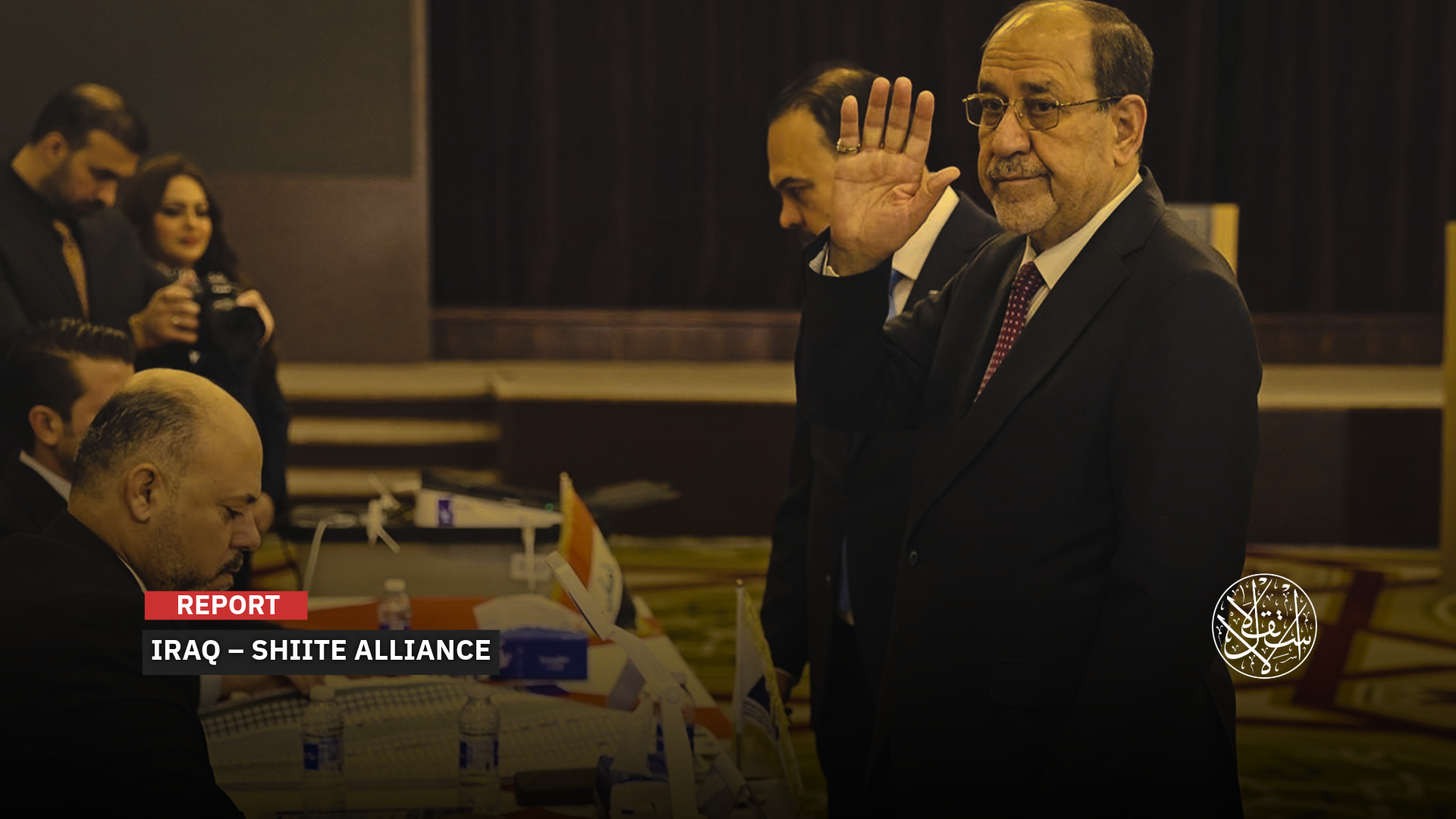
“The Shiite Coordination Framework has not officially announced al-Maliki's nomination for prime minister.”
Despite his administration being held responsible for the fall of nearly a third of Iraq to ISIS in 2014, and accused of squandering hundreds of billions of dollars through financial and administrative corruption, the Shia Coordination Framework reached a near-agreement to nominate Nouri al-Maliki for a third term as prime minister.
Al-Maliki served two terms as prime minister of Iraq, from 2006 to 2014. His second term ended with ISIS's takeover of large swathes of the country, prompting the Shia religious establishment in Najaf to veto his candidacy for a third term.
Tripartite Alliance
On January 10, 2026, local media outlets and Iraqi political figures affiliated with the Shia Coordination Framework, specifically those close to both Nouri al-Maliki and Mohammed Shia' al-Sudani, revealed that al-Sudani had withdrawn his candidacy in favor of al-Maliki following bilateral meetings between the two.
A leader in the Reconstruction and Development Coalition, Ayed al-Hilali, stated that the agreement resulted in the formation of a tripartite alliance within the Coordination Framework, comprising al-Maliki, al-Sudani, and Muhsin al-Mandalawi, the former Deputy Speaker of Parliament. This alliance holds 91 seats out of the approximately 170 seats the framework possesses.
He explained that if al-Maliki's candidacy is not approved by Parliament for any reason, the nomination will revert to al-Sudani.
However, if al-Maliki succeeds in forming the new government, al-Sudani will receive a significant number of ministerial portfolios and senior positions, and he may even assume the post of Foreign Minister himself.
Al-Hilali indicated that Iraq is experiencing complex regional crises, both in terms of developments in Iran and Syria, in addition to the presence of internal factions seeking to drag the country into war, noting that al-Maliki is the only figure capable of restraining these factions.
On January 11, the Iraqi news agency Shafaq News stated that al-Maliki is required to convince the forces within the Framework and the other political parties, in addition to the Sadrist movement and the religious establishment in Najaf, to endorse him as the prime ministerial candidate.
It indicated that the current Prime Minister, Mohammed Shia' al-Sudani, remains the strongest and most likely candidate to secure a second term.
For her part, Adila Hammoud, a member of parliament from the State of Law coalition, confirmed that the competition, which had been limited to al-Sudani and al-Maliki, has been decided in favor of the latter.
She said that the media and political forces had circulated numerous names, but that al-Sudani had officially withdrawn his candidacy in favor of al-Maliki and welcomed his appointment as the next prime minister.
She explained that al-Maliki's name was put forward after he was authorized to resolve the competition among the candidates within the Framework, noting that Nouri al-Maliki is now the sole candidate following recent internal agreements.
She noted that the internal agreement had put an end to the disagreements, and that the differences of opinion within the Framework did not reflect actual opposition but rather were part of normal political discussions.

Framework Split
Despite several political figures announcing their support for Nouri al-Maliki, the official statement issued by the Coordination Framework did not include the name of its candidate for prime minister.
Observers saw this as a clear indication of the continued disagreements within the Framework regarding the nomination of the State of Law Coalition leader and the failure to reach a final agreement on his name.
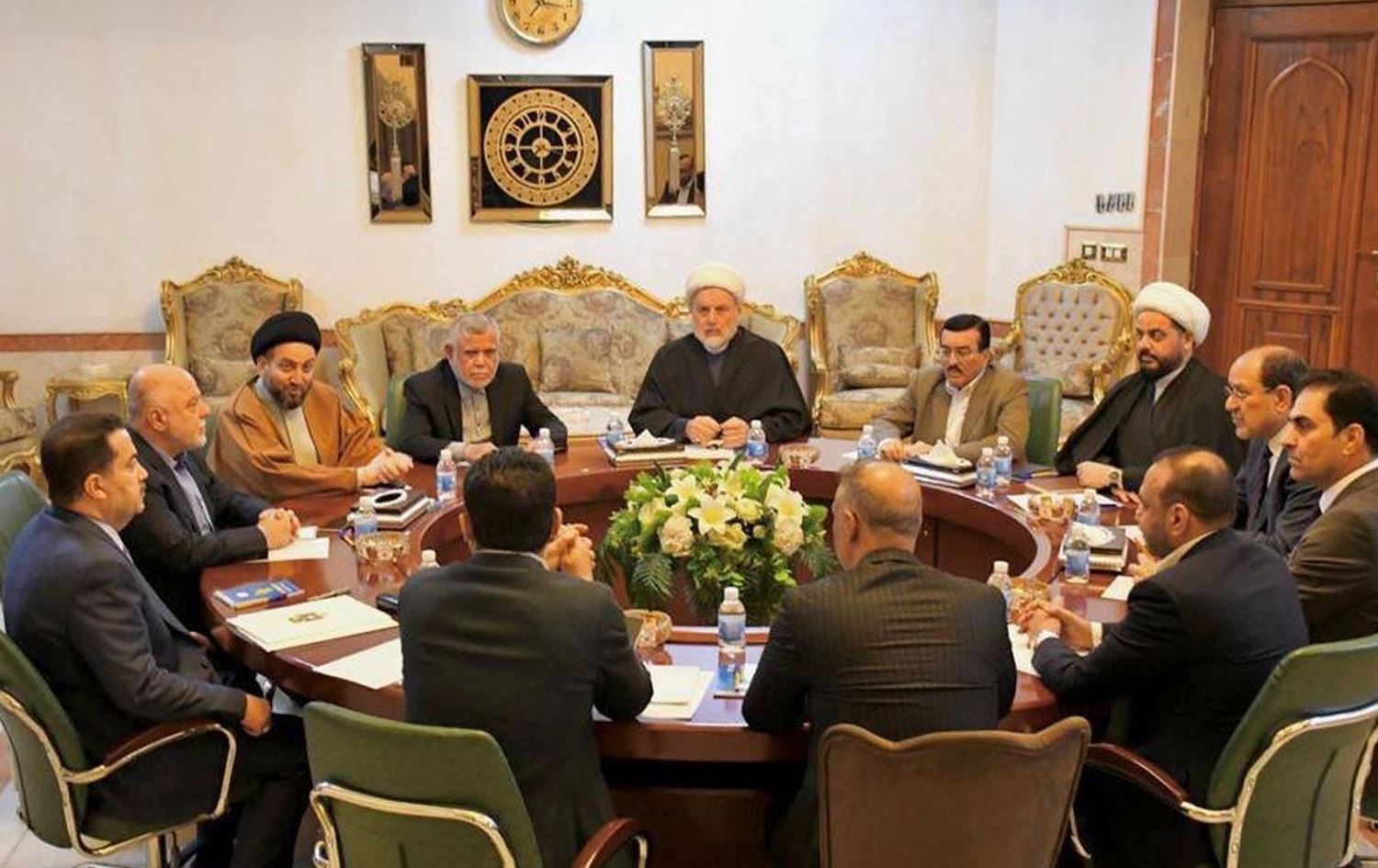
In its statement issued on January 10, the Coordination Framework said it held its regular meeting at the office of Muhsin al-Mandalawi to continue discussing the formation of the next government and to finalize the nomination of the prime minister, in accordance with the constitutional requirements for the upcoming phase.
According to the Iraqi newspaper Al-Alam Al-Jadeed, on January 11, Mohammed Shia' al-Sudani caused a major shock within the Coordination Framework forces when he informed them of his nomination of Nouri al-Maliki, leader of the State of Law Coalition, for the premiership, should they insist on rejecting the renewal of his term.
The newspaper reported that the National Wisdom Movement, led by Ammar al-Hakim, was the first party to express its shock and reservations.
Al-Hakim called for the necessity of consulting the religious authority in Najaf, which had previously rejected granting al-Maliki a third term in 2014.
He is currently considering the option of not participating in a government headed by al-Maliki, amid serious concerns about a repeat of past scenarios involving the monopolization of political decision-making.
The newspaper attributed the shock to the fact that no one expected any possibility of agreement between al-Maliki and al-Sudani, given their complete political incompatibility.
It pointed out that other leaders within the framework, including Qais al-Khazali and Hadi al-Amiri, also felt a sense of shock and double embarrassment, torn between rejection and acceptance, especially given the prior agreement among all parties within the framework, with the exception of al-Maliki and al-Sudani, to support Basim al-Badri's candidacy.
In the same context, Ali al-Jurani, a member of the National Wisdom Movement, considered the Framework's latest statement ambiguous.
He stated in a television interview on January 11 that the Framework's latest statement did not indicate a final decision on the prime ministerial candidate.
He noted that the Framework had previously nominated Nouri al-Maliki, for the position, but this nomination was not officially announced to avoid embarrassing the religious establishment.
Iranian Decision
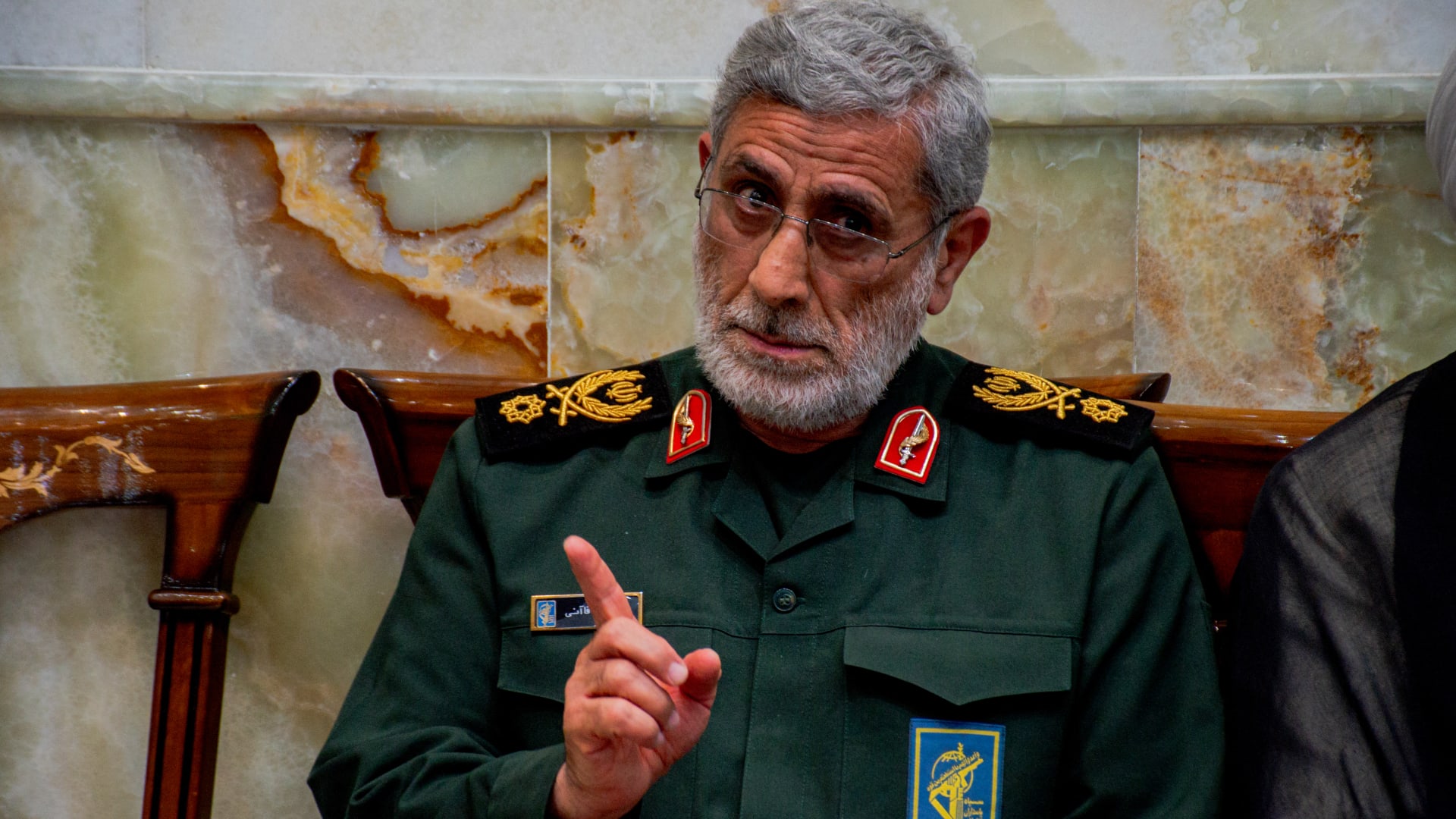
Regarding the extent of Iranian Quds Force Commander Ismail Qaani's involvement in pushing for Nouri al-Maliki's nomination, Ayed al-Hilali, a leading figure in Prime Minister Mohammed Shia' al-Sudani's coalition, did not deny this involvement.
Al-Hilali explicitly expressed his regret that the Shia bloc has been unable, for over twenty years, to make its own independent political decisions, which has allowed for Iranian intervention in this matter.
On January 7, the Baghdad Today news agency revealed that Muhsin al-Mandalawi hosted an unannounced meeting of Quds Force Commander Ismail Qaani in Baghdad, attended by several leaders of armed factions with political wings within parliament.
The meeting was described as being dedicated to discussing the structure of the next government and the mechanism for managing the relationship between the Prime Minister's office and the leaders of the Coordination Framework during the upcoming phase.
The agency reported that the timing of these intensive, extraordinary meetings reflects the fact that the issue of the Iraqi prime ministership has entered a decisive phase, whether through an internal consensus that endorses one of the three main candidates: Nouri al-Maliki, Mohammed Shia' al-Sudani, or Haider al-Abadi.
For his part, Iraqi political analyst Latif al-Mahdawi told Al-Estiklal: “Nouri al-Maliki is currently being portrayed in the media as the person capable of curbing the militias, improving relations with the United States, and controlling the Shia political landscape.”
He pointed out that the Sadrists remain silent so far, estimating that they are unlikely to intervene to prevent al-Maliki from coming to power.
He added that the United States will not object, or at least will not publicly reject, any name as long as it does not conflict with its interests.
He believed that al-Maliki remains the strongest figure within the coordination framework and its undisputed leader.
He predicted that the issue of al-Maliki assuming the premiership of the next government would remain unresolved until a position of non-objection emerged from the relevant parties, most notably the Shiite religious establishment in Najaf, the Sadrists, the United States, and the Gulf and Arab states.
He pointed out that al-Maliki's record is replete with violations across various sectors, whether in the field of human rights or in financial and administrative matters.
Al-Maliki is also accused of contributing to the ISIS invasion of Iraq, in collusion with former Iranian Quds Force commander Qasem Soleimani, and former Syrian regime leader Bashar al-Assad.
He is officially facing charges of high treason, according to the findings of an investigative committee formed by the Iraqi parliament in 2015.
The committee held al-Maliki responsible for the fall of Mosul and a third of the country to ISIS in 2014.
Among the prominent accusations leveled against al-Maliki is ISIS's takeover of Camp Speicher in Salah al-Din province in northern Iraq, and the massacre of approximately 700 soldiers stationed there.
Sources
- Why does Nouri al-Maliki insist on provoking the Sunnis of Iraq? [Arabic]
- Leaders within the framework are shocked by al-Maliki's nomination; al-Hakim leads the rejection with a Najaf veto [Arabic]
- Al-Sudani’s coalition: Passing al-Maliki is very difficult [Arabic]
- Nomination of Prime Minister: al-Maliki's office announces his candidacy [Arabic]
- Behind the scenes of Qaani's visit: Who is the candidate who received the general's support? [Arabic]