This is How Morocco Employs Its Relations With Britain in the Struggle With Spain
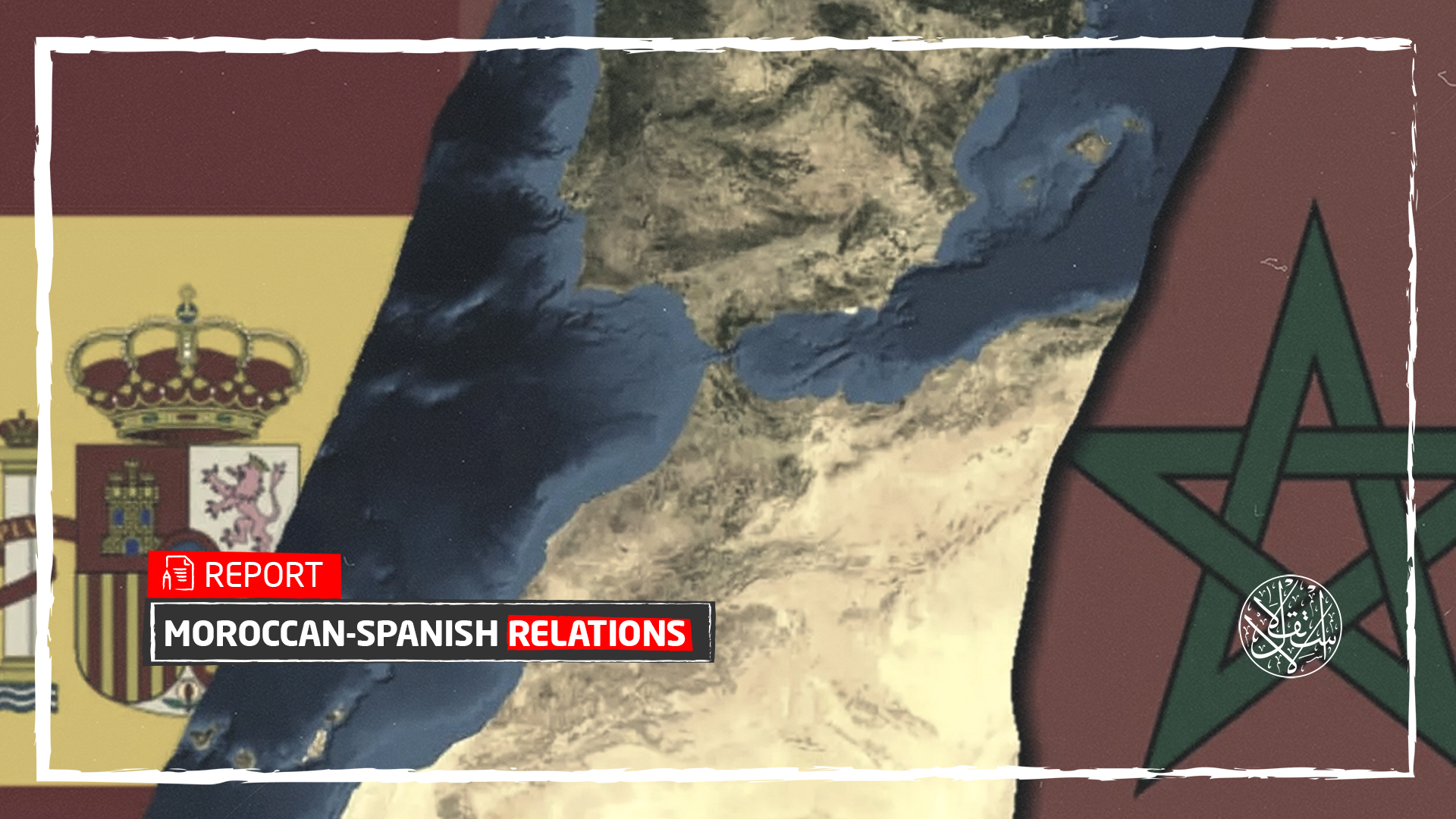
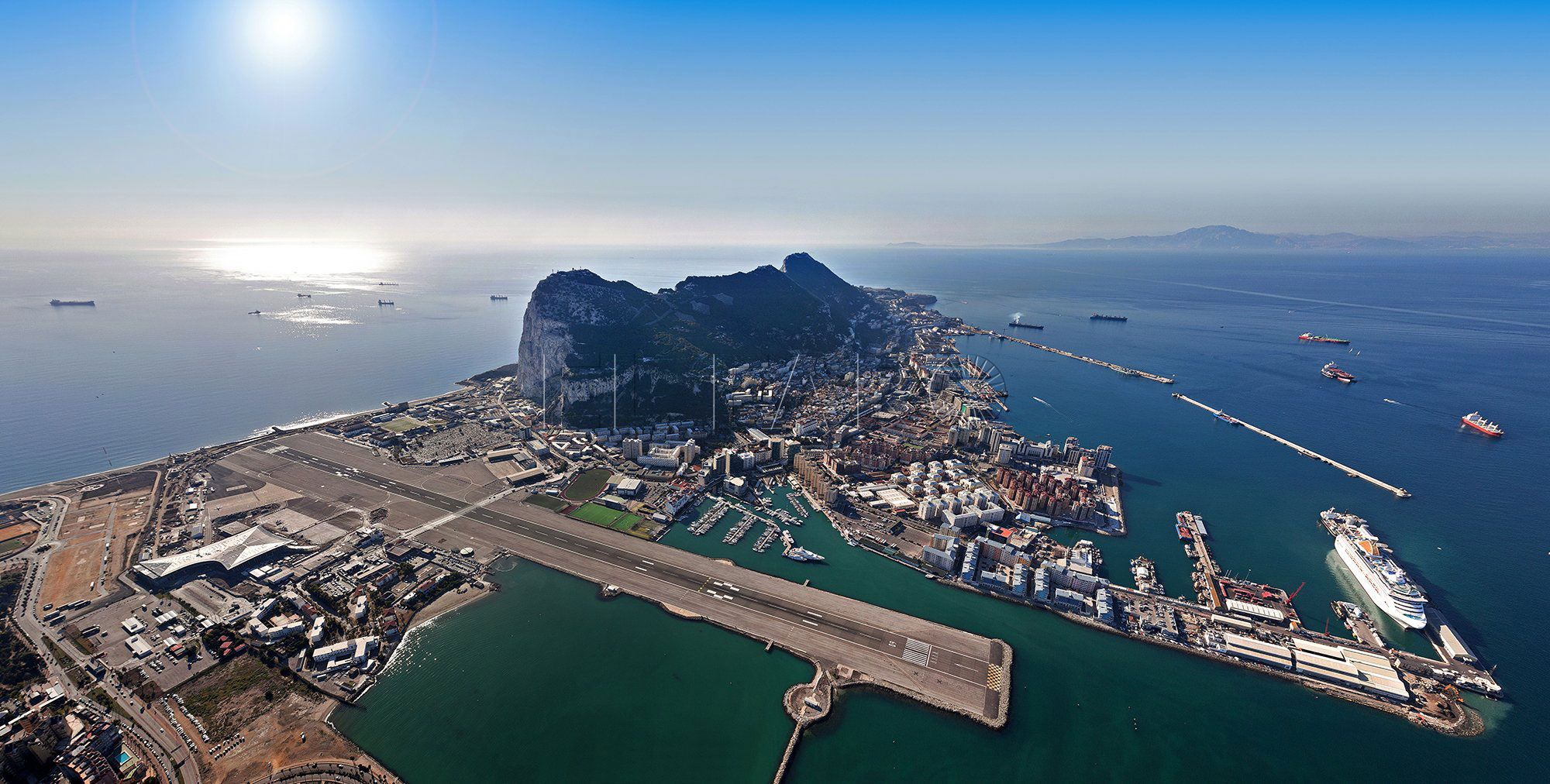
The Government of Gibraltar, a British autonomous region, is negotiating with Rabat to reopen trade routes by air and sea, amid an endless conflict with neighboring Spain.
The latest request came amid Morocco's crisis with Spain and the closure of Rabat, the Ceuta and Melilla border crossings, dedicated to the passage of goods, as well as the suspension of Moroccan crossings abroad, from which Spain was making huge gains.
This is where the question on the horizon seemed to be about Morocco’s employment of its relations with Britain in its conflict with Spain.
New Projects
Spanish newspapers said Gibraltar's Minister of Business and Tourism, Vijay Dariani, provided details of his government's "efforts" to "try to establish maritime and air relations with Morocco".
The Minister stated that his Government would continue its efforts to re-establish sea and air routes with Morocco as soon as possible.
Gibraltar's efforts to restore ties with Rabat contradict rabat's border closure on Moroccans crossing from Spain, the paper said.
The Moroccan government announced at the beginning of June 2021 that it would accept only citizens who set off on ships from ports in France and Italy, but not from Spain, and attributed the decision to health reasons.
Spanish reports indicated that the Moroccan decision came in the context of a serious diplomatic crisis between Rabat and Madrid.
According to the U.S. network Al-Hurra, the exclusion of Spanish ports from the strait crossing, known in Morocco as Operation Marhaba, has cost the country's shipping companies an estimated loss of 450 million to 500 million euros, according to The Spanish company Iberia.
The crisis between the two countries erupted when Spain hosted Polisario Front leader Ibrahim Ghali to demand the independence of Western Sahara for treatment in April 2021 "on humanitarian grounds."
Rabat called it "contrary to the principle of good neighborliness," adding that Boutros-Ghali entered Spain from Algeria with "forged documents and impersonated identity".
#Gibraltar El Ministro Daryanani @vijaygib asegura a la Comunidad Marroquí que el Gobierno espera lograr reestablecer conexiones por aire y mar con #Marruecos https://t.co/e1pIMh2rJ7 pic.twitter.com/0XzqOZsVrT
— InfoGibraltar (@InfoGibraltar) July 14, 2021
Israeli Support
Britain plans to link its sovereign territory of Gibraltar to the northernmost Moroccan city of Tangier, 28 kilometres (12 miles) long.
However, the nature of the connection has not yet been determined whether it is an undersea tunnel or a suspended bridge, bringing to the fore the dream of continental connectivity between Europe and Africa via Spain and Morocco, which has been put forward since the 1970s and has never seen the light of day.
However, according to media reports, the British government seriously plans to set up a continental connectivity project to exploit its implications for promoting Euro-African trade, particularly after its exit from the European Union, which has increased its need to expand its economic partnerships.
Reports suggested that Israel might enter the tunnel line, as it was located on the Mediterranean coastal strip, as well as the presence of a Jewish community in Gibraltar and the Spanish-occupied northern Moroccan city of Ceuta.
The cities of Ceuta and Melilla are under Spanish influence, although they are the far north of Morocco. Melilla has a population of about 70,000 and has been under Spanish control since 1497.
Rabat refuses to recognize Madrid's legitimacy over the two cities, considers them an integral part of Moroccan territory, and demands that Spain enter into direct negotiations with it in the hope of restoring them.
On April 21, 2021, Moroccan Minister of Equipment and Transport Abdelkader Emara held a "video conference" meeting with his Spanish counterpart, José Luis Abalos, in which they discussed the reactivation of the fixed link project across the Strait of Gibraltar.
The last meeting on the subject was held in the northern city of Tangier in 2009.
"The project will not only allow the link between two countries, but also between two continents, and Morocco will serve as the link between Europe and Africa," he said.
The idea, described by the French magazine Jean Afrique as "almost ideal" in the minds of French and Spanish engineers in the second half of the 19th century, and then the colonial empires, particularly France and Spain, which dominated Morocco, competed for plans to transfer African wealth to Europe.
Close Ties
Spain is Morocco’s largest investor, with more than 1,000 companies based in the Kingdom, and has business dealings with at least 7,000 other Moroccan companies.
According to official statistics, Morocco's imports from Spain between 2013 and 2017 increased from 4.8 billion to 6.85 billion euros (16.9 percent of the kingdom's total imports from the European Union).
Morocco's exports to Spain jumped from €3.27 billion to €5.46 billion, accounting for 23.7 percent of those destined for the European Union.
Trade exchanges between the two countries are expected to develop from about 12 billion to 24 billion euros in 2025, according to the General Union of Moroccan Businesses.
These exchanges are subject to the Partnership Agreement between Morocco and the European Union in March 2000.
Morocco is Spain's second trading partner outside the EU, while Madrid is the kingdom's number one trading partner.
More than 20,000 Spanish companies export their products to Morocco, while more than 800 companies in the Kingdom and more than 600 companies with shares are based in companies registered in Morocco.
Many say that if Spain had not occupied the two cities and other Moroccan islands, Moroccan-Spanish relations would have been one of Morocco’s best relations with any foreign country.
On October 23, 2020, Spanish authorities began installing a new border fence separating Ceuta from Morocco, with a budget of more than 32 million euros.
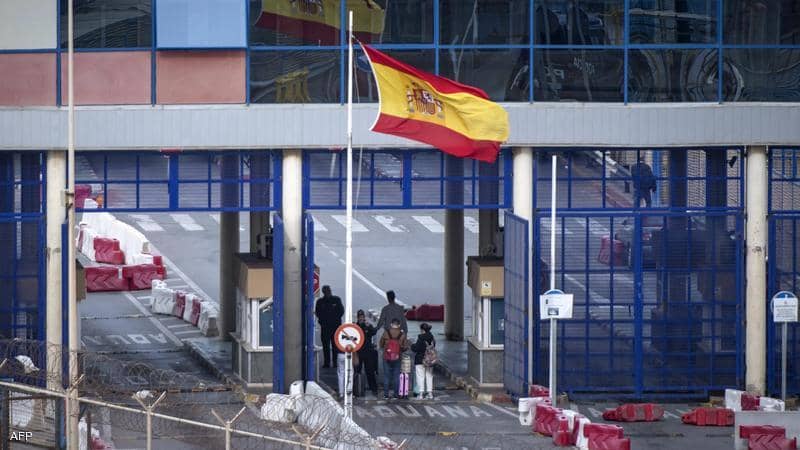
European funds participated in the budget by 75 percent, through the Internal Security Fund, the Asylum Fund, Immigration, and Integration, after Spain saw it as a necessary step to curb irregular migration.
Between early January and September 15, 2020, 5,121 migrants arrived in the archipelago, an increase of 500 percent in one year, according to Spain’s Interior Ministry.
The staggering figures prompt Spain to give special importance to the Moroccan state, through economic cooperation and security agreements at the behest of the European Union and tend to strengthen relations by virtue of border overlap.
Spain, provided it was accepted as a new member of the European Community in 1985, pledged to control the southern borders of the European Community.
Since its official accession to the Schengen Agreement in 1991, the Spanish border has been transformed into the Schengen area - with the exception of Ceuta and Melilla for their exceptional status - and Madrid has committed itself to monitoring them.
Political Messages
Mohamed Choukair, professor of political science at Hassan II University in Casablanca, says Morocco's current foreign policy is based on diversification, and in doing so it works to deal with several European countries, especially since England has left the European Union.
In this regard, there have been a number of mutual visits and several agreements based on bilateral cooperation.
The spokesman added to "al-Estiklal" that Gibraltar is part of English influence in order to diversify its relations and partnerships after the tension between it and Spain.
Morocco is certainly looking for other cooperation, with an agreement with Portugal and possibly another with Gibraltar.
The latter is one of Morocco's nearest seaports, according to Choukair, and from this point of view they can have several agreements and projects related to transport and tourism as well.
He added: Morocco's policy is mainly to diversify partners and not to limit themselves to specific partners, even within the European Union, rabat focuses on mutual interests within the framework of a "Winner-Winner".
In the context of this tension, the political science expert believes that Morocco is certainly sending political messages to Spain that it is not the only partner.
It is only natural that Morocco should try to put direct or indirect pressure on Spain, he estimated.
"Spain understood the message and is clearly trying to take a number of steps to get closer to Morocco, including the dismissal of the Spanish foreign minister, a Spanish signal to try to get closer," Choukair said.
What Spain has to understand, according to the expert, is that Morocco has reconsidered its foreign dealings and identified a number of foreign policy interventions, based on transparency, competence, and interests.
According to the spokesman, Spain understood that Morocco was an indispensable strategic partner, having cancelled the crossing (crossing of residents abroad) in which Madrid suffered heavy losses, causing the Spanish decision-maker to reconsider its approach to Rabat.
"Once Morocco feels that Spain is ready for the new deal, it will certainly hold a postponed joint committee meeting to overcome all these outstanding disputes."