If the War Drags On, Could Syria Face a Supply Chain Crunch?
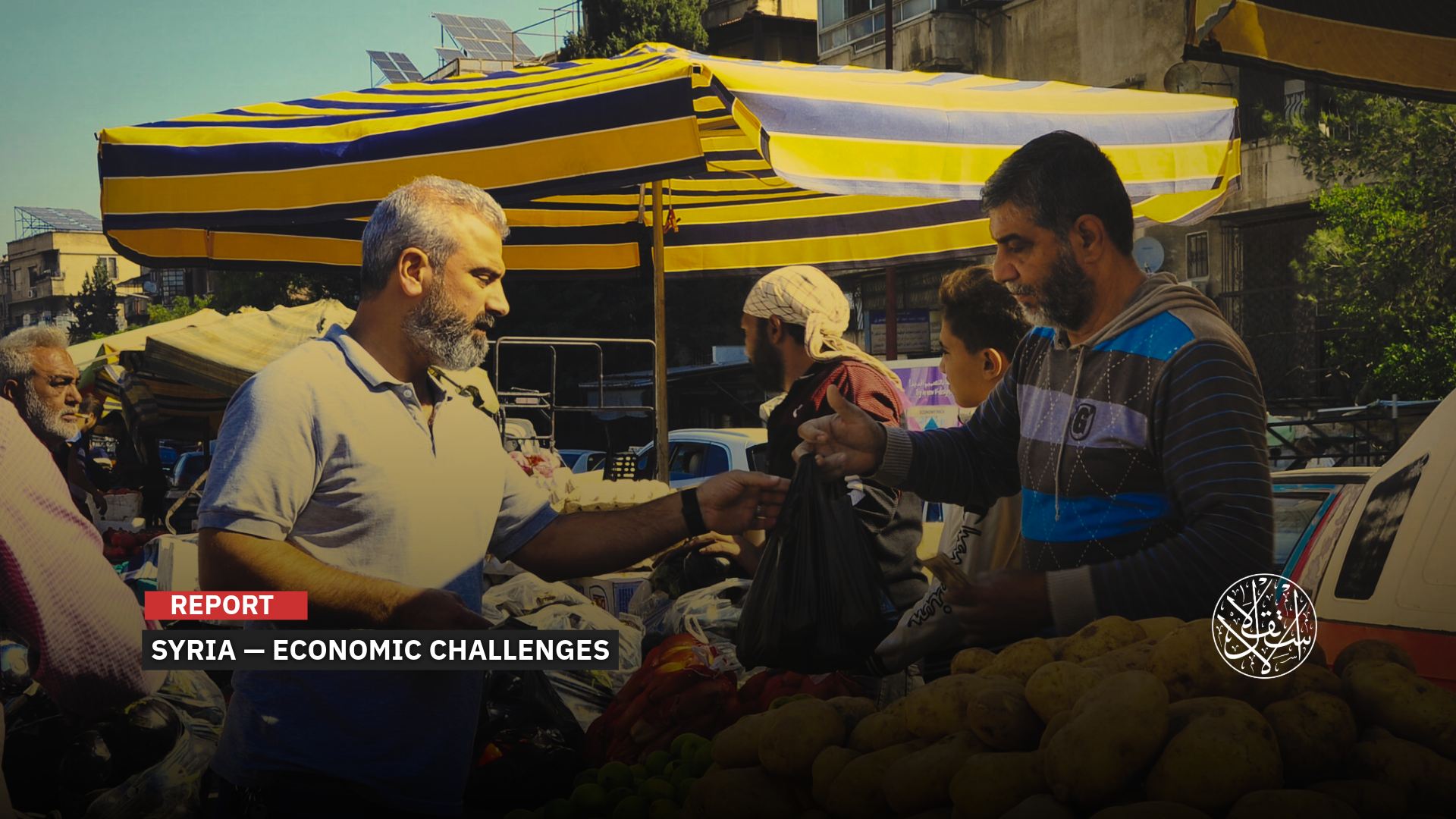
Tighter import controls help enforce stricter oversight on prices.
At a moment of deep regional uncertainty, where lines of war intersect with the maps of energy and trade, Syria finds itself at a new crossroads shaped not only by internal pressures but also by fast-moving geopolitical shifts reshaping the Middle East. The escalating conflict and the growing risk of a wider war are no longer passing developments. They are forces redefining national priorities and imposing a harsher economic reality on fragile states, with Syria at the forefront.
Syria’s challenges extend well beyond the familiar burdens of reconstruction and scarce resources. They are now tied to a broader regional equation, one directly affected by disrupted supply chains and the breakdown of critical trade routes.
The Strait of Hormuz stands at the center of that equation. As the narrow passage linking the Gulf to global markets, any disruption to its flow sends immediate shockwaves through energy markets and intensifies pressure on import-dependent countries like Syria, which is already grappling with deep economic vulnerability.
As tensions rise around this strategic corridor, Damascus faces a complex test. How can it secure essential supplies of energy and goods as options narrow and import costs climb? And how can it manage limited resources efficiently in an unstable regional environment while still trying to push forward long-delayed reconstruction?
For Syria, this is no longer just fallout from external tensions. It is a defining challenge, one that puts its economic resilience and governance under strain and leaves every domestic decision exposed to a volatile regional landscape still open to every possibility.
Geopolitical Shifts
As the Middle East undergoes rapid transformation, placing growing strain on fragile economies, Syria has taken a notable administrative step that reflects a clear awareness of the challenges ahead.
President Ahmed al-Sharaa issued two consecutive decrees, the first establishing a new body called the General Authority for Supply and Provision (GASP), and the second appointing Abdul-Razzaq Omar al-Masri as its director general. The move aims to streamline contracting procedures and improve the efficiency of public spending, according to the Syrian Arab News Agency (SANA) on March 15, 2026.
Under Decree No. 63 of 2026, the GASP is designed to unify and regulate procurement mechanisms, ensuring that public institutions secure their needs at the best technical standards and lowest possible cost. It also seeks to enhance transparency and strengthen the management of public funds at a time when economic conditions demand both discipline and flexibility.
The decision comes against a highly sensitive regional backdrop. The Middle East is facing deep geopolitical and economic shifts, particularly amid escalating tensions involving Iran following the U.S. and Israeli war on Tehran launched on February 28, 2026, and the resulting threats to regional stability and global trade flows.
In response, economists have called for urgent activation of supply systems in Syria, warning of the risks posed by mounting uncertainty in global markets, especially as shipping through the Strait of Hormuz, one of the world’s most critical energy and trade corridors, remains disrupted.
The strait typically carries about a fifth of global oil and liquefied natural gas supplies, making it a cornerstone of the global economy. Yet it has become increasingly restricted amid military escalation and mutual threats. The UK Maritime and Coastguard Agency reported that around 20 commercial vessels, including nine tankers, have been attacked or involved in incidents since early March, highlighting the scale of the risks facing regional trade.
Against this backdrop, the creation of the GASP goes beyond a technical reform. It represents an attempt to reassert state control over imports within a more centralized framework, allowing the government to manage the flow of goods, contain spending, and secure essential supplies at a time when global supply chains are under severe strain.
The new authority is expected to oversee the procurement of essential goods and manage supply and import operations on behalf of state institutions, strengthening the government’s ability to intervene directly in the market, reduce waste, and improve the allocation of scarce resources.
Official data from Syria’s General Authority for Land and Sea Ports for 2025 points to a heavily import-dependent economy. A total of 542,373 inbound trucks were recorded, compared with just 63,092 outbound shipments, according to the al-Thawra newspaper, underscoring a clear trade imbalance.
At this critical juncture, imports remain the primary means of meeting domestic demand and reconstruction needs, given weak local production and declining export capacity.
Key imports are concentrated in vital sectors, including fuel, gas, grains, and poultry, as well as electrical equipment, industrial machinery, spare parts, and reconstruction materials pledged by regional partners.
Caught between internal pressures and external volatility, this move appears to be a preemptive effort to reorganize Syria’s economy for a more unstable regional environment, where managing resources is no longer purely a domestic matter but one shaped by fast-moving geopolitical forces.
A Fragile Market
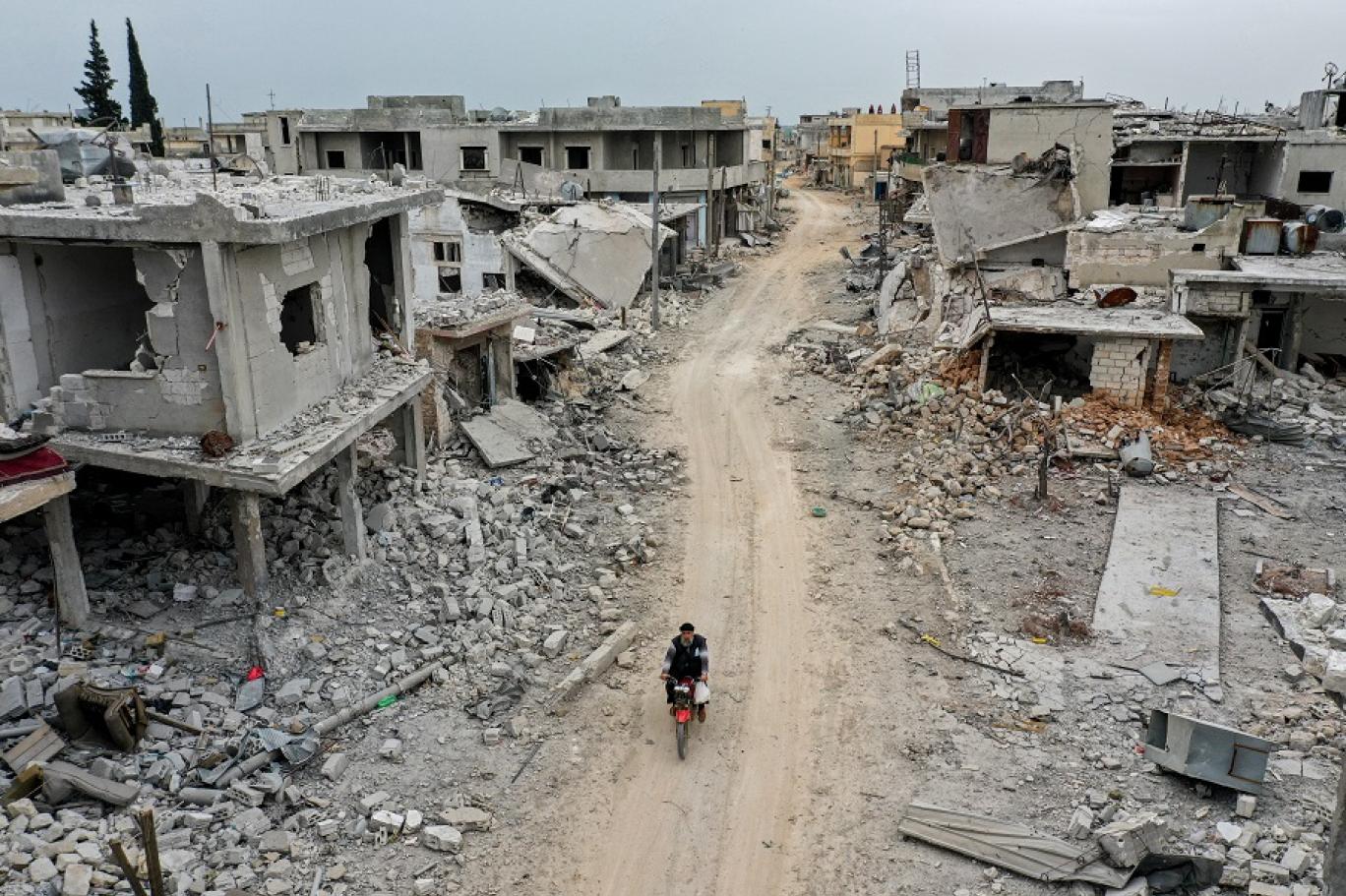
A closer look at Syria’s economy reveals a market marked by deep structural fragility, leaving it highly exposed to external shocks. The World Food Programme (WFP) has reported that more than 80 percent of Syrian households are unable to secure diverse, sufficient, and nutritious food, despite limited and gradual improvements in some food security indicators.
According to the WFP’s Syria brief for February 2026, covering data from January, the recovery path remains slow and constrained by the cumulative impact of years of conflict, isolation, and weak investment. These factors continue to weigh on the economy, erode infrastructure, and limit employment opportunities.
Although food prices showed relative stability in April 2026, they were still 87 percent higher than a year earlier, reflecting the heavy cost of living pressures facing households. Families relying on minimum wages can meet only about 29 percent of their food needs, highlighting a widening gap in purchasing power.
In total, around 12.9 million people in Syria are experiencing food insecurity, including 3.1 million facing acute levels, underscoring the scale of the humanitarian and economic challenge.
The crisis extends beyond consumption to weak domestic production, especially in strategic commodities. Local reports indicate that wheat production reached about 1.8 million tons in 2017, far short of the roughly 2.6 million tons needed to produce 3.1 million tons of bread, entrenching dependence on imports.
In this context, tighter import controls have emerged as a key policy tool to stabilize the market, helping authorities enforce stronger price oversight and curb opportunistic behavior by traders during periods of exceptional volatility.
Syria’s market is particularly sensitive to energy flows. As one of the countries most affected by disruptions in the Strait of Hormuz, any interruption quickly drives up energy costs, which in turn ripple across prices for goods and services in the domestic market.
Regional support has sought to ease part of the pressure. Qatar and Saudi Arabia have both supplied shipments of oil and gas to help cover a significant portion of the energy shortfall. In November 2025, the first Saudi shipment arrived at Baniyas port carrying about 650,000 barrels of crude as part of a broader pledge totaling 1.65 million barrels.
Earlier, in March 2025, Syrian Electricity Minister Omar Shaqrouq announced that Qatar was supporting the energy sector by supplying around two million cubic meters of natural gas per day via Jordan, a move aimed at securing a minimum level of stability in a sector that underpins the broader economy.
With limited domestic production, rising import costs, and volatile external supply lines, Syria’s market remains trapped in a cycle of chronic fragility. Even developments that appear distant on the regional stage can trigger immediate repercussions at home, whether through rising prices or shortages of essential goods.
A Strategic Move
As geopolitical pressures intensify and global supply chains grow more unstable, countries with fragile economies are being forced into a difficult balancing act: securing essential needs in an environment where politics and economics are more tightly intertwined than ever.
The war on Iran has emerged as a defining pressure point, reshaping government priorities across the region, especially for states heavily reliant on imports. These countries are now more exposed to market volatility and disruptions in critical trade routes.
For Syria, recent administrative steps go beyond routine restructuring. They signal a deeper shift toward strengthening the state’s ability to manage procurement more effectively at a time when reconstruction demands collide with food insecurity, external market pressures, and unstable supply flows.
Caught between the need to speed up decision-making, rein in public spending, and absorb regional shocks, a new economic approach is taking shape, one that seeks to reorganize state tools to better navigate a volatile moment.
Ayman al-Dasouqi, a Syrian researcher at the Omran Center for Strategic Studies, said the war on Iran is already placing unavoidable strain on supply chains across the Middle East, creating a dual challenge for governments: securing essential goods smoothly and at competitive prices while mitigating the fallout of a prolonged conflict.
“The creation of the GASP can be understood in part as an evolution of the supply committee established in December 2025, now expanded into a broader institutional framework directly linked to the presidency,” he told Al-Estiklal.
“The shift is designed to improve efficiency, accelerate decision making, and rationalize government procurement in a complex regional environment.”
“More broadly, the move reflects an effort to tighten control over supply channels and stabilize domestic markets, reducing the impact of external shocks on an already fragile economy while ensuring a minimum level of living stability amid rising poverty and widespread food insecurity,” al-Dasouqi added.
“The earlier supply committee, which operated under the land and sea ports authority, was no longer equipped to handle the scale of current challenges, either in staffing or in authority. Elevating it to a full public body with broader powers and direct ties to decision makers signals a clear expansion of its role.”
That expansion is closely tied to reconstruction, a process that demands high levels of coordination and control, alongside ongoing challenges in food security and import management in an increasingly unstable global environment. In that sense, the move appears less like a bureaucratic adjustment and more like a strategic recalibration.
At its core is the need for faster, more disciplined decision-making, ensuring that supply flows continue and bottlenecks in the domestic market are minimized as regional and global conditions shift, according to the analyst.
These efforts come as international estimates place the cost of rebuilding Syria between $250 billion and $400 billion. A World Bank report in October 2025 put economic losses at more than $216 billion, with the true figure likely higher given the extensive damage to infrastructure, housing, and key sectors such as transport, energy, water, and sanitation.
Over more than a decade, Syria’s economy has contracted by over 50 percent, while the local currency has lost about 99 percent of its value, deepening the crisis and pushing poverty to unprecedented levels.
In an attempt to reverse course, President Ahmed al-Sharaa said in November 2025 that Syria had attracted around $28 billion in investments over ten months, alongside legal reforms allowing foreign investors to repatriate capital.
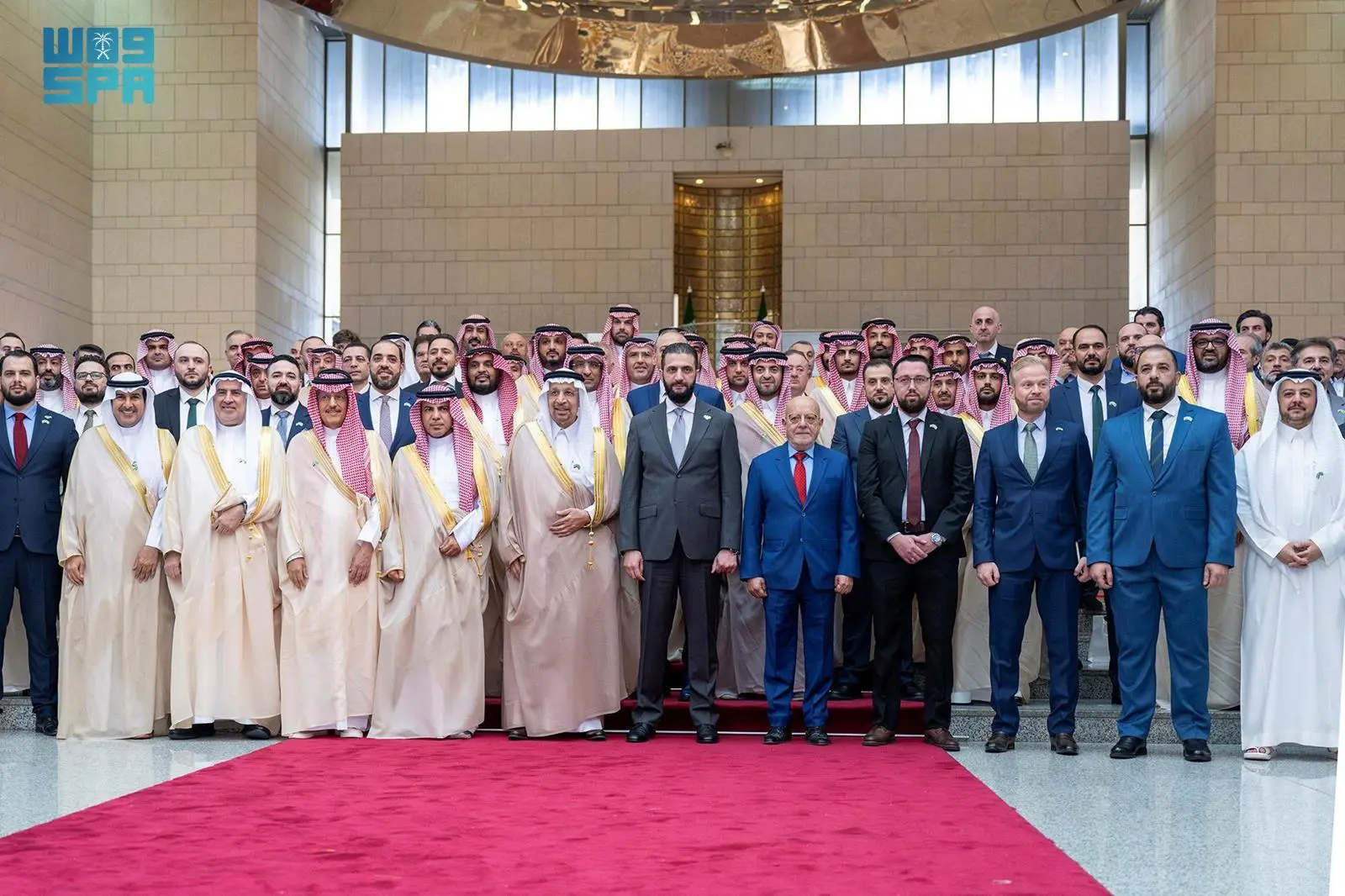
Speaking at the Future Investment Initiative (FII) conference in Riyadh, he emphasized efforts to improve the investment climate and facilitate capital flows, part of a broader push to draw in investment and support economic recovery.
Taken together, the creation of the GASP reflects a preemptive attempt to rebuild the tools of economic management in Syria, not only to confront immediate pressures but also to prepare for reconstruction in a region where securing resources and supply lines has become a matter of strategic necessity.