Hebron Under Siege: Security Operation or Plan to Annex and Judaize?
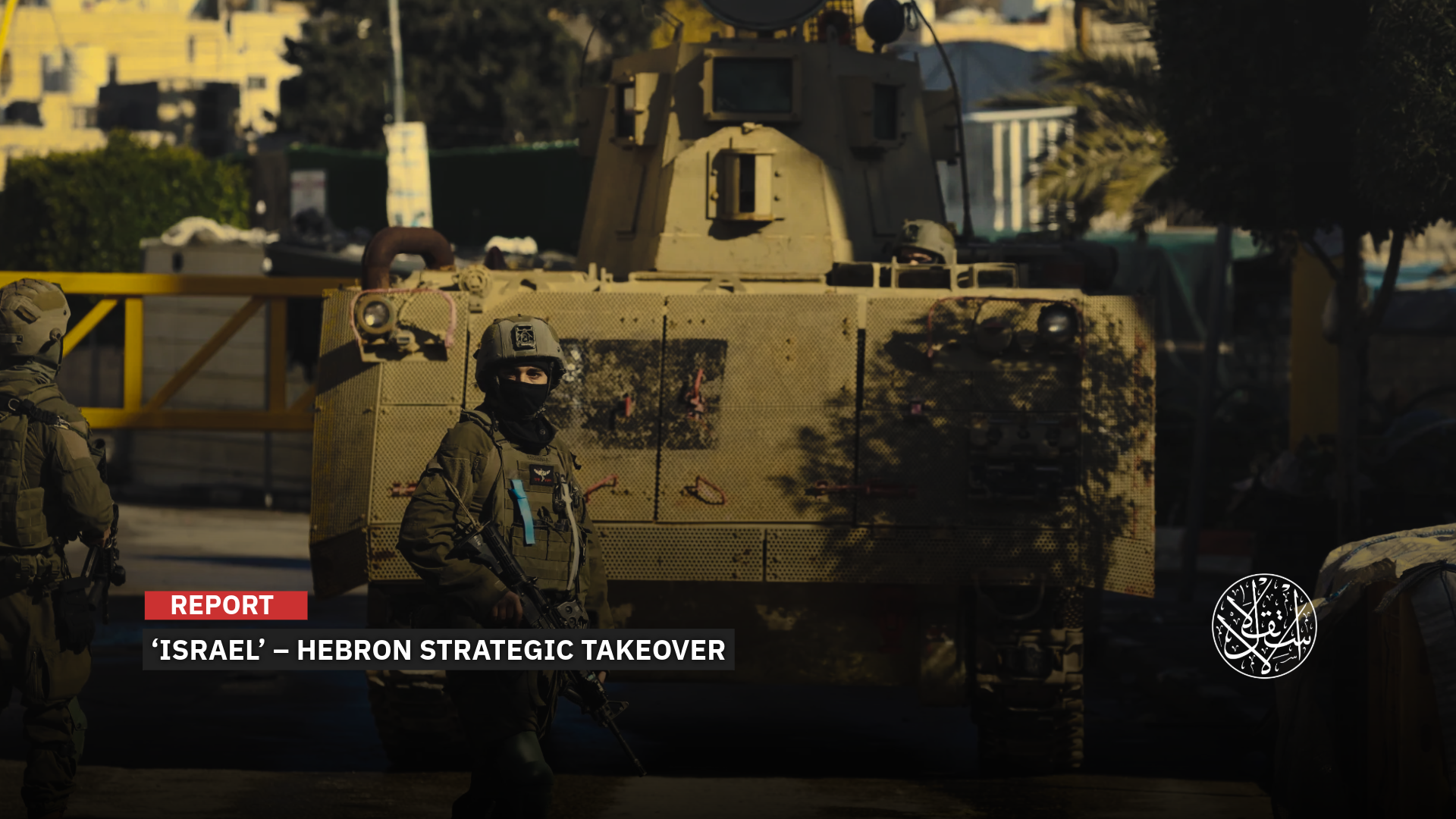
Hebron’s historic Jabal Jawhar neighborhood is at the heart of the Israeli operation.
After a year of sustained aggression in the northern West Bank, the Israeli army has launched a new “military operation,” this time targeting the southern West Bank, specifically the city of Hebron.
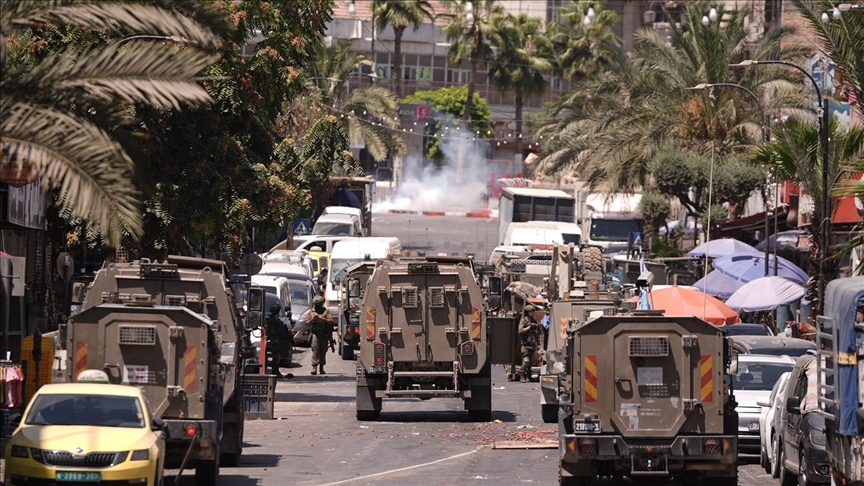
In the early hours of January 19, 2026, Israeli Occupation Forces began a large-scale military aggression on Hebron, the largest governorate in the occupied West Bank.
Hundreds of special Occupation Forces units raided the Jabal Jawhar neighborhood, claiming the operation aimed to “thwart terrorist infrastructure.”
The aggression comes after “Israel” launched a so-called military operation in the northern West Bank on January 21, 2025, under the name “Iron Wall.”
That operation began in the Jenin refugee camp, later expanding to the Nur Shams and Tulkarm camps, and has continued to this day.
The Latest Aggression
The Israeli army said, in a joint statement with the internal security agency Shin Bet, that the operation would continue for several days with the participation of border police forces, warning that residents may hear explosions and see heavy troop movements during this period.
The operation focused on the Jabal Jawhar neighborhood, with the army saying its aim was to dismantle what it described as “terrorist infrastructure” and to seize “illegal weapons and enhance security in the area.”
“Israel” claimed the decision to launch the operation was prompted by a rise in shooting incidents between families, or clans, in the city, and by fears that the weapons could later be used against settlers or Israeli soldiers.
Hebron is a large city divided into areas under Palestinian and Israeli security control. Its old city includes a small enclave of Israeli settlers who live under constant military protection.
The current operation is the largest carried out in Hebron in years. Israeli Occupation Forces imposed a tight closure on the area and curfews in several neighborhoods from the early morning hours, a scene that recalled the incursions of the Al-Aqsa Intifada in 2002.
Israeli military sources said hundreds of soldiers from special units and reserve forces were taking part in the raid, as part of a campaign described as unprecedented in the city.
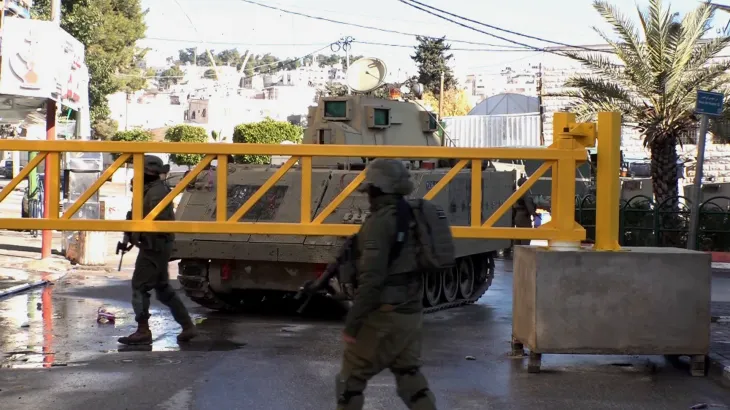
On the ground, Israeli Occupation Forces have maintained a strict cordon around Hebron since the operation began, setting up checkpoints and earth mounds, closing secondary roads, and restricting all movement in and out of the city.
Video footage shared by activists showed Israeli Occupation Forces installing new metal gates at the entrances of neighborhoods in the targeted area, alongside the bulldozing of side roads and their closure with concrete blocks to prevent Palestinian movement. Surveillance drones were also seen flying overhead.
The official Palestinian news agency Wafa reported that the army carried out a campaign of field arrests, detaining at least seven Palestinians in the first hours of the operation, including a 13-year-old boy who was arrested after his home was raided. The arrests are expected to continue.
Local residents also reported violent home raids, forceful searches, and the blowing up of doors, amid the sound of explosions heard across the city throughout the night.
Several homes were seized and turned into military outposts and observation points for Israeli soldiers.
What’s the Aim?
Despite Israeli assertions that the operation is a “preventive security” measure, observers say the justification masks other motives.
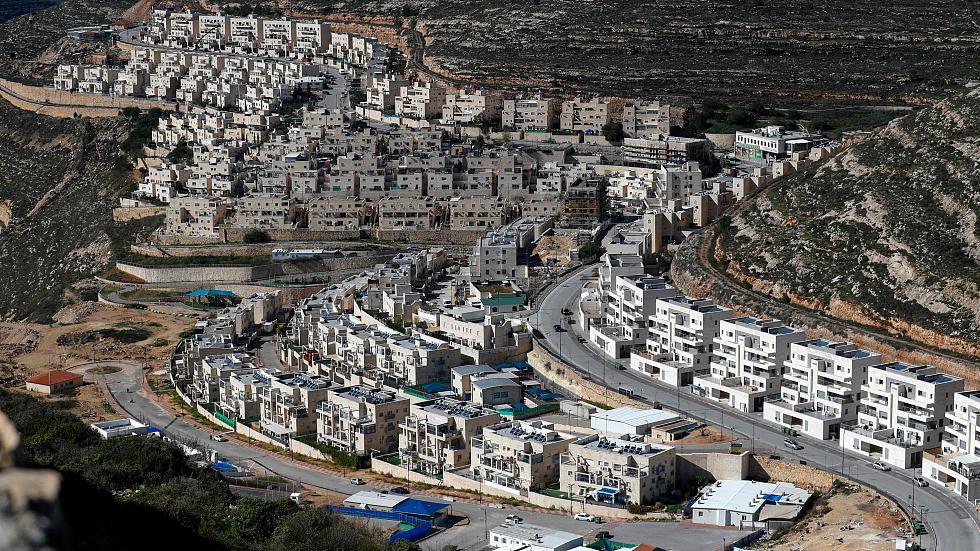
The targeted area already falls under Israeli military control and is surrounded by settlements that are under constant, round-the-clock surveillance.
This reality has raised questions about “Israel’s” claims, particularly as the army carried out the demolition of a home belonging to one of the perpetrators of an attack on a settler near Hebron just days ago, and has arrested dozens in repeated raids across the area in recent months.
Palestinians say the timing and scale of the operation go beyond the pursuit of specific suspects and point instead to an Israeli intent to entrench a heavy and permanent military presence in the city, further advancing its Judaization and altering its demographic and geographic character.
That intent, they argue, was evident from the first hours of the operation, through the expansion of checkpoints and earth barriers, a move described as laying the groundwork for dividing the already fragmented city into smaller sections and tightening Israeli control over it.
The Ibrahimi Mosque, the city’s most prominent religious site, has also been subjected to escalating measures in recent weeks.
Israeli authorities barred the Palestinian religious endowment director from entering the site for 15 days and transferred supervisory powers to the so-called Israeli Civil Administration.
These steps have deepened suspicions that what is unfolding in Hebron is not a temporary military campaign, but another phase in a broader effort to consolidate Israeli control over the heart of the city and its holy sites.
Palestinian families fear a repeat of the prolonged incursions seen recently in northern West Bank cities, which were accompanied by widespread destruction of infrastructure and the displacement of residents.
By February 2025, local sources estimated that about 40,000 Palestinians had been forced to leave their homes in Jenin and Tulkarm as a result of Israeli military aggression that reduced refugee camps to devastated areas.
According to official statistics, more than 1,080 Palestinians have been killed in the West Bank, around 11,000 wounded, and more than 20,000 arrested from late 2023 through early 2026.
The United Nations and international human rights organizations have described these measures as the most violent since the second intifada, citing “Israel’s” use of collective punishment and the deployment of tanks and bulldozers in city incursions, echoing tactics used in the Gaza Strip.
Israeli Occupation Forces have begun applying the same approach in Hebron. According to Wafa, they demolished a 250-square-meter home in Khirbet Bir al’-‘Eid in the southern area, forcing its 10 residents to leave without allowing them to take their basic belongings.
Political Aspect
Adel Shadid, a researcher specializing in Israeli affairs, said the military operation in Hebron is political in nature rather than security-driven, arguing that claims circulated in Hebrew-language media about the presence of resistance cells are inaccurate. He noted that no shots have been fired from the targeted area for a long time.
In remarks to Al-Estiklal, Shadid said the Jabal Jawhar neighborhood is a historic area that has been under full Israeli occupation, adding that “Israel” insisted on retaining security and civilian administrative control over it under the 1997 Hebron Protocol, which formed part of the Oslo Accords.
He said “Israel” is using the operation to link the settlement of Kiryat Arba, the first and largest settlement in the West Bank, to the city of Hebron and to other settlement outposts, as well as to the Ibrahimi Mosque, whose Palestinian supervisory authority was recently stripped away.
“Through this linkage, Israel is creating geographic continuity between settlers in Hebron and the rest of the settlements in the West Bank,” Shadid said. “This means Israeli policy is moving toward annexing the city, Judaizing it, and displacing its population.”
He warned that this would tear Hebron apart from within, unlike other West Bank cities that “Israel” largely contains from the outside through bypass roads, walls, barbed wire, and settlements.
Shadid pointed out that the area is home to thousands of settlers and that two of “Israel’s” most hardline ministers live there, National Security Minister Itamar Ben-Gvir and Settlement Minister Orit Strook.
On how “Israel” intends to deal with Palestinians in a city of nearly one million people, roughly one-third of the West Bank’s population, Shadid said “Israel” is pursuing two tracks. The first is weakening the Palestinian Authority’s powers in social and service sectors such as education and health.
The second track, he said, involves strengthening the role of so-called mukhtars, or clan leaders, as part of what is known as the Hebron Emirate project, which aims to separate the city from the Palestinian Authority.
During the war on Gaza, the Israeli government floated a plan to detach Hebron from the authority’s control and replace it with a local tribal administration through the creation of a separate “emirate.”
Shadid said the plan would mean dismantling both the authority and society itself, turning Palestinians into fragmented entities and clans, and erasing the national, political, and collective dimension through a system governed by mukhtars and tribes.
He added that “Israel” is now seeking to arm mukhtars, as a prelude to eventually reclaiming those weapons, reviving an approach it applied after the 1967 occupation as part of renewed efforts to resurrect the Hebron Emirate project.
Sources
- IDF launches large-scale counterterrorism operation in the Hebron area
- Security forces launch extensive operation in Hebron, hundreds of fighters to operate for several days [Hebrew]
- Clans in Hebron engage in street gun battles, one killed and 10 wounded [Hebrew]
- Israel launches new military operation in the northern West Bank
- As the aggression enters its second day, Israeli forces demolish a home in southern Hebron [Arabic]