From Ending the War to Reshaping Power: What Does Burhan Want From Sudan’s Dialogue?
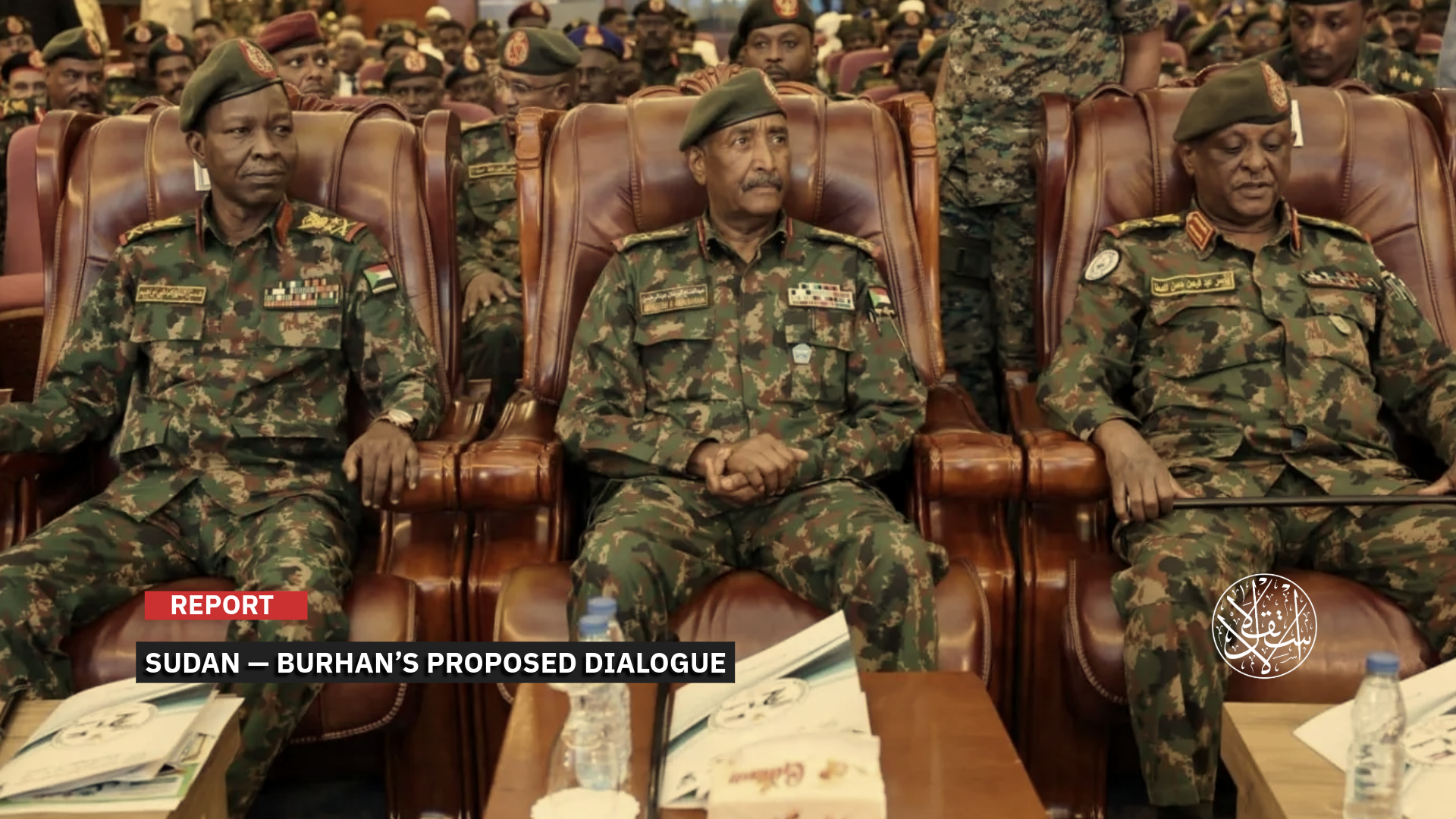
Burhan’s rhetoric does not place the RSF leadership on the same footing as the civilian opposition.
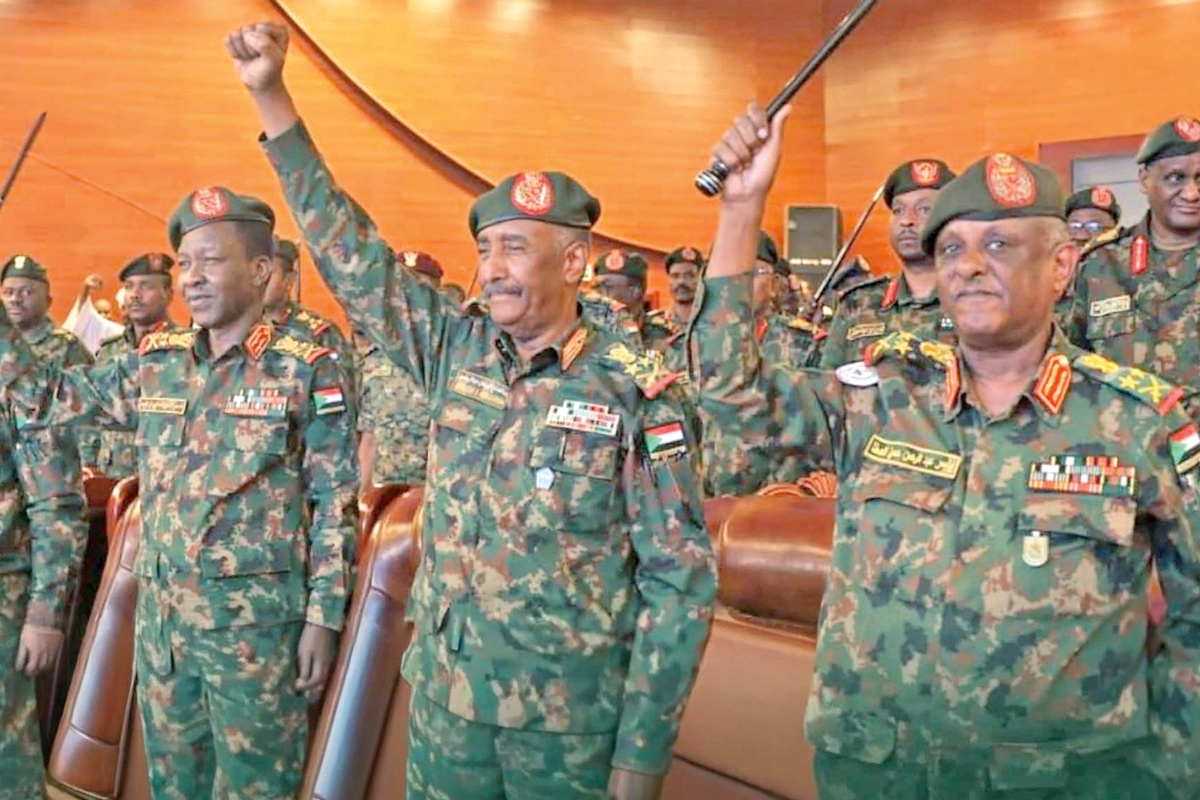
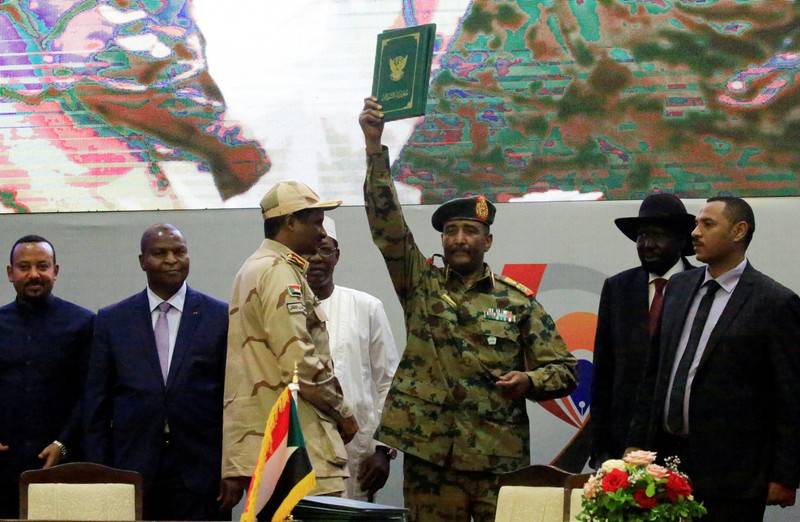
Sudan’s army chief, Abdel Fattah al-Burhan, announced on August 15, 2026, that participants in a proposed national dialogue would receive temporary immunity, presenting it as a key step toward a political process led by an independent national mechanism. In a speech marking the 72nd anniversary of the founding of the Sudanese Armed Forces (SAF), Burhan pledged to suspend criminal proceedings against participants facing charges and provide them with legal, political, and security guarantees. He also promised that statements made during the dialogue would not be used as a basis for prosecuting them.
But Burhan stressed that the measure would not amount to an amnesty or waive the rights of complainants. Instead, it would only suspend prosecution for the duration of the political process. The announcement moves Burhan’s call for dialogue, first made in May 2026, from a broad political pledge toward preliminary arrangements intended to allow opponents to attend and participate.
The initiative, however, comes as the war continues, divisions persist over who should take part, and questions remain over the identity and agenda of the proposed mechanism. It also faces military conditions that rule out the return of the Rapid Support Forces (RSF) militia leadership to power. That raises a broader question: Can immunity widen participation, or will the process remain constrained by the balance of power on the battlefield and the limits of a state-led political path?
Identity Still Unclear
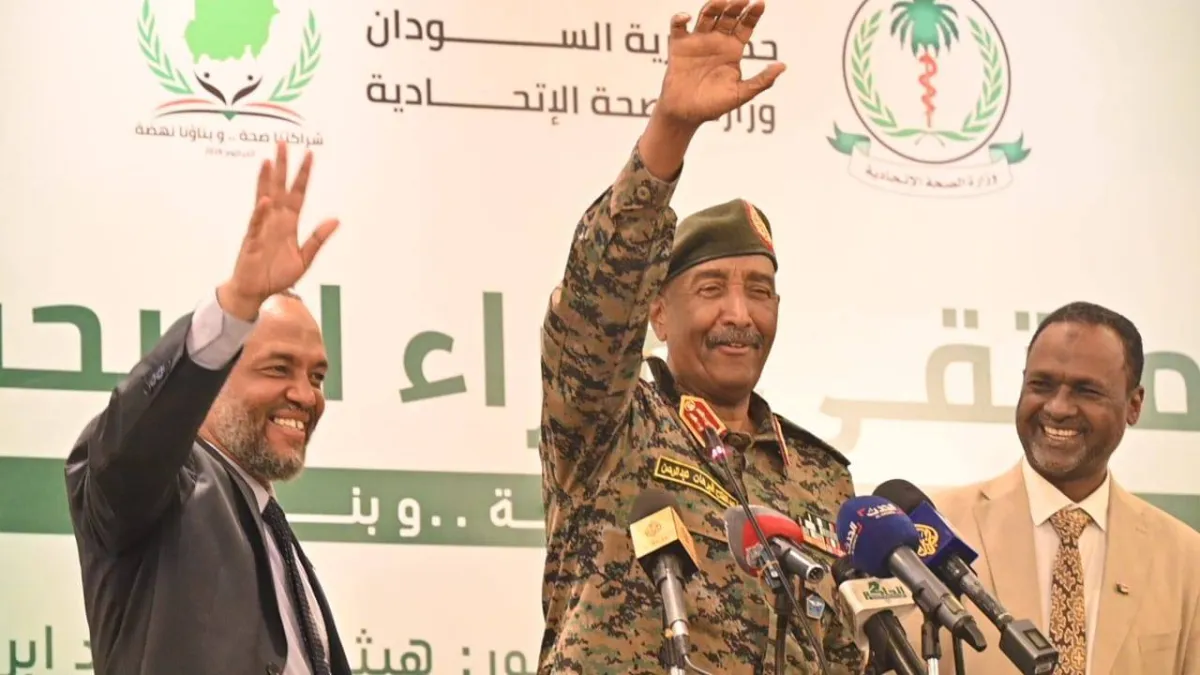
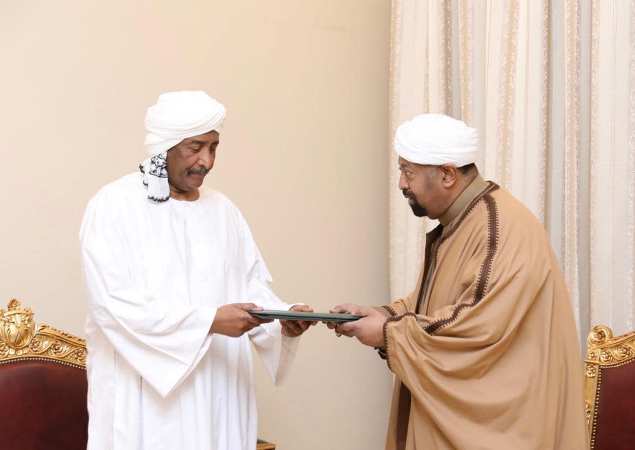
Burhan attributed the initiative to a group of Sudanese citizens who acted on their own initiative. He said he had met with members of the group and heard their views and demands on creating a conducive political environment before agreeing to their proposal and tasking them with acting as an independent mechanism to oversee the dialogue.
The state’s stated role would be limited to providing guarantees and logistical support. Burhan stressed that the government would neither organize the conference nor determine its agenda or outcomes. The mechanism is expected to hold a press conference to present its vision and work plan, but the names of its members, its structure, and the criteria for selecting participants have yet to be announced. That makes it too early to attribute the initiative to any particular party or political alliance.
The new initiative does not come out of nowhere. On May 26, Burhan announced preparations for an inclusive political dialogue in Sudan aimed at reaching agreement on the foundations of national reconstruction and completing the democratic civilian transition.
Khartoum then saw meetings in July 2026 between Burhan and leaders of the Democratic Bloc, alongside a joint seminar held by the National Umma Party and the Democratic Unionist Party-Original. Leaders who took part in those efforts voiced support for an internal dialogue, while Burhan pledged to take practical steps to create the right conditions for it.
Immunity Does Not Erase the Charges
Burhan’s pledge of temporary immunity places the measure at the center of the arrangements for creating conditions for dialogue but also sets clear limits to prevent it from becoming a blanket amnesty. The measure would suspend prosecutions against participants while they take part in the political process, without erasing complaints, dropping charges, or affecting the rights of victims and plaintiffs.
Under the arrangement, a person covered by the protection could return to Sudan or travel to the conference venue and participate without being arrested over a case covered by the immunity. The proceedings could then resume once the immunity expires, unless another legal decision is issued.
The suspension of proceedings would be accompanied by another safeguard aimed at protecting freedom of discussion. Burhan pledged that views and positions expressed by participants during the sessions would not be used as grounds for prosecution. The aim is to allow opposition groups to discuss the army, the government, the war, and the country’s political arrangements without fear that their positions could trigger new complaints.
The announced arrangements also include security and political guarantees and logistical support. These measures would be important if the mechanism were to involve figures living outside government-controlled areas or those who left the country because of legal proceedings against them.
Turning these pledges into enforceable immunity, however, would require written legal measures. The closest available legal basis is Article 58 of Sudan’s 1991 Criminal Procedure Act, which gives the attorney general the authority to suspend a criminal case after an investigation has been completed and before a first instance verdict is issued, provided the decision is justified.
The Supreme Court has previously ruled that the power was established to serve a public interest or address a political or social necessity and that it does not give the executive unlimited authority to override the judiciary.
Accordingly, Sudanese media reports suggest that a pledge from the head of the Transitional Sovereignty Council (TSC) alone would not be enough. The authorities would need to specify who is covered, which cases are suspended, how long the protection will last, and which institutions are bound by it, while also clarifying the status of arrest warrants and trials conducted in absentia.
They would also need to clarify whether serious crimes, including war crimes, killings, and crimes against humanity, would be excluded from the arrangement. Any ambiguity on this point could turn immunity from a tool for opening political space into a new source of conflict with victims and the judiciary.
Disagreement Over Who Should Take Part
Political forces have yet to set out comprehensive positions on the initiative in its new form, but their earlier stances on dialogue offer an initial map of potential supporters and objections.
The Democratic Unionist Party-Original, through Jaafar al-Mirghani, has backed Burhan’s initiative for peace and a political process. It has called for an internal dialogue based on Sudan’s unity, a single national army, and rejection of parallel entities.
The party has also opposed political exclusion, arguing that the judiciary should be responsible for holding those accused of crimes to account, while elections should be the means of holding political parties accountable.
Abdel Rahman al-Sadiq al-Mahdi, deputy head of the Ansar Affairs Authority’s Shura Council, has called for an inclusive Sudanese dialogue and said the Jeddah Declaration (the Treaty of Jeddah) could provide a basis for reaching a solution.
The position of the National Umma Party, however, remains complicated by a split among its leaders, with one faction operating inside Sudan, another aligned with the Somoud coalition, and a group that joined the Sudan Founding Alliance (Tasis) led by the RSF militia.
The Democratic Bloc, meanwhile, has shown openness to an internal political process but rejects recognizing Tasis as an independent political actor, viewing it as an extension of the RSF militia.
The identity of the dialogue mechanism and its list of invitees will also shape the position of the Somoud coalition and Sudan's Declaration of Principles forces. These groups support an end to the war and a Sudanese-owned dialogue but insist that the National Congress Party, the Islamist movement and their affiliated groups be excluded from the political process.
The Sudan Liberation Movement led by Abdel Wahid al-Nur and the Sudan People’s Liberation Movement previously rejected a document produced through consultations in Addis Ababa because it did not explicitly bar the former regime from taking part.
This highlights the central dilemma of inclusivity. Forces aligned with the SAF oppose the participation of the RSF militia and its allies, while opposition groups want Islamists and the National Congress Party kept out. If the mechanism accepts both demands, the dialogue could become a gathering of selected forces rather than a broad national process. If it ignores the objections, key political groups could boycott it.
The mechanism, therefore, needs a single standard that distinguishes individual criminal responsibility from political affiliation and prevents accusations of supporting either side in the war from becoming an open-ended tool for excluding political opponents.
An Incomplete Peace
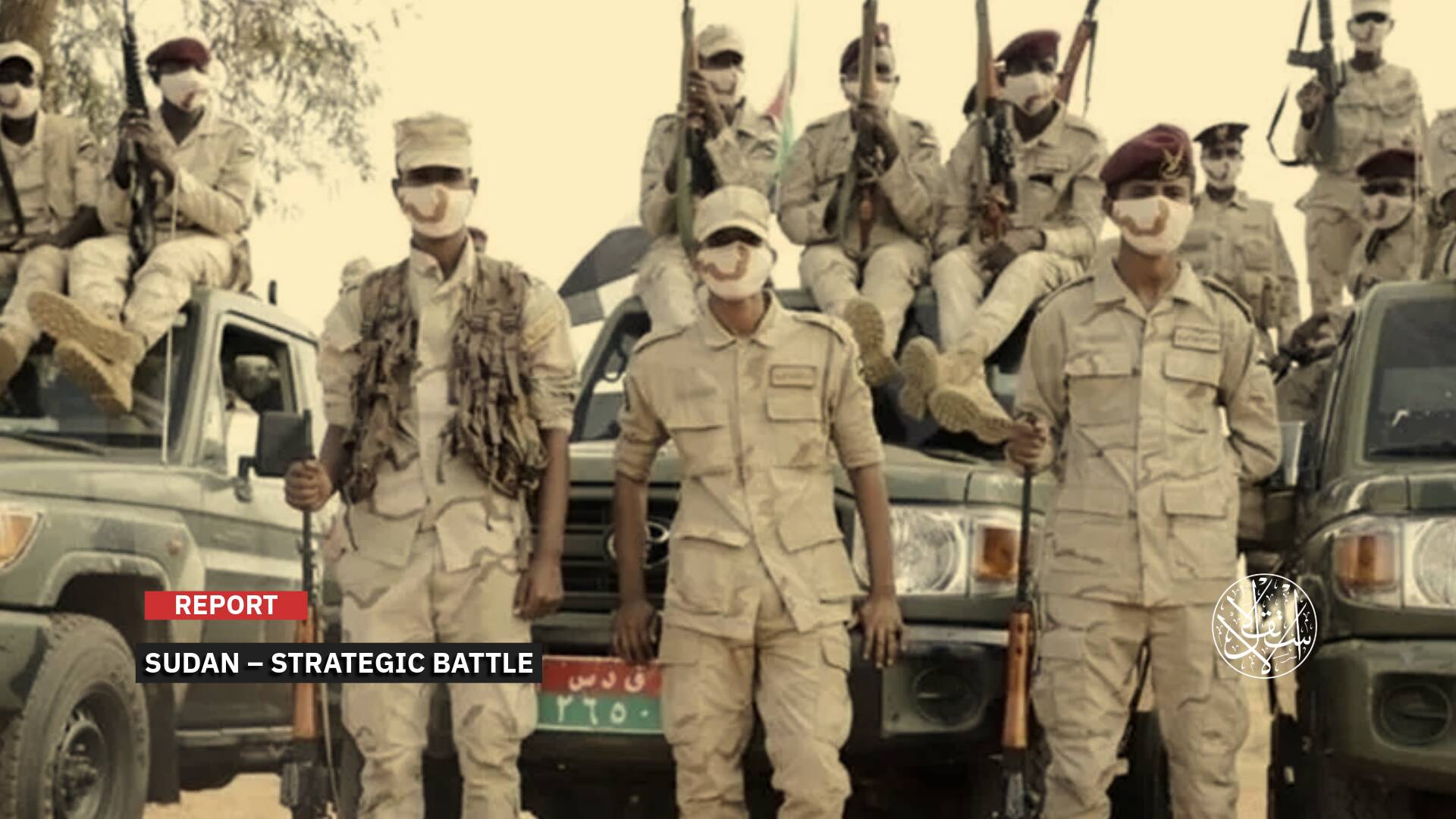
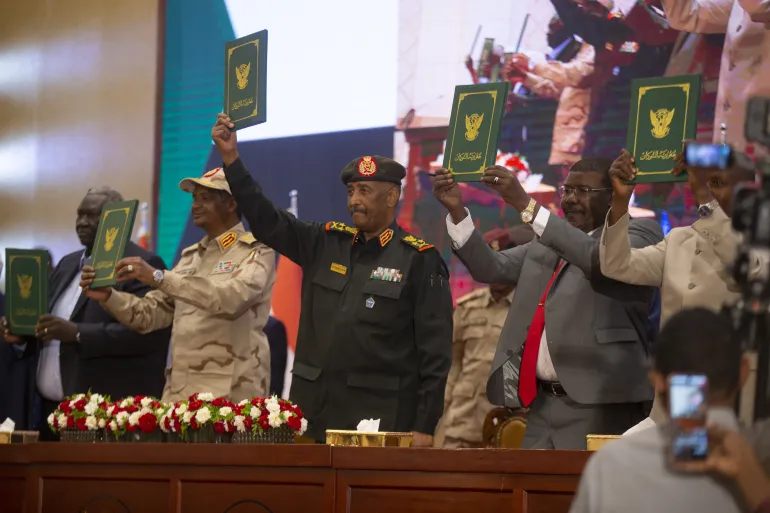
Burhan’s speech also made clear that the initiative does not place the RSF militia leadership on the same footing as the civilian opposition. He said he was prepared to engage with any serious peace initiative but rejected what he called an “incomplete peace” that would return the RSF, led by Mohamed Hamdan Dagalo, known as Hemedti, and its supporters to power.
That effectively closes the door on restoring the partnership between Burhan and Hemedti that existed within the TSC before the war. Instead, Burhan tied the future of the RSF militia to a security process that must begin on the ground before any political arrangements are considered.
He laid out a series of steps for that process, starting with the RSF withdrawing from cities and regrouping in designated areas, followed by the return of displaced people and refugees to their homes. Only then would the status of the fighters be considered, including the possibility of integrating those who have not committed crimes into the regular armed forces.
These conditions echo the government’s response to a U.S. proposal for a 90-day humanitarian truce. The government called for the RSF to withdraw from cities in stages, regroup its forces, preserve a unified national army, and end external support for armed groups.
But the announcement did not resolve the status of parties and figures affiliated with the Tasis alliance. The Democratic Bloc refuses to sit with the alliance, viewing it as a political arm of the RSF, while Tasis includes civilian forces and armed movements that present themselves as political actors.
It also remains unclear whether the temporary immunity could cover figures associated with Tasis or would be limited to opponents who do not support the war.
A paper by Malik Agar offers one possible way to address this dilemma by separating the process into two tracks: military negotiations between the SAF and the RSF to secure a ceasefire and implement security arrangements, and a political dialogue focused on governance, the constitution, and the civilian transition.
Such a separation could prevent the RSF from returning to power through military force without sidelining issues tied to ending the war. But its success would require prior agreement on who qualifies as a political actor, who bears criminal responsibility, and who should be allowed to participate after severing ties with an armed force.
The Pressure of War
Sudanese political analyst Dr. Ibrahim Abdel-Atti told Al-Estiklal that the timing of the dialogue initiative gives the temporary immunity a significance that goes beyond the law. The measure comes more than three years into the war, as government institutions return to Khartoum, efforts to rebuild the political system and establish a legislative council gather pace, and African and international efforts seek to revive the political process.
He said the immunity could remove one of the main barriers to participation for opposition figures living outside Sudan or facing politically motivated charges, but that a verbal pledge alone would not be enough to ensure their safety.
Its success, he added, would require translating the pledge into written, binding legal decisions for prosecutors, police, security agencies, and border authorities. The measures would also need to specify who and which cases are covered, how long the protection would last, and guarantee participants the right to enter and leave the country, organize, and express their views without facing prosecution.
Abdel-Atti said the independence of the mechanism would remain in question unless it discloses the names of its members, how participants will be selected, how decisions will be made, and how its outcomes will be implemented. Holding the dialogue in Khartoum alone, he stressed, would not prove that it is nationally owned or inclusive of the country’s different political forces.
He said the initiative’s prospects would depend on its ability to address the most difficult issues, particularly the future of the SAF and the RSF militia, the participation of forces aligned with either side of the war, the role of Islamists, the shape of government, and the civilian transition.
He warned that setting conditions for peace that effectively decide in advance who can take part, or leaving the guarantees as political promises, could turn the dialogue into yet another competing initiative, without building the consensus needed to end the war and rebuild the state.
Sources
- Burhan Pledges Immunity for Dialogue Participants, Rejects Hemedti's Return to Power [Arabic]
- “Addis Ababa Document” Deepens Divisions Among Sudan’s Rival Factions [Arabic]
- Interpretation of Article 58 of the 1991 Criminal Procedure Act, Submitted by the Attorney General [Arabic]
- Al Jazeera Net Publishes Details of U.S. Sudan Peace Proposal and Government Response [Arabic]
- Burhan Announces Guarantees and Temporary Immunity for Political Dialogue Participants [Arabic]