From Discovery to Destruction: How Is the Syrian Government Managing the Chemical Weapons File?
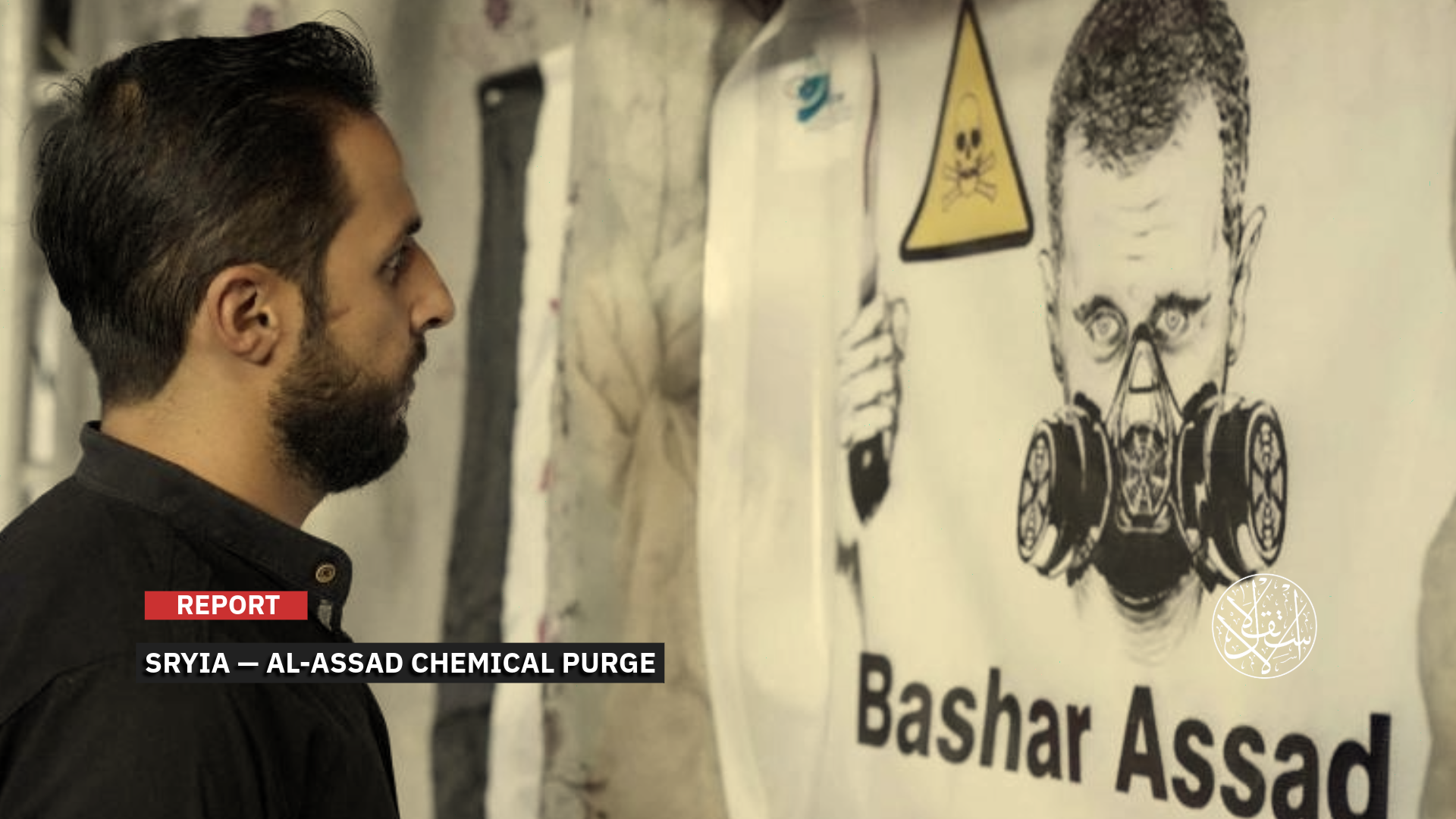
The Organization for the Prohibition of Chemical Weapons has visited more than twenty suspected Syrian sites since March 2025.
The chemical weapons file in Syria has witnessed notable developments in recent months, with progress being made in uncovering stockpiles and documents related to the chemical weapons program left behind by the regime of Bashar al-Assad, amid growing international support for cooperation between Damascus and the Organization for the Prohibition of Chemical Weapons (OPCW).
This opens the door to a potential resolution of one of the most complex and controversial issues in the history of the Syrian conflict.
Over the course of 13 years of war, the al-Assad regime faced repeated accusations of using chemical weapons against civilians in several areas, while the fate of its chemical arsenal and storage sites remained a constant concern for the international community, especially after the fall of the regime in December 2024.
In this context, the new Syrian government has repeatedly affirmed its full commitment to cooperating with the OPCW and proceeding with the dismantling and destruction of the remaining stockpiles and materials linked to the chemical program, while stressing its need for technical, logistical, and financial support from the international community to complete this complex task.
As part of practical steps taken, Damascus reactivated its permanent mission to the OPCW in The Hague in November 2025 and appointed Muhammad Katoub as its Permanent Representative to the organization.
In March 2026, the government also launched a comprehensive plan, supported by the United States and international partners, to fully eliminate the chemical legacy left by the former regime.
Although the processes of inspection, dismantlement, and destruction may take many months or even years due to high costs and the surrounding technical, security, and political complexities, the international community views this process as a necessary step to ensure that chemical weapons do not return to the Syrian arena or are used in the region in the future.

Practical Steps
The Syrian government’s progress in the chemical weapons file has received broad international praise, following Damascus’s submission of tens of thousands of documents related to the chemical weapons program of the former regime, and its facilitation of access for international inspection teams to dozens of suspected sites.
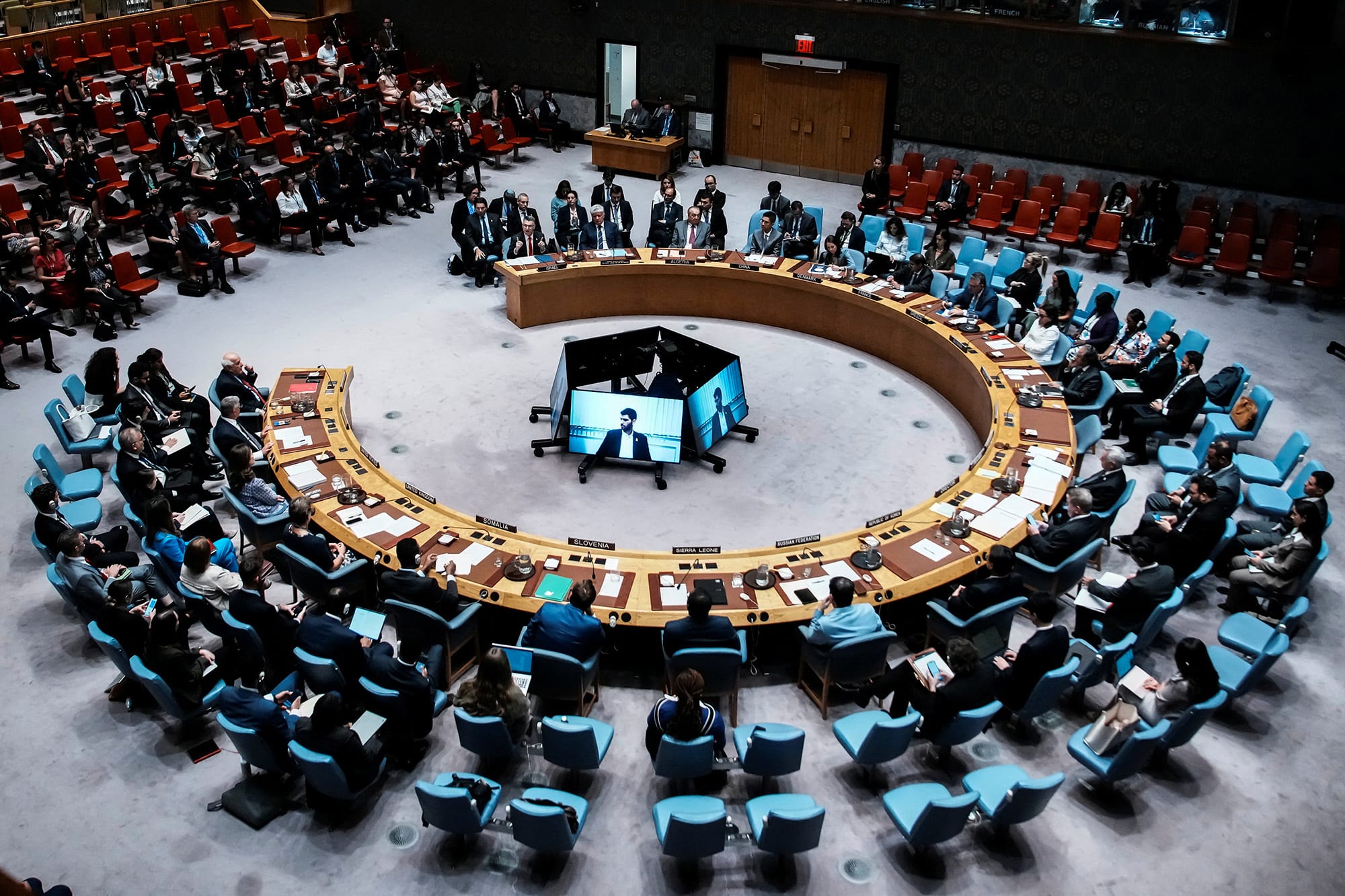
In this context, Syria’s Permanent Representative to the United Nations, Ibrahim Alabi, revealed during a UN Security Council session held on 4 June 2026 that his country had submitted to the Organization for the Prohibition of Chemical Weapons (OPCW) more than 60,000 documents related to the program of the former regime, and had facilitated visits by inspection teams to 32 suspected sites.
Alabi explained that the efforts of Syrian teams had recently culminated in the identification and securing of chemical missiles and munitions, affirming that Syria is continuing to complete the destruction of this legacy in cooperation with international bodies, in a way that serves the path of accountability and justice for victims of prohibited weapons.
This UN activity comes as an extension of an announcement by the OPCW on 26 May 2026, regarding the discovery of large quantities of previously undeclared weapons, as well as sensitive materials and documents during a field mission carried out by its experts with the support of the current authorities.
The Director-General of the organization, Ambassador Fernando Arias, described these findings as “highly significant,” estimating that they confirm technical assessments issued since 2014, which stated that the al-Assad government deliberately concealed information and misled the international community about the true scope of its program.
Arias noted that inspection operations covered priority sites in northern coastal Syria and central regions of the country, where aerial bombs, missiles, chemical materials, and equipment were found, in addition to thousands of pages of documents currently undergoing technical analysis ahead of the issuance of a detailed final report.
In a related development, Mohamad Katoub, Syria’s Permanent Representative to the OPCW in The Hague, told Reuters on 26 May 2026 that Syrian authorities had arrested 18 individuals suspected of involvement in the chemical weapons program of the former regime.
Katoub added that components of the toxic nerve agent sarin, previously used by al-Assad’s forces, had been found, along with the recovery and containment of more than 70 missiles and bombs that had been prepared for use in chemical attacks.
The announcement of the detention of 18 former officials linked to the chemical weapons program was not merely an administrative step; it resulted from intensive security investigations conducted by Syrian authorities in cooperation with international intelligence agencies to dismantle what is known as the “shadow network.”
This network included senior officers in the chemical warfare division, technical experts, and commercial intermediaries who over many years secured supply chains through shell companies abroad.
Leaks indicate that the ongoing investigations with detainees in Damascus are not limited to identifying burial sites of remaining stockpiles and waste, but also aim to uncover the “military orders archive”, meaning written documents and digital records that establish the chain of command for issuing chemical attack orders from the presidential palace down to the airbases from which aircraft took off.
Human rights activists in Syria and abroad believe that the testimonies obtained from these interrogations will form the “backbone” of future criminal prosecution cases before international courts, shifting the case from a phase of technical verification of the existence of chemical weapons to a phase of identifying individual criminal responsibility for war crimes.
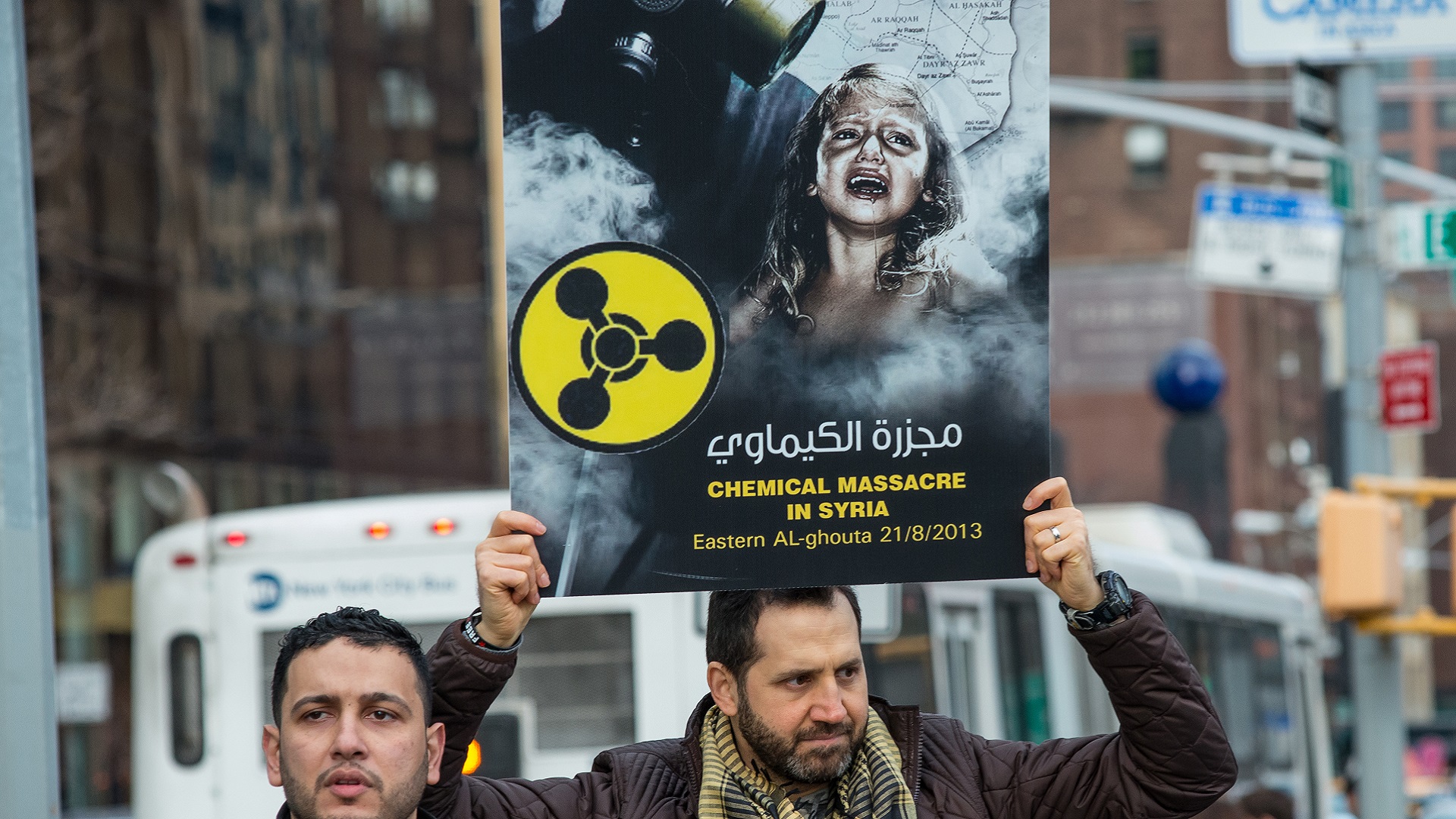
Al-Assad’s Legacy
In a related context, the United Nations High Representative for Disarmament Affairs, Izumi Nakamitsu, announced substantial progress in efforts to eliminate chemical weapons in Syria.
Nakamitsu indicated, during a briefing to the UN Security Council, that the Organization for the Prohibition of Chemical Weapons (OPCW) continues to work and coordinate with the Syrian government to identify and remove the remaining elements of the chemical weapons program of the former regime.
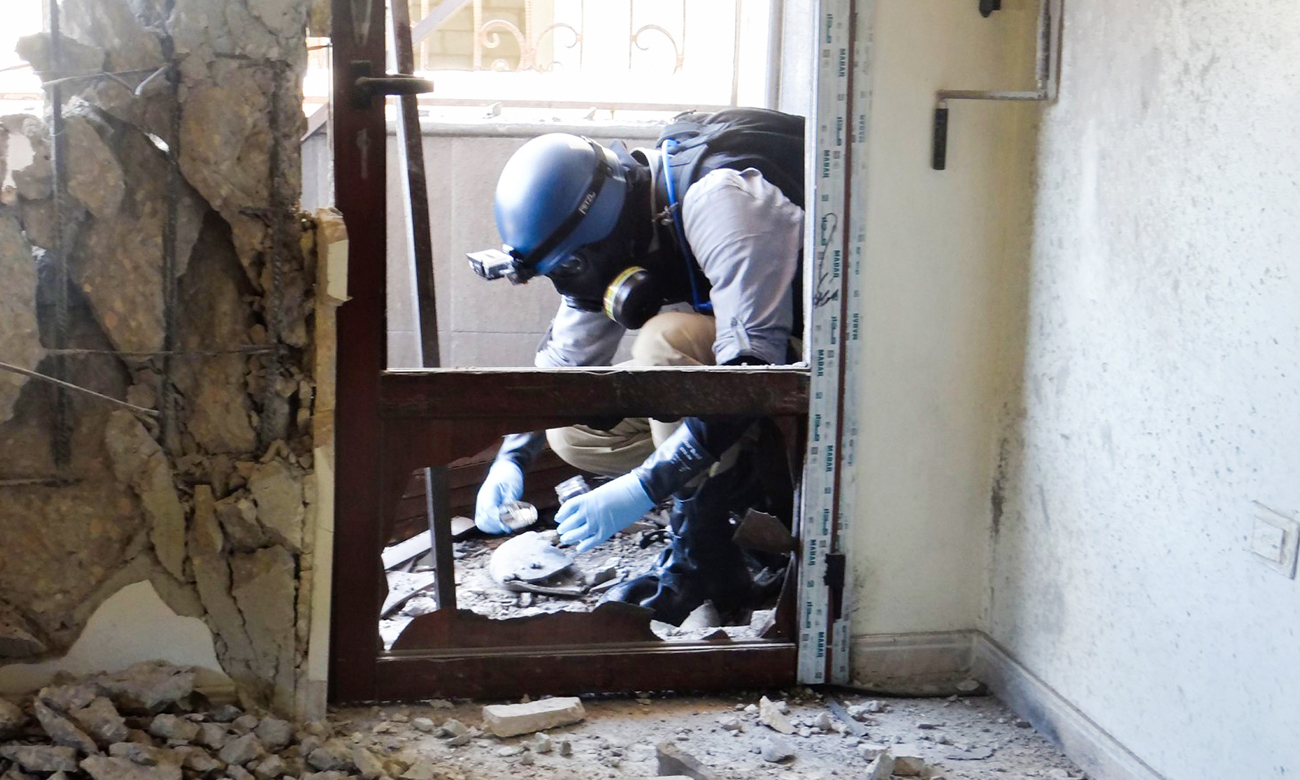
The UN official highlighted a visit conducted by a team of OPCW experts at the beginning of last month, which covered several undeclared sites considered high priority in the northern coastal and central regions, specifically in the provinces of Hama, Homs, and Latakia.
According to Nakamitsu, the team was able to prepare a complete and accurate inventory of the remnants of the chemical weapons program, in what has been described as one of the most significant developments in this file in years.
She confirmed that inspection operations led to the discovery of large quantities of chemical weapons, materials, and related documents that the al-Assad regime had never previously declared.
Among these findings were dozens of undeclared chemical munitions, including aerial bombs of the same type used in the chemical attacks on al-Latamneh in March 2017 and Khan Sheikhoun in April 2017, as well as missiles of the same type used in the Ghouta attack in August 2013.
Nakamitsu stressed the need to continue cooperation with the current Syrian government to formally declare and destroy the newly discovered materials under direct international supervision.
She also noted that the organization has visited more than twenty sites since March 2025, while emphasizing that further investigations and field visits are still required to complete the full picture of the former chemical weapons program.
As part of evidence collection efforts, the High Representative stated that the OPCW has conducted interviews with former program experts, collected 19 samples, and secured more than 6,000 documents.
She further pointed out that the Syrian government has handed over more than 34 boxes of documents, which were scanned and later returned to the Syrian national authority, reflecting an advanced level of cooperation between Damascus and the international organization.
A Positive Message
During a recent UN Security Council session, widespread international praise was expressed for the tangible steps taken by the Syrian government to bring closure to the legacy of chemical remnants left by the former al-Assad regime.
In this context, the United States welcomed the progress made in uncovering previously undeclared chemical weapons and materials, stating that these findings provide clear evidence exposing the falsehood of the al-Assad regime’s earlier declarations.
US Deputy Permanent Representative to the United Nations, Tammy Bruce, said that this notable development would not have been possible without the support provided by the international community to the new Syrian authorities.
The United Kingdom’s Deputy Permanent Representative, Jennifer MacNaughtan, noted that Damascus’s effective cooperation had directly contributed to the identification of dozens of chemical munitions, including bombs and missiles.
She added that the detention of suspects involved in the Eastern Ghouta massacre, where the toxic nerve agent sarin was used, represents a decisive and serious step toward accountability and justice.
Similarly, France’s representative, Jerome Bonnafont, stated that the former president Bashar al-Assad’s regime used chemical weapons against the Syrian population in at least nine confirmed instances.
He expressed hope that the remaining chemical stockpiles would be secured and destroyed as quickly as possible, stressing that the success of this process would send a “strong positive message” to the international community.
Meanwhile, China’s Deputy Permanent Representative, Sun Lei, called for the chemical weapons file to be closed as soon as possible, allowing Syria to redirect its resources and efforts toward reconstruction and development.
He also emphasized the importance of strengthening early warning measures to ensure that such dangerous materials do not fall into the hands of terrorist organizations.
Turkiye’s representative also stated that the Syrian government has shown sincere commitment to assisting the Organization for the Prohibition of Chemical Weapons (OPCW) in fulfilling its mandate, urging member states to support Syria until it becomes completely free of weapons of mass destruction.
The cooperation between the Syrian government and the OPCW was further praised by several delegations, including Bahrain, Greece, Somalia, Pakistan, Latvia, Panama, and Denmark.
These countries stressed the importance of continuing efforts to address outstanding issues and ensuring that such crimes are never repeated in the future.
In contrast, Russia adopted a different position, with its Permanent Representative to the United Nations, Vasily Nebenzya, expressing skepticism regarding the reliability of the evidence and findings related to the use of chemical weapons during the period of the al-Assad regime.
He also criticized the evidence-gathering and investigative mechanisms of the OPCW’s Technical Secretariat.
Major Obstacles
Despite significant political momentum and declared U.S. and international support, the final elimination of the recently discovered chemical arsenal faces highly complex logistical and technical obstacles.
The discovery of old aerial bombs and missiles equipped with sarin or degraded VX nerve agent compounds presents major challenges for experts from the Organization for the Prohibition of Chemical Weapons (OPCW) in ensuring safe neutralization.
These substances have, over time, become chemically unstable, making their transport from current sites highly risky in terms of both environmental and security hazards.
Beyond these technical difficulties, the “cost of destruction” emerges as a major obstacle. International sources estimate that dismantling operations, the construction of safe field incineration facilities, and soil decontamination in the provinces of Homs, Hama, and Latakia could cost hundreds of millions of dollars.
Given Syria’s strained economic situation after years of war, Damascus is pushing for the creation of an UN-administered international trust fund to finance these operations directly.
Observers believe that closing this file definitively will depend not only on the Syrian government’s political will, but also on how quickly the international community translates diplomatic praise into financial flows and on-the-ground technical support.
In turn, political analyst Ibrahim al-Khatib told Al-Estiklal that the new Syrian government’s handling of the complex legacy of the al-Assad chemical weapons program represents one of the most significant political and security tests for Damascus in the post-transition phase.
Al-Khatib noted that the authorities’ recent announcement of dismantling remnants of the covert program and arresting those involved should not be seen merely as compliance with international pressure, but as a strategic political investment that presents Damascus to the international community as a responsible partner, thereby enhancing its diplomatic legitimacy and accelerating its integration into the global system as a stabilizing actor.
He added that eliminating this heavy legacy sends a message of reassurance domestically, particularly to victims’ families, signaling an end to a culture of impunity, while also removing the legal and political justification for the continuation of stringent Western sanctions that were long tied to this file.
He concluded that this step reflects a fundamental transformation in Syria’s military and security doctrine toward a professional national army committed to international treaties, stressing that Syria is thereby turning a dark page in an effort to restore its legitimacy and demonstrate that its path of change is genuine and institutional.
Sources
- UN Security Council Commends Syrian Government’s Efforts on the Chemical Weapons File [Arabic]
- Undeclared Chemical Weapons Found in Syria, Including Types Used in the Notorious Ghouta Massacre
- Deployment of OPCW Expert Team to the Syrian Arab Republic Reveals Previously Undeclared Chemical Weapons
- Remnants of Assad’s Chemical Weapons Program Recovered, Syrian Official Says