After 33 Years Since Its Signing: What Does Canceling Oslo Mean for the Future of the West Bank?
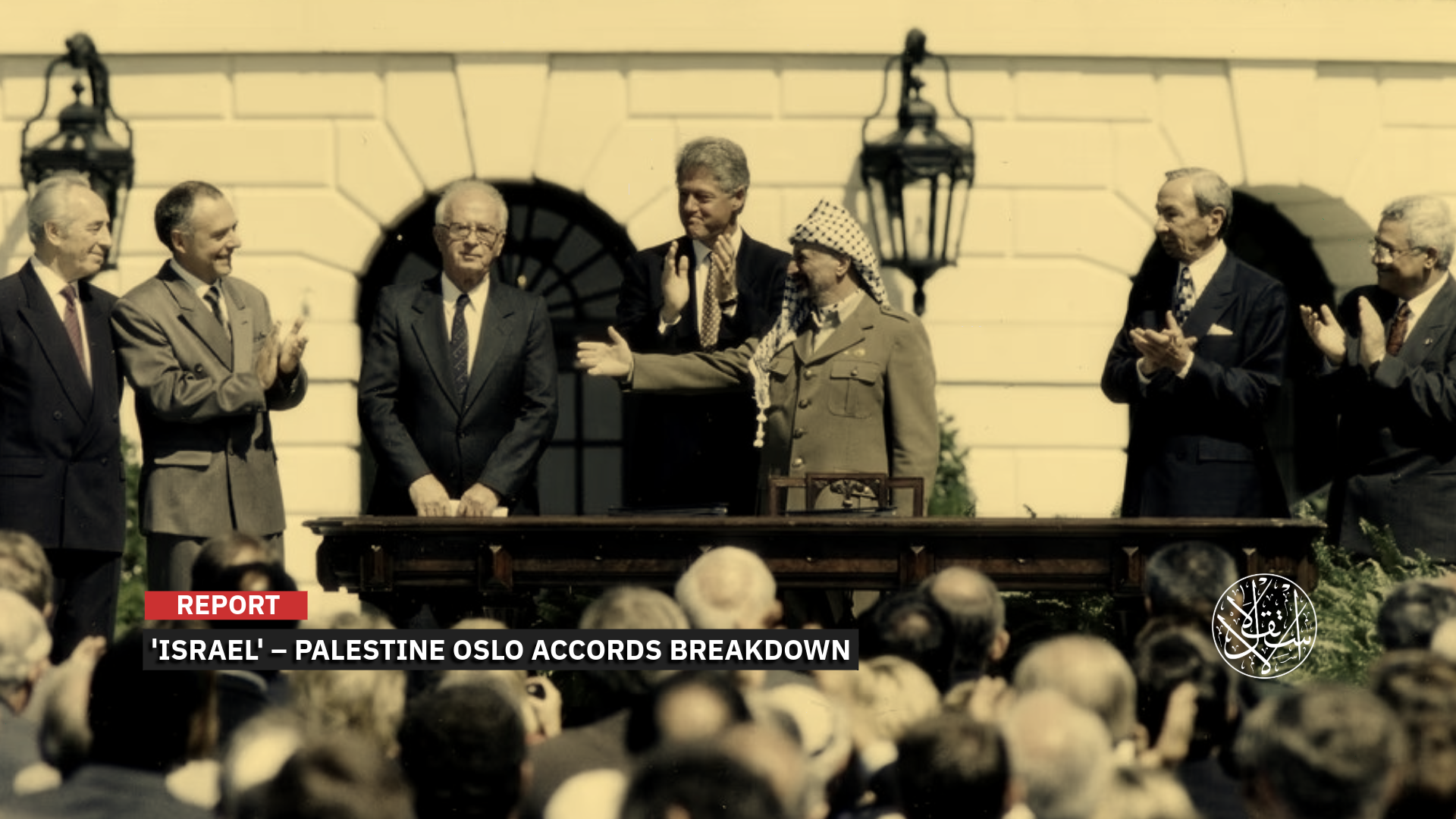
Since the signing of the Oslo Accords in 1993, calls within “Israel” to cancel them have never ceased.
After far-right lawmakers in the Israeli government passed a series of laws concerning the execution of Palestinian prisoners, the seizure of Palestinian Authority funds, and the confiscation of land in the West Bank, all of which received approval, they moved toward introducing a new bill calling for the cancellation of the Oslo Accords, the Hebron Protocol, and the Wye River Memorandum.
The bill, which was brought forward for a vote before being temporarily postponed by Prime Minister Benjamin Netanyahu, came amid his government’s focus on developments in southern Lebanon and the war against Iran.
It is considered one of the most dangerous proposed legislations, as its passage would effectively mean ending the existence of the Palestinian Authority, terminating the peace process, and officially imposing comprehensive occupation over the West Bank and the Gaza Strip.
Such a move could return conditions to the pre-Oslo era of 1993, while increasing the likelihood of confrontation and another uprising.
The timing of the bill has raised questions about its motives and whether it is part of electoral maneuvering aimed at attracting far-right voters ahead of the Knesset elections scheduled for October 2026, or whether it reflects a genuine direction toward eliminating what remains of the Oslo Accords and politically burying them 33 years after their signing.
This comes at a time when political and field realities indicate that “Israel” has already imposed extensive control over most Palestinian territories during the post-Oslo years, alongside major settlement expansion in the West Bank.
The Cancellation Campaign
Since the signing of the Oslo Accords in 1993, calls within “Israel” for their cancellation have never ceased, particularly from right-wing parties and religious nationalists.
However, these calls intensified unprecedentedly after Operation al-Aqsa Flood and the war on Gaza in October 2023, moving from the level of political statements to official legislative proposals within the Knesset.
With the rise of the far-right religious camp to power, demands to cancel the Oslo Accords became a constant part of the rhetoric of the Likud party, led by Benjamin Netanyahu, the Jewish Power party( Otzma Yehudit) led by National Security Minister Itamar Ben-Gvir, and the Religious Zionism party led by Finance Minister Bezalel Smotrich.
During 2025 and 2026, several legislative proposals were introduced to cancel agreements signed with the Palestinians, including a bill submitted by Ben-Gvir on March 9, 2025, to revoke the Oslo Accords, the Hebron Protocol, and the Wye River Memorandum. Another proposal, discussed by the Israeli Ministerial Committee for Legislation in May 2026, called for canceling all obligations arising from Oslo.
The latest of these attempts was a bill introduced by Knesset member Limor Son Har-Melech of the Jewish Power party on May 10, 2026. It was scheduled to be presented before the Ministerial Committee for Legislation before Netanyahu requested its temporary postponement for further review.
Although Justice Minister Yariv Levin stated that “everyone supports the idea,” Israeli media reported that the decision to postpone the bill stemmed from security and diplomatic assessments, as well as a desire to avoid opening a new political front while “Israel” remains occupied with the wars in Gaza and Lebanon and tensions with Iran.
The proposed law stipulates the cancellation of all agreements signed between “Israel”, the Palestine Liberation Organization, and the Palestinian Authority, meaning they would no longer be binding on the state or any official Israeli body.
It also calls for repealing the legislation enacted to implement those agreements and restoring the legal and security situation to what it was before the signing of the Oslo Accords in 1993.
The sponsors of the bill justify their move by claiming that the Oslo Accords “did not achieve peace,” but instead, according to their argument, contributed to “the deterioration of the security situation and the escalation of attacks against Israelis.”
The Hebrew newspaper Maariv also reported on May 11, 2026, that the sponsors argued the agreements allowed Palestinians to build their political and security institutions, including what they described as an “armed infrastructure,” ultimately leading to the events of October 7, 2023.
Ben-Gvir argues that completely canceling the agreements, restoring control over the areas transferred to the Palestinians under them, and abolishing the laws connected to their implementation would represent the “correction of a historic mistake,” as he described it.
He also claims that the establishment of a Palestinian state, considered the ultimate objective of the Oslo Accords, poses an “existential threat to Israel,” and would lead to the continuation of the conflict, undermine stability, and pave the way for Hamas to take control of the Palestinian Authority.
Analysts believe that the most dangerous shift lies not only in discussing the cancellation of Oslo, but in the transition of the idea from ideological rhetoric among the Israeli right into an official legislative and institutional track within the state, especially amid the growing religious and nationalist extremist discourse inside the government and the Knesset after the Gaza war.
Although discussion of the bill has been postponed, merely introducing it reflects a growing political trend within “Israel” to reconsider the entire political path that began with the Oslo Accords more than three decades ago, raising broad questions about the future of the Palestinian Authority, the possibility of renewed open confrontations, and the collapse of what remains of the political settlement process.

Bill Seeks to Scrap the Oslo Accords
Palestinian experts and political analysts believe that the latest attempt to pass a law canceling the Oslo Accords, despite similar previous attempts, carries electoral and propaganda dimensions this time, linked to competition among far-right parties for voter support ahead of the upcoming Knesset elections.
They also view the move as an attempt by the party of Itamar Ben-Gvir to pressure Prime Minister Benjamin Netanyahu and demonstrate its strength within the ruling coalition, which explains Netanyahu’s request to postpone the vote on the bill for the time being.
Political analyst Nehad Abu Ghosh stated in remarks to Shahab News Agency on May 11, 2026, that the proposed law comes within the context of “competition among far-right parties ahead of the elections, aimed at gaining popularity and scoring political points.”
He added that “Israel” still benefits from the Oslo Accords, particularly through the security role carried out by the Palestinian Authority, in addition to reducing the administrative and service burdens on the occupation.
He also noted that “Israel” uses the agreement as a political cover to present the appearance of a political process before the international community, despite successive Israeli governments failing in practice to adhere to the agreement’s provisions and reducing it solely to the security aspect.
However, according to observers, the reality on the ground indicates that the policies implemented by the Israeli government have effectively gone beyond the agreements signed with the Palestinians for years, and that attempts to cancel Oslo are merely efforts to provide legal and political cover for a reality “Israel” has already imposed.
According to analysts, the primary objective of the religious and nationalist far-right currents is to remove any legal or political restrictions preventing full Israeli control over the West Bank, especially since the Oslo Accords included commitments related to negotiations, Palestinian self-rule, and mutual recognition.
They also believe the deeper objective is to permanently eliminate the idea of a Palestinian state, since the Oslo Accords were based on the principle of a “phased solution” leading to a final settlement ending with the establishment of an independent Palestinian state, an outcome rejected by the far-right Zionist camp, which embraces the project of “Greater Israel.”
For this reason, hardline right-wing parties, particularly those led by Itamar Ben-Gvir and Bezalel Smotrich, are pushing toward canceling Oslo on the grounds that it “restricted Israeli expansion,” as preparation for imposing full Israeli sovereignty over the West Bank and accelerating annexation and settlement expansion.
These currents are also demanding the dismantling of the Palestinian Authority in order to evade the political and legal obligations resulting from the agreements, especially following the escalation of hardline rhetoric after Operation al-Aqsa Flood.
Mustafa Barghouti, Secretary-General of the Palestinian National Initiative, said in remarks to Palestinian media that “Israel’s” effort to cancel Oslo “clearly reveals that it is the occupation that rejects peace, not the Palestinians.”
He added that what is happening exposes, in his words, the reality of the Israeli position rejecting the establishment of a Palestinian state, arguing that “it is no longer acceptable to continue speaking about peace, negotiations, and the two-state solution while Israel continues its expansionist policies and crimes against Palestinians.”

Consequences of Canceling the Oslo Accords
Observers believe that the most dangerous consequence of canceling the Oslo Accords would be the collapse of the Palestinian Authority, on the grounds that the legal and political foundation upon which it was established would disappear. This would effectively mean the end of the division of the West Bank into Areas A, B, and C, opening the door to expanded settlement activity and the imposition of full Israeli control over Palestinian territories.
Legally, financially, and security-wise, the Palestinian Authority depends on the framework that emerged after the signing of Oslo. Therefore, canceling the agreements could gradually strip it of its legal legitimacy, weaken the role of its institutions, halt coordination with “Israel”, and ultimately lead to the full return of direct Israeli occupation over the West Bank.
According to analysts, this would mean “Israel” resuming direct administration of Palestinian cities instead of indirect governance through the Palestinian Authority, bringing with it major security and economic burdens, in addition to the likelihood of escalating daily confrontations between Palestinians and the Israeli army and an increase in armed resistance.
Israeli analysts also believe that officially canceling the agreement could increase European and international pressure on “Israel” and strengthen accusations that it seeks to entrench a permanent apartheid system, in addition to potentially affecting the Arab normalization agreements known as the Abraham Accords.
Some Arab states that normalized relations with “Israel” based their position on the idea of preserving the “two-state solution” and preventing the annexation of the West Bank. Therefore, the official cancellation of the Oslo Accords could place those countries in an awkward position and intensify regional tensions.
Adviser and researcher Hassan Hussein al-Wali believes that the Israeli right’s move toward passing a law canceling the Oslo Accords raises fundamental questions about the future of the legal and political relationship that has governed the Palestinian scene for more than three decades.
In an article published on May 11, 2026, he explained that some interpretations view the step as a direct threat to the Palestinian Authority, while another perspective sees unilateral cancellation of the agreement as effectively dismantling the legal and political cover that had been used to manage the conflict instead of resolving it.
He added that this could open the door to moving from the “transitional self-rule phase” toward demanding a framework of a “sovereign state,” as an entitlement imposed by political developments and international references.
Al-Wali pointed out that Prime Minister Benjamin Netanyahu’s request to postpone the vote on the bill reflects awareness within the Israeli political establishment of the risks of such a move, because officially canceling Oslo could legally redefine “Israel” as an occupying power bearing full legal and humanitarian responsibilities under the Geneva Conventions.
It could also allow the Palestinians to free themselves from the security and economic obligations imposed by the agreements, including the Paris Economic Protocol, without being blamed internationally for the collapse of the political process.
Al-Wali called for using this shift as a “strategic opportunity” to reestablish Palestine’s legal status as a “state under occupation” rather than a “self-governing authority,” and to return to the 1988 Palestinian Declaration of Independence as the primary political reference, alongside internationalizing the Palestinian Cause and holding the international community responsible for ending the occupation.
Although the Oslo Accords granted Palestinians Israeli recognition of the Palestine Liberation Organization as the legitimate representative of the Palestinian people and allowed for the establishment of a self-governing authority and an elected legislative council during a transitional phase, many Palestinians believe that the political commitments related to establishing a Palestinian state were never implemented, amid continued settlement expansion, the return of the Israeli army to self-rule areas, and escalating military operations in Gaza and the West Bank in recent years.

What Are Oslo, Hebron, and Wye River?
In September 1993, then-Israeli Prime Minister Yitzhak Rabin and Palestine Liberation Organization leader Yasser Arafat signed the “Oslo I” agreement in the U.S. capital, Washington, following secret negotiations held in Norway.
The agreement stipulated the establishment of a transitional Palestinian self-government, a gradual withdrawal of the Israeli army from parts of the West Bank and the Gaza Strip, and the creation of an elected Palestinian Authority with limited powers.
Final-status issues, such as Jerusalem, refugees, settlements, and borders, were to be resolved during a five-year transitional period.
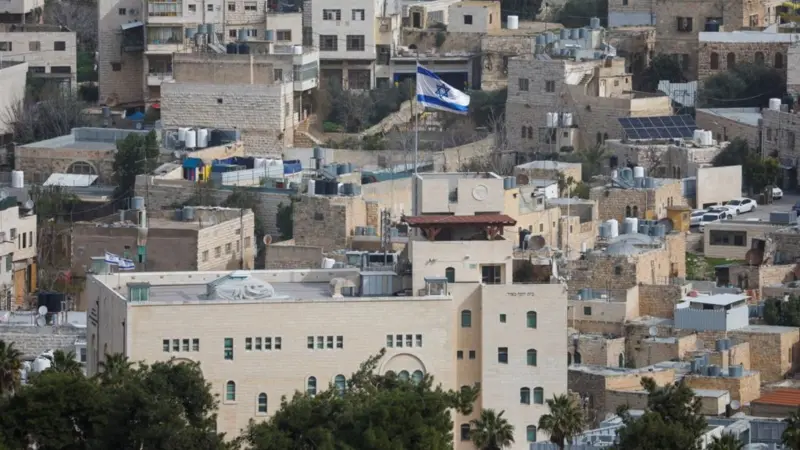
In January 1997, the “Hebron Protocol” was signed between the Palestine Liberation Organization and the Israeli government. The agreement provided for the redeployment of Israeli Occupation Forces in the city of Hebron and its division into two areas: the first under full Palestinian control, comprising around 80 percent of the city, and the second under Israeli security control, comprising around 20 percent, with some civilian powers transferred to the Palestinian Authority.
However, Palestinians say that “Israel” continued expanding inside the city and gradually seized parts of the areas under Palestinian Authority control as part of a policy of expanding settlement influence.
On February 15, 2026, the Israeli Security Cabinet approved amendments to mechanisms governing the division of powers in the West Bank. The changes included expanding Israeli control to cover the provision of municipal services in areas administered by Palestinians, as well as granting broad authority to seize what “Israel” describes as “heritage sites” across the West Bank, in addition to transferring oversight of the Ibrahimi Mosque to the settlers’ council.
Following the signing of the Oslo agreements in 1993 and 1995, the West Bank was divided into three areas:
- Area A: under Palestinian civil and security control.
- Area B: under Palestinian civil administration and Israeli security control.
- Area C: under full Israeli control.
However, Palestinians believe these divisions gradually lost their meaning amid continued settlement expansion and Israeli military operations, especially in Areas B and C.
Israeli analyst Yagil Levy wrote in the newspaper Haaretz on September 7, 2023, that the Israeli army formulated the Oslo Accords in a way that guaranteed continued Israeli control over the West Bank and Gaza Strip, while preventing the Palestinian Authority from becoming a fully sovereign entity, alongside continued settlement expansion.
Many observers believe that the assassination of Israeli Prime Minister Yitzhak Rabin in 1995 marked a major turning point in the course of the agreements, before final-status negotiations stalled, settlement construction intensified, and the chances of implementing the Oslo provisions declined.

In October 1998, Palestinian President Yasser Arafat and Israeli Prime Minister Benjamin Netanyahu signed the Wye River Memorandum in Washington under U.S. sponsorship. The agreement stipulated an Israeli withdrawal from additional parts of the West Bank, the implementation of joint security arrangements, the strengthening of economic cooperation, and the resumption of final-status negotiations.
Under the Oslo Accords, the Palestine Liberation Organization recognized “Israel” on approximately 78 percent of historic Palestine, in exchange for the establishment of a Palestinian state on the remaining territories occupied in 1967, namely the West Bank, the Gaza Strip, and East Jerusalem.
Historic Palestine covers an area of approximately 27,480 square kilometers, most of which is controlled by “Israel”. The West Bank covers around 5,860 square kilometers, the Gaza Strip around 365 square kilometers, and East Jerusalem approximately 125 square kilometers.
Observers believe that the successive governments of Benjamin Netanyahu, particularly the hardline right-wing and religious coalitions, directly contributed to undermining the Oslo Accords.
Netanyahu described the agreements on more than one occasion as a “historic mistake,” while his governments moved toward expanding settlements and rejecting any political process that could lead to the establishment of an independent Palestinian state.

Settlement Expansion Increased Sevenfold
Although the Oslo Accords were presented as a gateway to ending the occupation and establishing a Palestinian state, the pace of Israeli settlement expansion in the West Bank increased unprecedentedly after their signing. Estimates by Palestinian research centers indicate that settlement activity has grown nearly sevenfold compared to its level before the agreement.
According to those estimates, “Israel” allocated around 42 percent of West Bank land for settlement expansion, including 62 percent of the land in Area C, while the number of settlers rose from approximately 111,000 at the time the agreement was signed to nearly 750,000 today.
The Oslo Accords had stipulated that Area C would remain under Israeli control for a transitional period not exceeding five years, but the collapse of the peace process led to the consolidation and expansion of Israeli control over the area.
Area C constitutes around 60 percent of the West Bank and includes vast agricultural and grazing lands belonging to Palestinian villages located within Areas A and B.
Despite widespread Palestinian criticism, the Palestinian Authority has not announced the cancellation of the Oslo Accords signed in 1993 and 1995, and has remained committed, particularly to their security provisions. However, developments on the ground in the West Bank and the rise in armed resistance have led many Palestinian assessments to conclude that the agreement has “effectively expired” and that its political and legal foundations have significantly eroded.
The idea of the “two-state solution” suffered another setback after Israeli Prime Minister Benjamin Netanyahu signed the settlement plan known as “E1” in the settlement of Ma’ale Adumim on September 11, 2025, before it was officially approved in December of the same year.
The plan includes the construction and legalization of 19 new settlements and settlement outposts in the eastern areas of Jerusalem, Bethlehem, and Ramallah, linking them to the settlement of Ma’ale Adumim, located between Jerusalem and Jericho, in addition to building more than 3,400 new settlement units.
Palestinians say that implementing the “E1” project would effectively separate the northern West Bank from the southern part, undermining the possibility of establishing a geographically contiguous Palestinian state.
While signing the plan, Netanyahu stated, “This place belongs to us,” adding, “There will never be a Palestinian state,” according to Reuters.
In July 2025, the International Court of Justice, the highest judicial body of the United Nations, ruled that the Israeli occupation of Palestinian territories is illegal and called for the removal of Israeli settlements “as rapidly as possible.”