Is Left-Leaning Colombia Returning to the Pro-American Right Wing?
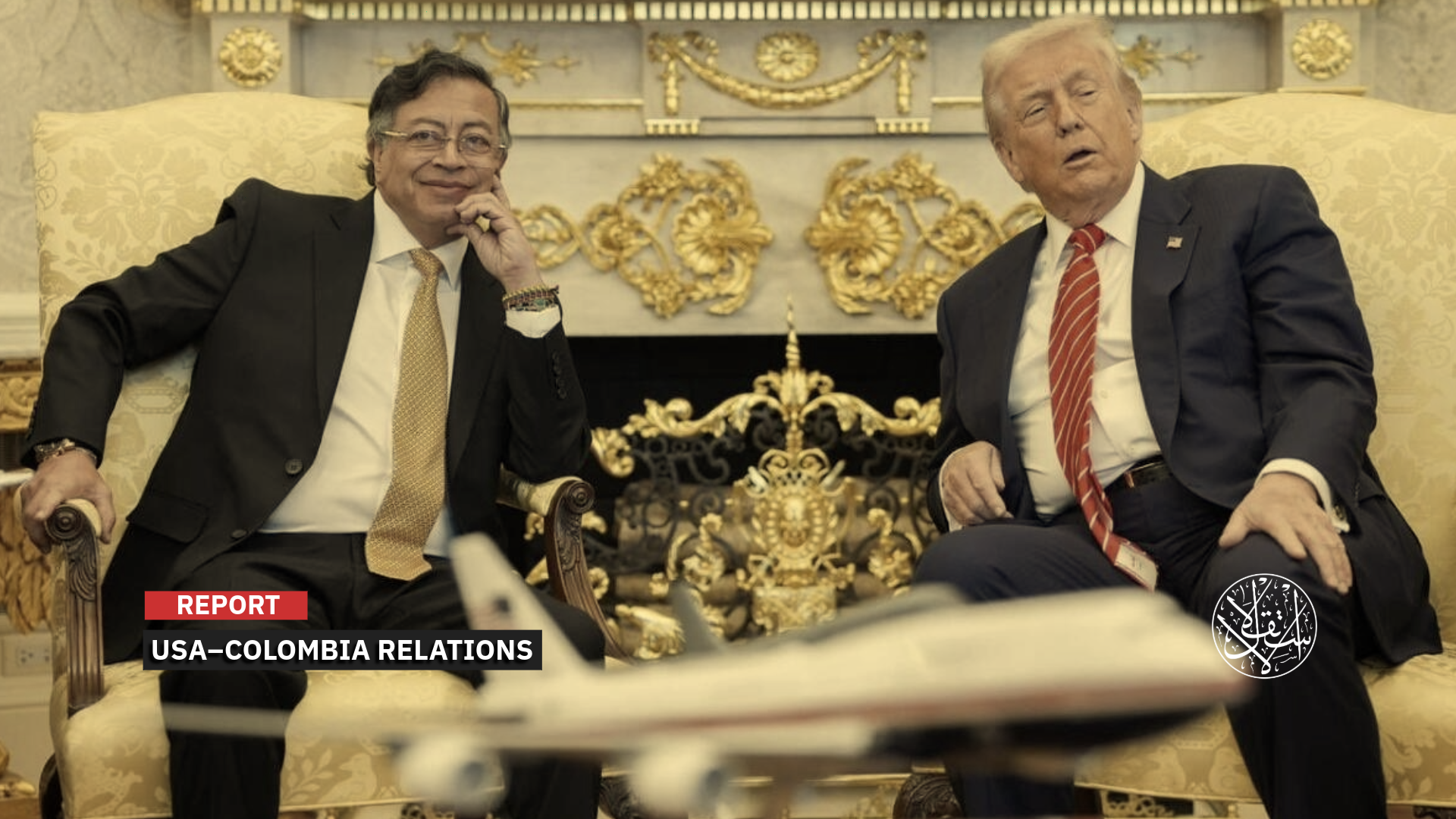
"Colombia’s upcoming elections appear to be a referendum on the country's stance towards Palestine and Israel."
Despite the wave of victories achieved by far-right candidates in recent years in Argentina, Chile, Ecuador, Bolivia, and Honduras, with US support, Colombia remains one of the few Latin American countries still governed by the left, alongside Mexico and Brazil.
However, this reality may change as the presidential elections approach, after the US-backed right-wing opposition candidate, Abelardo De la Espriella, led in the first round, pending the final result in the runoff scheduled for June 21, 2026.
US support for right-wing movements has reignited the debate about US intervention in Latin American affairs, whether through direct intervention or by supporting opponents of outgoing President Gustavo Petro.
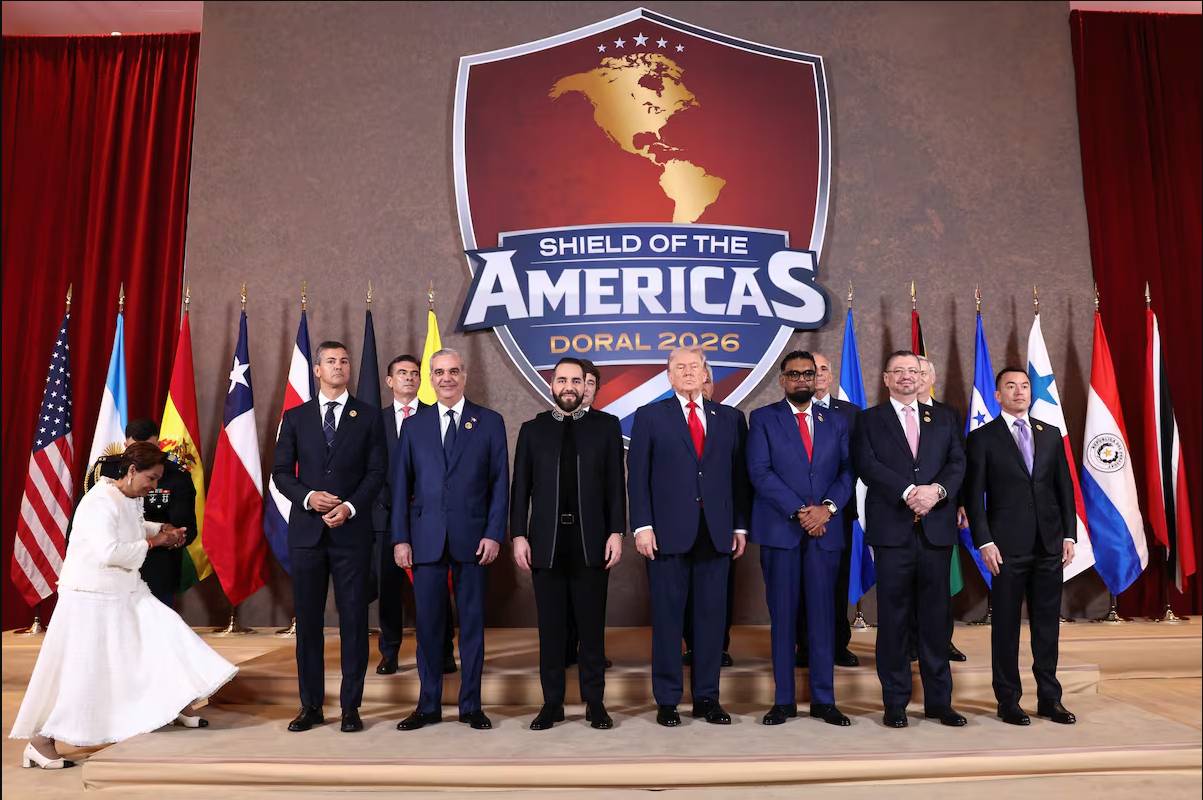
This debate is particularly significant given the Trump administration's adoption of a policy based on reviving the Monroe Doctrine concerning American influence in Latin America.
This doctrine, declared by US President James Monroe in 1823, has been redefined, but in a way that critics argue allows Washington to expand its intervention in the region's affairs through various means.
Right-Wing Influence
Washington aspires to bring Colombia back into the fold of American right-wing influence in the upcoming elections, as part of the Trump administration's policy of dominating Latin America and combating leftist governments.
This includes using military force, as seen in the case of Venezuela with the abduction of its president, or through blockade, as is the case with Cuba, where oil supplies are withheld and threats of invasion are threatened.
Historically, Colombia has been considered one of Washington's closest allies in Latin America, but relations have been strained since the election of leftist President Gustavo Petro in 2012, due to disagreements over immigration, drugs, and regional policies.
Although Trump did not officially announce his intervention in the 2026 Colombian elections, he was a powerful presence in the political discourse, attacking President Petro and the Latin American left and threatening to bring all leftist governments back into the American fold by supporting right-wing candidates in the elections.
All the US-funded evangelical churches in Colombia also played a role in the election campaign in favor of the far-right candidate, Espriella.
The relationship between Trump and Petro during late 2025 and early 2026 witnessed one of the most severe crises in the history of relations between the two countries, reaching the point of open threats of military action against Colombia.
Trump described Colombia as a sick country, saying that it was ruled by a sick man who loved to manufacture cocaine and sell it to the United States, a direct reference to Petro.
On other occasions, Trump reiterated his accusations against Petro of being lenient with drug cartels and threatened to impose economic and punitive measures on Bogota.
Trump's most dangerous statement came on January 4, when journalists asked him directly whether the United States might launch a military operation against the Colombian government, he replied, "That sounds good to me."
This statement came days after the US operation targeting Venezuelan President Nicolas Maduro, leading Colombians to perceive the threat as genuine rather than a mere passing remark.
US Secretary of State Marco Rubio also attacked Colombia's leftist president, calling him crazy.
The crisis wasn't limited to military pronouncements. Trump also spoke of halting some US aid to Colombia, imposing sanctions on figures close to Petro, and reviewing cooperation programs between the two countries on counter-narcotics efforts, citing the leftists' failure to combat drug trafficking.
Petro's supporters viewed these statements as a US attempt to pressure the democratically elected leftist government. But just days after the escalation, a phone call took place between Trump and Petro, who visited Washington in February 2026, and the crisis eased somewhat.
Nevertheless, Trump's statements regarding Colombia continued to exert pressure on Petro's leftist government and indirectly influenced the Colombian domestic political climate, especially ahead of the elections.
If the conservative right-wing candidate wins the runoff on June 21, many analysts expect Colombia to see a retreat from the leftist approach represented by Petro, a closer relationship with the United States, and a more hardline stance toward the remaining leftist governments in the region, such as Venezuela and Cuba.
Decisive Runoff
The runoff is expected to be decisive in Colombia, determining whether the left will maintain its dominance and continue its clashes with the Trump administration, or whether the right-wing candidate, who admires Trump, will win, bringing the country back into the American right-wing fold.
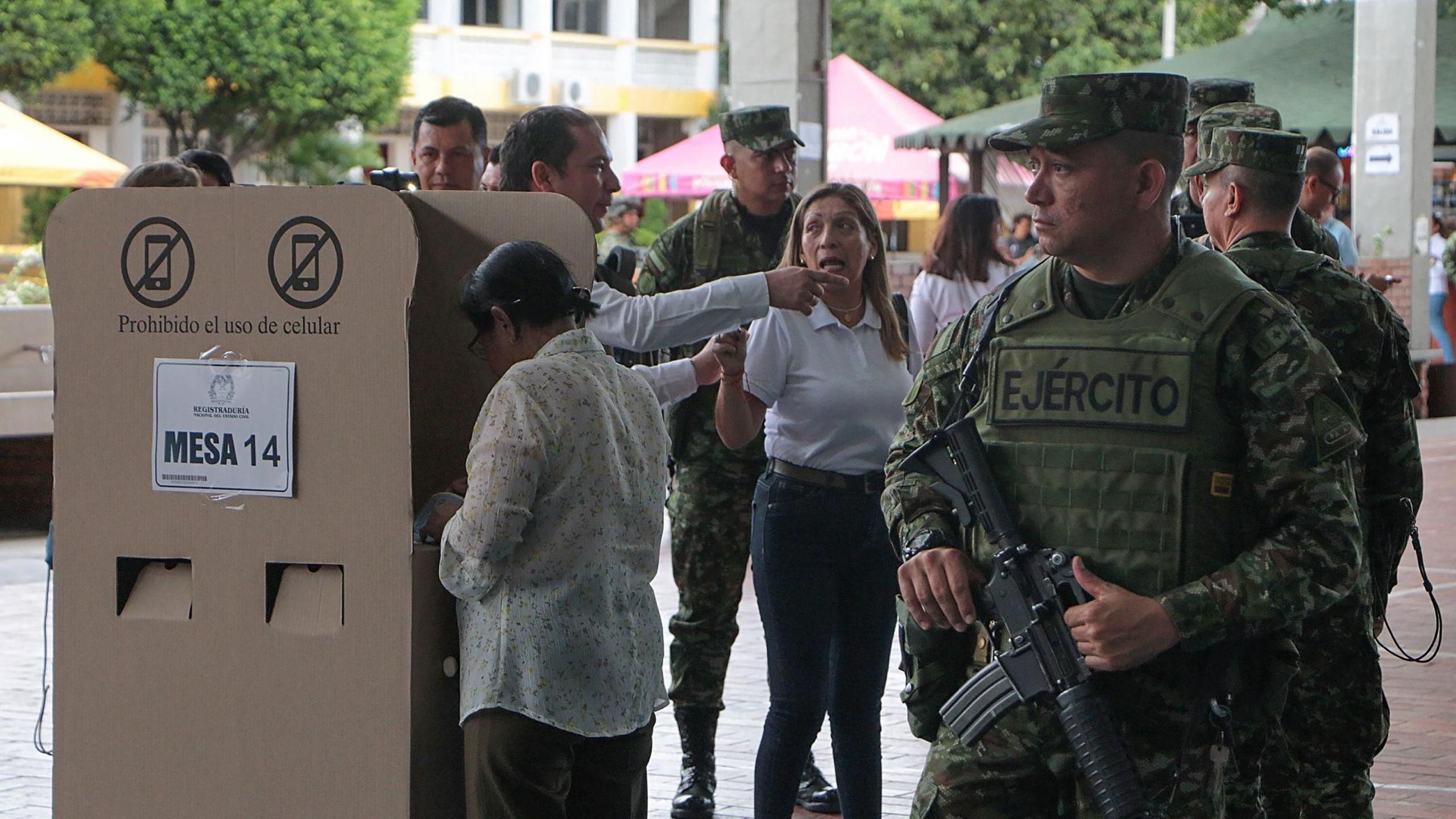
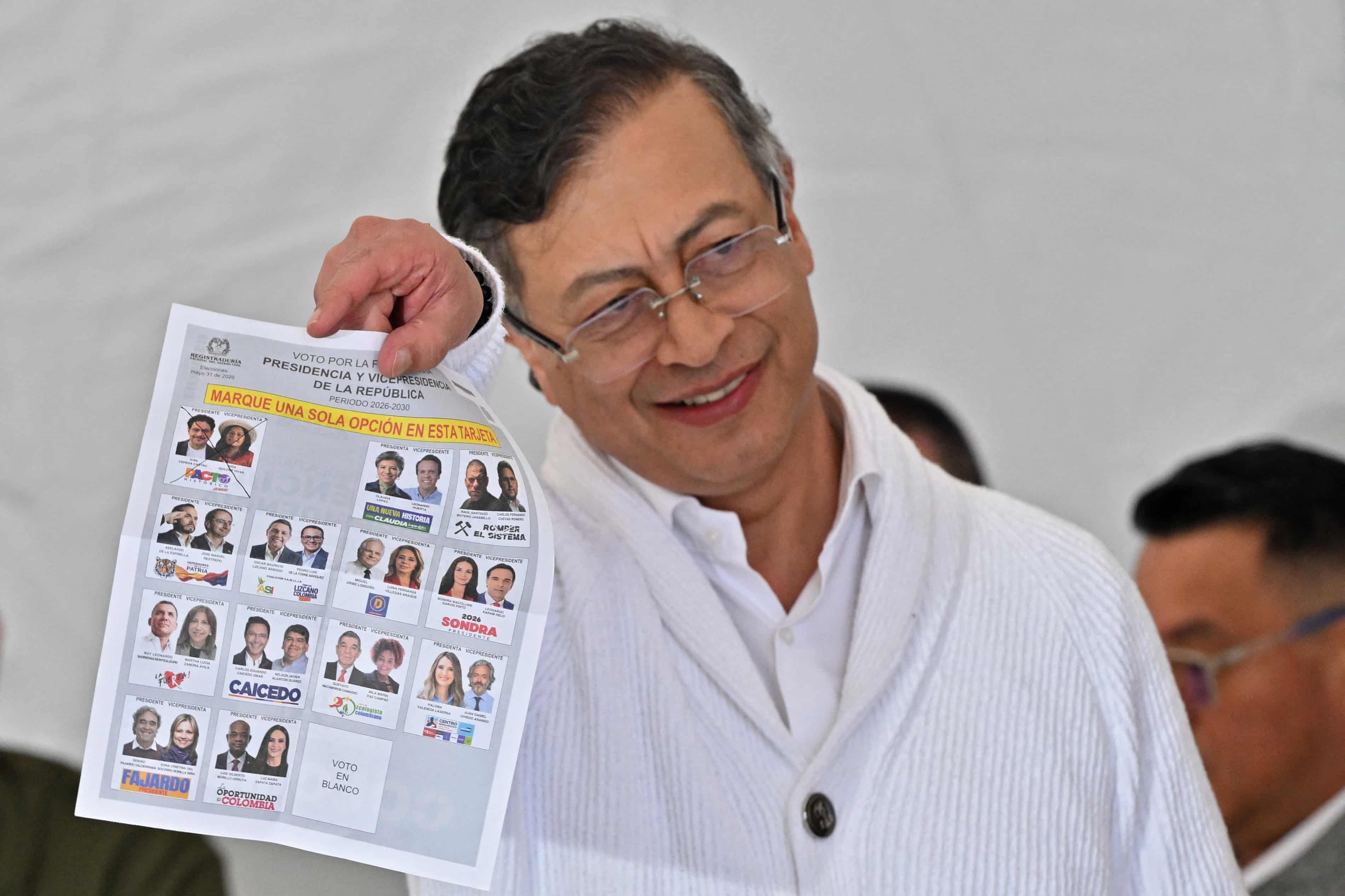
Data from the National Register of Electoral Persons showed that right-wing candidate Abelardo de la Espriella led the race with more than 43.7% of the vote, qualifying for a runoff against left-wing Senator Ivan Cepeda, who received less than 40.9% of the vote. Twelve other candidates were eliminated from the presidential race.
President Petro said he does not accept the preliminary results of the election that will determine his successor, but pledged to abide by the court's decision after a review of the results.
In a post on X, Petro justified his rejection of the results, which were conducted by a private company, by stating that the algorithms of the counting and sorting software were modified three times, and 800,000 identity cards belonging to people not listed on the official electoral register were added.
The 2026 Colombian presidential election marks a pivotal moment in the country's political history, coming after four years of rule by Petro, the first leftist president in modern Colombian history.
With the rise of nationalist and conservative right-wing candidates, the debate has reignited regarding whether the country is heading towards a political upheaval that could return it to the traditional pro-Washington camp.
Petro came to power in 2022, capitalizing on popular discontent with the traditional elites and campaigning on a platform of social justice, economic reform, and peace with armed groups.
However, his term faced numerous obstacles, including the slow pace of reforms, economic difficulties, and tensions with sectors of the political and economic establishment. This contributed to a decline in the popularity of the left and paved the way for a strong right-wing resurgence.
Observers believe that some voters are not necessarily voting for a fully-fledged right-wing platform, but rather expressing disappointment with the performance of the leftist government—a pattern observed in other Latin American countries in recent years.
Petro did not leave office in Colombia due to a coup, impeachment, or loss of his position, but rather because he reached the end of his constitutional term.
The Colombian constitution prohibits the president from running for a second consecutive or non-consecutive term, limiting the presidency to a single four-year term. Therefore, Petro is ineligible to run again in the 2026 elections.
Despite accusations from Petro's opponents that he sought to extend his influence through a constituent assembly or constitutional reforms, he repeatedly denied wanting to remain president after 2026.
Petro declared on several occasions that he was not seeking re-election, emphasizing that the constitution does not allow it.
Nevertheless, he is expected to try to maintain political influence after leaving the presidency by supporting candidates from his leftist movement and pushing for constitutional reforms and new political projects.
Internal or External?
A major controversy is brewing in Colombia regarding the victory of the pro-American right-wing candidate and the surprise surrounding his first-round win, given his relative obscurity.
Questions are being raised: Is his victory due to the deteriorating internal situation, American interference, or both?
The Guardian observed in early June 2026 that the surprise first-round victory of a Trump supporter represents a major blow to traditional conservatives in Colombia.
Espriella's success came as a surprise to most Colombian analysts and politicians, although it suggests that some voters were fed up with politics and supported the right-wing candidate for economic and security reasons rather than political ones.
Political scientist Nadia Jimena Perez Guevara stated that Espriella succeeded in uniting the voices of disaffected citizens—not only those opposed to Petro and left-wing policies, but also those simply fed up with politics.
The right-wing candidate advocates for military alliances with the United States and "Israel", a comprehensive confrontation with criminal groups, and the construction of massive prisons.
The left-wing candidate, on the other hand, supports Petro's strategy of comprehensive peace, which relies on negotiating the dismantling of all criminal groups.
However, Western assessments suggest that Trump's influence has become so pervasive that elections in Latin America are decided by him, or rather, by his chosen candidates.
A report in the magazine Latino America 21 indicates that Latin America has been experiencing a political shift to the right since 2015, following the fall of several left-wing governments, largely due to US intervention.
This shift followed the so-called pink tide of the early 2000s, fueled by public discontent, the rise of controversial leaders, and a new US foreign policy.
Of the 15 countries surveyed, nine have undergone political transformations since 2022, mostly from left to right.
Figures like Javier Milei in Argentina and Nayib Bukele in El Salvador embodied this new political climate with populist strategies, while Luis Abinader in the Dominican Republic represented a moderate right that prioritized stability and pragmatism.
The magazine states that American foreign policy played a role, as the Trump administration adopted a position supportive of right-wing governments and hostile to left-wing governments.
The US-backed military coup that ousted Nicolas Maduro in Venezuela in January 2026 marked a symbolic turning point and a message from Washington to the left that 21st-century socialism was being dismantled.
The Trump administration declared its intention to support its allies in the Western Hemisphere, boost trade, and stabilize its Latin American partners.
Although its confrontational approach is worrying, right-wing governments responded to Washington's request for economic and strategic support.
Israeli Interests
For its part, "Israel" is watching the elections in Colombia with interest, given that President Petro has adopted one of the most hardline stances against it in Latin America since the outbreak of the war on Gaza, and it appears that the leftist candidate to succeed him is leaning towards adopting the same approach.
During the leftist government, Colombia announced in May 2024 that it was severing diplomatic relations with "Israel", justifying the decision with accusations that "Israel" had committed serious violations in the Gaza Strip.
Petro sought to have his country join the case brought by South Africa against "Israel" before the International Court of Justice (ICJ).
Based on a vision adopted by the Colombian left, the Palestinian Cause is considered a matter of rights and morality, and Israel is seen as bearing responsibility for actions that warrant international accountability.
In contrast, "Israel" views the prospects of right-wing candidate Espriella, known for his pro-"Israel" stance, favorably.
Espriella has already met with the Israeli Foreign Minister and pledged to restore diplomatic relations with Tel Aviv, even promising to move the Colombian embassy to Jerusalem.
Espriella considers "Israel" a strategic ally and calls for renewed cooperation, including leveraging its security expertise within Colombia.
Therefore, his rise to power would represent a radical departure from Petro's pro-Palestinian policies.
Thus, Colombia's upcoming elections appear to be a referendum on the country's direction regarding Palestine and "Israel".
A victory for left-wing candidate Cepeda would likely mean a continuation of the pro-Palestinian approach and ongoing political pressure on "Israel", while Espriella's victory would bring Colombia back into close alignment with the United States and "Israel".
For this reason, "Israel" is following these elections with keen interest and concern, as they could determine whether it loses or regains one of the most influential diplomatic arenas in Latin America.
Sources
- Colombia’s far-right presidential candidate De la Espriella wins first round of vote ahead of runoff
- Trump admirer’s surprise first-round win is a blow to Colombia’s traditional conservatives
- Pro-Trump candidate pulls ahead in Colombia presidential vote as ruling party sows doubt in results
- Trump threatens military operation against Colombia, after Venezuela raid
- Colombia’s Petro to visit White House in February
- The Latin American political landscape on the right: security, economy and the dilemma of the center