Al-Aqsa Mosque: From Hashemite Custodianship to Occupation Administration: What Is Happening Behind the Scenes?
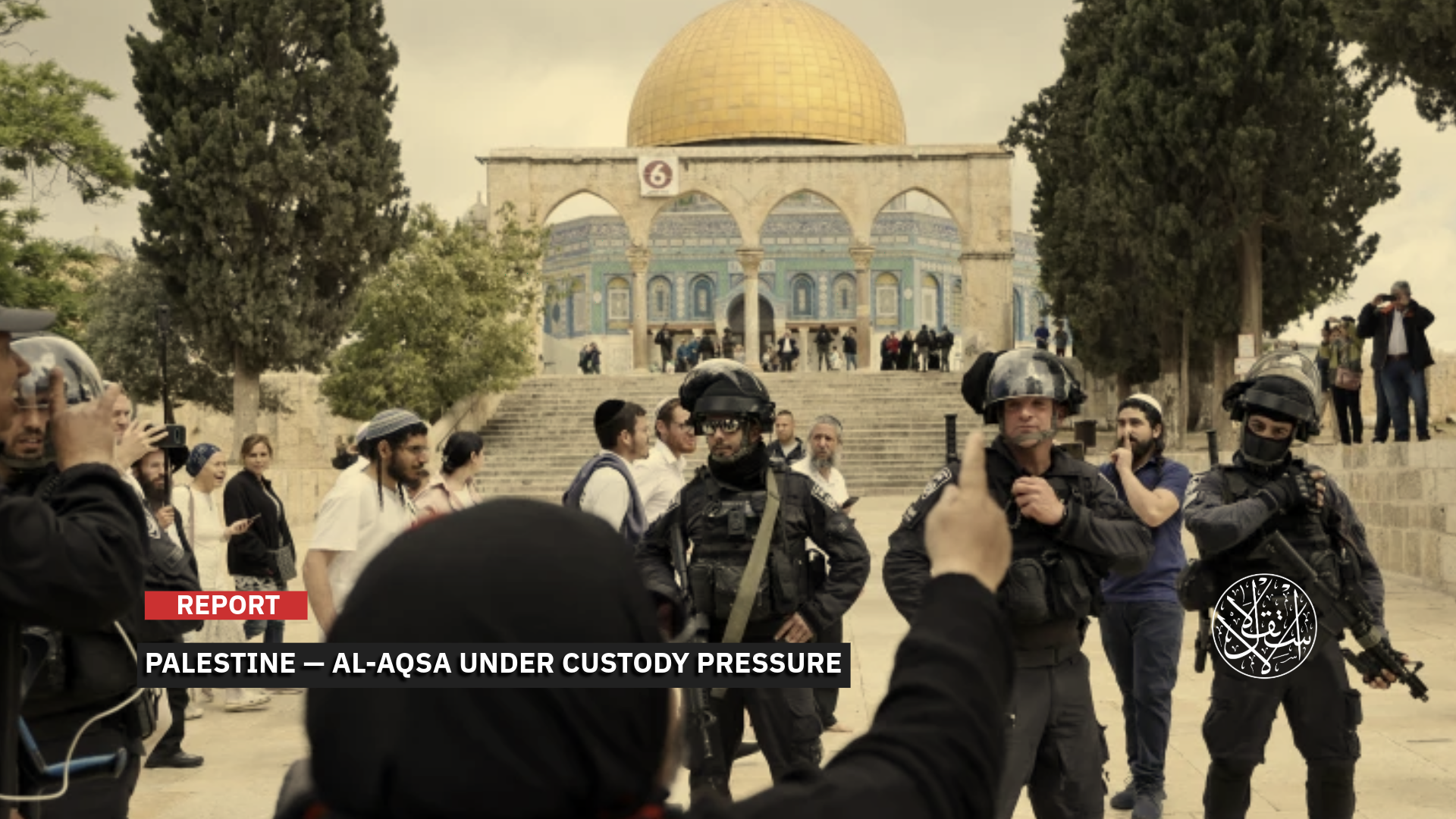
The plan is approaching the model used at the Ibrahimi Mosque in Hebron.
At the end of May 2026, an investigation triggered a political and media uproar after revealing that the U.S. administration under Donald Trump and “Israel” were working on drafting a plan to end the authority of Jordan’s Islamic Endowments Department over al-Aqsa Mosque.
The British outlet Middle East Eye reported that Washington and “Tel Aviv” were seeking to replace the Endowments Department with a new arrangement that would classify the Noble Sanctuary as a “multi-religious center.”
There has been no official confirmation of the plan from Washington or “Tel Aviv”, while U.S. Secretary of State Marco Rubio said he was unaware of it and questioned its credibility.
London stated that Jordan’s custodianship over the holy sites must be respected, but the leak came amid a situation on the ground where the existing status quo is already eroding.
Plan Details
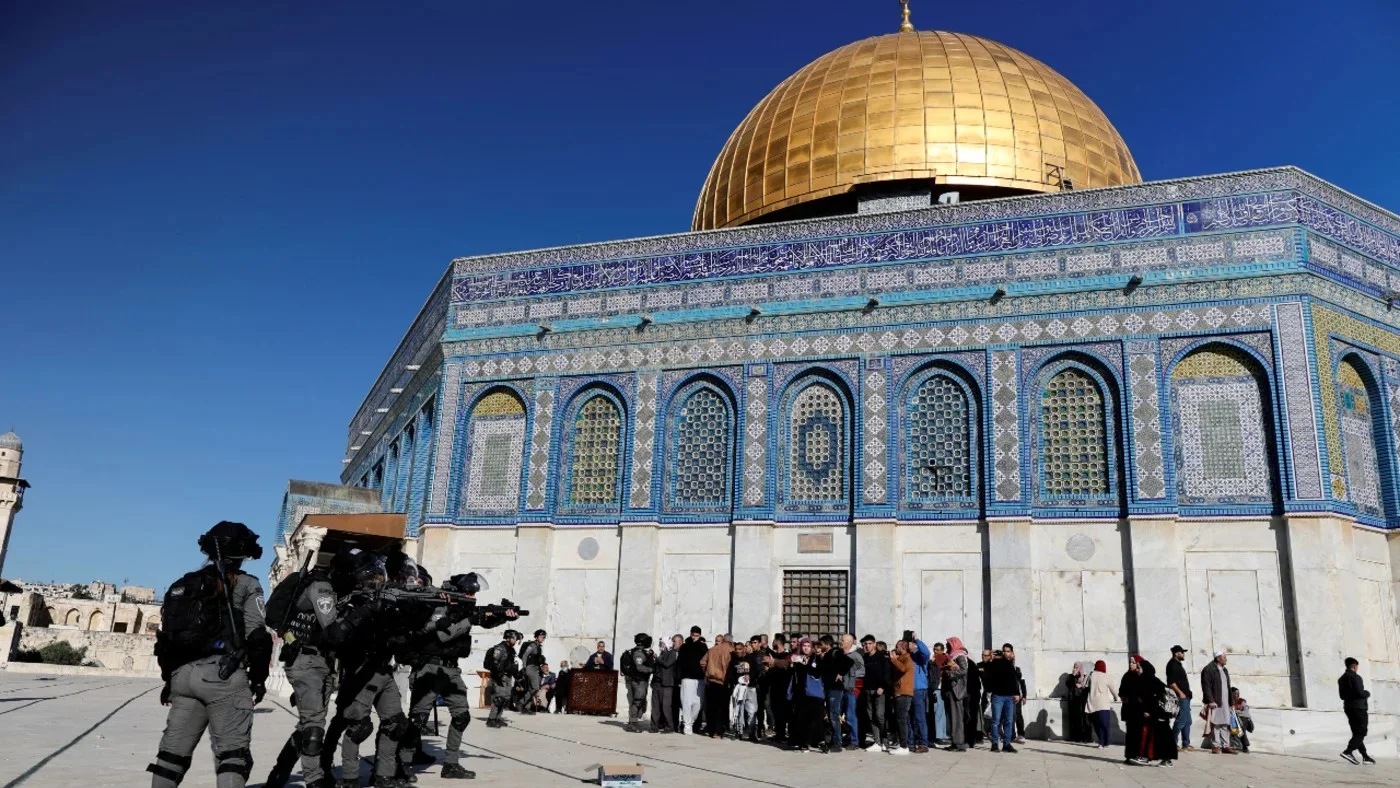
The leak published by the site refers to a draft U.S.–Israeli plan, the most prominent provisions of which include abolishing the authority of Jordan’s Ministry of Islamic Endowments over al-Aqsa Mosque and forming a new body appointed by the Israeli occupation government to manage the site.
According to sources cited by the site, including American and Arab officials, the new authority would declare the compound a “multi-religious center,” effectively transforming it from a mosque under Hashemite custodianship into a shared site with Jewish, Christian, and Muslim religious presence.
The core idea involves granting Zionist settlers “equal access” to the courtyards of al-Aqsa, allowing group prayers, and expanding Israeli involvement in appointing imams and approving Friday sermons, marking a significant shift from the current declared status quo, which limits incursions to “tourism” without prayer.
According to the same account, sources cited by Middle East Eye also discussed an alternative scenario involving “rotating Arab supervision” of al-Aqsa, after countries such as Bahrain, Egypt, Morocco, and the UAE were informed of the U.S. proposal, in contrast to Saudi opposition to any arrangement that would affect Hashemite custodianship.
This vision goes beyond regulating incursions, as it grants “Israel” a direct role in appointing preachers and overseeing Friday sermons, with the plan reportedly giving “Israel” the final say in selecting imams and approving sermon texts.
The report also speaks of turning the site into a tourist landmark attracting visitors of different faiths, which would obscure its Islamic identity and strip it of its symbolic status as the first qibla and the third holiest site in Islam.
Notably, the plan as described in the leak approaches the model applied at the Ibrahimi Mosque in Hebron in the southern West Bank, where the mosque was spatially and temporally divided between Muslims and Jews following the 1994 massacre.
Observers believe that designating al-Aqsa as a “multi-religious center” would legitimize the division of prayer times and spaces for Jewish worship and formalize settler incursions.
The Jerusalem Governorate, affiliated with the Palestinian Authority, stated that the talk of a “center” aims to impose Israeli sovereignty and undermine the status quo in the city.
Days after the plan was revealed, the Israeli newspaper Haaretz reported on June 3 that “Israel”, through calls issued by Daniel Liarach, deputy commander of the al-Aqsa Mosque police unit, is seeking to recruit nationalist extremists and settlers into its ranks under the slogan of “participating in enforcing sovereignty.”
Rabbis and activists from the “Temple Mount” movements, which call for building a temple in place of the mosque, encouraged their followers to join these forces to strengthen control over the site.
The broader aim of these measures is to transfer actual authority and administration of al-Aqsa Mosque from the Islamic Endowments Department to the Israeli occupation police.
The Jerusalem Governorate described this step as a “dangerous development” and a new phase of direct cooperation between official Israeli institutions and extremist groups.
Who Holds the Keys?
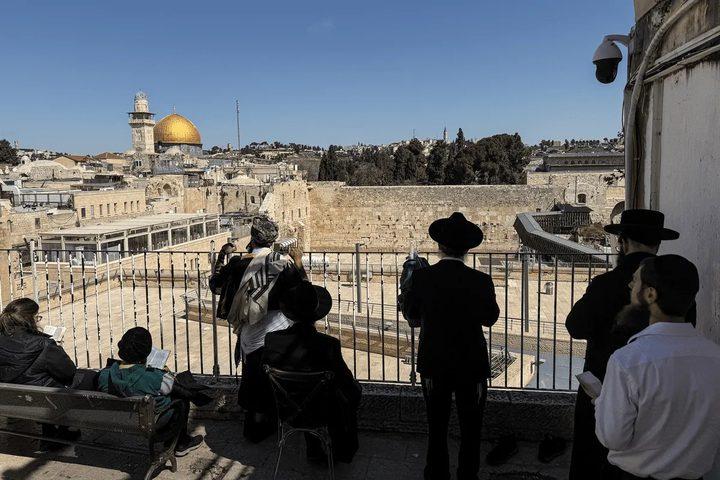
To understand what the plan seeks to change, it is first necessary to explain the current system. The al-Aqsa Mosque / Noble Sanctuary falls under Hashemite custodianship, an arrangement that began in 1924 when responsibility for safeguarding the Islamic holy sites in Jerusalem was entrusted to Sharif Hussein bin Ali, leader of the Arab Revolt, and his sons.
This role gained legal recognition in the Jordan–Israel peace treaty of 1994, which states in Article 9 that Jordan’s special role in caring for the Islamic holy sites in Jerusalem is acknowledged and that it is given priority in any future arrangements.
The management of religious affairs within the compound is carried out through a council and the Islamic Endowments Department. The council was formed by the Jordanian government in 1988 and expanded in 2019 to include 18 members. It is appointed by Jordan, sets policies, and oversees the administration of the mosque and its waqf properties.
As for the Endowments Department, which falls under the Jordanian ministry, it includes around 1,000 employees and is responsible for registering endowments, supervising maintenance and preservation of buildings, managing access to the compound, and monitoring violations by the occupation authorities, while Israeli police effectively control the entry of non-Muslims through the Mughrabi Gate.
Imams and preachers are appointed through a religious and administrative network linked to the Jordanian Endowments Department and Palestinian religious authorities in Jerusalem. Endowments employees are administratively under the Jordanian ministry, while religious authority at the site is tied to the Mufti of Jerusalem, appointed by the Palestinian presidency.
This gives the Endowments Department administrative and organizational authority within the compound, but it remains influenced by the political context and by occupation-imposed restrictions on the ground.
Although the Endowments Department manages religious affairs, actual security control over the compound is in the hands of Israeli police. After the occupation of East Jerusalem in 1967, “Israel” and Jordan reached a “status quo” arrangement whereby the Endowments retained administrative control while the occupying state handled security and access points.
Under this arrangement, non-Muslims are allowed to enter the site via the Mughrabi Gate during specific hours, but they are prohibited from praying. Over time, however, “Israel” has increasingly violated this rule.
In 2003, “Israel” resumed allowing settler incursions into the compound and imposed unilateral measures regulating their timing and restricting Muslim worshippers, while the Endowments have been unable to prevent settlers from entering.
Israeli police control the opening of the mosque gates, the number of entrants, impose age restrictions on Muslim worshippers, and ban itikaf (religious seclusion) during the final nights of Ramadan.
In April 2021, police cut the mosque’s loudspeaker wires to prevent the call to prayer from being broadcast during Israeli celebrations of what is known as “Jerusalem Day.”
Imams at al-Aqsa have also been banned or expelled when their sermons addressed the Gaza war or criticized the occupation, reflecting the extent of control over religious and political speech.
With the rise of far-right parties within the occupying government, settler incursions into the compound have expanded and shifted from “tourist visits” into organized group prayers.
The notion of “visitation rights” has effectively evolved into structured Talmudic rituals performed by settlers in large groups under police protection, while Muslim worshippers face restrictions and certain age groups are barred from entry.
What Changed?
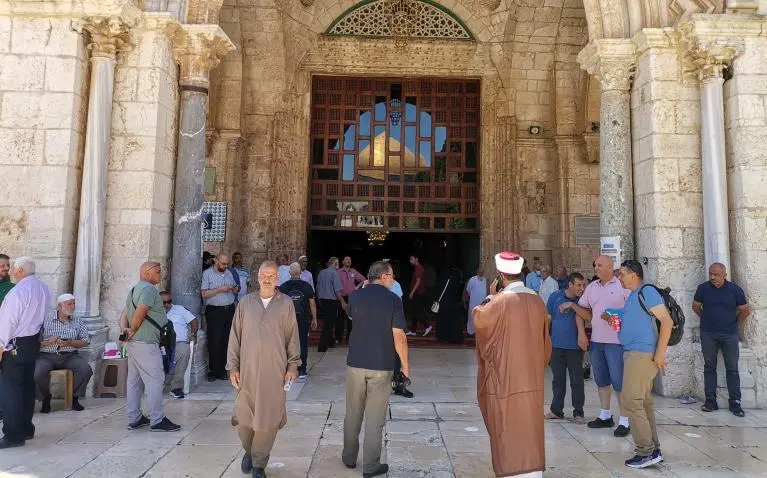
If implemented, the leaked plan would represent a fundamental shift in the governance structure of the compound. Moving from Hashemite custodianship and Islamic administration to a “multilateral” framework involving the occupation would, in essence, transfer the weight from religious management to security and political control.
The first consequence would be the disappearance of the council and the Islamic Endowments Department as bodies managing the mosque’s affairs. This would deprive Jordan of its historic role and strip it of part of its domestic and international legitimacy, as the Hashemite custodianship is considered a cornerstone of the Jordanian political system’s legitimacy and a tool for enhancing the kingdom’s regional role.
Even if Jordan were to retain a symbolic or financial role, reducing its powers would constitute a political blow and could open the door for other countries to enter the custodianship equation within a broader regional competition.
On the religious level, the new system could mean that the appointment of imams and preachers would become subject to Israeli approval. In other words, the imam would shift from being an employee of the Jordanian Ministry of Endowments to someone working under an authority managed by “Israel”, with all the accompanying conditions.
The leaked plan stipulates that “Israel” would approve Friday sermons and select imams, opening the door to political oversight of sermon content and the prevention of any discussion of the occupation or Palestinian rights.
Such a change is expected to strip the mosque of part of its educational and social role and could push worshippers to seek other mosques or confront the occupation authorities, potentially increasing tensions.
As for settler incursions, transforming the site into a “multi-religious center” would formally allow group Jewish prayer, something that was at least prohibited under the declared status quo.
Warnings suggest that settler incursions could become part of an official schedule, including time and space division similar to what occurred at the Ibrahimi Mosque in Hebron.
At the same time, Israeli police powers inside the compound are expected to expand, becoming the sole authority controlling gates and visitors. With the absence of any effective Arab or Islamic administrative force, the occupation authorities would be able to implement any changes without legal resistance.
These concerns are not based solely on the leak, as field indicators over recent months suggest that the status quo is already eroding even before any official announcement.
In January 2026, Israeli police allowed settlers entering the compound to bring printed prayer sheets into the courtyards, a move the Israeli press described as a new challenge to the rule prohibiting non-Muslim prayer inside the site.
Then far-right National Security Minister Itamar Ben Gvir stated openly from within the compound that he seeks to expand Jewish access and what he called “prayer rights,” using rhetoric that treats the site as an area of Israeli sovereignty.
In May 2026, the Times of Israel reported that police under Ben Gvir’s ministry were “increasingly tolerating Jewish prayer at al-Aqsa,” and that the extremist minister repeatedly states that “his policy is to allow such prayer.”
Meanwhile, the Endowments’ ability to enforce its rules inside the compound has been declining. Ramadan 2026 saw arrests of religious staff, raids inside the site, and even the closure of the compound at the end of Ramadan 2026.
The occupation authorities justified the closure as linked to the war on Iran, while Palestinians viewed it as an attempt to tighten restrictions and entrench control.