China and the New Syria: Navigating Diplomatic Caution While Betting on Economic Revival
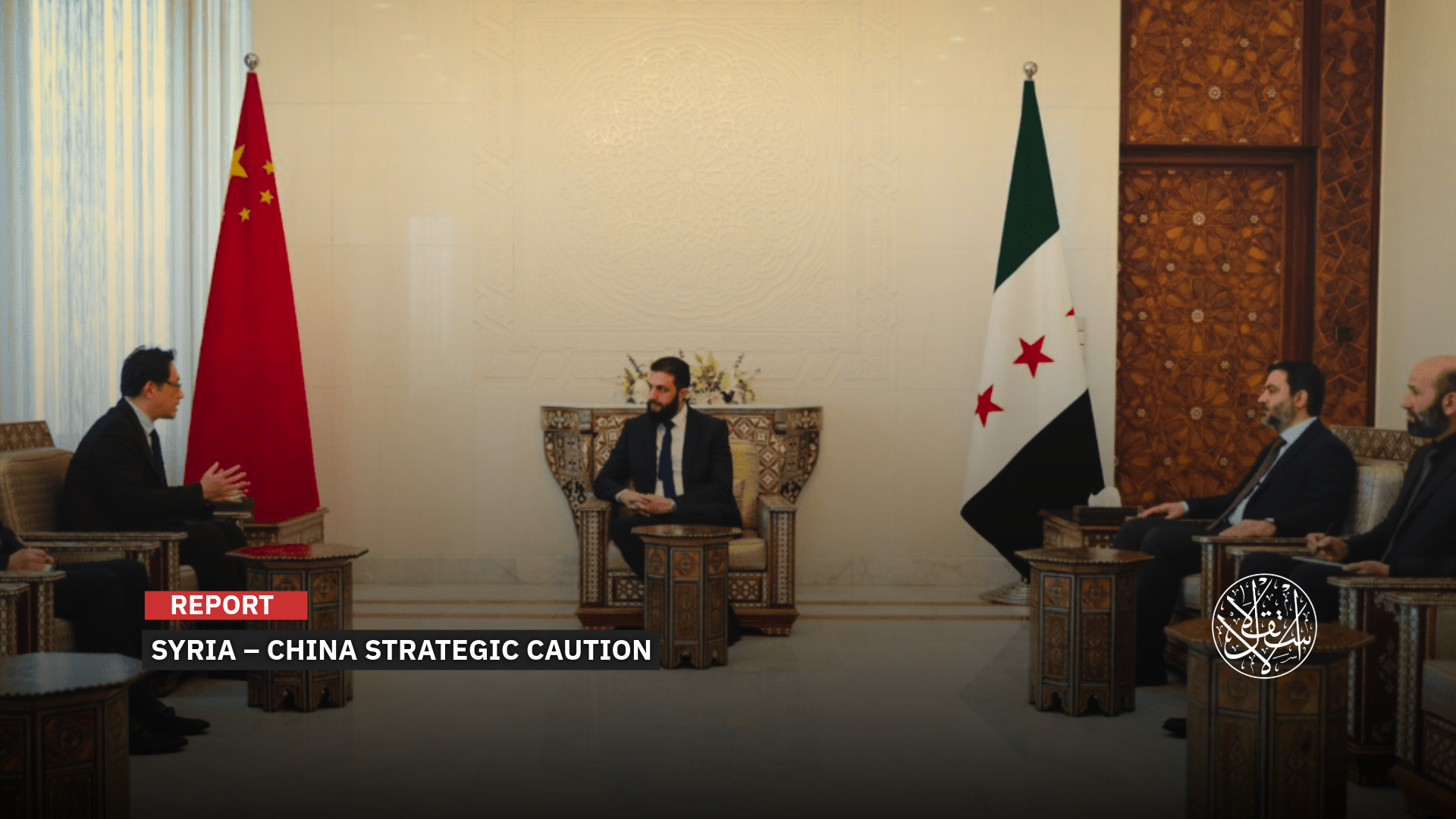
China views its foothold in Syria as a key economic lever.
Since the fall of Bashar al-Assad’s regime, China has found itself entering a new phase in its dealings with the emerging Syrian state, a phase defined more by caution and anticipation than by engagement or initiative.
Beijing, which had long viewed Syria through a purely security-focused lens, is now confronted with a different political reality that tests the limits of its traditional foreign-policy doctrine, the principle of “non-interference” set against the need to protect its strategic interests.
China signaled its reservations toward Syria’s new leadership in its position at the UN Security Council, where it is one of the permanent members, adopting a noticeably restrained and guarded stance.
Strained Relations
When the UN Security Council lifted sanctions on Syria’s transitional president, Ahmed al-Sharaa, on November 6, 2025, China abstained from the vote, a move that reflected deep differences between Beijing and Damascus over several sensitive issues.
China’s ambassador to the United Nations, Fu Cong, said his country abstained because the resolution “did not adequately address China’s concerns regarding counterterrorism and the security situation in Syria.”
Fu explained that the resolution clearly stipulates that Syria must “take decisive action to combat terrorist activities and address the threat posed by foreign terrorist fighters, including members of the East Turkestan Islamic Movement, who are present in Syria.”
Beijing has for years expressed serious concern about the fate of the East Turkestan Islamic Movement, which includes Uyghur fighters from China and Central Asia, at a time when human rights organizations accuse China of committing widespread violations against this Muslim minority within its borders.
On October 18, 2025, Syrian foreign minister Asaad al-Shaibani said in an interview with state-run al Ekhbariya TV that it was necessary to “reset the relationship with China, which had politically supported the former regime and used its veto power on its behalf at the UN Security Council.”
Al-Shaibani revealed that the first official visit by Syria’s new leadership to Beijing would take place in November 2025.
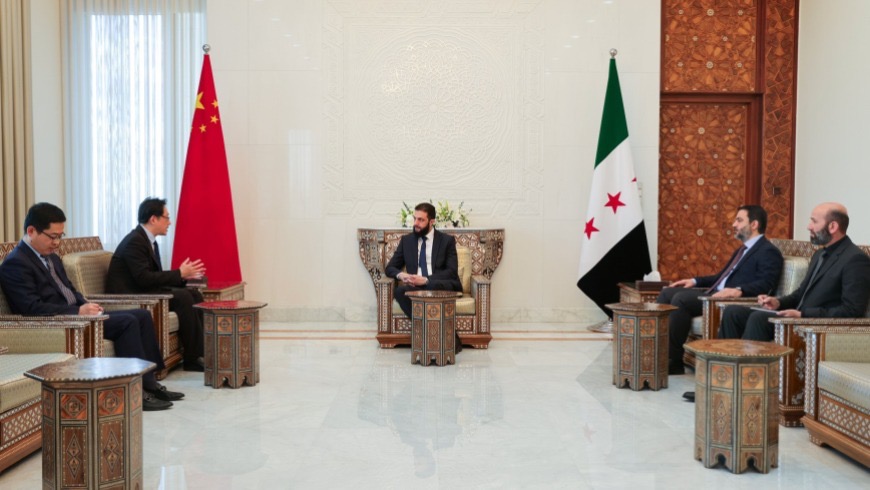
Earlier, on October 26, 2025, al-Shaibani met Shi Hongwei, China’s ambassador to Syria, at the Foreign Ministry in Damascus.
The ministry said in a statement that the meeting discussed ways to strengthen bilateral cooperation across various fields, with an emphasis on mutual support regarding issues of common interest.
Transitional president Ahmed al-Sharaa also received a Chinese delegation in May 2025, led by Wei Qing, director-general of the Department of West Asian and North African Affairs at China’s Ministry of Foreign Affairs.
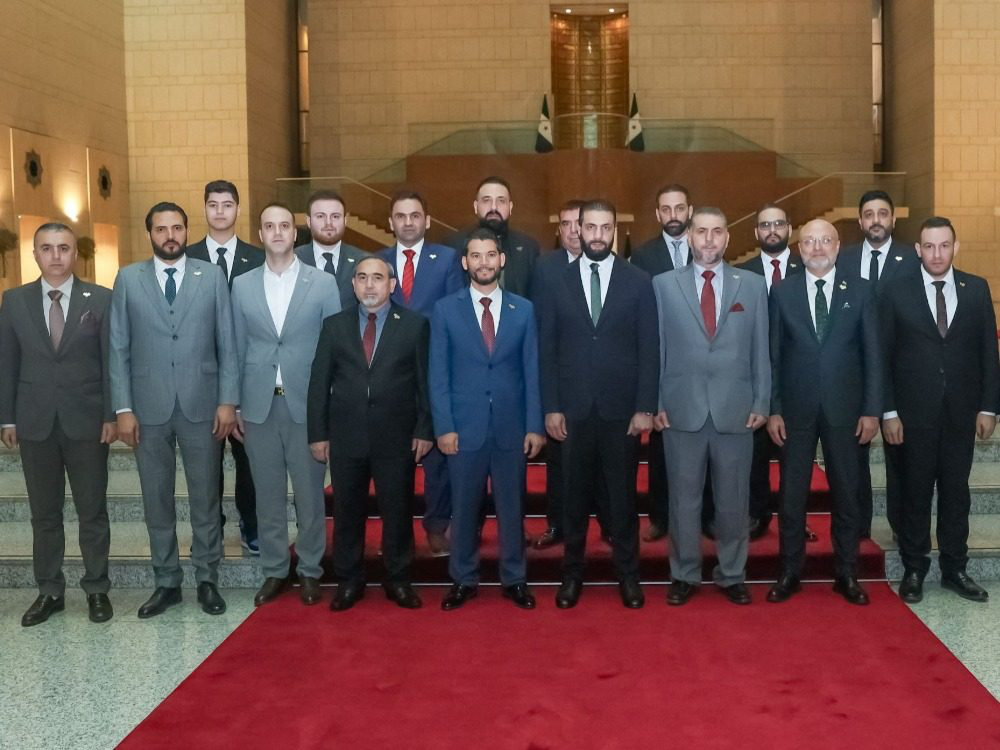
On September 30, 2025, al-Sharaa met a group of Syrian businesspeople based in China at the People’s Palace in Damascus. The Syrian presidency said the meeting focused on how to invest the expertise and skills of Syrians abroad and link them to development projects inside the country, stressing the role of Syrian entrepreneurs in supporting the national economy.
Chinese Concern
It appears that security concerns, particularly those linked to the presence of the Turkestan Islamic Party, remain the most influential factor shaping the relationship between China and Syria’s new administration, affecting Beijing’s diplomatic and economic posture alike.
Caught between its desire to maintain stability in Syria and its fear that the Syrian arena could become a battleground for great-power competition, Beijing is trying to craft a cautious approach that balances its strategic interests with its security anxieties, while it waits for the contours of the new Syrian system and its future policies to become clearer.
China has not yet announced the formal appointment of any new ambassador to Damascus. By contrast, the Syrian embassy in Beijing, located in the Chaoyang district, has raised the new Syrian flag over its building in a notable symbolic gesture.
Muhammad Hasanein Khaddam, Syria’s current ambassador to China, who has held the position since July 2022 and remained in office after the fall of Bashar al-Assad’s regime, said his communication with Damascus is currently limited to “routine bureaucratic matters.”
In this context, Syrian researcher Ammar Jalo told Al-Estiklal newspaper that “China’s position on the new Syria can be understood by looking back at the nature of its previous engagement with the ousted al-Assad regime, which was driven primarily by security considerations, foremost among them the presence of the Turkestan Islamic Party in Syria.”
“This presence was a key reason behind repeated visits by Syrian officials to Beijing, and behind China’s appointment of a special envoy to Syria in 2016, as well as his frequent trips to Syrian territory and his almost monthly meetings with the former regime to monitor the group’s movements and assess their impact on Chinese interests around the world,” Jalo said.
“China’s view of Syria has historically been governed more by security calculations than by any political or economic dimension,” although he noted, “these concerns have partially diminished in the current phase with the disappearance of the Turkestan Party from the military and security scene in the new Syria, which has created a new kind of anxiety for Beijing, namely the possibility that recent developments are part of an indirect American attempt to target China, especially after Washington removed the group from its terrorism lists in 2020.”
According to Jalo, “China’s concern is relatively justified amid the intensifying rivalry between Beijing and Washington, and the possibility that the United States could use the Turkestan Party as a lever in the geopolitical competition for influence in Syria and the wider region.”
“From this perspective, China is now moving within a narrow space between two principal axes. The first is supporting Syria’s stability as a sovereign state without interfering in its internal affairs, in line with one of the five core principles guiding Chinese foreign policy. The second is pursuing cautious diplomatic engagement shaped by its security concerns.”
“Several meetings have taken place between the Chinese ambassador and the charge d’affaires in Damascus on one hand, and representatives of the new Syrian administration on the other, and their main focus has been China’s demand that Turkestan Party members be kept away from Syrian territory, or at the very least from positions of influence within the military and security institutions,” Jalo concluded.
A Cautious Economic Player
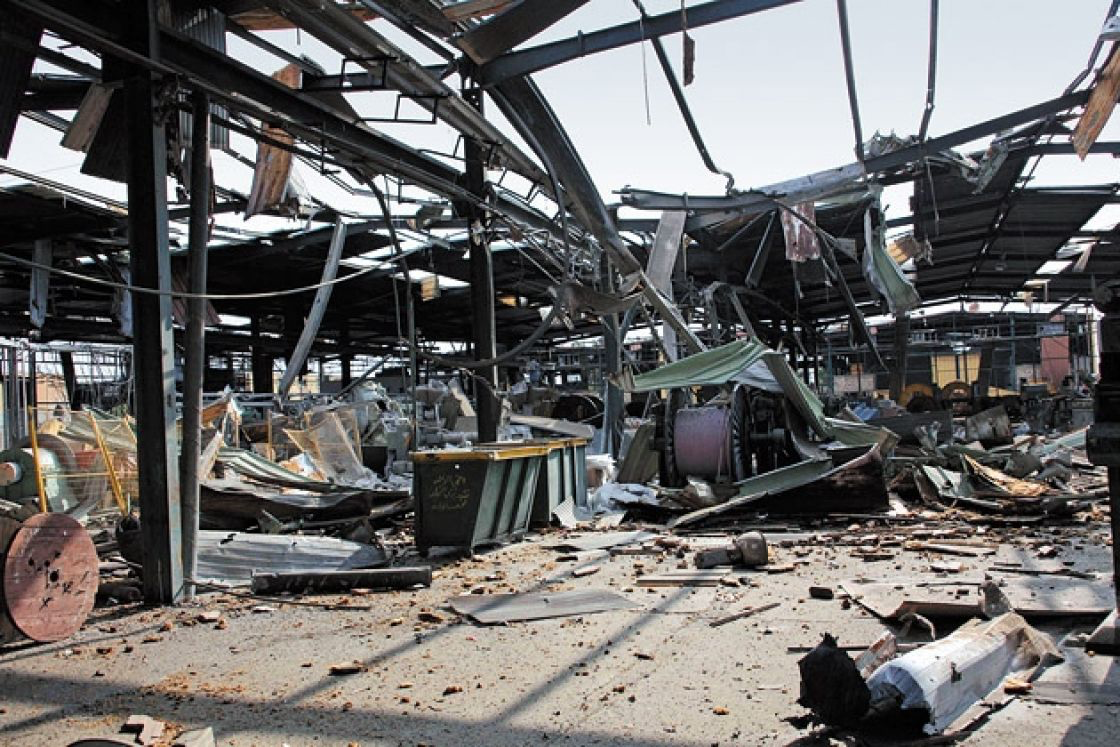
Syria hopes to attract foreign investment to help revive key industries, and China is seen as one of the most likely countries to play that role, given its long-standing expertise in infrastructure and industrial development.
In this context, Syrian economy minister Mohammad Nidal al-Shaar told Reuters on October 21, 2025, that Chinese companies had pledged hundreds of millions of dollars to establish new factories for cement, plastics and sugar in Syria.
Even so, Beijing continues to adopt a cautious stance toward the new Syrian government, despite having been one of Damascus’s most important economic partners under the former regime, when China helped break the international isolation imposed on Syria and kept trade lines open despite Western sanctions.
China now finds itself in a political gray zone in its dealings with Damascus, aware of how crucial it is to define the shape of its new relationship with Syria in the midst of a reconstruction phase estimated by the World Bank to cost more than $216 billion.
Chinese customs data show that the value of China’s direct exports to Syria in 2023 reached roughly $357 million, compared with Syrian imports to China of just $1.5 million.
But observers note that these figures do not reflect the true volume of trade between the two countries, due to the circumvention of U.S. sanctions through intermediary states such as Iraq, Lebanon and Jordan, which collectively imported about $49.7 billion worth of Chinese goods in the same year.
Syrian researcher Ammar Jalo points out that “China is still hesitant to launch major investments inside Syria, despite its global strength in energy, ports and infrastructure.”
He explained that this hesitation “stems from the lack of security and stability, since China views investment in a volatile environment as a risk that can evaporate at any moment, a lesson it learned from its experience in Libya, when it had to evacuate thirty thousand Chinese nationals and lost around $20 billion.”
“The continued presence of the Turkestan Islamic Party in Syria poses a direct threat to China’s national security, which makes Beijing cautious about any positive economic initiatives,” Jalo added.
Despite these reservations, China refrained from using its veto at the UN Security Council on a resolution removing Syrian prime minister and interior minister Anas Khattab from terrorism lists, a signal that Beijing wants to keep communication channels open.
Jalo believes that the upcoming visit of President Ahmed al-Sharaa to Beijing could offer an opportunity to ease China’s security concerns and reach understandings that ensure Syrian territory will not be used for any hostile activities against Chinese interests.
“As long as Turkestan Party members remain active within state institutions or hold influential positions, China’s anxieties will persist and will hinder the development of diplomatic and economic relations between the two countries, unless clear and reassuring agreements are reached with Beijing,” Jalo concluded.