Ghazal Ghazal: Cleric Serving the Regime, Playing on the Edge of Sectarianism in Syria’s Coast
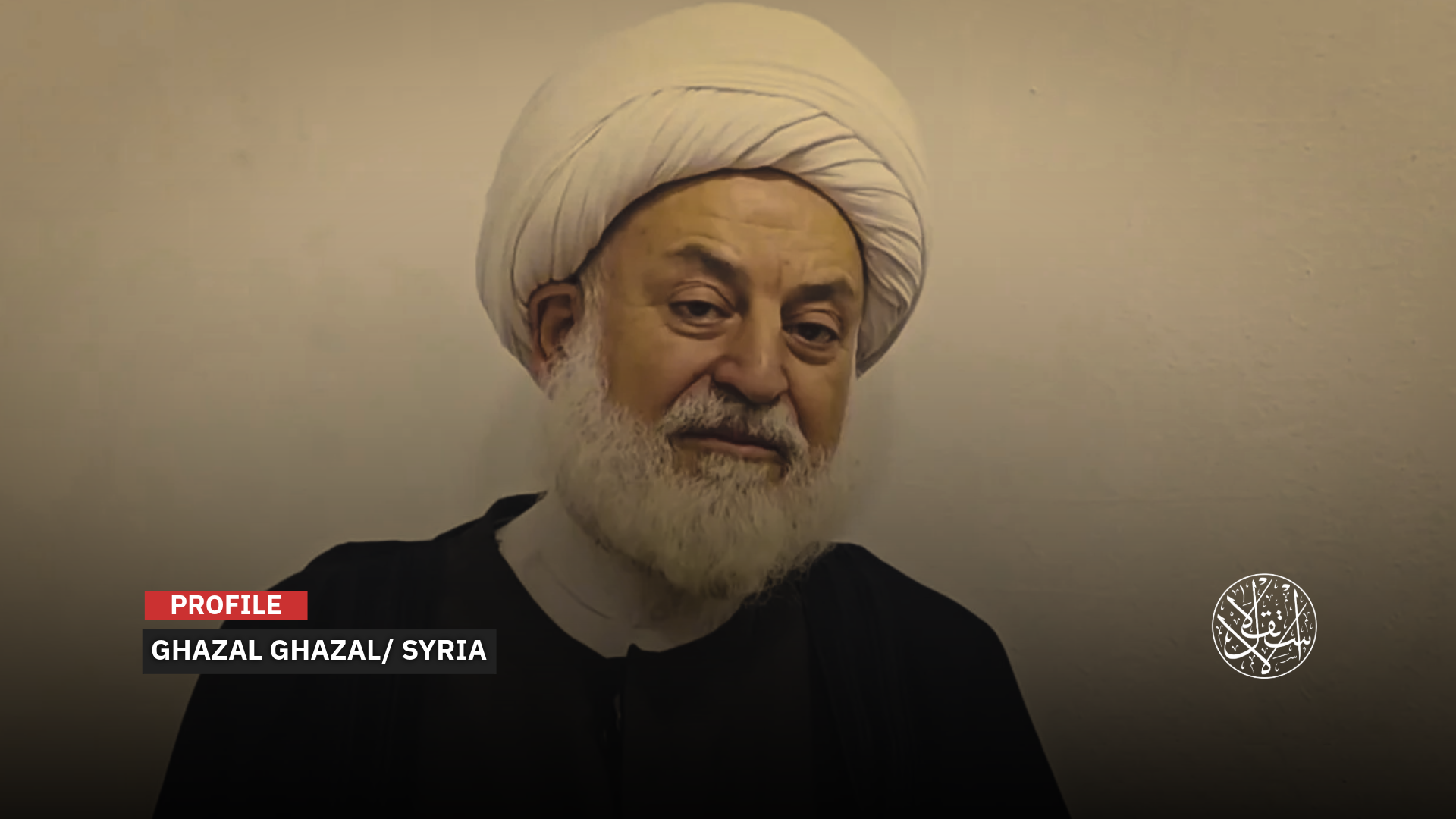
Sheikh Ghazal Ghazal spent years siding with al-Assad’s regime and endorsing its policies.
Between religion and politics, and between rhetoric about “protecting the sect” and practices of incitement, the name of Ghazal Ghazal, head of the Supreme Islamic Alawite Council, has emerged as one of the most controversial figures associated with sectarian division along Syria’s coast.
Sheikh Ghazal Ghazal, 64 years old, is an Alawite cleric who for years held an official religious position under the now-deposed regime of Bashar al-Assad, aligning himself closely with it and maintaining silence in the face of the widespread crimes and violations committed against Syrians, a stance that reflects a clear fusion of religious authority and political power.
The Turban and the State
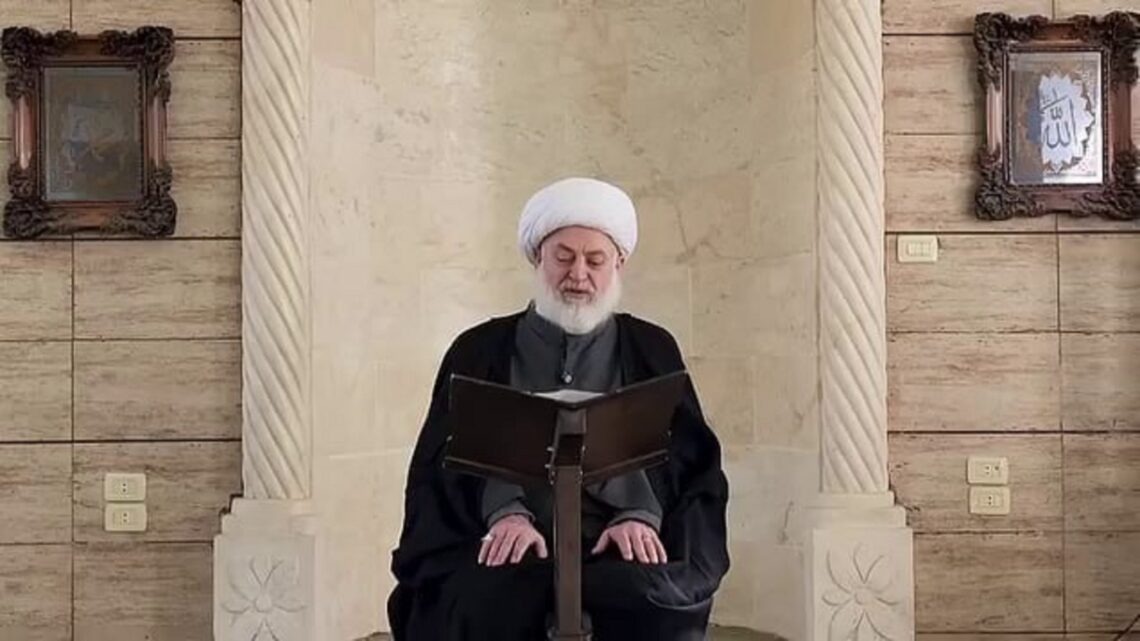
The Alawite cleric Ghazal Ghazal repositioned himself politically and religiously following the fall of Bashar al-Assad’s regime on December 8, 2024, stepping into the spotlight as head of what is known as the Supreme Islamic Alawite Council, in an attempt to assume a representative role for the Alawite sect during an exceptionally sensitive transitional period.
Since then, Ghazal’s name has surfaced repeatedly in connection with his open rejection of Syria’s political transformation.
He began by calling for international intervention under the pretext of “protecting the Alawites,” before moving on to promote a project of “federalism” along the Syrian coast.
This campaign has involved incitement to protest and demands for the release of officers and members of the ousted Assad regime implicated in crimes against Syrians, a move widely viewed as an effort to obstruct the course of transitional justice.
On December 28, 2025, cities and towns across the governorates of Latakia and Tartus witnessed demonstrations calling for “federalism” and the “release of detainees from remnants of the former regime,” in response to appeals issued by Ghazal Ghazal.
The head of internal security in Latakia, Brigadier General Abdulaziz al-Ahmad, said that “terrorist” elements from remnants of the regime had taken part in the protests and had assaulted internal security forces in the cities of Latakia and Jableh.
Latakia’s Directorate of Health announced that the attacks resulted in four deaths and 108 injuries, including members of the internal security forces, once again drawing attention to the dangers of exploiting sectarian rhetoric during a fragile transitional phase.
By contrast, religious figures and community leaders from the Alawite Islamic sect along the Syrian coast issued clear statements rejecting calls for division and sectarian incitement, reaffirming their commitment to the country’s unity and to building a unified Syrian state.
In a statement published on December 29, 2025, Alawite leaders in Tartus said that “the individual known as Ghazal Ghazal does not represent us,” declaring their categorical rejection of his calls, which they described as attempts to sow chaos and fracture national cohesion.
These developments coincided with security and media reports of active movements led by prominent figures from the ousted al-Assad regime operating from outside the country, aimed at igniting potential armed unrest, with a particular focus on the Syrian coast.
According to the reports, these efforts involved recruiting fighters and distributing funds through networks that remain loyal to the former regime.
Against this backdrop, Ghazal Ghazal has become a focal point of division within the Alawite community itself, at a moment when Syria is moving toward rebuilding the state and its institutions.
This has raised serious questions about his background, his roles, the limits of his representational claim, and the real objectives behind his activities during one of the most critical phases in Syria’s modern history.
Ghazal hails from a well-known religious family in the eastern countryside of Latakia. He is the son of Sheikh Wahib Ghazal, one of the most prominent Alawite clerics in Syria, whose path was followed by several of his sons, including Badr, Fadl, Muwafaq, and Ghazal.
He was born in 1962 in the village of Talla in the al-Haffa area of Latakia governorate. He grew up in a religious environment, and his father’s home served as the first center for Alawite religious education in the area, contributing significantly to the formation of his intellectual and religious outlook.
After completing his basic education in Latakia, he enrolled in the Faculty of Sharia at Damascus University, before moving to London, where he studied at the Universal University of Islamic Sciences, founded by Ali al-Shahrestani in 1988. He obtained a bachelor’s degree in Islamic sharia from the institution.
He has published a number of books and manuscripts, including The Human Heart in the Quran and the Sunnah and Means of Knowledge in the Quran and the Sunnah.
Upon returning to Syria, he worked at the Latakia Directorate of Endowments and taught in the city’s secondary schools.
He later served as mufti of the Alawite sect in the Latakia area, alongside his work as a preacher, teacher, and imam at the Imam Muhammad al-Baqir Mosque.
The Ghazal family is regarded as one of the prominent families within the Alawite religious landscape. Several of its members were known for their strong loyalty to the ousted al-Assad regime, most notably his brother, Sheikh Badr Ghazal, whose name became associated with fatwas used to justify the killing of regime opponents after the outbreak of the Syrian revolution, before he was found dead in 2013.
Sectarian Incitement
The contours of Ghazal’s orientation became apparent early on after the fall of Bashar al-Assad’s regime. According to observers, he sought to turn Syria’s coastal region into a zone of tension and instability by inciting against the new Syrian state and by mobilizing members of the Alawite community in projects with external dimensions that go beyond their genuine demands.
This trajectory became particularly clear in February 2025, when a group of Alawites inside Syria and in the diaspora announced the establishment of a body called the Supreme Islamic Alawite Council. According to its founding statement, the council is composed of two main bodies.
First, the religious council, headed by Sheikh Ghazal Ghazal, which includes around 130 clerics from various Syrian governorates and is ostensibly tasked with religious affairs and with setting out a general framework concerned with what is described as “protecting the sect’s religious identity.”
Second, the executive council, which comprises a number of specialized offices, including political affairs and public relations, media, economic affairs and relief, legal affairs, coordination, and historical documentation.
According to its founders, the executive council aims to develop a comprehensive plan for managing the affairs of the community during the transitional period.
The most prominent political proposal embraced by the council, however, has been the call for the “federalization of the Syrian coast,” specifically the governorates of Latakia and Tartus.
This position has been advanced in clear disregard of the region’s demographic reality, which includes a broad mix of other Syrian communities, including Sunnis, Christians, and others.
The proposal has raised concerns that such rhetoric could be used to reproduce sectarian division and impose political arrangements that run counter to the country’s unity.
Observers argue that the geographic dispersion of the Alawite community, whose members live in scattered villages across multiple governorates, renders projects of secession or exclusive entities unrealistic.
Calls to establish a separate region encompassing the Syrian coast, the cities of Homs and Hama, and their surrounding countryside collide directly with the complex demographic reality of those areas, where diverse populations of Alawites, Sunnis, Christians, Ismailis, and Murshidis live side by side.
Any such partition-based vision, they warn, would amount to an open recipe for conflict rather than stability.
Within this context, available indicators suggest that Ghazal’s role has centered on reproducing tension along the Syrian coast whenever Damascus has advanced efforts to engage with Alawite community leaders and steer the region toward calm and stability.
This dynamic became evident following his call for members of the Alawite community to demonstrate on December 28, 2025, demanding “federalism,” at a time when conditions were clearly moving toward de-escalation, particularly after the release of a group of detainees from the ousted regime’s army whose involvement in the bloodshed of Syrians had not been proven.
Syrian President Ahmed al-Sharaa had stated in a declaration issued by the presidency in April 2025, his categorical rejection of “any attempts to impose a divisive reality or to establish separate entities under the labels of federalism or self-administration without comprehensive national consensus.”
According to circulating information, Ghazal Ghazal is regarded as one of the most prominent instigators behind the mobilization of those protests, a step observers interpreted as an attempt to scramble the political landscape and disrupt the path toward calm, particularly as his visibility and influence in the public sphere had waned.
This decline became especially apparent after a delegation from the Syrian coast met with President Ahmed al-Sharaa in Damascus on December 14, 2025.
That meeting resulted in pledges to accelerate judicial procedures against members and officers of the ousted regime and to listen to the demands of local residents, in an atmosphere described as highly positive.
At the same time, the Syrian Ministry of Interior announced the execution of security operations targeting cells linked to the former regime.
These operations resulted in the killing and arrest of several members and officers and the seizure of large quantities of weapons.
Observers also pointed to Ghazal’s reaction following a security operation carried out by the Ministry of Interior against the “Saraya al-Jawad” cell affiliated with former general Suheil al-Hassan in the village of Baabda in the Jableh countryside of Latakia governorate on December 24, 2025.
At the time, he called for the “immediate withdrawal” of Syrian security forces from the village, without issuing any clear condemnation of the cells’ destabilizing role or warning of the threat they posed to public security.
In a recorded statement, Ghazal said, “If these violations against the Alawites continue, we will take to the streets with bare chests in defense of our dignity,” adding that “the only peaceful solution is the implementation of a federal system with political decentralization to spare the country chaos and internal fighting.”
He had earlier called for a comprehensive general strike, urging members of the Alawite community to remain in their homes for five days starting on December 8, 2025.
In another recorded statement, he attacked the Syrian government, claiming it was forcing citizens to celebrate the anniversary of the fall of Bashar al-Assad’s regime.
According to field data, however, these calls met with little response in governorates with significant Alawite populations, particularly Hama, Homs, Tartus, and Latakia.
This reflected the limited impact of the appeals and the widening gap between incendiary rhetoric and the reality of public sentiment.
Playing the Sectarian Card
According to Syria TV, citing regional security sources on December 29, 2025, the Syrian government is exerting intensive efforts to dismantle cells linked to remnants of Bashar al-Assad’s regime and to prevent attempts to exploit members of the Alawite community and draw them into new cycles of violence.
The sources said that Damascus has taken two notable steps in this regard. The first involves strengthening channels of communication with Alawite elites and religious figures, most notably Sheikh Mohi al-Din al-Salloum, who has come to view Ghazal Ghazal as seeking to drag the Alawite community toward what he described as a “bloodbath” that serves external agendas.
The second step, according to the sources, centers on the role played by Khaled al-Ahmad, a member of the Civil Peace Committee and himself from the Alawite community.
Al-Ahmad has worked to establish direct lines of communication between the Syrian government and coastal notables and community leaders, in an effort to contain tensions and prevent the region from sliding into chaos.
According to the same sources, the Syrian government is also working in parallel through contacts with Moscow to neutralize military commanders deployed within Russian bases in Syria, Libya, and elsewhere, and to prevent their involvement in any moves aimed at mobilizing remnants of the former regime.
These efforts are said to rely on the development of relations between the two sides, which have reached an advanced stage.
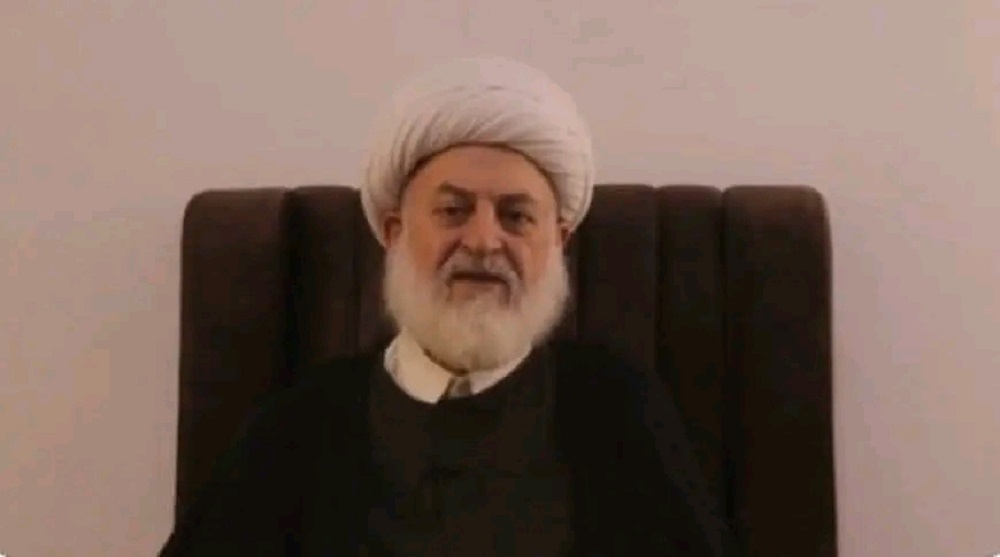
By contrast, observers say that Ghazal’s political and religious record reflects a long-standing alignment with Bashar al-Assad’s regime.
He supported its practices, provided them with religious cover, and remained silent in the face of crimes committed against Syrians, particularly members of the Sunni community, including the use of barrel bombs and prohibited weapons, without issuing any condemnation of those violations.
On the contrary, Ghazal repeatedly appeared in the former regime’s official media, praising Bashar al-Assad and his army. Among his most notable televised remarks was his statement, “The Syrian Arab Army, may God protect it and grant it victory, under the leadership of His Excellency President Dr Bashar al-Assad, may God protect him, stands as an impregnable barrier against this conspiracy,” a direct reference to the Syrian uprising.
Reflecting the extent of his proximity to the former regime’s security apparatus, Ghazal Ghazal was among the leading Alawite clerics summoned by Bashar al-Assad to the presidential palace in August 2023.
According to leaks at the time, the meeting aimed to market these clerics as a religious front promoting the idea that Assad was the “protector of the sect and the guarantor of its survival.”
Until the fall of Bashar al-Assad’s regime on December 8, 2024, Ghazal Ghazal resided in the city of Latakia, before leaving Syria for an unknown destination following the events of March 2025 on the Syrian coast.
During those events, on March 6, 2025, remnants of the former regime attempted to isolate the coastal region and threaten the political transition by launching coordinated attacks carried out by officers, fighters, and militias loyal to the ousted regime against security patrols of the new Syrian state in the governorates of Tartus and Latakia.
However, the Ministries of Interior and Defense succeeded in quashing the rebellion in less than 24 hours through operations that resulted in the killing and arrest of dozens of former regime elements and the imposition of full security control over both governorates.
In a report published by a Syrian investigative committee on July 22, 2025, the killing of 1,426 civilians and military personnel was documented, along with the disappearance of 20 others during the coastal events.
The report held 265 individuals affiliated with outlawed groups linked to remnants of the former regime responsible for those violations.
Ghazal Ghazal, however, rejected the investigative committee and its findings in a recorded statement delivered on July 25, 2025.
He called on the international community to “provide international protection” for members of the Alawite community and to push toward the establishment of “a decentralized or federal political system,” in his words.
The Supreme Islamic Alawite Council in Syria and the diaspora, chaired by Ghazal Ghazal, also announced on September 18, 2025, its rejection of elections for the Syrian People’s Assembly, which consists of 210 seats, one-third appointed by President Ahmed al-Sharaa and two-thirds elected.
At the time, the council’s Coordination and Public Relations Office said that the People’s Assembly promoted by what it described as the “de facto authority” lacked any national or representative legitimacy.
The statement reflected the continuation of the political escalation pursued by Ghazal in opposition to the course of the new Syrian state.
Sources
- Ministry of Interior imposes curfew in Latakia [Arabic]
- Alawite community leaders on the coast reject calls for division and sectarian incitement [Arabic]
- President al-Sharaa warns against imposing a “divisive reality” in Syria [Arabic]
- Supreme Alawite Council rejects coastal investigative committee [Arabic]
- Regional meddling across Syria: Iran mobilizes Fourth Division remnants to destabilize security [Arabic]
- Al-Sharaa meets coastal notables: exploiting sectarian tensions threatens Syria’s unity [Arabic]