How Trump’s Ambitions in Greenland Put NATO Unity to the Test
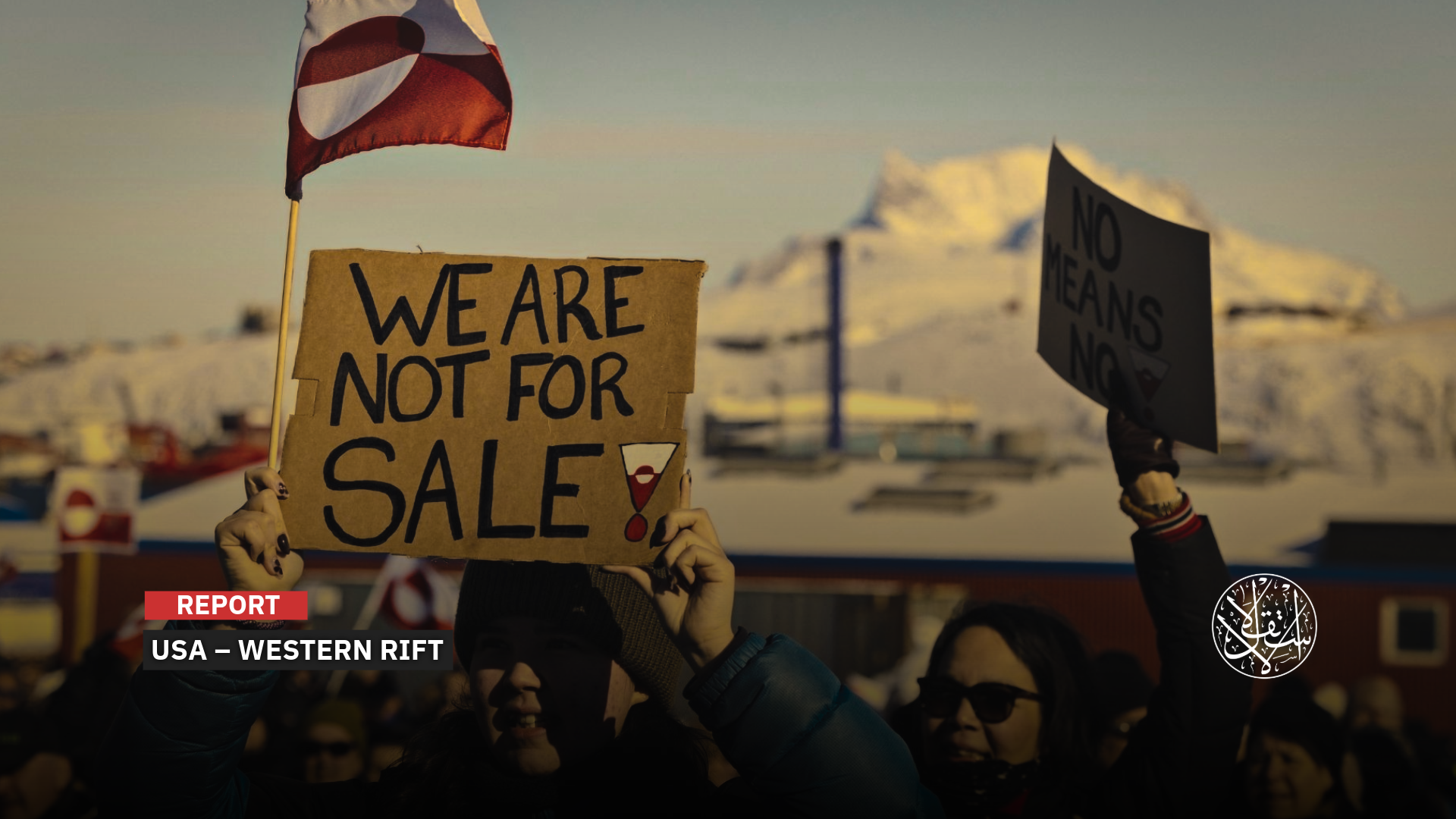
“In any new major war, whoever controls Greenland would master the vital Atlantic Sea lanes.”
US President Donald Trump has renewed his calls to annex Greenland, especially following the military raid on Venezuela, during which President Nicolas Maduro and his wife were captured and taken to New York.
On January 4, 2026, he told reporters that the U.S. needed Greenland, a Danish territory, citing increasing Russian and Chinese influence on the island.
It is worth noting that Trump has previously made repeated calls to annex Greenland to the U.S., but these statements have been met with widespread anger in Europe.
Greenland is a self-governing territory of Denmark and is the world's largest island. It occupies a central location in the Arctic region, which is gaining increasing importance due to melting ice caused by the climate crisis and the opening of new trade routes.
In addition to its strategic location, Greenland is rich in natural resources, including rare earth minerals used in the telecommunications industry, uranium, vast oil fields, and enormous untapped natural gas reserves.
Political Escalation
Trump's recent remarks about Greenland have reignited a sharp political and diplomatic tension between Washington and Copenhagen, causing widespread shock in Denmark and Greenland that quickly spread to other Nordic countries, which rushed to declare their full solidarity with Copenhagen.
This escalation followed a sarcastic remark Trump made aboard Air Force One, mockingly saying, “You know what Denmark did recently to improve security in Greenland? They added a dog sled,” a comment that provoked widespread resentment in Scandinavian political and media circles.
The repercussions of the remark were not limited to its sarcastic tone. Trump's repeated insistence that the U.S. needs Greenland for national security reasons, justifying this by citing the growing Russian and Chinese influence in the Arctic, further exacerbated the situation.
According to Scandinavian analysts, this rhetoric should not be interpreted in isolation from a broader context of veiled American messages, especially after the US intervention in Venezuela and the arrest of its president, Nicolas Maduro.
Tensions escalated after the White House stated on January 5 that the US military is always an option.
On January 6, 2026, Greenland's Foreign Minister, Vivian Motzfeldt, announced that Greenland and Denmark had requested an urgent meeting with US Secretary of State Marco Rubio to discuss Trump's recent remarks regarding his intention to annex the Arctic island.
It is worth noting that towards the end of his first presidential term, Trump offered to buy the island, but his offer was rejected, and he was told it was not for sale.
He revived his interest in Greenland after returning to the White House in January 2025 and did not rule out the use of force.
Greenland has also witnessed high-level visits that have sparked considerable controversy. In March 2025, US Vice President J.D. Vance visited and delivered a speech accusing Denmark of not investing enough to protect the territory.
The debate over US intentions resurfaced in late 2025 when Trump appointed Jeff Landry as special envoy to Greenland, who publicly advocated for the island to become part of the United States.
More recently, Stephen Miller, the US Deputy National Security Advisor, asserted in an interview with CNN that Greenland should be part of the U.S. to protect NATO interests and ensure the security of the Arctic region.
When asked about the possibility of a US military operation against Greenland, Miller stated, “There's no need to even think about or talk about a military operation. Nobody is going to go to war against the United States for Greenland.”
These concerns were further fueled by social media posts, particularly one by Katie Miller, wife of Trump advisor Stephen Miller, which included a map of Greenland covered with the American flag and captioned ‘SOON’.

Security Foothold
From Copenhagen's perspective, Trump's remarks were considered a serious transgression that touches the very core of Danish sovereignty and the structure of the Commonwealth of Nations, which includes Denmark, Greenland, and the Faroe Islands.
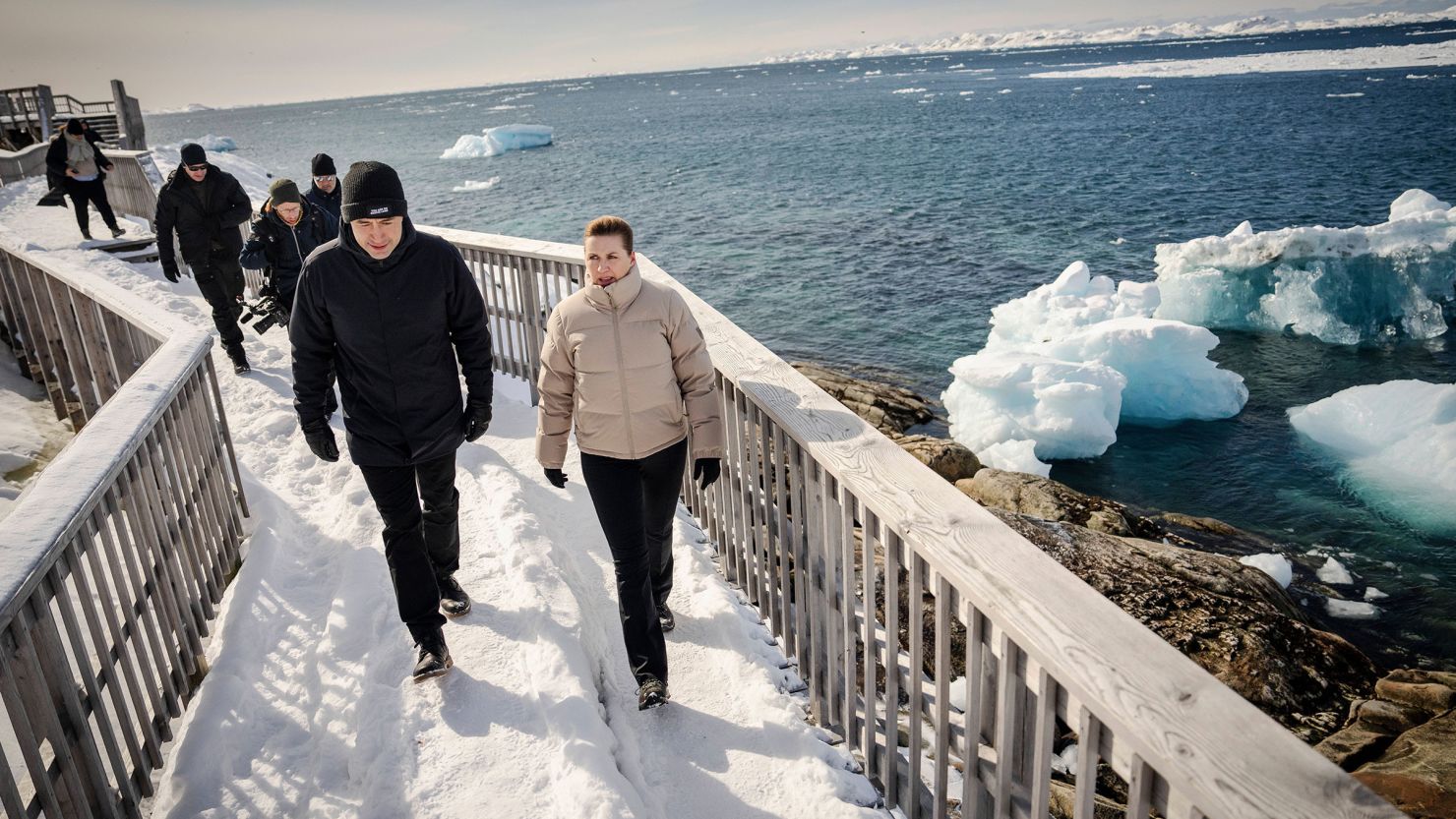
Prime Minister Mette Frederiksen responded with a firm statement, asserting that the United States has no right to annex any of the three Commonwealth member states, emphasizing that Greenland is not a subject for negotiation or compromise.
She also reminded everyone that the Kingdom of Denmark, including Greenland, is a member of NATO and enjoys its security guarantees under an existing defense agreement with Washington that already grants it military authority on the island.
But she called, in turn, for an end to the unacceptable threats against a historic ally, noting that any US decision to launch a military attack on a NATO ally would mean the end of everything.
In parallel with the official stance, officials from various Danish political parties described Trump's remarks as disrespectful to a sovereign nation, reiterating that Greenland is not for sale and that the island's fate is determined solely by its people.
It is worth noting that the U.S. signed a defense agreement with Greenland in 1951 and has approximately 150 personnel stationed there at the Pituffik Space Base, which focuses on missile detection and space surveillance.
According to Ian Lesser, an advisor to the President at the German Marshall Fund of the United States (GMF), Washington already has a security foothold it needs in Greenland, and it is almost certain that the Trump administration's intentions are more related to natural resources.
Although opinion polls indicate that most Greenlanders support independence from Denmark, the overwhelming majority of them simultaneously reject the idea of the island becoming part of the United States.
The Trump administration recently attempted to win over some in Greenland, particularly by focusing on what they call historical grievances in the relationship with Copenhagen, but this proved largely ineffective.
Following Trump's remarks about the island, Greenland's Prime Minister, Jens Frederik Nielsen, reassured his citizens, saying that while it was understandable for people to be concerned, there was no need for such anxiety.
He added that Greenland was committed to continuing dialogue with the U.S. through the appropriate channels and was determined to maintain the long-standing trust and cooperation with Washington.
He emphasized the need for collective action, both at the community level and in coordination with allies, stressing their desire to expand cooperation with NATO.
Commenting on the renewed focus on the Greenland issue after the US military intervention in Venezuela and the abduction of its president, Nicolas Maduro, to New York, Nielsen stated that Greenland's situation was entirely different, as there was no threat of annexation by the U.S.
He emphasized the need to put an end to Trump's pronouncements on Greenland, explaining that the long-standing friendship was now under strain.
He emphasized the importance of rebuilding strong cooperation with the United States, stating that there is no risk of Greenland being taken over overnight.
Contrary to Trump's derision, the facts on the ground demonstrate that Denmark has systematically worked in recent years to bolster Greenland's security.
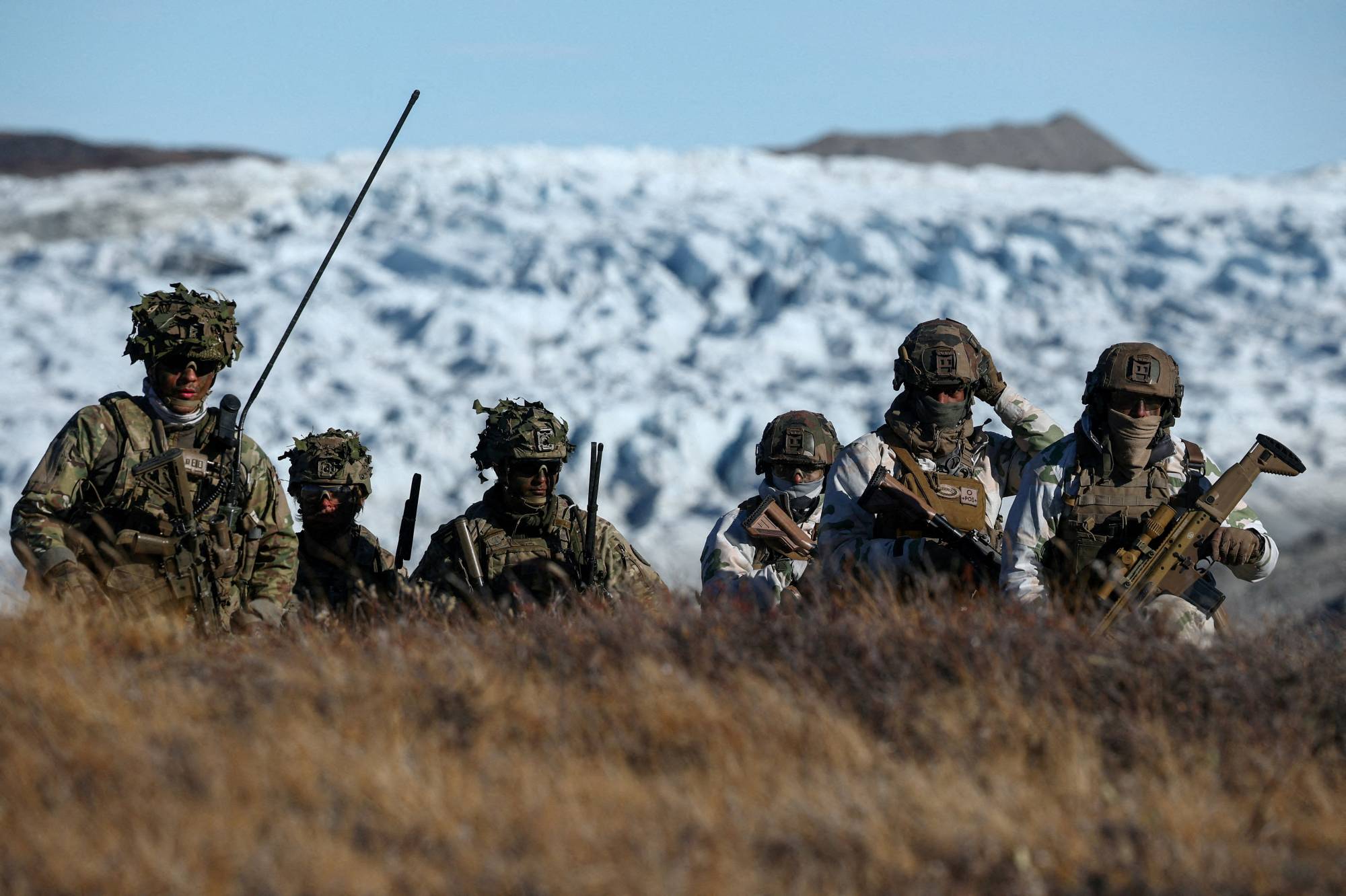
In recent years, in coordination with the self-governing government, Denmark has countered Chinese attempts to gain a foothold on the island through major investment projects. It has also strengthened its military and security presence in the Arctic Circle, in addition to hosting a large US base in Thula.
In late January 2025, Copenhagen announced an additional $2.5 billion to enhance its military presence in the Arctic.
Copenhagen has also finalized multi-year plans that include broader investments in ships, aircraft, radar and surveillance systems, as well as the purchase of 16 F-35 fighter jets, with the aim of strengthening Arctic security and Danish defense in general, not just Greenland.
Geopolitical Rivalry
The reactions weren't limited to Denmark and Greenland. The Nordic countries—Sweden, Norway, Finland, and Iceland—declared their full support for Copenhagen, in a rare display of Scandinavian unity.
Swedish Prime Minister Ulf Kristersson asserted that only Denmark and Greenland have the right to make decisions concerning themselves.
His Norwegian counterpart, Jonas Gahr Støre, emphasized that Greenland is part of the Kingdom of Denmark.
Finnish President Alexander Stubb affirmed that no one makes decisions on behalf of Greenland and Denmark.
As the leaders of France, Britain, Germany, Italy, Poland, and Spain stated in a joint statement released by the German Chancellery, “The Kingdom of Denmark, including Greenland, is part of NATO. The security of the Arctic region must be a shared responsibility of all NATO members, including the U.S.”
They emphasized their respect for the principles of the UN Charter, particularly sovereignty, territorial integrity, and the inviolability of borders, noting that these are universal principles that they will continue to defend.
UK Prime Minister Keir Starmer stressed that only Greenland and the Kingdom of Denmark can decide the island's fate.
Polish Prime Minister Donald Tusk said that Denmark can count on the solidarity of all of Europe on the issue of Greenland, a territory belonging to Denmark.
“No NATO member should attack or threaten another. Otherwise, the alliance would lose its meaning if there were internal conflicts or disputes within it,” he added.
For its part, the EU's foreign policy spokesperson, Anita Heber, told reporters that the bloc remains committed to defending the territorial integrity of its member states.
Canadian Prime Minister Mark Carney stated that “the future of Greenland is a decision that belongs exclusively to the people of Greenland and Denmark.”
Italian Foreign Minister Antonio Tajani urged the EU to take a firm stance, adding that the EU must guarantee the independence of a territory under the Danish crown.
This crisis reflects a deeper tension within the Western alliance, as Copenhagen believes that Trump's statements not only threaten Greenland's sovereignty but also undermine the foundations of trust between NATO allies.
In contrast, Denmark, with clear Scandinavian support, is attempting to send a decisive message: the Arctic is not an open arena for power politics, and respect for sovereignty and the right to self-determination remains a red line, even in a time of escalating geopolitical competition.
For his part, a political analyst told Al-Estiklal that “European leaders have always downplayed Trump's expansionist tendencies and ignored his remarks.”
“But the situation changed after what happened in Venezuela, and they now take the US president's threats seriously when he says he wants Greenland,” he added.
“Despite his reluctance to announce direct steps, his mockery of a NATO ally has revived concerns about annexation and the imposition of a fait accompli in the Nordic countries,” he said.
He concluded that “what is happening now represents a classic dynamic of great power competition, where the conflict is no longer limited to territorial control, but is increasingly focused on access to strategic resources.”
He explained that “Trump’s threats to seize the island, and its connection to defense interests, missiles, and mineral resources, reveal a duality in American policy between national security and economic ambitions.”
He also pointed out that Greenland has become a key player, both because of its natural resources and its geopolitical value, especially since it lies on the shortest possible missile trajectory between Russia and the U.S.